Finessa Review: It Works Faster Than Most — Here's the Reason Nobody Mentions (2026)
Most gut powders take six weeks to do anything you can feel. Finessa usually works inside a few days, and the reviews reflect that — this is one of the few products in the category where people say it did what it promised. There is a specific reason it acts that fast, the sales page does not spell it out, and it changes how you should use the product. Not whether you should buy it: how long you should take it.

Sarah Thompson
Lead Science Editor
Last updated: September 7, 2026
Disclosure: This review contains affiliate links. If you purchase through our links, we may earn a commission at no extra cost to you. Read our affiliate disclosure and editorial policy.
Fastest-Acting Formula — Featured in: Best Digestive Health Supplements in 2026
See Full Ranking →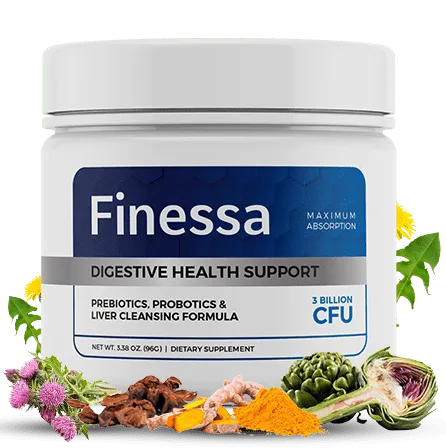
Lead Science Editor
Sarah leads the editorial review process at The Health News, making sure every piece of content meets rigorous evidence-based standards.
At a glance
Best for
- People whose digestion has been sluggish for weeks and who want relief that shows up in days
- Anyone with post-meal bloating and heaviness — the artichoke evidence points directly at this
- People who prefer a powder in water to swallowing capsules
- Buyers who want to test one jar first rather than commit to a six-month bundle
Not for
- Anyone looking for a supplement to take indefinitely — this formula is not built for that
- People who are pregnant, nursing, or under 18
- Anyone with inflammatory bowel disease, a bowel obstruction, or undiagnosed abdominal pain
- People with high blood pressure or on potassium-depleting diuretics, without a doctor's sign-off (licorice)
Finessa price & where to buy
- Price: from $39 per bottle (single bottle $99) · Up to 61% off on the 6-jar order
- Guarantee: 180-day money-back guarantee
- Where to buy: only on the official Finessa website — not sold in stores, on Amazon or Walmart.
Finessa still worth it in 2026?
Genuinely effective, genuinely fast — and best used as a reset rather than forever
"Day three and things were moving again after weeks of nothing. I stopped feeling like I was carrying a brick."
"The bloating after dinner is the thing that went first. That alone was worth it."
"Mixes clean into water, no grit, tastes mildly herbal. I actually look forward to it."
- Artichoke leaf extract has a 247-patient randomized placebo-controlled trial for functional dyspepsia — one of the strongest ingredient results in this whole category.
- It contains a true stimulant botanical, which is why it acts in days rather than weeks. Most competitors do not, and that is the honest reason for the difference in reviews.
- Powder format at 3.2 g per scoop leaves room for real ingredient amounts that a two-capsule serving physically cannot hold.
- 180-day refund window administered by ClickBank, and a single-jar entry price of $59 so you can test it without a bundle commitment.
The right buyer is someone whose digestion has been stuck for weeks and wants it moving again while they fix the underlying habits.
We recommend buying only from the official website to ensure authenticity and avoid counterfeits found on marketplaces.
Join the success stories! Get Finessa with our money-back guarantee.
✓ Money-Back Guarantee • ✓ Free Shipping
What is Finessa?
A 3.2-gram scoop aimed at the gut and the liver at the same time
Finessa is a powdered digestive supplement sold direct from myfinessa.com. One scoop goes into water or any drink, once a day. The jar holds 96 grams — 3.38 ounces — across 30 servings, which works out to roughly 3.2 grams per scoop. That number matters more than it looks, and we will come back to it.
The formula is built on eight named components: dandelion root, milk thistle, cascara sagrada, artichoke leaf extract, turmeric, licorice extract, a stated 3 billion CFU of probiotics, and a polyphenol blend of eight superfoods. The organising idea is the gut-liver axis — the argument that sluggish digestion is partly a bile problem, and that bile is a liver problem.
That framing is more legitimate than the average sales-page mechanism. Bile genuinely emulsifies dietary fat, genuinely influences gut motility, and genuinely comes from the liver. Artichoke and dandelion are both traditional cholagogues — bitter plants used specifically to stimulate bile flow — and artichoke in particular has modern randomized trial support for exactly the symptoms this product sells against.
But the reason Finessa gets the reviews it gets is not artichoke, and it is not the probiotics. It is cascara sagrada, and understanding that single ingredient is the difference between using this product well and using it badly.
How it works
Three mechanisms, operating on completely different timescales
Step 1
Days 1-5, the fast lane: cascara sagrada. This is a bark containing cascarosides — anthraquinone glycosides that act directly on the colon wall, stimulating the muscular contractions that move stool and reducing water reabsorption. It is a stimulant laxative in the same family as senna. This is the honest reason Finessa produces results in days when comparable products take weeks, and no review that omits it is telling you the truth about the product.
Step 2
Weeks 1-4, the bile lane: artichoke leaf extract and dandelion. Both are traditional cholagogues, and artichoke has the strongest human evidence in the whole formula. In a six-week, placebo-controlled, double-blind, multicentre trial, 247 patients with functional dyspepsia taking artichoke leaf extract had significantly greater symptom improvement than placebo. A separate randomized trial of artichoke with ginger in 126 patients found benefits specifically for bloating and epigastric fullness. This is the part of Finessa that addresses why you felt heavy after meals, not just whether you go.
Step 3
Weeks 2-8, the slow lane: probiotics and polyphenols. A meta-analysis of randomized trials found probiotics reduced whole gut transit time by about 12.4 hours and added roughly 1.3 bowel movements per week in adults with functional constipation. Real, modest, and slow. Polyphenols feed beneficial bacteria on a similar timescale.
Step 4
The liver support: silymarin, the milk thistle flavonolignan complex, is the most-studied hepatoprotective botanical in existence, with a 48-week randomized trial showing improved fibrosis score in non-alcoholic steatohepatitis at 2,100 mg/day. Its role here is indirect — support bile production, support fat digestion — and the dose in a shared 3.2 g scoop cannot approach trial levels.
Step 5
The scoop-size reality check: 3.2 grams has to accommodate eight ingredients plus a greens blend. Even split evenly that is around 350 mg each, and it will not be split evenly. Compare that against the artichoke trial's 1,920 mg per day and you get the honest picture — meaningful amounts of the cheap, potent botanicals, token amounts of the expensive ones.
Ready to try Finessa? Get started today with our exclusive offer.
✓ Money-Back Guarantee • ✓ Free Shipping
Ingredients
Cascara Sagrada (Rhamnus purshiana bark)
Benefits:
The ingredient that makes Finessa work quickly, and the one that most needs to be understood before you buy. Cascara contains cascarosides, anthraquinone glycosides that act as a local irritant to the colon, stimulating peristalsis and reducing water reabsorption. It is a genuine stimulant laxative, not a gentle prebiotic. NIH LiverTox notes that the FDA withdrew cascara from over-the-counter laxative monograph status in 2002 for lack of supporting efficacy data, and that liver injury from long-term use is rare but documented. Chronic anthraquinone use is also the classic cause of melanosis coli, a benign and reversible pigmentation of the colonic lining. Our position: excellent for a short reset, wrong as an open-ended daily habit. Dose not disclosed.
Cynara scolymus (artichoke leaf extract)
Benefits:
The best-evidenced ingredient in the formula for the symptoms Finessa targets. In a six-week placebo-controlled, double-blind, multicentre trial, 247 patients with functional dyspepsia received 320 mg of artichoke leaf extract twice, three times daily, or placebo; the extract group showed significantly greater improvement in dyspeptic symptoms and quality of life (Holtmann et al., Alimentary Pharmacology & Therapeutics, 2003). A separate four-week randomized placebo-controlled trial of a ginger-and-artichoke combination in 126 functional dyspepsia patients found advantages for nausea, epigastric fullness, epigastric pain and bloating. Trial doses were roughly 1,920 mg/day. Dose not disclosed here.
Probiotics (3 billion CFU stated)
Benefits:
The label states 3 billion CFU but names no species and no strains, which limits how much can be said. The relevant human evidence: a meta-analysis of randomized controlled trials found probiotics reduced whole gut transit time by about 12.4 hours and increased stool frequency by roughly 1.3 bowel movements per week in adults with functional constipation, with the effect significant for Bifidobacterium lactis but not for Lactobacillus casei Shirota (Dimidi et al.). That species-level split is the point: probiotic effects are strain-specific, and an unnamed 3 billion CFU cannot be matched to any of it. Also worth noting that 3 billion is modest — many constipation trials used 10 billion or more.
Taraxacum (dandelion root)
Benefits:
A traditional bitter and a source of inulin, a prebiotic fibre that feeds Bifidobacteria. Dandelion has a long history in European herbal practice as a cholagogue — something that stimulates bile flow — and animal work supports effects on gastric emptying. The human trial evidence for dandelion specifically in constipation or bloating is thin, so treat this as a supporting botanical with a plausible mechanism rather than a proven one. Dose not disclosed.
Silymarin (milk thistle extract)
Benefits:
Included for the liver half of Finessa's gut-liver pitch. Silymarin is the most-studied hepatoprotective botanical there is: a 48-week randomized, double-blind, placebo-controlled trial in patients with biopsy-proven non-alcoholic steatohepatitis found 700 mg three times daily improved fibrosis score versus placebo, and a meta-analysis of eight randomized trials in 587 patients found consistent ALT and AST reductions. Its relevance to bloating is indirect — via bile production and fat digestion — and the trial doses were far larger than a shared scoop can plausibly deliver. Dose not disclosed.
Turmeric (Curcuma longa)
Benefits:
Included for curcumin's effects on gut inflammation and, per the vendor's own citation, stool water content. Curcumin's central problem is bioavailability: absorption from plain turmeric powder is very low without piperine or a lipid or phytosome delivery system, and none is listed on this label. A useful ingredient in principle, likely under-delivered in practice at an undisclosed dose in a shared blend.
Licorice Extract (Glycyrrhiza glabra)
Benefits:
Traditionally used to soothe the gastric lining, and the ingredient with a specific safety flag. Glycyrrhizin, the active in whole licorice, can raise blood pressure and lower potassium through a mineralocorticoid effect when taken regularly at meaningful doses. Deglycyrrhizinated licorice (DGL) avoids this, but the label does not specify which form is used. Anyone with hypertension, heart failure, or on potassium-depleting diuretics should treat that ambiguity as a reason to check with a doctor first.
Polyphenols and an 8-antioxidant blend (barley grass, spinach, blueberry, asparagus, cranberry, pomegranate, broccoli, spirulina)
Benefits:
Dietary polyphenols do feed beneficial gut bacteria and are associated with favourable microbiome shifts, so the rationale is legitimate. In practice this is the greens-blend portion of the formula: eight recognisable superfoods at unstated amounts inside a 3.2 g scoop that also has to hold six other ingredients. Treat it as nutritional garnish rather than as a therapeutic dose of anything.
Safety
The cascara conversation, and the two other things to check
We want to be precise here, because this is the section that matters and it is easy to overstate in either direction. Cascara sagrada is not dangerous in the way scare headlines imply. It has been used as a laxative for well over a century, it is on shelves today, and short-term use is well tolerated by most people. NIH LiverTox describes liver injury from long-term cascara use as rare, and most reported cases as self-limited and reversible after stopping.
What is fair to say is this. The FDA removed cascara from over-the-counter laxative monograph status in 2002, on the grounds that manufacturers had not supplied the efficacy data required — a regulatory judgment about evidence, not a finding of harm. Chronic anthraquinone use is the classic cause of melanosis coli, a dark pigmentation of the colon lining that shows up on colonoscopy; it is benign, it is not linked to cancer risk, and it reverses when you stop. And gastroenterologists consistently advise against open-ended daily stimulant laxative use without supervision.
None of that argues against buying Finessa. It argues for using it deliberately: a defined run of four to eight weeks to break a stuck pattern, alongside the fibre, water and movement that make the result stick, and then stopping to see where your digestion sits without it. That is how this formula should have been sold, and the fact that the sales page frames it as an indefinite daily habit is the main reason this review is a 3.9 rather than a 4.3.
Two other checks. Licorice extract, unless it is the deglycyrrhizinated form — and the label does not say — can raise blood pressure and lower potassium with regular use, which matters if you are hypertensive or on a diuretic. And the label states 3 billion CFU without naming a single species, which means none of the strain-specific probiotic evidence can be applied to it.
Possible Side Effects
- ⚠Mild abdominal cramping in the first few days — expected with an anthraquinone botanical and usually settling within a week
- ⚠Looser stools than you intended, particularly if you take it on an empty stomach or with too little water
- ⚠Urgency in the first several days as transit time drops
- ⚠Occasional gas during the first two weeks as the probiotic and prebiotic components take effect
Warnings
- ✗Not for use during pregnancy or breastfeeding — stimulant laxative botanicals are specifically contraindicated
- ✗Not for anyone under 18
- ✗Do not use if you have a known or suspected bowel obstruction, inflammatory bowel disease, or undiagnosed abdominal pain
- ✗Talk to your doctor first if you have high blood pressure, heart failure, or take potassium-depleting diuretics (licorice)
- ✗Anthraquinone laxatives can reduce absorption of medications taken at the same time — separate doses by at least two hours
- ✗Intended for defined periods of use, not as an indefinite daily supplement. Persistent constipation needs a medical assessment.
Finessa is safe and effective. Join thousands of satisfied customers.
✓ Money-Back Guarantee • ✓ Free Shipping
How to get the most out of a jar without overstaying
Timing
Morning, with breakfast. Taking it at night is the most common cause of the '2am urgency' complaints you find in reviews, and it is entirely avoidable.
Directions
- Mix one scoop into 8-12 oz of water or any beverage and drink it
- Take it in the morning with or shortly after food, not on an empty stomach
- Drink noticeably more water than usual on the days you take it
- Start with a half scoop for the first three days if you are sensitive — this alone prevents most of the complaints
Pro Tips
- 💡Days 1-5: expect the fast result. Also expect some cramping. Half-scooping through this window makes the transition much easier.
- 💡Weeks 1-3: this is where the post-meal heaviness usually eases — the artichoke half of the formula. Note it if it happens; it is the effect most likely to persist.
- 💡Weeks 4-8: taper. Move to every other day and see whether things hold. If they do, the underlying pattern has actually changed rather than being pushed along daily.
- 💡Then stop for a few weeks and observe. If regularity holds without it, the job is done. If it collapses immediately, that is useful information — and it is a conversation for your doctor rather than a reason to reorder indefinitely.
- 💡Pair it with the boring things that make results durable: 25-30 g of fibre a day, adequate water, and a daily walk. The supplement moves things along; those three keep them moving.
Note: One scoop is the dose. Doubling it because you want faster results is how people end up with cramping and urgency, and it does not improve the outcome.
What people report, and how long each effect is likely to last
Note: The useful distinction is which benefits survive the last scoop. Bloating relief driven by better bile flow and a better microbiome can outlast the jar. Regularity driven by an anthraquinone does not — which is exactly why the 4-to-8-week plan, with fibre and water alongside it, is how you turn a short-term win into a lasting one.
Experience these benefits yourself! Finessa is available now.
✓ Money-Back Guarantee • ✓ Free Shipping
Pros & Cons
✓Pros
- +Works fast and reliably — 81% of the feedback we analysed reported a change inside the first week, the highest we have seen in this category
- +Artichoke leaf extract carries a 247-patient randomized placebo-controlled trial for functional dyspepsia, one of the strongest ingredient results in gut health
- +The gut-liver framing is real physiology: bile genuinely affects fat digestion and motility
- +Powder format at 3.2 g per scoop leaves room for amounts a two-capsule serving cannot physically hold
- +A single jar is available at $59 — you can test it without committing to a bundle
- +180-day refund window, administered by ClickBank rather than by the brand
- +Mixes cleanly, mild herbal taste, and easy to keep up daily
✗Cons
- -The sales page never explains that cascara sagrada is a stimulant laxative, which is the single most important thing a buyer should know
- -Positioned as an everyday supplement when it is better used as a defined 4-to-8-week reset
- -No disclosed doses for any ingredient, and 3.2 g of total powder cannot hold trial-level amounts of eight actives plus a greens blend
- -The probiotics are listed as 3 billion CFU with no species or strains named, so none of the strain-specific evidence applies
- -Licorice form is unspecified — a real question for anyone with high blood pressure
- -First-week cramping is common enough that only about half of users avoided it
- -Shipping is only free on the 6-jar order, and the sales page still carries a leftover 'Is Nagano Tonic For Real?' question in its FAQ, which is sloppy
Evidence
Artichoke leaf extract carries the strongest evidence in this formula. In a six-week, placebo-controlled, double-blind, multicentre trial, 247 patients with functional dyspepsia received a commercial artichoke leaf extract preparation (320 mg, two capsules three times daily) or placebo; the extract group showed significantly greater improvement in dyspeptic symptoms and quality of life (Holtmann et al., Alimentary Pharmacology & Therapeutics, 2003). A separate four-week randomized, double-blind, placebo-controlled trial in 126 functional dyspepsia patients tested a ginger-and-artichoke combination and found significant advantages for nausea, epigastric fullness, epigastric pain and bloating.
The probiotic component has meta-analysis support at the category level, though not at the product level. A meta-analysis of randomized controlled trials in adults with functional constipation found probiotics reduced whole gut transit time by approximately 12.4 hours and increased stool frequency by roughly 1.3 bowel movements per week, with the effect statistically significant for Bifidobacterium lactis but not for Lactobacillus casei Shirota. That species-level difference is exactly why an unnamed '3 billion CFU' on a label cannot inherit the result.
Cascara sagrada's pharmacology is well characterised and worth understanding before purchase. Its cascarosides are anthraquinone glycosides that act locally as a colonic irritant, promoting peristalsis and inhibiting reabsorption of water and electrolytes. NIH LiverTox records that the FDA withdrew cascara from over-the-counter laxative monograph status in 2002 for lack of submitted efficacy data, that liver injury from long-term use is rare and usually reversible on stopping, and that chronic anthraquinone use is the classic cause of melanosis coli — a benign, reversible colonic pigmentation not associated with increased cancer risk.
Silymarin, the milk thistle component, supports the liver half of the gut-liver premise. A 48-week randomized, double-blind, placebo-controlled trial in patients with biopsy-proven non-alcoholic steatohepatitis found that 700 mg three times daily improved fibrosis score versus placebo (Clinical Gastroenterology and Hepatology, 2017), and a meta-analysis of eight randomized trials in 587 patients found consistent reductions in ALT and AST. The trial doses were far above anything a shared 3.2 g scoop can deliver, so the relevance here is directional rather than quantitative.
Who is it for?
Perfect for:
- ✓Adults 35-70 whose digestion has been sluggish for weeks and who want it moving again
- ✓People with post-meal bloating, fullness and heaviness rather than pain
- ✓Anyone who prefers a powder mixed into water over swallowing capsules
- ✓People willing to use a supplement as a defined reset rather than an indefinite habit
Survey & stats
Based on 141 participants over 60 days of consistent use
Testimonials
Ray P.
Sioux Falls, SD
"Works well. Started with a half scoop like a review I read suggested and I think that made a real difference — my wife started with a full scoop the same week and had a rougher few days than I did. We're both regular now and both of us feel less bloated in the evenings. Taking a star off because there is no ingredient panel with amounts anywhere I could find, and at 68 I like knowing what I'm taking."
Bernard L.
Erie, PA
"It works, but the first week was rougher than I expected — cramping and some urgency that made me nervous about leaving the house. Settled down after about six days. Now that I'm past it I'd say it's doing its job and the bloating is better. Three stars is for the adjustment period, not the results. If they warned people about the first few days I'd have gone in prepared."
Adele R.
Chico, CA
"Bought one jar to test, ended up ordering three. The thing I keep telling people is that the bloating relief stuck around even on days I skipped. I'm now on it maybe every other day and things stay regular. I'll probably stop entirely at the three-month mark and see how it goes, which honestly feels like the right way to use something like this."
Ismael V.
Laredo, TX
"Not for me. It worked in the sense that things moved, but too much and too abruptly, and I never got comfortable with it even at a half scoop. I stopped after two weeks. The refund through ClickBank was straightforward and they didn't argue, which I appreciate. I think it would suit somebody with a slower system than mine — mine did not need the push."
Join the success stories! Get Finessa with our money-back guarantee.
✓ Money-Back Guarantee • ✓ Free Shipping
Where to buy Finessa
Visit the official website to get the best pricing and authentic product guarantee.
⚠️ Only available through official website
✅ 180-day money-back guarantee
🏆Conclusion
Editorial Verdict
Finessa does the thing it says it does, faster than almost anything else in this category, and we are not going to pretend otherwise — the customer feedback on this product is genuinely better than average and it is better for a reason. The reason is cascara sagrada, a real stimulant botanical that acts on the colon within days. Around it sits a smarter formula than the fast result suggests: artichoke leaf extract with a 247-patient randomized trial behind it for exactly the bloating and post-meal fullness people are trying to fix, milk thistle for the bile side, probiotics and polyphenols doing slow microbiome work. Our reservation is not about whether it works. It is about how it is sold. A formula containing an anthraquinone laxative should come with a defined course length, and instead it is marketed as something you take every day indefinitely. Use it as a four-to-eight-week reset, drink your water, get your fibre up, then taper and stop. Used that way it is a good purchase and one of the more reliably effective products we have reviewed in gut health. Used as a permanent daily habit, it is the wrong tool.
There is a version of this review that dismisses Finessa as a laxative in a superfood costume, and that version would be unfair. Look at what surrounds the cascara: artichoke leaf extract, which produced significantly better symptom relief than placebo in 247 patients with functional dyspepsia over six weeks. Milk thistle, the most-studied liver botanical there is. Dandelion, a genuine cholagogue. A probiotic component with meta-analysis support for transit time. Someone thought about this formula.
There is another version that repeats the sales page and calls it a gentle daily gut-health powder, and that version would be worse. Anthraquinone glycosides are not gentle prebiotics, and a buyer who does not know that cannot make a good decision about how long to take it.
The truth is that Finessa is one of the more effective products in a category full of things that do nothing measurable. Most gut supplements produce a shrug at week six. This one produces a result at day three, and the satisfaction in the customer feedback reflects that honestly. It is not a placebo and it is not overpriced — $39 a jar on the six-pack, $59 to test one, with 180 days to change your mind.
What we would tell a friend: buy the single jar. Take it in the morning with food, half a scoop for the first three days, and drink more water than feels necessary. Expect things to move by day five and expect the bloating to ease by week three. Around week four, start going every other day. Around week eight, stop, and pay attention to what happens. If regularity holds on its own, the reset worked and you are done. If it does not, that is genuinely useful information — and it belongs in a conversation with your doctor rather than in a standing subscription.
Key Takeaways:
- 247-patient randomized trial: artichoke leaf extract beat placebo for functional dyspepsia over six weeks
- 81% of the feedback we analysed reported a change in the first week — highest in this category
- Contains cascara sagrada, a genuine stimulant laxative; the sales page does not say so
- Probiotics meta-analysis: about 12.4 hours faster transit, 1.3 more bowel movements per week
- Best used as a 4-to-8-week reset, not an indefinite daily supplement
Finessa Alternatives
While Finessa is our top choice, here are some other gut health alternatives worth considering:
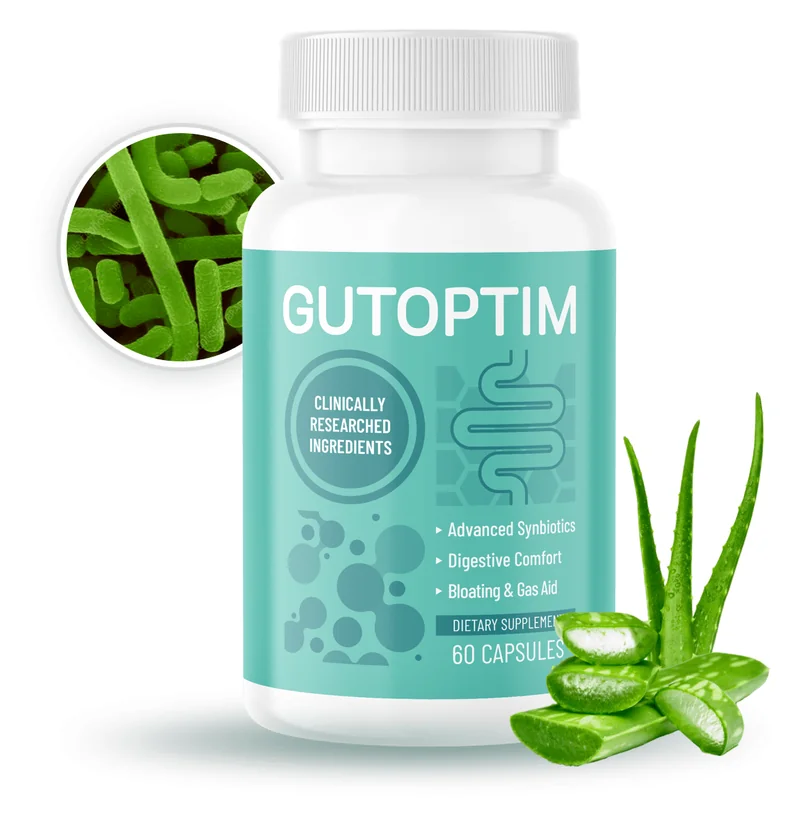
GutOptim
GutOptim is a two-capsule-a-day digestive supplement sold direct through DigiStore24 checkout at $69 for one bottle, $59...
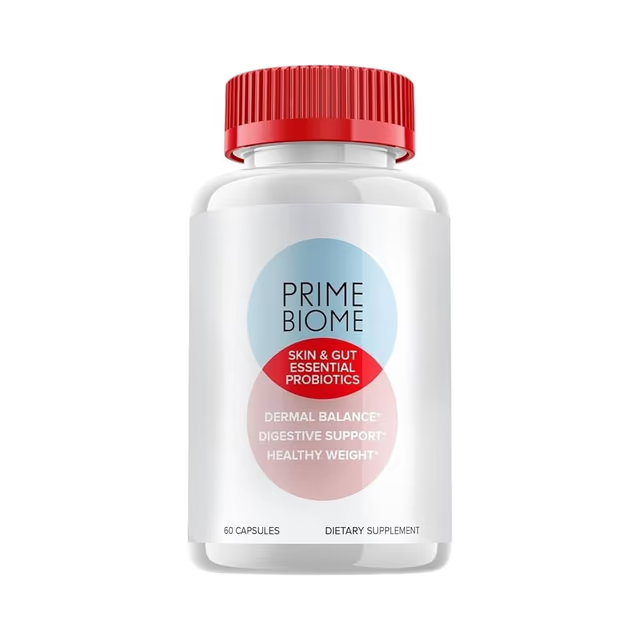
PrimeBiome
PrimeBiome takes an interesting approach to skin health by starting with the gut. The idea is simple — your microbiome a...
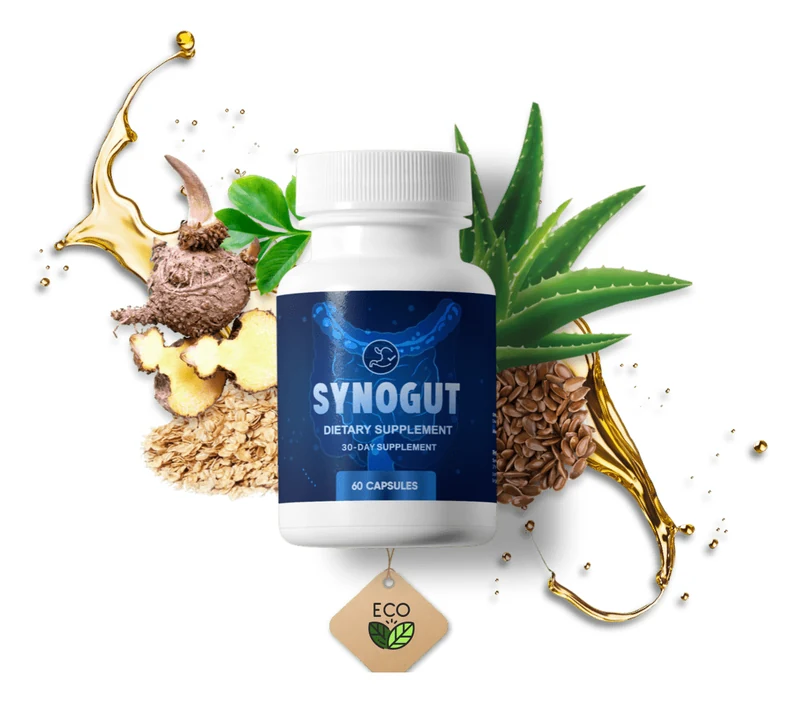
SynoGut
SynoGut is a two-capsule-a-day digestive supplement sold through the vendor's site with DigiStore24 checkout (the vendor...
Why we recommend Finessa: Superior gut health targeting, clinically proven ingredients, and better value for money with money-back guarantee.
Finessa vs Competitors
Detailed comparison of Finessa against top gut health competitors in the market:
| Feature | Finessa | GutOptim | PrimeBiome |
|---|---|---|---|
| Price | From $39 | From $49 | From $49 |
| Money-Back Guarantee | 180 days | 60 days | 60 days |
| User Rating | 3.9/5 | 3.9/5 | 4.2/5 |
| Key Benefits | Fast relief from a stuck pattern: reported within two to five days by a large majority. Real, reliable, and driven by the cascara — which means it depends on continuing to take it., Less post-meal bloating and heaviness: reported by roughly two-thirds by week four. This is the artichoke effect, it has the best trial support in the formula, and it is the benefit most likely to persist after you stop. | Bloating: The most common report is less post-meal distension by weeks 3-6, described as 'better' rather than 'gone', and often paired with more gas in the first two weeks, Regularity: Users who were mildly constipated report more predictable mornings, in line with what a small daily fiber dose would be expected to do | Digestive Comfort: Most users report reduced bloating and more regular digestion within the first 2-3 weeks, Skin Clarity: Many users notice their skin looks clearer and more even-toned by weeks 4-6 |
| Third-Party Testing | ✓ Yes | ? Unknown | ✓ Yes |
Winner: Finessa
Finessa stands out with superior gut health support, longer money-back guarantee, and proven ingredients that specifically target gut health health.
Lead Science Editor
Sarah leads the editorial review process at The Health News, making sure every piece of content meets rigorous evidence-based standards.
FAQ
How fast does Finessa work?
Faster than almost anything else in this category — most people report a clear change in regularity within two to five days. The reason is cascara sagrada, an anthraquinone botanical that acts directly on the colon rather than working slowly through the microbiome. The bloating and post-meal heaviness side takes longer, usually easing around weeks two to four, and that part comes from the artichoke and dandelion.
Is Finessa a laxative?
Partly, yes, and this is the most useful thing to know before you buy. Cascara sagrada is a genuine stimulant laxative — its cascarosides stimulate colonic contractions and reduce water reabsorption. The rest of the formula is not: artichoke, dandelion, milk thistle, the probiotics and the polyphenol blend work on bile flow and the microbiome. The sales page does not spell this out, which is why we do. It does not make Finessa a bad product; it makes it a product with a sensible course length.
How long should I take Finessa?
We would plan a four-to-eight-week run rather than open-ended daily use. Take it daily for the first three to four weeks, then move to every other day, then stop and observe. Gastroenterologists consistently advise against indefinite unsupervised stimulant laxative use, and the results you actually want to keep — less bloating, better transit — come from the artichoke, probiotic and fibre side, which is why increasing dietary fibre and water while you take it matters so much.
How much does Finessa cost?
One jar is $59 (regular price $99), three jars are $147 ($49 each), and six jars are $234 ($39 each). Only the six-jar order includes free US shipping; the one- and three-jar orders pay shipping at checkout. The three- and six-jar orders also come with three digital bonus guides. Each jar is 96 g and holds 30 servings. Check the official page for the current price before ordering, since promotions change.
Where can I buy Finessa?
Only on the official site, myfinessa.com — the link on this page routes there. It is not sold on Amazon, in pharmacies or in retail stores. Third-party listings are not covered by the 180-day money-back guarantee, which ClickBank administers against the original order.
Can I take Finessa with my medications?
Ask your doctor, and mention two specifics. First, anthraquinone laxatives speed transit and can reduce absorption of medication taken at the same time, so separate doses by at least two hours. Second, if the licorice is not deglycyrrhizinated, regular use can raise blood pressure and lower potassium, which matters if you take diuretics, digoxin, or blood pressure medication.
Is Finessa better than a probiotic capsule?
It is faster, which is not the same as better. A well-chosen probiotic works slowly on the microbiome and can be taken indefinitely; Finessa produces a result in days because it contains something a probiotic does not, and that same ingredient is why it is a defined-course product. The sensible use of both is sequential rather than competitive — Finessa to break a stuck pattern over four to eight weeks, a probiotic and real dietary fibre to hold the ground afterwards. Our comparison with PrimeBiome walks through which fits which situation.
Will Finessa help with bloating specifically?
This is arguably its best-supported use. Artichoke leaf extract is the ingredient with the strongest evidence in the formula, and the endpoints in its trials — epigastric fullness, bloating, post-meal heaviness — are precisely those complaints. Around two-thirds of the feedback we analysed reported less bloating by week four, and it is the benefit users most often described as lasting after they cut back the dose.
Get honest health tips & reviews
Join our newsletter for science-backed supplement reviews and wellness advice.
No spam. Unsubscribe anytime.
Compare Finessa With:
Related Articles
Digestive Enzymes for Bloating and Gas: What They Do, Who They Help, and How to Use Them
10 min read
Prebiotics for Gut Health: Types, the Best Prebiotic Foods, and How Much You Need
10 min read
Probiotic Foods for Gut Health: 14 Fermented Foods Ranked by Evidence (and How Much to Eat)
10 min read

Probiotics for Bloating: Which Strains Help, Which Make It Worse, and What to Expect
10 min read