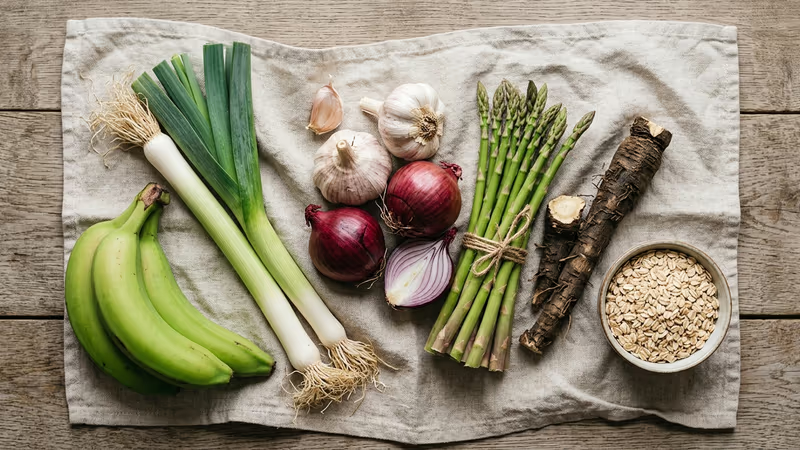

Probiotics get most of the attention, but prebiotics for gut health may be the more practical daily habit. Prebiotics are the specific fibers and plant compounds that your existing gut bacteria feed on, and they're found in ordinary foods like onions, oats, beans, and slightly green bananas. The catch is that most Americans eat far too little of them, and adding a lot at once is a reliable way to end up gassy and discouraged. This guide explains what prebiotics are, which types have solid evidence, the best food sources with real serving ideas, how much you actually need, and how to increase your intake without paying for it in bloating.
What You'll Learn
- The official scientific definition of a prebiotic and how it differs from probiotics and ordinary fiber
- How prebiotics feed the microbiome and produce short-chain fatty acids
- The main prebiotic types with human evidence, from inulin to resistant starch
- A practical prebiotic foods list with serving ideas you can use this week
- How much you need per day and a ramp-up schedule that limits gas
- When a prebiotic fiber supplement makes sense and when food is enough
- Who should be careful, including people with IBS or SIBO
- How to pair prebiotics with probiotics
What Prebiotics Are (and What They Aren't)
The most widely accepted definition comes from an expert panel convened by the International Scientific Association for Probiotics and Prebiotics. Gibson and colleagues published the consensus in 2017 in Nature Reviews Gastroenterology and Hepatology, defining a prebiotic as a substrate that is selectively used by host microorganisms and confers a health benefit. Three ideas are packed into that sentence. The substance must reach your gut bacteria intact, it must be used by beneficial bacteria more than harmful ones, and that selective feeding must produce a measurable benefit for you.
This is where prebiotics differ from fiber in general. All prebiotics that come from plants are fiber, but not all fiber is prebiotic. Cellulose in celery, for example, adds bulk and helps regularity, but bacteria don't ferment much of it. Inulin in chicory root, on the other hand, is heavily fermented and reliably increases bifidobacteria. The 2017 consensus also opened the door to non-fiber prebiotics, such as certain polyphenols, as long as they meet the selectivity and benefit tests.
Probiotics are different again. They are live microorganisms you swallow, such as the strains in yogurt or a capsule. Prebiotics are food for the microbes already living in you. A simple way to remember it: probiotics add residents, prebiotics feed them.
Still unsure which one you need?
We compare the two head-to-head, including when each one is the better starting point and how they work together.
Read: prebiotics vs probioticsHow Prebiotics for Gut Health Feed the Microbiome
Your small intestine can't break down prebiotic fibers, so they travel to the colon intact. There, trillions of bacteria ferment them. The main products of that fermentation are short-chain fatty acids, or SCFAs: acetate, propionate, and butyrate. Butyrate is the primary fuel for the cells lining the colon and helps keep the gut barrier tight. Propionate travels to the liver and plays a role in appetite and blood sugar signaling. Acetate is used by other bacteria and by tissues around the body.
Fermentation also shifts which bacteria thrive. A 2018 systematic review and meta-analysis in the American Journal of Clinical Nutrition by So and colleagues pooled randomized trials of fiber interventions in healthy adults. Fiber supplementation, particularly with fructans and galacto-oligosaccharides, consistently increased the abundance of Bifidobacterium and Lactobacillus species. Interestingly, it did not change overall microbial diversity. That tells us prebiotics act more like targeted fertilizer for specific beneficial groups than a blanket booster for everything.
What happens when the microbiome doesn't get fed is just as instructive. In a 2016 study in Cell, Desai and colleagues fed mice a fiber-free diet and found that their gut bacteria switched to eating the protective mucus layer that lines the colon. The mucus thinned, and the mice became far more vulnerable to a harmful bacterium. It was an animal study, but the message translates: gut bacteria will eat something, and if you don't provide fiber, they may turn on your own defenses.
Types of Prebiotics With Evidence
Inulin and Fructo-Oligosaccharides (FOS)
These fructans are the most studied prebiotics and the ones most likely to show up in supplements. They come from chicory root, Jerusalem artichoke, garlic, onion, and wheat. Inulin has longer chains and ferments more slowly, while FOS (also called oligofructose) has shorter chains and ferments quickly. Both increase bifidobacteria reliably. The trade-off is gas, especially with the short-chain versions.
Galacto-Oligosaccharides (GOS)
GOS are made from lactose and are found naturally in human milk and, in small amounts, in legumes. They're notable for being one of the few prebiotics with a positive trial in people with IBS. In a 2009 study in Alimentary Pharmacology and Therapeutics, Silk and colleagues gave 44 IBS patients 3.5 or 7 grams of a trans-GOS product or placebo for 12 weeks. Both doses significantly increased fecal bifidobacteria, and the 3.5-gram dose improved stool consistency, flatulence, bloating, and overall symptom scores. That's an unusual result, because most fermentable fibers make IBS worse.
Resistant Starch
Resistant starch is starch that escapes digestion in the small intestine. It is found in green bananas, legumes, and in potatoes, rice, and pasta that have been cooked and then cooled. Cooling reorganizes the starch into a form that bacteria, not enzymes, break down. It is a strong butyrate producer and tends to be gentler on gas than inulin, which makes it a good first prebiotic for sensitive people.
Partially Hydrolyzed Guar Gum (PHGG)
PHGG is a soluble fiber derived from guar beans and broken into smaller pieces so it doesn't thicken. It ferments slowly, is generally well tolerated, and has been used in several IBS studies for both constipation and diarrhea. It has less bifidogenic data than inulin or GOS, but for people who can't tolerate those, it is often the practical choice.
Psyllium
Psyllium is only partly fermented, so it behaves more like a bulking fiber than a classic prebiotic. Its strength is stool regularity and cholesterol support, and it produces relatively little gas. It fits a gut-health routine as a complement to more fermentable fibers rather than a replacement.
Beta-Glucan
Beta-glucan is the soluble fiber in oats and barley. It is fermented in the colon and has a prebiotic effect, but its best-documented benefit is cardiovascular. A 2014 meta-analysis of 28 randomized controlled trials in the American Journal of Clinical Nutrition by Whitehead and colleagues confirmed that 3 grams or more of oat beta-glucan per day lowers LDL cholesterol, which is the basis for the approved heart-health claim on oat products. That's roughly one to one and a half cups of cooked oatmeal.
Polyphenols as Prebiotic-Like Compounds
Compounds in cocoa, berries, green tea, red grapes, and olive oil are not fibers, but a large share of them reaches the colon and is metabolized by bacteria, often favoring beneficial species. Under the 2017 definition they can qualify as prebiotics when evidence supports a benefit. The practical advice is simple: eat more colorful plants rather than buying isolated polyphenol capsules.
The Best Prebiotic Foods List
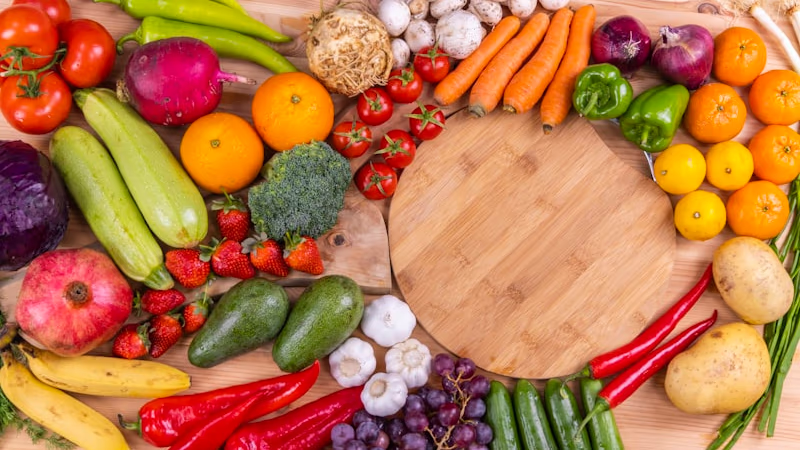
You don't need exotic ingredients. Most of the best prebiotic foods are already in a typical grocery store. Here they are, with serving ideas that fit into regular American meals.
- Garlic — One of the richest sources of fructans by weight. Add a crushed clove to salad dressing, roast a whole head with olive oil, or stir it into soups near the end of cooking.
- Onion — Raw or cooked, onions supply inulin and FOS. Sauté a full onion into chili or stir-fry, or add thin slices to sandwiches and salads.
- Leeks — Milder than onion with similar fructans. Slice and simmer into potato-leek soup, or sauté as a side with a little butter.
- Asparagus — Around 2 to 3 grams of inulin per 100 grams. Roast with olive oil or chop raw into salads for the highest prebiotic content.
- Jerusalem artichoke — Also called sunchoke, it is exceptionally high in inulin. Roast like potatoes, but start with a small portion; this one is famous for gas.
- Chicory root — The industrial source of most inulin supplements. Try roasted chicory coffee alternatives or chicory greens in salads.
- Oats — Beta-glucan plus resistant starch when cooled. Overnight oats made the night before deliver both.
- Barley — Beta-glucan and resistant starch. Swap it for rice in soups and grain bowls.
- Green bananas — The less ripe, the more resistant starch. Slice a firm, slightly green banana into oatmeal or blend into a smoothie.
- Cooked-and-cooled potatoes or rice — Cook, refrigerate overnight, then eat cold in potato salad or reheat as fried rice. Reheating keeps most of the resistant starch.
- Legumes — Beans, lentils, and chickpeas provide GOS, resistant starch, and other fibers. Half a cup in soup, salad, or tacos is an easy daily target.
- Apples — Pectin is fermented in the colon and supports butyrate producers. Eat the skin.
- Flaxseed — Mucilage fiber and lignans. Add a tablespoon of ground flax to yogurt, smoothies, or oatmeal.
How Much You Need, and How to Ramp Up Without Gas
There is no official daily value for prebiotics specifically. Most research showing a shift in bifidobacteria used 3 to 10 grams of a defined prebiotic per day, on top of general fiber. For total fiber, U.S. guidelines suggest about 25 grams daily for women and 38 for men, and most adults get roughly half that. A realistic target is 5 grams of prebiotic-rich food or supplement per day, within an overall fiber intake of 25 to 35 grams.
Tolerance matters more than hitting a number. A 2010 randomized crossover study in the Journal of the American Dietetic Association by Bonnema and colleagues tested inulin and oligofructose at 5 and 10 grams in healthy adults. A 5-gram serving of either type was well tolerated. At 10 grams, longer-chain inulin was still acceptable for most people, while some sensitive individuals experienced noticeable flatulence. That gives a clear practical ceiling: 5 grams per serving is the safe starting zone, and 10 grams is where trouble begins for some.
- Week 1: Add one prebiotic food serving per day, such as half a cup of beans or one onion cooked into a meal. Drink an extra glass or two of water.
- Week 2: Add a second serving, choosing a different type. Pair a resistant-starch food (cooled potatoes, green banana) with a fructan food (onion, garlic).
- Week 3: If gas is manageable, introduce oats or barley daily and a third vegetable source.
- Week 4 and beyond: Hold at three to four servings daily. If you add a supplement, start at 2 to 3 grams and increase by 1 to 2 grams each week to a maximum of 5 to 10 grams.
- If symptoms spike at any step, drop back to the previous week's amount for a few days, then try again. Gas usually settles as the microbiome adapts over two to four weeks.
Prebiotic Fiber Supplement vs Food
Food comes first for most people. Whole foods deliver a mix of fiber types plus vitamins, minerals, and polyphenols, and they're self-limiting in a way that a scoop of powder isn't. A prebiotic fiber supplement earns its place in a few situations: when you can't reliably eat enough plant foods, when you want a specific type that is hard to get from diet in meaningful amounts (GOS is a good example), or when you're testing whether a defined dose helps a specific symptom.
If you buy one, look for a single named ingredient with the dose per serving clearly stated: inulin, FOS, GOS, PHGG, or resistant starch. Blends that hide amounts behind a proprietary label make it impossible to dose sensibly. Powders are easier to titrate than capsules, since 5 grams of fiber would require many capsules.
Considering a supplement?
We've ranked digestive health supplements by ingredient quality, dosing transparency, and the evidence behind each formula, including products that combine prebiotic fiber with probiotic strains.
See our ranked digestive health supplementsWho Should Be Careful
Prebiotics are safe for most adults, but fermentation means gas, and for some people that gas is more than an inconvenience.
- IBS — Fructans and GOS are FODMAPs, the fermentable carbohydrates that trigger IBS symptoms in many people. The low-FODMAP diet works by restricting them, but a 2015 study in Gut by Halmos and colleagues showed the trade-off: the diet lowered bifidobacteria. If you have IBS, work with a dietitian to find your tolerance rather than cutting prebiotics out permanently. GOS at low doses and PHGG are often the best-tolerated options.
- SIBO — In small intestinal bacterial overgrowth, bacteria have colonized the small intestine, where prebiotics can feed them too early and worsen bloating. Get evaluated and treated before ramping up fermentable fiber.
- Active inflammatory bowel disease — During a flare, high-fiber intake can be uncomfortable. Follow your gastroenterologist's guidance.
- Recent bowel surgery or a stricture — Bulk and gas can be a physical problem. Ask your surgeon first.
Pairing Prebiotics With Probiotics
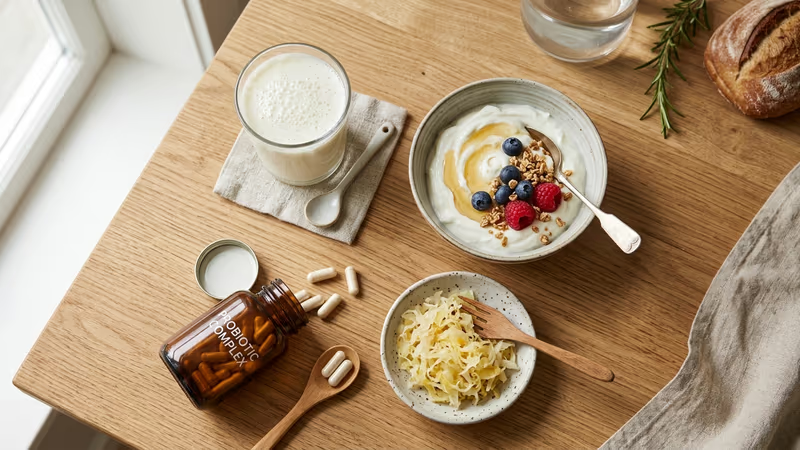
A product or meal that combines a prebiotic with a probiotic is called a synbiotic. The logic is straightforward: you introduce a beneficial strain and feed it at the same time. In practice, most probiotic strains in supplements don't take up permanent residence, so the prebiotic mostly benefits the bacteria you already have, which is still worthwhile. If you take a probiotic, having it alongside a fiber-rich meal is reasonable. If you had to pick just one, a consistent prebiotic-rich diet has broader and more durable effects on the microbiome than a capsule of live bacteria taken on its own.
Our Take
Prebiotics for gut health are one of the rare areas where the evidence and the practical advice line up cleanly. Eat garlic, onions, oats, beans, and cooled potatoes regularly, build up slowly, and drink enough water. Aim for 5 grams of defined prebiotic per day within 25 to 35 grams of total fiber. Use a single-ingredient supplement if food alone doesn't get you there or you want to test a specific type like GOS. And if you have IBS or suspect SIBO, get guidance before you push fermentable fiber, because the same compounds that feed good bacteria can also feed symptoms. Done gradually, this is a habit that pays off for years.
Frequently Asked Questions
What are the best prebiotics for gut health?
The best-studied prebiotics for gut health are inulin and fructo-oligosaccharides from chicory, garlic, and onion, and galacto-oligosaccharides from legumes and supplements. A 2018 meta-analysis in the American Journal of Clinical Nutrition found these consistently raise bifidobacteria in healthy adults. Resistant starch from cooled potatoes, rice, and green bananas is a strong butyrate producer and is usually gentler on gas. For people with sensitive digestion, GOS at low doses and partially hydrolyzed guar gum are often the most tolerable choices.
How much prebiotic fiber should I take daily?
Most trials that shifted gut bacteria used 3 to 10 grams of a defined prebiotic per day. A practical target is about 5 grams daily from foods or a supplement, within a total fiber intake of 25 to 35 grams. A 2010 tolerance study found 5 grams of inulin or oligofructose per serving was well tolerated, while 10 grams caused flatulence in some people. Start low, increase by 1 to 2 grams per week, and let symptoms rather than a fixed number set your ceiling.
Do prebiotics cause gas?
Yes, some gas is expected because prebiotics work by being fermented, and fermentation produces gas. The amount depends on the type, the dose, and how adapted your microbiome is. Short-chain fructans like oligofructose and Jerusalem artichoke are the most gas-producing; resistant starch, PHGG, and psyllium tend to be milder. Gas usually decreases over two to four weeks as bacterial populations adjust. Ramping up slowly, drinking more water, and spreading intake across meals instead of one large dose all help.
Can I take prebiotics and probiotics together?
Yes. Taking them together is common, and combined products are called synbiotics. Prebiotics feed beneficial bacteria, including any probiotic strains you take, though most supplemental strains pass through rather than settle permanently. There's no interaction to worry about, and taking a probiotic with a fiber-rich meal is a reasonable routine. If you're introducing both for the first time, add them one at a time a week apart so that if bloating occurs, you can tell which one is responsible.
Are prebiotics good for weight loss?
The evidence is modest but real. In a 2009 randomized trial in the American Journal of Clinical Nutrition, Parnell and Reimer gave overweight adults 21 grams of oligofructose daily for 12 weeks. The prebiotic group lost about 1 kilogram while the placebo group gained slightly, with lower levels of the hunger hormone ghrelin and higher levels of the fullness hormone peptide YY. That's a small effect from a high dose, so prebiotics are best viewed as a support for appetite control and overall diet quality rather than a weight-loss product.
Get honest health tips & reviews
Join our newsletter for science-backed supplement reviews and wellness advice.
No spam. Unsubscribe anytime.