Head-to-Head Comparison · 2026
Finessa vs PrimeBiome (2026): Fast Relief or Slow Rebuild?
Finessa works in days; PrimeBiome works in weeks. That difference comes down to one ingredient, and it decides how long each product should be taken. We compare the trials, the formats and the right sequence.
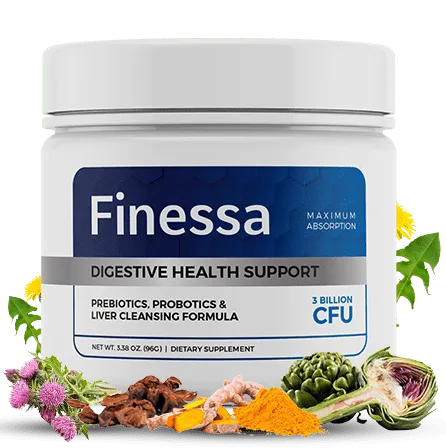
Finessa
3.9/5
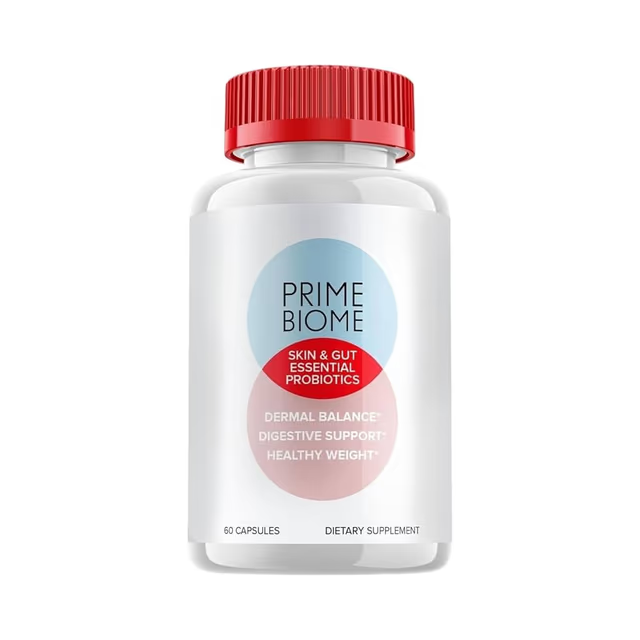
PrimeBiome
4.2/5
In 60 seconds
These products are not really competing — they are answering different questions on different timescales. Finessa contains cascara sagrada, a genuine stimulant laxative, which is why users report a change within days and why it should be treated as a defined four-to-eight-week reset rather than a permanent daily habit. PrimeBiome is a probiotic-and-botanical gummy built for slow microbiome work with no stimulant component, which makes it far better suited to indefinite use and far slower to show you anything. The honest recommendation for most people is sequential rather than either/or.
Finessa approach
A 3.2 g powdered scoop: cascara sagrada, artichoke leaf extract, dandelion root, milk thistle, turmeric, licorice extract, 3 billion CFU of unnamed probiotics, and a polyphenol blend of eight superfoods. Gut-liver framing. No disclosed doses.
PrimeBiome approach
A chewable gummy pairing probiotic strains with botanicals aimed at the gut-skin axis, including inulin, dandelion, fenugreek, lemon balm, organic Ceylon ginger, slippery elm bark and fennel. No stimulant laxative component.
The 60-Second Honest Take
Read the customer feedback on these two products side by side and one difference is impossible to miss. Finessa users describe results in days. PrimeBiome users describe results in weeks, if at all. The usual explanation offered for that gap is that one formula is stronger. That is not what is happening. Finessa contains cascara sagrada, a bark whose cascarosides act as a local irritant on the colon wall, stimulating peristalsis and reducing water reabsorption. It is a stimulant laxative in the same family as senna. That is the entire reason the timelines differ, and the Finessa sales page never says so — which is the single most important thing a buyer of either product should know. This is not a reason to avoid Finessa. Stimulant laxatives work, they have been used for over a century, and short-term use is well tolerated. It is a reason to treat Finessa as a course rather than a habit — four to eight weeks to break a stuck pattern, then taper and stop. PrimeBiome has no equivalent ingredient. It is slower because it is doing slower work: feeding and shifting a microbiome, which takes weeks by nature. That makes it the better candidate for open-ended use and the worse candidate if you need something to change this week. Which is why, for most people, the answer is not one or the other.
What Finessa Gets Right
It works, quickly and reliably, and the customer feedback reflects that honestly. In a category where most products produce a shrug at week six, this one produces a result by day three for the large majority of users. That is worth acknowledging before any caveat. The formula around the cascara is smarter than the fast result suggests. Artichoke leaf extract carries the strongest evidence of anything in either product here: in a six-week, placebo-controlled, double-blind, multicentre trial, 247 patients with functional dyspepsia received artichoke leaf extract (320 mg, two capsules three times daily) or placebo, and the extract group showed significantly greater improvement in dyspeptic symptoms and quality of life (Holtmann et al., Alimentary Pharmacology & Therapeutics, 2003). A separate four-week randomized placebo-controlled trial of a ginger-and-artichoke combination in 126 patients found specific advantages for bloating and epigastric fullness. That matters because bloating and post-meal heaviness — not just frequency — are what most people in this category actually want fixed, and the artichoke half of Finessa is the part most likely to keep working after you stop. The gut-liver premise is real physiology. Bile emulsifies dietary fat and influences motility, and it comes from the liver. Artichoke and dandelion are both traditional cholagogues; milk thistle has a 48-week randomized trial in non-alcoholic steatohepatitis behind it. The framing is not invented. Two commercial advantages: a single jar is available at $59, so you can test it without a bundle commitment — rare in this space — and the refund window is 180 days, administered by ClickBank.
Where Finessa Falls Short
The omission, not the ingredient. Cascara sagrada is a legitimate laxative botanical. The problem is that Finessa is marketed as an everyday gut-health powder while containing one, and a buyer who does not know that cannot make a good decision about how long to take it. For context rather than alarm: NIH LiverTox records that the FDA withdrew cascara from over-the-counter laxative monograph status in 2002 because manufacturers had not supplied the required efficacy data — a regulatory judgment about evidence, not a finding of harm. It also records that liver injury from long-term use is rare and usually reversible on stopping. Chronic anthraquinone use is the classic cause of melanosis coli, a benign, reversible pigmentation of the colonic lining that carries no increased cancer risk. And gastroenterologists consistently advise against open-ended unsupervised stimulant laxative use. None of that argues against buying Finessa. It argues for a defined course length, which the sales page does not provide and which our Finessa review sets out in detail. Three further gaps. No doses are disclosed, and a 3.2 g scoop has to accommodate eight actives plus a greens blend — for scale, the artichoke trial used roughly 1,920 mg per day of artichoke extract alone. The probiotic component is listed as 3 billion CFU with no species or strains named, so none of the strain-specific probiotic literature can be applied to it. And the licorice form is unspecified: if it is not deglycyrrhizinated, regular use can raise blood pressure and lower potassium, which matters for anyone hypertensive or on a diuretic.
What PrimeBiome Gets Right
PrimeBiome is the top pick in our digestive roundup, and its advantages are precisely the ones Finessa lacks. No stimulant component, which makes long-term use appropriate. This is the structural difference. PrimeBiome can be taken for months without the course-length question that hangs over any anthraquinone formula, and for a chronic, low-grade problem — mild bloating, irregularity, general gut discomfort — that suits the shape of the problem better. The probiotic and prebiotic evidence is modest but real. A meta-analysis of randomized controlled trials in adults with functional constipation found probiotics reduced whole gut transit time by approximately 12.4 hours and increased stool frequency by roughly 1.3 bowel movements per week, with the effect statistically significant for Bifidobacterium lactis. Small numbers, achieved without stimulating anything. The gummy format drives adherence. Slow-acting products only work if you keep taking them, and a gummy is materially easier to sustain over three months than a powder that requires water and a scoop. Botanical support for comfort rather than urgency. Slippery elm, fennel and ginger are traditional carminatives aimed at gas and discomfort, and inulin is a prebiotic fibre that feeds Bifidobacteria directly. The honest limitation, and it is the mirror image of Finessa's: PrimeBiome will not do anything you can feel this week, its guarantee is 60 days rather than 180, and for someone genuinely stuck right now that combination is frustrating. Our PrimeBiome review covers the timeline expectations.
The Sequence Most People Should Actually Use
Framing these as rivals produces a worse outcome than using them in order. If you are currently stuck — nothing moving for a week or more, bloated and uncomfortable — start with Finessa. Take it in the morning with food, half a scoop for the first three days to blunt the cramping, and drink noticeably more water than usual. Expect movement by day five and expect the post-meal heaviness to ease around week three. Around week four, begin tapering. Move to every other day. This is the point where you find out whether the underlying pattern has changed or whether you have simply been pushing things along daily. Around week eight, stop, and add the slow work. This is where a probiotic-and-prebiotic formula like PrimeBiome earns its place — holding ground that has already been recovered, on a timescale where its modest effect sizes are enough. Alongside it: 25 to 30 g of dietary fibre a day, adequate water, and a daily walk. Those three do more than either supplement and neither product will substitute for them. If you are not currently stuck — your gut works but is uncomfortable, gassy, unpredictable — skip Finessa entirely and start with PrimeBiome. There is no reason to take an anthraquinone for a problem that is not obstruction. And if regularity collapses the moment you stop Finessa, that is genuinely useful information, and it belongs in a conversation with your doctor rather than in a standing subscription.
The Verdict, Stated Plainly
PrimeBiome is the better everyday product and keeps the top spot in our digestive health roundup. It has no stimulant component, which makes indefinite use appropriate, and its slower mechanism suits the chronic low-grade discomfort most buyers in this category actually have. Finessa is the better product for being stuck right now, and it is more effective at that job than anything else we have reviewed in gut health. The artichoke evidence is the strongest single trial result in either formula, the powder format leaves room a two-capsule serving cannot match, and a $59 single jar with 180 days to change your mind is a genuinely low-risk way to test it. The deciding factor is not quality. It is duration. Finessa is a course; PrimeBiome is a habit. A product containing cascara sagrada should be sold with a defined end date, and the fact that it is not is the main criticism in our review — not the ingredient itself, which works exactly as advertised. Buy Finessa if your digestion has been stuck for weeks. Use it for four to eight weeks, taper, stop. Buy PrimeBiome if your gut works but is uncomfortable, or as the thing you move to afterwards. And in both cases, fix the fibre and the water, because that is the part that decides whether anything you gain actually stays.
Quick Verdict
Choose Finessa if you want:
- ✓People whose digestion has been sluggish for weeks and who want relief that shows up in days
- ✓Anyone with post-meal bloating and heaviness — the artichoke evidence points directly at this
- ✓People who prefer a powder in water to swallowing capsules
May not be ideal for:
Anyone looking for a supplement to take indefinitely — this formula is not built for that
Choose PrimeBiome if you want:
- ✓Adults dealing with digestive issues that seem tied to their skin health
- ✓People over 35 noticing both gut changes and skin dullness
- ✓Those looking for a natural approach to skin clarity from the inside out
May not be ideal for:
People under 18, pregnant, or nursing
Side-by-Side Comparison
| Feature | Finessa | PrimeBiome |
|---|---|---|
| Our Rating | 3.9/5 | 4.2/5 |
| Starting Price | $39 | $49 |
| Guarantee | 180-day money-back | 60-day money-back |
| Key Ingredients | 8 active ingredients | 10 active ingredients |
| Best For | People whose digestion has been sluggish for weeks and who want relief that shows up in days | Adults dealing with digestive issues that seem tied to their skin health |
Pros & Cons
Finessa
Pros
- ✓Works fast and reliably — 81% of the feedback we analysed reported a change inside the first week, the highest we have seen in this category
- ✓Artichoke leaf extract carries a 247-patient randomized placebo-controlled trial for functional dyspepsia, one of the strongest ingredient results in gut health
- ✓The gut-liver framing is real physiology: bile genuinely affects fat digestion and motility
- ✓Powder format at 3.2 g per scoop leaves room for amounts a two-capsule serving cannot physically hold
- ✓A single jar is available at $59 — you can test it without committing to a bundle
Cons
- ✗The sales page never explains that cascara sagrada is a stimulant laxative, which is the single most important thing a buyer should know
- ✗Positioned as an everyday supplement when it is better used as a defined 4-to-8-week reset
- ✗No disclosed doses for any ingredient, and 3.2 g of total powder cannot hold trial-level amounts of eight actives plus a greens blend
- ✗The probiotics are listed as 3 billion CFU with no species or strains named, so none of the strain-specific evidence applies
PrimeBiome
Pros
- ✓Targets both gut health and skin appearance through the gut-skin axis — a research-backed approach
- ✓Uses Bacillus coagulans, a spore-forming probiotic with better survival through stomach acid
- ✓Gummy format is easy to take daily — no large capsules to swallow
- ✓Includes prebiotics to feed the probiotics and support colonization
- ✓Third-party tested for purity and potency
Cons
- ✗Only available online through the official website — not in stores
- ✗Skin benefits take 4-6 weeks to become noticeable — requires patience
- ✗Some users experience mild digestive adjustment in the first week as the microbiome adapts
- ✗Contains Lion's Mane mushroom, which isn't suitable for people with mushroom allergies
Pricing Comparison
Finessa
PrimeBiome
Frequently Asked Questions
Which is better, Finessa or PrimeBiome?
Both Finessa (rated 3.9/5) and PrimeBiome (rated 4.2/5) are solid gut health supplements. Finessa is best for People whose digestion has been sluggish for weeks and who want relief that shows up in days, while PrimeBiome excels at Adults dealing with digestive issues that seem tied to their skin health. The best choice depends on your specific goals and preferences.
What is the price difference between Finessa and PrimeBiome?
Finessa starts at $39 per bottle while PrimeBiome starts at $49 per bottle. Both offer multi-bottle discounts that reduce the per-unit cost. Finessa comes with a 180-day money-back guarantee and PrimeBiome offers a 60-day money-back guarantee.
Which has better ingredients, Finessa or PrimeBiome?
Finessa features 8 key ingredients while PrimeBiome contains 10 active compounds. Both formulas are manufactured in FDA-registered, GMP-certified facilities. The ingredient profiles target gut health from different angles, so the better formula depends on which specific benefits matter most to you.
Can I take Finessa and PrimeBiome together?
We recommend choosing one supplement at a time so you can accurately assess its effects. Taking both simultaneously makes it difficult to determine which product is contributing to your results. If one doesn't meet your needs, you can switch to the other. Always consult your healthcare provider before combining supplements.
Final Verdict
PrimeBiome is the better everyday choice and keeps the top position in our digestive roundup, because it contains no stimulant component and can therefore be taken indefinitely — which suits the chronic, low-grade discomfort most buyers in this category actually have. Finessa is the more effective product for someone stuck right now, and the reason is cascara sagrada, a genuine stimulant laxative that the sales page never identifies as one. That makes Finessa a four-to-eight-week course rather than a permanent habit, which is our main criticism of how it is marketed rather than of the formula. Around that cascara sits real substance: artichoke leaf extract with a 247-patient randomized placebo-controlled trial for functional dyspepsia, milk thistle for the bile side, and a $59 single-jar option with a 180-day ClickBank guarantee. The best answer for most people is sequential — Finessa to break a stuck pattern, taper by week four, stop by week eight, then PrimeBiome plus 25-30 g of daily fibre to hold the ground.