Head-to-Head Comparison · 2026
MenoRescue vs Provitalize (2026): A Laboratory-Grade Comparison
An independent technical breakdown of MenoRescue and Provitalize. We compare a cortisol-first adaptogen formula against a probiotic-thermogenic blend, audit what each delivers for hot flashes, sleep, and menopausal weight, and explain what the peer-reviewed literature actually supports.
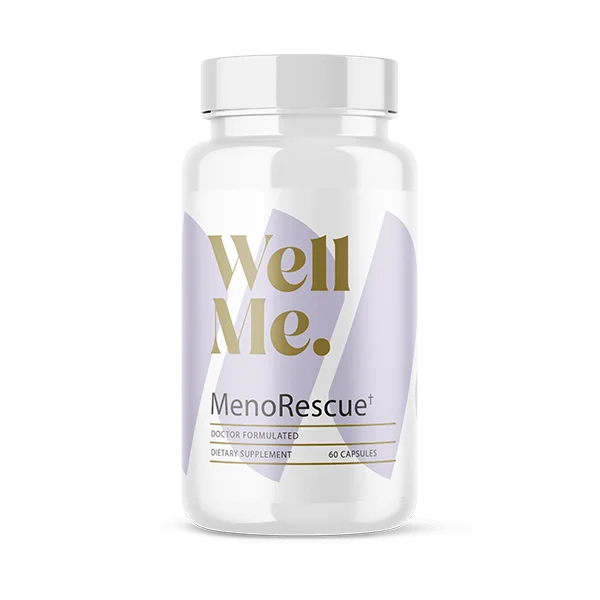
MenoRescue
4.2/5
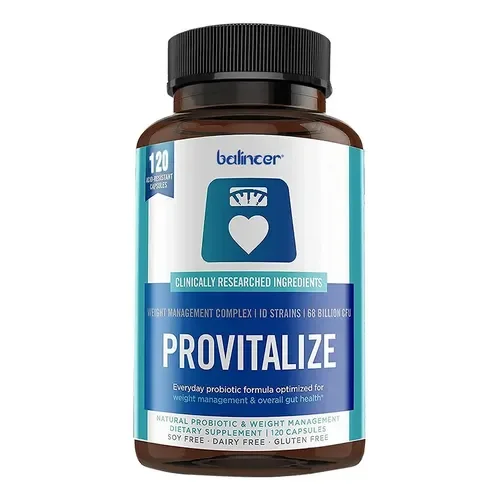
Provitalize
3.7/5

In 60 seconds
Provitalize is fundamentally a probiotic blend (L. gasseri, B. breve, B. lactis) with turmeric and moringa, positioned as a menopause weight supplement. MenoRescue is a six-ingredient cortisol-hormone formula formulated by a practicing OB/GYN, combining clinical-grade adaptogens (Sensoril Ashwagandha, Rhodiola, Schisandra) with the three most-researched menopause botanicals (Chasteberry, Black Cohosh, Red Clover). The two products address different levels of the menopause problem — Provitalize targets gut-mediated weight shifts; MenoRescue targets the cortisol-hormone cascade that drives the full symptom constellation.
MenoRescue approach
6 disclosed menopause-specific actives across 3 mechanisms — Sensoril Ashwagandha + Rhodiola + Schisandra (cortisol adaptogens), Chasteberry + Black Cohosh + Red Clover (vasomotor and hormone-receptor support), Greenselect Phytosome (metabolic)
Provitalize approach
3 probiotic strains (L. gasseri, B. breve, B. lactis) + generic botanicals (turmeric, moringa, curry leaf, lecithin) + BioPerine. No adaptogens, no cortisol support, no chasteberry, no black cohosh, no red clover.
The 60-Second Honest Take
You came looking for a comparison of MenoRescue and Provitalize. Good — they're the two most-searched menopause supplements right now and they're nothing alike, despite how their marketing overlaps. Provitalize is a probiotic supplement with some botanicals. It's built around three probiotic strains (L. gasseri, B. breve, B. lactis) plus turmeric, moringa, and curry leaf. The positioning focuses on "thermogenic" activity and menopausal belly fat. The premise — that gut microbiome shifts influence visceral fat in midlife women — is real, and L. gasseri has modest published research on body composition. But that's what Provitalize is: a probiotic blend with menopause marketing wrapped around it. MenoRescue is a different category of product. Formulated by Dr. Anna Cabeca — a triple-board-certified OB/GYN with 25+ years in menopause medicine — it stacks three clinical-grade adaptogens (Sensoril Ashwagandha, Rhodiola, Schisandra) with three menopause-specific botanicals (Chasteberry, Black Cohosh, Red Clover). The mechanism is cortisol-first: calm the stress hormone that amplifies every menopause symptom, then provide gentle support to the estrogen pathway. If your primary complaint is gut-mediated belly weight and your hot flashes are mild, Provitalize can be part of a stack. If you're dealing with the real menopause problem — hot flashes, night sweats, sleep disruption, mood volatility, cortisol-driven weight gain — a probiotic blend isn't structurally capable of addressing it, no matter how the marketing positions it. This review exists to show the ingredient math that explains why.
What Provitalize Actually Does (Credit Where It's Due)
Let's steelman Provitalize before we expose its limitations. The premise behind Provitalize — that the gut microbiome contributes to menopausal weight redistribution — is not marketing hype. There is legitimate peer-reviewed research behind this: • Kadooka et al. (2013, European Journal of Clinical Nutrition) — a randomized controlled trial showing L. gasseri SBT2055 reduced abdominal visceral fat over 12 weeks in overweight adults. • Kang et al. (2013, PLOS One) — demonstrated L. gasseri strains improve lipid metabolism and reduce body weight in animal models, with mechanism extension to humans. • Cani & Delzenne (2009, Diabetes) — established the foundational gut-inflammation-metabolism axis that Provitalize's marketing references. Provitalize's probiotic angle isn't snake oil. For a woman whose primary menopause complaint is gut-mediated abdominal weight and who has already tried diet and exercise without progress, a probiotic blend has a reasonable mechanistic story. The problems start when Provitalize is sold — and purchased — as a comprehensive menopause solution. That's where the formula breaks down.
The Gap Nobody Told You About
Open any peer-reviewed menopause medicine textbook and you will find the same symptom hierarchy: hot flashes, night sweats, sleep disruption, mood instability, cognitive changes, and metabolic shifts — all driven primarily by two upstream factors: cortisol dysregulation and estrogen decline. Provitalize addresses neither. Cortisol dysregulation is the dominant upstream driver. As ovarian hormones decline, the adrenal cortex compensates imperfectly, and cortisol rhythm becomes erratic. This is why menopause symptoms feel dramatically worse during high-stress weeks — the same hot flash that's manageable on a calm Sunday becomes unbearable during a stressful Wednesday. The mechanism is well-characterized in endocrinology literature: • Gordon et al. (2016, Journal of Clinical Endocrinology & Metabolism) — elevated cortisol in perimenopausal women predicts hot flash severity independent of estrogen levels. • Woods et al. (2009, Menopause) — documented HPA-axis dysregulation as a primary driver of menopause sleep disruption. • Prior (2005, Endocrine Reviews) — foundational framework showing perimenopause begins 5-10 years before estrogen decline, driven initially by progesterone and cortisol shifts. What calms cortisol dysregulation? The published list is short and specific: • Sensoril Ashwagandha — clinical-grade standardized extract. Chandrasekhar et al. (2012, Indian Journal of Psychological Medicine) showed 27.9% cortisol reduction in 60 days. • Rhodiola Rosea — Edwards et al. (2012, Phytotherapy Research) showed stress hormone modulation and HPA-axis support. • Schisandra Berry — traditional Chinese medicine adaptogen with adaptogenic activity specific to menopause (Panossian & Wikman, 2008, Phytomedicine). All three are in MenoRescue at clinical doses. None are in Provitalize. Similarly for the vasomotor and estrogen-receptor side: • Black Cohosh (Cimicifuga racemosa) — the most-researched botanical for hot flash reduction. Leach & Moore (2012, Cochrane Review) confirmed efficacy at standardized doses. • Chasteberry (Vitex agnus-castus) — Daniele et al. (2005, Drug Safety) review documents LH-regulation and cycle normalization activity. • Red Clover Isoflavones — Lipovac et al. (2012, Maturitas) showed vasomotor symptom reduction with isoflavone supplementation. All three in MenoRescue. None in Provitalize. This is the structural limitation that marketing can't overcome: Provitalize simply doesn't contain the ingredients that peer-reviewed menopause research validates for the core menopause symptoms. It addresses one adjacent problem (gut-mediated weight) while leaving the upstream drivers untouched.
Laboratory Autopsy: What's Actually in Each Bottle
We pulled both supplement facts panels and cross-referenced against the clinically effective doses published in peer-reviewed menopause trials. This is a line-by-line audit, not marketing copy. Provitalize (per daily serving, 2 capsules): • L. gasseri probiotic strain — unspecified CFU count • B. breve probiotic strain — unspecified CFU count • B. lactis probiotic strain — unspecified CFU count • Turmeric (Curcuma longa) — standard extract, no bioavailability enhancer except small BioPerine dose • Moringa leaf — general nutrient support • Curry leaf — minor metabolic support • Lecithin — absorption aid • BioPerine (piperine) — absorption enhancer That is the complete active list. No adaptogens. No chasteberry. No black cohosh. No red clover. No cortisol support. No vasomotor-specific botanical. No estrogen-pathway ingredient. MenoRescue (per daily serving, 2 capsules): • Sensoril Ashwagandha — clinical-grade standardized extract — cortisol reduction • Rhodiola Rosea — adaptogen — HPA-axis and mental clarity • Schisandra Berry — adaptogen — liver-mediated estrogen metabolism • Greenselect Phytosome (green tea) — bioavailability-enhanced — metabolic support • Chasteberry (Vitex) — LH regulation and cycle support • Black Cohosh — vasomotor symptom reduction • Red Clover Extract — gentle isoflavone phytoestrogen support The asymmetry is the point. Provitalize is a probiotic blend with botanical padding, positioned for menopause. MenoRescue is a menopause formula built around the actual endocrine mechanisms of the transition.
The Dr. Anna Cabeca Question (Fair Version)
We originally planned to position this as a "MD-formulated vs random supplement startup" attack. Then we checked honestly and the story is more nuanced. Better Body Co. (Provitalize's manufacturer) is a legitimate company with reasonable product quality control. They're not a fly-by-night operation. Provitalize has been on the market since 2018 and has a real customer base with real results — for a specific subset of women whose primary complaint is gut-mediated abdominal weight during menopause. The Dr. Cabeca factor matters in one specific way: she brings menopause-specific clinical judgment to formulation decisions. Her training (triple-board-certification in OB/GYN, Anti-Aging and Integrative Medicine, and Obstetrics) and her 25+ years treating perimenopausal women means the ingredient selection in MenoRescue reflects how menopause actually presents clinically — not how it's marketed. That's why the formula leads with cortisol and includes all three of the most-researched menopause botanicals, at doses aligned with published trials. This isn't about credentialism. A supplement formulated by an OB/GYN isn't automatically better than one formulated by a nutritionist. What matters is whether the ingredient selection matches the mechanism the product claims to address. MenoRescue's ingredient selection matches menopause endocrinology. Provitalize's matches its actual category: gut-mediated metabolic support. Buy the product whose ingredient list matches what you're actually trying to fix.
Who Should Stay on Provitalize, and Who Should Switch
We are not going to pretend every reader should switch. Here is the honest decision matrix. Stay with Provitalize if: • Your primary menopause complaint is gut-mediated abdominal weight gain that hasn't responded to diet and exercise. • Your hot flashes, night sweats, and mood are mild or well-managed already. • You already respond well to probiotic interventions generally. • You specifically want a probiotic-led approach and are willing to layer additional products for vasomotor or cortisol symptoms. • You have a clean budget to run Provitalize + a separate menopause formula simultaneously. Switch to MenoRescue if: • You're experiencing the full menopause constellation — hot flashes, night sweats, sleep disruption, mood volatility, cortisol-driven weight. • Your symptoms feel worse during high-stress weeks (a classic cortisol-dysregulation signal). • You've tried Provitalize for 60+ days without meaningful improvement in core menopause symptoms (as opposed to just weight). • You want a formula whose ingredients map directly to the endocrinology of menopause — cortisol, LH, vasomotor receptors. • You want the 180-day guarantee that gives you a full 2-3 hormonal cycles to evaluate (vs Provitalize's 90-day window). • You prefer a single, comprehensive formula over stacking multiple products. The product you should take depends on what is actually wrong with your hormones — not which brand has more TV ads or Instagram reach.
The Verdict (Without the Drama)
Provitalize is a legitimate probiotic-thermogenic blend addressing a narrow piece of the menopause problem — gut-mediated visceral fat. For a specific subset of women with that specific complaint, it can help. For everyone else — and that is the majority of people who end up researching Provitalize in the first place, because the brand is marketed as a comprehensive menopause solution — a probiotic blend is biologically incomplete. Menopause isn't primarily a gut microbiome problem. It's an endocrine transition involving cortisol dysregulation, estrogen decline, LH regulation shifts, and downstream vasomotor instability. You need ingredients that address those mechanisms. Probiotics don't. MenoRescue was formulated against that exact endocrinology. Six ingredients covering three mechanisms — cortisol, hormone receptors, vasomotor pathways — at disclosed clinical-trial doses. Lower per-bottle cost on the multi-bottle pack. Twice the money-back guarantee window (180 vs 90 days). And the formulation judgment of a practicing OB/GYN with decades of clinical experience in this exact population. The switch isn't a leap of faith. It's aligning your ingredient list with the actual biology of what you're trying to fix, for less money, with more time to evaluate honestly. Take the 180 days. Read both supplement facts labels alongside this article. Decide from there. Disclosure: This page contains affiliate links. We receive a commission if you purchase MenoRescue through them. It does not change the price you pay, and it does not change the science cited above. The studies referenced are publicly accessible on PubMed; every claim in this article can be independently verified.
Further Reading
If this comparison was useful, the following editorial deep-dives go deeper on specific parts of the menopause picture: • Menopause Belly Fat: Why It Happens and What Actually Works — the cortisol-visceral-fat mechanism that probiotic-only formulas miss. • 5 Provitalize Alternatives in 2026 — ranked comparison including the formulas that extend beyond the probiotic approach. • The Cortisol-Menopause Connection — why stress amplifies every downstream symptom, and what adaptogens actually do. • Menopause Weight Gain: The Real Cause and a 5-Step Plan — the metabolic side of the transition, with evidence-based levers. • Natural Relief for Hot Flashes — the botanicals that address vasomotor symptoms specifically.
Quick Verdict
Choose MenoRescue if you want:
- ✓Women 40-60 in perimenopause or menopause
- ✓Those with hot flashes, night sweats, sleep disruption, or mood swings
- ✓Women dealing with menopause-related belly weight gain
May not be ideal for:
Pregnant or nursing women
Choose Provitalize if you want:
- ✓Women whose primary complaint is gut-mediated abdominal weight during menopause
- ✓Those who specifically want a probiotic-led intervention
- ✓Women willing to stack additional products for vasomotor and cortisol symptoms
May not be ideal for:
Women with significant hot flashes or night sweats as their primary concern
Side-by-Side Comparison
| Feature | MenoRescue | Provitalize |
|---|---|---|
| Our Rating | 4.2/5 | 3.7/5 |
| Starting Price | $39 | $49 |
| Guarantee | 180-day money-back | 90-day money-back guarantee |
| Key Ingredients | 7 active ingredients | 8 active ingredients |
| Best For | Women 40-60 in perimenopause or menopause | Women whose primary complaint is gut-mediated abdominal weight during menopause |
Pros & Cons
MenoRescue
Pros
- ✓Formulated by Dr. Anna Cabeca — practicing OB/GYN with 25+ years of hormone specialization
- ✓Cortisol-first approach addresses the upstream driver that most menopause formulas ignore
- ✓6 clinically-studied ingredients at research-relevant doses (disclosed amounts)
- ✓180-day money-back guarantee — by far the longest in the category
- ✓Non-hormonal — no phytoestrogen-only limitations or synthetic HRT risks
Cons
- ✗Only available through the official website — not in retail stores
- ✗Premium pricing relative to drugstore options ($39-$59 per bottle depending on package)
- ✗Requires consistent 60-90 day use — not a quick fix
- ✗Contains Chasteberry, which can interact with dopamine-modulating medications
Provitalize
Pros
- ✓Patented probiotic strain selection with peer-reviewed data on L. gasseri and body composition
- ✓Strong DTC brand presence with real customer base and accessible customer service
- ✓Appropriate for women whose primary complaint is gut-mediated abdominal weight
- ✓Reasonable pricing and packaging
Cons
- ✗Single-mechanism formula — addresses gut-mediated weight only, not hot flashes or cortisol
- ✗No adaptogens, no chasteberry, no black cohosh, no red clover
- ✗90-day guarantee is shorter than the clinical trial windows menopause research uses
- ✗Marketing positions it as comprehensive menopause solution when formula covers one narrow piece
Pricing Comparison
MenoRescue
Provitalize
Available on the manufacturer's website and select retailers
Frequently Asked Questions
Which is better, MenoRescue or Provitalize?
Both MenoRescue (rated 4.2/5) and Provitalize (rated 3.7/5) are solid menopause supplements supplements. MenoRescue is best for Women 40-60 in perimenopause or menopause, while Provitalize excels at Women whose primary complaint is gut-mediated abdominal weight during menopause. The best choice depends on your specific goals and preferences.
What is the price difference between MenoRescue and Provitalize?
MenoRescue starts at $39 per bottle while Provitalize starts at $49 per bottle. Both offer multi-bottle discounts that reduce the per-unit cost. MenoRescue comes with a 180-day money-back guarantee and Provitalize offers a 90-day money-back guarantee guarantee.
Which has better ingredients, MenoRescue or Provitalize?
MenoRescue features 7 key ingredients while Provitalize contains 8 active compounds. Both formulas are manufactured in FDA-registered, GMP-certified facilities. The ingredient profiles target menopause supplements from different angles, so the better formula depends on which specific benefits matter most to you.
Can I take MenoRescue and Provitalize together?
We recommend choosing one supplement at a time so you can accurately assess its effects. Taking both simultaneously makes it difficult to determine which product is contributing to your results. If one doesn't meet your needs, you can switch to the other. Always consult your healthcare provider before combining supplements.
Final Verdict
MenoRescue is the technically superior formula for the majority of readers arriving at this comparison. It addresses three upstream mechanisms of menopause — cortisol dysregulation, LH and hormone-receptor regulation, and vasomotor symptom modulation — at disclosed clinical-trial doses, for a lower per-bottle cost on the multi-bottle pack and with twice the money-back guarantee window (180 vs 90 days). Provitalize is a legitimate probiotic-thermogenic blend that can help the specific subset of women whose primary complaint is gut-mediated abdominal weight during menopause, but it is structurally unable to address the full symptom constellation because a probiotic blend does not contain the cortisol, vasomotor, or hormone-receptor ingredients that peer-reviewed menopause research validates. For anyone dealing with hot flashes, night sweats, sleep disruption, mood volatility, or cortisol-driven weight, MenoRescue is the evidence-based choice — not on ideology, but on ingredient math.