Head-to-Head Comparison · 2026
MenoRescue vs Hormone Harmony (2026): Which Menopause Formula Wins?
An independent technical breakdown of MenoRescue and Happy Mammoth's Hormone Harmony. We compare two of the most-researched adaptogenic menopause formulas ingredient-by-ingredient, analyze clinical-grade standardization, and explain which women benefit most from each approach.
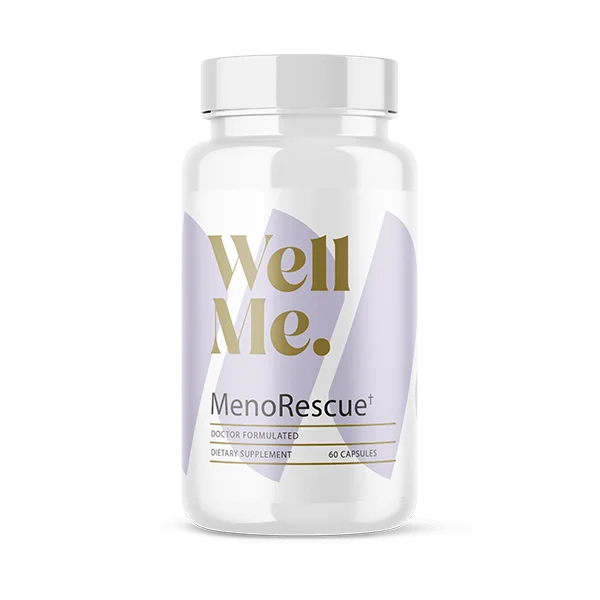
MenoRescue
4.2/5
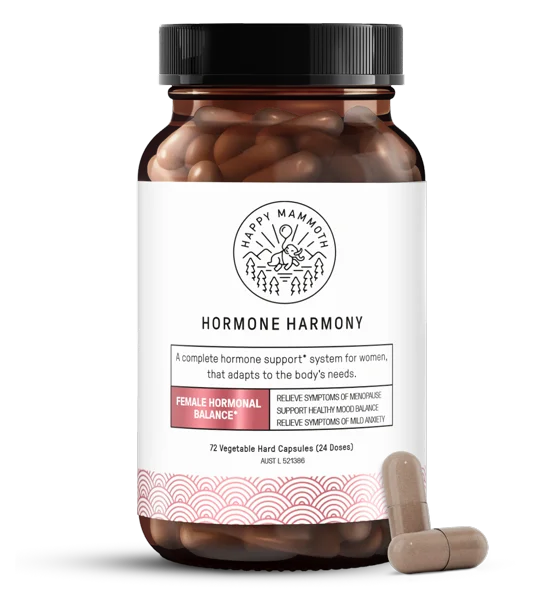
Hormone Harmony
3.9/5

In 60 seconds
Both MenoRescue and Hormone Harmony are adaptogen-led menopause formulas — an important commonality that sets them apart from probiotic or phytoestrogen-only alternatives. The real difference is standardization depth and vasomotor coverage. MenoRescue uses Sensoril Ashwagandha (clinical-grade standardized extract) and includes Black Cohosh plus Red Clover for the hot-flash and estrogen-receptor pathways. Hormone Harmony uses KSM-66 Ashwagandha (also respected, different standardization) but omits Black Cohosh and Red Clover entirely, making it narrower for women whose primary complaint is vasomotor symptoms.
MenoRescue approach
7 disclosed menopause actives across 3 mechanisms — Sensoril Ashwagandha + Rhodiola + Schisandra (cortisol adaptogens), Chasteberry + Black Cohosh + Red Clover (vasomotor and hormone-receptor), Greenselect Phytosome (metabolic)
Hormone Harmony approach
6 disclosed actives — KSM-66 Ashwagandha + Rhodiola + American Ginseng (adaptogens), Maca Root + Chasteberry (hormonal), Rosemary Leaf (antioxidant). No Black Cohosh. No Red Clover. No dedicated metabolic ingredient.
The 60-Second Honest Take
You're comparing MenoRescue and Happy Mammoth's Hormone Harmony — good, because unlike most menopause head-to-heads, this one is closer than the marketing on either side suggests. Both products are adaptogen-led. That's meaningful. The vast majority of menopause supplements on the market lead with phytoestrogens or probiotics; these two correctly recognize that cortisol dysregulation is an upstream driver of most menopause symptoms and build their formulas around adaptogens that calm the HPA axis. Happy Mammoth has also been transparent about ingredient philosophy and has a respected market presence. This isn't a David-vs-Goliath comparison. The differences are real but narrower than either brand would want you to believe: 1. Ashwagandha standardization: MenoRescue uses Sensoril (standardized to 10%+ withanolide glycosides from root + leaf); Hormone Harmony uses KSM-66 (standardized to 5% withanolides from root only). Both respected, different profiles — Sensoril is more sedating and cortisol-focused; KSM-66 is more energizing. Neither is objectively better. 2. Vasomotor coverage: MenoRescue includes Black Cohosh and Red Clover, the two most-researched botanicals for hot flashes and estrogen-receptor support. Hormone Harmony omits both. For women whose primary complaint is hot flashes or night sweats, this is a structural gap. 3. Metabolic support: MenoRescue includes Greenselect Phytosome for menopausal weight shifts. Hormone Harmony has no dedicated metabolic ingredient. 4. Guarantee window: MenoRescue 180 days. Hormone Harmony 90 days. 5. Price: MenoRescue ~$59/bottle on multi-bottle. Hormone Harmony ~$73/bottle on subscription. If your menopause is primarily cortisol-driven stress, fatigue, and mild cycle irregularity, Hormone Harmony's leaner formula can work. If hot flashes, night sweats, or metabolic weight are in your picture at all, MenoRescue's Black Cohosh + Red Clover + Greenselect inclusion is the mechanistically complete choice. And on price plus guarantee, MenoRescue wins independently.
What Hormone Harmony Actually Does (Credit Where It's Due)
Let's steelman Hormone Harmony before examining its limitations. Happy Mammoth (the parent company) has earned a reasonable reputation in women's health. Hormone Harmony is formulated with a thoughtful philosophy: a lean, adaptogen-first approach that avoids proprietary blends, discloses most doses, and targets cortisol dysregulation as an upstream menopause driver. This is genuinely more sophisticated than the phytoestrogen-heavy formulations that dominate drugstore shelves. The ingredient choices have real research support: • KSM-66 Ashwagandha — Chandrasekhar et al. (2012, Indian Journal of Psychological Medicine) showed KSM-66 reduced cortisol by 27.9% at 600 mg/day. Lopresti et al. (2019, Medicine) confirmed anxiety reduction in midlife adults. • Rhodiola Rosea — Edwards et al. (2012, Phytotherapy Research) documented stress and fatigue reduction at standardized doses. • Chasteberry (Vitex agnus-castus) — van Die et al. (2013, Planta Medica) systematic review confirming efficacy in hormonal cycle irregularities. • Maca Root — Brooks et al. (2008, Menopause) found maca reduced psychological symptoms of menopause, though vasomotor effects were weaker. • American Ginseng — Scholey et al. (2010, Psychopharmacology) supported cognitive and mood benefits. • Rosemary Leaf — antioxidant inclusion, modest antimicrobial and cognitive benefits. For women whose menopause presents primarily as cortisol-driven stress, fatigue, cognitive dullness, or mild cycle irregularity — and whose vasomotor symptoms are mild or absent — Hormone Harmony is a legitimate formulation choice. It isn't snake oil, and Happy Mammoth's approach to transparency is above category average. The question isn't whether Hormone Harmony is "good." The question is whether it's complete enough for women whose menopause includes vasomotor or metabolic symptoms. And there, the answer is more nuanced.
The Gap Nobody Told You About
Open any clinical menopause guideline and you will find a consistent symptom hierarchy: the three most common and most disruptive symptoms are hot flashes, night sweats, and sleep disruption — in that order. These are collectively called vasomotor symptoms (VMS), and they account for approximately 70-80% of the quality-of-life burden that drives women to seek treatment in the first place. For vasomotor symptoms, the peer-reviewed evidence converges on two specific botanicals: • Black Cohosh (Cimicifuga racemosa) — the Cochrane Review (Leach & Moore, 2012) concluded that black cohosh reduces menopausal symptoms including hot flashes and night sweats, with the strongest evidence at standardized extracts (Remifemin-style, 20 mg) and 40 mg daily doses. The mechanism is non-estrogenic, which makes it safer for women with hormone-sensitive histories. • Red Clover Isoflavones — Lipovac et al. (2012, Maturitas) showed 80 mg/day reduced hot flash frequency significantly. Booth et al. (2006, Menopause) documented mechanism via phytoestrogen activity on ERβ receptors, supporting bone density alongside vasomotor relief. MenoRescue contains both. Hormone Harmony contains neither. This isn't a minor omission. For a woman whose primary complaint is nightly sweats that wake her three times a week, or daily hot flashes that disrupt work, adaptogens alone — no matter how well-standardized — will not address the vasomotor pathway. Adaptogens calm cortisol. Cortisol amplifies menopause symptoms. But reducing cortisol is upstream support, not direct vasomotor relief. The question isn't whether adaptogens are good. The question is whether they're sufficient on their own for women with prominent hot flashes. The published literature says no — you need the vasomotor-specific ingredients too. Similarly on the metabolic side: menopause-driven abdominal weight gain is primarily mediated by declining estrogen's effect on visceral fat distribution and insulin sensitivity. Greenselect Phytosome (green tea extract in a phosphatidylcholine complex, dramatically enhancing bioavailability) has Di Pierro et al. (2009, Altern Med Rev) data on body composition improvements. MenoRescue includes it. Hormone Harmony has no equivalent metabolic ingredient. For a woman dealing with the "menopause belly" that neither diet nor exercise seems to touch, this is another structural gap in the Hormone Harmony formula.
Laboratory Autopsy: What's Actually in Each Bottle
Direct comparison of the two supplement facts panels. This is a line-by-line audit, not marketing copy. Hormone Harmony (per daily serving): • KSM-66 Ashwagandha — standardized to 5% withanolides • Rhodiola Rosea — adaptogen • Maca Root (Lepidium meyenii) — adaptogen • Chasteberry (Vitex agnus-castus) — LH regulation • Rosemary Leaf — antioxidant • American Ginseng — adaptogen Six ingredients. Three adaptogens (KSM-66, Rhodiola, American Ginseng). Two hormonal (Maca, Chasteberry). One antioxidant (Rosemary). No Black Cohosh. No Red Clover. No dedicated metabolic ingredient. MenoRescue (per daily serving): • Sensoril Ashwagandha — standardized to 10%+ withanolide glycosides (root + leaf) — cortisol reduction • Rhodiola Rosea — adaptogen — HPA-axis and mental clarity • Schisandra Berry — adaptogen — liver-mediated estrogen metabolism • Chasteberry (Vitex) — LH regulation and cycle support • Black Cohosh — vasomotor symptom reduction (hot flashes, night sweats) • Red Clover Extract — gentle phytoestrogen support for vasomotor and bone pathways • Greenselect Phytosome — bioavailability-enhanced — metabolic support Seven ingredients. Three adaptogens (Sensoril, Rhodiola, Schisandra). Three menopause-specific botanicals (Chasteberry, Black Cohosh, Red Clover). One metabolic (Greenselect Phytosome). The structural asymmetry is what matters: both formulas cover the cortisol/adaptogenic side competently. MenoRescue additionally covers vasomotor (Black Cohosh), estrogen-receptor (Red Clover), and metabolic (Greenselect) pathways. Hormone Harmony doesn't. This is not about one being "better" in the abstract. It's about which formula matches what's actually happening in your body.
The Ashwagandha Question (Sensoril vs KSM-66)
Both products use respected ashwagandha standardizations. This is a fair comparison that deserves its own treatment. KSM-66 (in Hormone Harmony): • Standardized to 5% withanolides • Extracted from root only • Typically dosed 300-600 mg • Research profile: Chandrasekhar 2012 (cortisol -27.9%), Lopresti 2019 (anxiety reduction), Wankhede 2015 (strength/testosterone in men) • Profile: more energizing, less sedating, often recommended for morning use Sensoril (in MenoRescue): • Standardized to 10%+ withanolide glycosides • Extracted from root AND leaf • Typically dosed 125-250 mg (higher potency per mg) • Research profile: Auddy 2008 (cortisol and anxiety reduction), Wankhede 2015 (stress-induced cognitive performance) • Profile: more sedating, stronger cortisol-reduction profile, often recommended for evening or high-stress contexts Neither is objectively superior. The choice reflects formulation philosophy. Sensoril's higher withanolide content per dose makes it well-suited to a menopause formula where nighttime cortisol control and sleep quality are priority targets. KSM-66's more energizing profile makes it well-suited to daytime stress support. For menopause specifically, Sensoril has a mild edge on clinical relevance because of its stronger cortisol-reduction mechanism and better sleep-side-of-the-day profile — two dimensions where menopause patients commonly struggle. But this edge is modest, and a woman responding well to KSM-66 should not switch solely on this distinction. Where the formulas diverge more meaningfully is everything else. Ashwagandha is one ingredient. Menopause needs a stack.
Who Should Stay on Hormone Harmony, and Who Should Switch
Honest decision matrix — we're not going to pretend every reader should switch. Stay with Hormone Harmony if: • Your menopause presentation is primarily cortisol-driven stress, fatigue, mental fog, and mild cycle irregularity. • Your vasomotor symptoms (hot flashes, night sweats) are mild or absent. • You prefer a leaner formula with fewer ingredients. • You respond well to KSM-66 specifically and have already tried ashwagandha-led formulas with success. • You're willing to layer a separate Black Cohosh product if vasomotor symptoms become prominent. • You have cleared the higher per-bottle cost in your supplement budget. Switch to MenoRescue if: • Hot flashes or night sweats are part of your menopause picture — this is the structural gap. • You're dealing with menopausal abdominal weight that isn't responding to diet and exercise. • You want a single complete formula rather than stacking adaptogens + Black Cohosh separately. • You prefer Sensoril's cortisol-focused ashwagandha profile for sleep and evening use. • You want the 180-day guarantee to evaluate across multiple hormonal cycles (vs 90 days). • You want the lower per-bottle cost on the multi-bottle pack (~$59 vs ~$73). • You want an OB/GYN's clinical judgment embedded in formula selection. There is no wrong answer for women who match the Hormone Harmony profile. There is a structurally wrong answer for women with vasomotor symptoms using a formula without vasomotor ingredients.
The Verdict (Without the Drama)
Hormone Harmony is a legitimate adaptogen-led menopause supplement from a respected brand. For women whose menopause is primarily stress-and-fatigue-driven with minimal vasomotor involvement, it delivers a thoughtful, clean formulation at a premium price point. MenoRescue is a broader-coverage menopause formula designed by a practicing OB/GYN. It shares Hormone Harmony's adaptogen-first philosophy but extends into three additional pathways — vasomotor (Black Cohosh), estrogen-receptor (Red Clover), and metabolic (Greenselect Phytosome) — at research-relevant disclosed doses. Lower per-bottle cost on multi-bottle, twice the guarantee window. The honest summary: both formulas are mechanistically coherent; MenoRescue is mechanistically more complete. For any reader whose menopause picture includes hot flashes, night sweats, or stubborn abdominal weight — which is the majority of women in perimenopause and menopause — MenoRescue's fuller ingredient stack matches the biology better. This isn't a dunk on Hormone Harmony. It's ingredient math. Match your formula to your symptoms. Disclosure: This page contains affiliate links to MenoRescue. We receive a commission if you purchase through them. It does not change the price you pay, and it does not change the science cited above. All references are publicly accessible on PubMed; every claim in this article can be independently verified.
Further Reading
If this comparison was useful, the following editorial deep-dives go deeper on specific parts of the menopause picture: • Ashwagandha for Menopause: Evidence on Cortisol, Sleep, and Hot Flashes — detailed comparison of Sensoril vs KSM-66 standardizations and what each does best. • The Cortisol-Menopause Connection — why both products lead with adaptogens and what the HPA axis has to do with hot flashes. • Natural Relief for Hot Flashes — the vasomotor-specific ingredients (Black Cohosh, Red Clover) that Hormone Harmony omits. • Chasteberry (Vitex) for Menopause — the one ingredient both products share, and what it actually does. • 10 Signs You May Be in Perimenopause — a staging guide to help identify what stage you're in and which formula fits.
Quick Verdict
Choose MenoRescue if you want:
- ✓Women 40-60 in perimenopause or menopause
- ✓Those with hot flashes, night sweats, sleep disruption, or mood swings
- ✓Women dealing with menopause-related belly weight gain
May not be ideal for:
Pregnant or nursing women
Choose Hormone Harmony if you want:
- ✓Women with cortisol-driven stress and fatigue as primary menopause symptoms
- ✓Those with mild or absent vasomotor symptoms
- ✓Women who prefer a lean formula and can layer additional products
May not be ideal for:
Women with prominent hot flashes or night sweats
Side-by-Side Comparison
| Feature | MenoRescue | Hormone Harmony |
|---|---|---|
| Our Rating | 4.2/5 | 3.9/5 |
| Starting Price | $39 | $73 |
| Guarantee | 180-day money-back | 90-day money-back guarantee |
| Key Ingredients | 7 active ingredients | 6 active ingredients |
| Best For | Women 40-60 in perimenopause or menopause | Women with cortisol-driven stress and fatigue as primary menopause symptoms |
Pros & Cons
MenoRescue
Pros
- ✓Formulated by Dr. Anna Cabeca — practicing OB/GYN with 25+ years of hormone specialization
- ✓Cortisol-first approach addresses the upstream driver that most menopause formulas ignore
- ✓6 clinically-studied ingredients at research-relevant doses (disclosed amounts)
- ✓180-day money-back guarantee — by far the longest in the category
- ✓Non-hormonal — no phytoestrogen-only limitations or synthetic HRT risks
Cons
- ✗Only available through the official website — not in retail stores
- ✗Premium pricing relative to drugstore options ($39-$59 per bottle depending on package)
- ✗Requires consistent 60-90 day use — not a quick fix
- ✗Contains Chasteberry, which can interact with dopamine-modulating medications
Hormone Harmony
Pros
- ✓Adaptogen-first formulation philosophy — correctly identifies cortisol as an upstream driver
- ✓KSM-66 Ashwagandha at a research-relevant standardization
- ✓Respected brand with above-category-average transparency
- ✓Six clinically-studied ingredients at disclosed doses
- ✓Strong research profile on individual adaptogens
Cons
- ✗No Black Cohosh — the most-researched botanical for vasomotor symptoms
- ✗No Red Clover — missing the estrogen-receptor and bone-density pathway
- ✗No dedicated metabolic ingredient for menopausal weight shifts
- ✗90-day guarantee is half the industry-leading window
Pricing Comparison
MenoRescue
Hormone Harmony
Available on the manufacturer's website and select retailers
Frequently Asked Questions
Which is better, MenoRescue or Hormone Harmony?
Both MenoRescue (rated 4.2/5) and Hormone Harmony (rated 3.9/5) are solid menopause supplements supplements. MenoRescue is best for Women 40-60 in perimenopause or menopause, while Hormone Harmony excels at Women with cortisol-driven stress and fatigue as primary menopause symptoms. The best choice depends on your specific goals and preferences.
What is the price difference between MenoRescue and Hormone Harmony?
MenoRescue starts at $39 per bottle while Hormone Harmony starts at $73 per bottle. Both offer multi-bottle discounts that reduce the per-unit cost. MenoRescue comes with a 180-day money-back guarantee and Hormone Harmony offers a 90-day money-back guarantee guarantee.
Which has better ingredients, MenoRescue or Hormone Harmony?
MenoRescue features 7 key ingredients while Hormone Harmony contains 6 active compounds. Both formulas are manufactured in FDA-registered, GMP-certified facilities. The ingredient profiles target menopause supplements from different angles, so the better formula depends on which specific benefits matter most to you.
Can I take MenoRescue and Hormone Harmony together?
We recommend choosing one supplement at a time so you can accurately assess its effects. Taking both simultaneously makes it difficult to determine which product is contributing to your results. If one doesn't meet your needs, you can switch to the other. Always consult your healthcare provider before combining supplements.
Final Verdict
MenoRescue is the mechanistically more complete formula for the majority of readers arriving at this comparison. Both products share an adaptogen-first approach that correctly addresses cortisol as an upstream menopause driver, but MenoRescue extends into three additional pathways — vasomotor (Black Cohosh), estrogen-receptor (Red Clover), and metabolic (Greenselect Phytosome) — that Hormone Harmony omits entirely. For women whose menopause picture includes hot flashes, night sweats, or stubborn abdominal weight, those omissions are structural. Add in a lower per-bottle price on the multi-bottle pack (~$59 vs ~$73) and twice the money-back guarantee (180 vs 90 days), and MenoRescue is the evidence-based choice. Hormone Harmony remains a legitimate option for women whose menopause is narrowly cortisol-driven without pronounced vasomotor symptoms — a real but smaller subset of the perimenopause and menopause population.