
One of the most common things I hear in my practice sounds something like this: "I haven't changed anything, but suddenly my waistband doesn't fit." Menopause belly fat is real, it has a clear biological explanation, and it's not a matter of willpower or discipline. Around the menopausal transition, fat distribution shifts from hips and thighs toward the abdomen, and a specific type of deep abdominal fat, called visceral fat, increases even in women whose overall weight stays stable. Understanding why that happens is the first step to doing something about it.
What Actually Happens to Body Fat in Menopause
The fat women carry in their 30s is largely subcutaneous, meaning it sits just under the skin and tends to settle on hips, thighs, and buttocks. During perimenopause and after, that pattern changes. A landmark longitudinal study by Lovejoy and colleagues (2008, International Journal of Obesity) followed women through the menopausal transition and found that visceral fat, the deeper fat packed around the organs, increased significantly, and the shift was driven by hormonal change rather than by aging alone.
Visceral fat is metabolically different from subcutaneous fat. It is more inflammatory, it interferes with insulin signaling, and it is associated with higher risk of cardiovascular disease and type 2 diabetes. That is why menopause belly fat is not a cosmetic issue; it is a genuine health signal worth paying attention to.
The Most Common Causes of Meno Belly
Declining Estrogen Changes Fat Storage
Estrogen influences where the body prefers to store fat. As estrogen declines in perimenopause and menopause, the body's fat storage map rewrites itself. Greendale and colleagues (2019, JCI Insight) used imaging across the menopausal transition and documented both the loss of lean muscle and the relative increase in abdominal fat, even when total weight did not dramatically change. In other words, the scale can lie during menopause: body composition shifts while the number moves only a little.
Rising Cortisol and Chronic Stress
Cortisol is the stress hormone, and it preferentially promotes visceral fat storage. Research from Woods and colleagues (2009, Menopause) found that the menopausal transition is associated with higher cortisol output, and sleep disruption from hot flashes and night sweats amplifies that pattern. Poor sleep alone is a potent cortisol trigger. The result is a biochemical environment that makes the midsection a preferred storage site.
Insulin Resistance Creeps In
As estrogen drops, insulin sensitivity often follows. Ko and Kim (2020, Obesity) described how postmenopausal women show increased insulin resistance independent of body weight. When cells respond less well to insulin, the body secretes more of it, and higher circulating insulin pushes calories toward fat storage, especially around the abdomen.
Muscle Loss Slows Metabolism
Sarcopenia, the gradual loss of skeletal muscle, accelerates in the years around menopause. Muscle is the body's metabolic engine, burning calories at rest. Losing two to three pounds of muscle per decade after 40 quietly lowers the amount of food your body can handle without gaining fat, and because the fat preferentially goes to the belly, the visible change lands there.
Evidence-Based Approaches That Actually Work
Strength Training Is Non-Negotiable
Of all the interventions I discuss with women in midlife, resistance training is the one with the strongest evidence and the biggest return. Two to three sessions per week of progressive strength work preserves muscle, improves insulin sensitivity, and specifically reduces visceral fat. You do not need a gym; bands, bodyweight, and simple dumbbells at home are enough to start. Cardio alone, especially long slow cardio, is less effective at shifting meno belly than resistance training combined with walking.
Protein at Every Meal
Most women in midlife are under-eating protein by the standards that support muscle preservation. Current clinical guidance suggests 1.2 to 1.6 grams of protein per kilogram of body weight per day, distributed across meals. Practically, that looks like 25 to 35 grams of protein at breakfast, lunch, and dinner. Protein also increases satiety and has the highest thermic effect of any macronutrient, meaning you burn more calories digesting it.
Manage Cortisol and Protect Sleep
Because cortisol is a major driver of abdominal fat storage, anything that reliably lowers your stress load matters. Consistent sleep schedules, a cool dark bedroom, limiting alcohol (which fragments sleep even when it feels relaxing), and daily outdoor light exposure all help. For women whose sleep is being shredded by night sweats, addressing the vasomotor symptoms is the fastest route to lower cortisol.
Reduce Refined Carbs, Not All Carbs
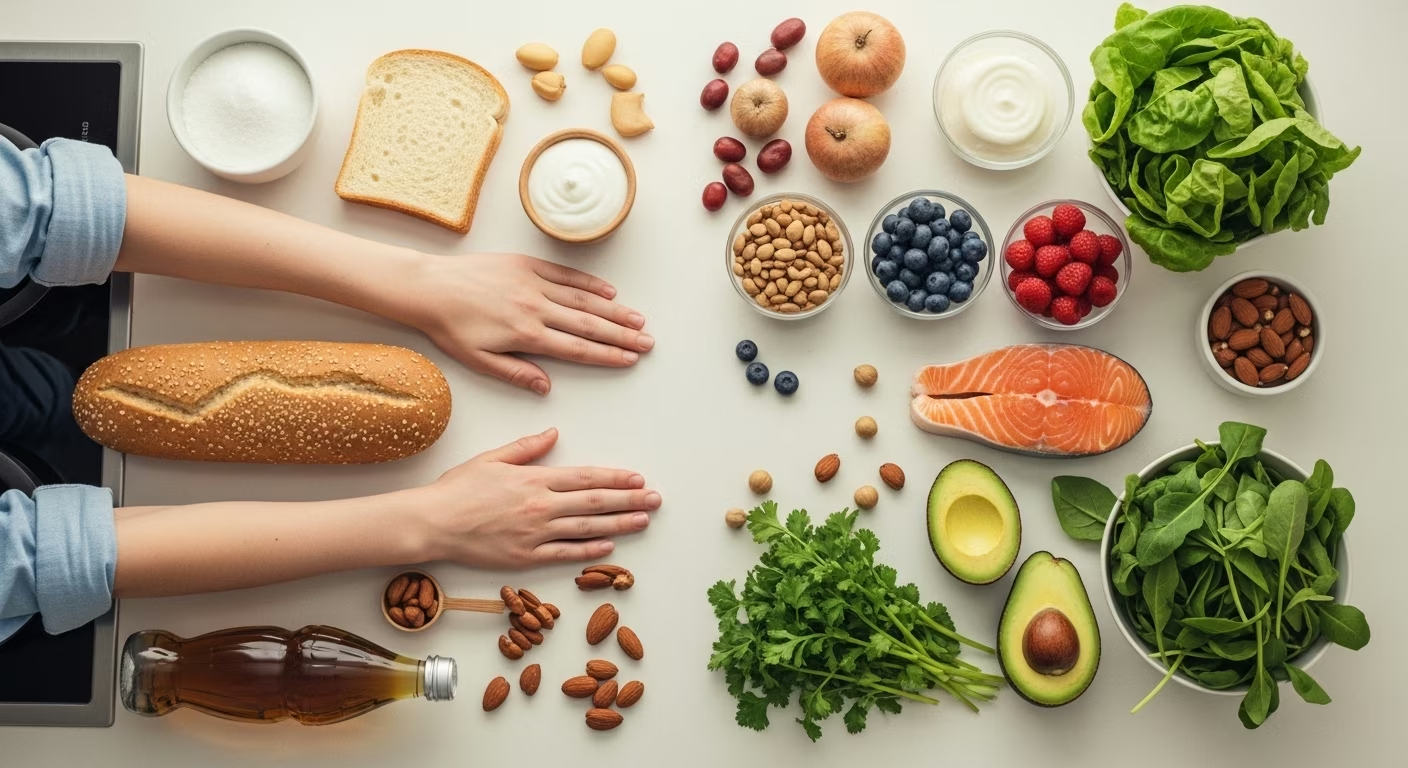
Because insulin resistance is part of the picture, the carbohydrate choices that matter most are the refined, quickly absorbed ones, such as sweetened drinks, white bread, pastries, and desserts consumed on an empty stomach. Whole-food carbohydrates like beans, lentils, intact grains, fruit, and vegetables are not the problem and often help. The goal is blood sugar stability, not carbohydrate elimination.
Walk Daily, Ideally Outside
Walking gets dismissed as too gentle to matter, but 30 to 45 minutes of daily walking does something strength training cannot: it keeps insulin sensitivity high throughout the day. A 10 to 15 minute walk after dinner reliably blunts the post-meal blood sugar spike that otherwise pushes calories toward abdominal fat storage. Add morning daylight to the walk and you also support the circadian rhythm that influences cortisol and sleep.
Targeted Botanical Support
For women whose sleep and stress response are clearly dysregulated, a handful of botanicals have supporting evidence. Ashwagandha has been shown to reduce cortisol and improve perceived stress (Chandrasekhar and colleagues, 2012, Indian Journal of Psychological Medicine). Black cohosh has the largest evidence base for vasomotor symptoms and indirectly helps by improving sleep (Leach and Moore, 2012, Cochrane Review). These are supportive players, not a replacement for strength training and protein, but they can close the loop for women whose symptoms keep cortisol elevated.
A well-formulated menopause supplement can take the guesswork out of stacking individual botanicals. We have reviewed the options that target cortisol, sleep, and vasomotor symptoms together.
See our top menopause supplement picksHow to Measure Progress Without the Scale
Because body composition can improve while scale weight stays flat or even rises slightly, the scale is one of the least useful tools in this stage of life. A tape measure around the navel, taken first thing in the morning once a week under the same conditions, is a better single metric for meno belly. Waist-to-height ratio, meaning waist circumference divided by height, should ideally be below 0.5. Clothing fit, energy through the afternoon, and workout strength progressing from week to week are all more informative than the bathroom scale. If you are going to weigh, a weekly average rather than a daily reading smooths out the water retention fluctuations common in perimenopause.
A Realistic Weekly Template
- Two 30 to 45 minute strength sessions covering legs, pulls, pushes, and core.
- Three to five walks of 20 to 40 minutes, ideally outdoors for light exposure.
- Protein-forward breakfast every day, aiming for 25 to 35 grams.
- One evening a week without alcohol becoming most evenings over time.
- One consistent bedtime window that allows for 7 to 8 hours in bed.
- One rest day without structured exercise, but not without movement.
What Does Not Work for Meno Belly
- Spot reduction: there is no ab exercise that burns belly fat specifically.
- Extreme calorie restriction: it accelerates muscle loss and usually backfires.
- Detox teas and waist trainers: no mechanism, no evidence, sometimes harmful.
- Endless cardio without strength work: preserves fat, loses muscle.
- Ignoring sleep while chasing diet perfection: cortisol will undo the work.
The Perimenopause vs Postmenopause Distinction
It helps to know which stage you are in because the approach shifts slightly. In perimenopause, hormones fluctuate wildly from cycle to cycle, and belly fat often appears in waves alongside bloating, sleep disruption, and mood changes. Supporting blood sugar stability and sleep takes priority because the hormonal signal itself is unpredictable. In postmenopause, the hormonal environment is more stable but at a lower estrogen baseline, and the core intervention, strength training paired with adequate protein, becomes even more important because muscle is the most modifiable metabolic lever left. Women who build their training and eating habits in perimenopause typically have an easier time postmenopause because the muscle they are protecting during the transition is the muscle that will serve them for the next decade.
The Role of Sleep in a Flatter Midsection
Sleep is not a separate topic from weight in menopause; it is the same topic. One night of 5 hours of sleep produces measurably higher cortisol and worse insulin sensitivity the following day. Chronic short sleep, which is where many women in midlife quietly live, effectively puts the body in a low-grade stress state that defaults to abdominal fat storage. The most useful sleep interventions are usually the least exciting: a consistent bedtime within a 30 minute window, no alcohol within 3 hours of bed, a cool and dark bedroom, morning daylight exposure, and limited screens in the last hour of the day. For women whose sleep is being broken by night sweats specifically, treating the vasomotor symptoms, with botanicals, lifestyle changes, or hormone therapy, is a more efficient route to a flatter midsection than any diet tweak.
When to See a Doctor
Talk with your clinician if your waist circumference exceeds 35 inches, if you have a family history of type 2 diabetes or cardiovascular disease, or if you are gaining weight rapidly despite consistent habits. Ask for a fasting glucose, HbA1c, lipid panel, and ideally a fasting insulin. If hot flashes and night sweats are destroying your sleep, it is absolutely worth a conversation about whether menopausal hormone therapy is appropriate for you. Decades of updated evidence support its safety and benefit for many women under 60 or within 10 years of menopause.
The Bottom Line
Menopause belly fat is the visible result of estrogen decline, cortisol patterns, insulin resistance, and muscle loss working together. The encouraging part is that every one of those levers responds to the same short list of interventions: strength training, adequate protein, blood sugar stability, sleep protection, and targeted botanical or medical support where needed. You are not doing something wrong; your body changed the rules, and the playbook needs to change with it.
Frequently Asked Questions
Why does menopause cause belly fat specifically?
Declining estrogen shifts fat storage from hips and thighs toward the abdomen, and rising cortisol combined with insulin resistance amplifies that shift. The result is an increase in visceral fat, the deeper fat around the organs, even in women whose total weight is stable.
Can you lose meno belly without HRT?
Yes. Many women reduce visceral fat meaningfully with resistance training, adequate protein, sleep protection, and blood sugar stability. HRT can make the process easier for women with severe vasomotor symptoms, but it is not required.
How long does it take to see results?
Body composition changes slowly. Expect meaningful change in waist measurement around 8 to 12 weeks of consistent strength training and nutrition. The scale may move very little while the midsection shrinks because muscle is being added as fat is lost.
Is menopause belly fat dangerous?
Visceral fat is metabolically active and is associated with higher risk of cardiovascular disease, insulin resistance, and type 2 diabetes. That is why it is worth addressing, beyond any cosmetic concern.
Do crunches get rid of meno belly?
No. Spot reduction is not physiologically possible. Core exercises strengthen abdominal muscles, which is valuable for posture and back health, but they do not burn the fat sitting over or behind them.
What is the single most important change to make first?
If you are not strength training, start there. Two short resistance sessions per week do more for menopausal body composition than almost any other single change, and they improve insulin sensitivity at the same time.
Get honest health tips & reviews
Join our newsletter for science-backed supplement reviews and wellness advice.
No spam. Unsubscribe anytime.