
Provitalize is one of the most recognizable names in menopause supplements, and the pitch (probiotics for midlife weight) has a real mechanism behind it. What buyers often discover after a few months is that the formula is narrower than their symptom picture. Provitalize is a probiotic-plus-turmeric-plus-moringa blend, and for women dealing with hot flashes, sleep disruption, cortisol-driven belly fat, or mood changes, there is simply not enough in the bottle to cover the terrain. This guide walks through five better-rounded Provitalize alternatives for 2026, ranked by how completely they address the full menopause symptom set.
What Provitalize Actually Contains
Provitalize is built around three probiotic strains (Lactobacillus gasseri, Bifidobacterium breve, and Bifidobacterium lactis), combined with turmeric, moringa leaf, curry leaf, lemon balm, and a small amount of bioperine. The hero strain is L. gasseri, and it is there because of a respected body of research (most notably Kadooka and colleagues, 2013, European Journal of Clinical Nutrition) showing reductions in visceral fat when L. gasseri was consumed daily over 12 weeks.
That research is real. The problem is scope. Menopause is not primarily a gut microbiome problem. It is a hormonal transition that drives hot flashes, night sweats, mood shifts, sleep disruption, cortisol elevation, and, downstream of all of that, weight redistribution. A probiotic formula can be part of a menopause plan, but building the whole plan around it is asking one tool to do the job of several.
How I Ranked the Alternatives
For this list, I evaluated each alternative on four criteria: breadth of symptom coverage, strength of ingredient evidence, dosing at clinically studied levels (rather than sprinkle doses in a proprietary blend), and transparency of the label. The goal is not to bash Provitalize, which is a legitimate product for its stated purpose. The goal is to match the woman whose symptoms extend beyond visceral fat with a formula that actually addresses them.
1. MenoRescue: The Most Complete Alternative
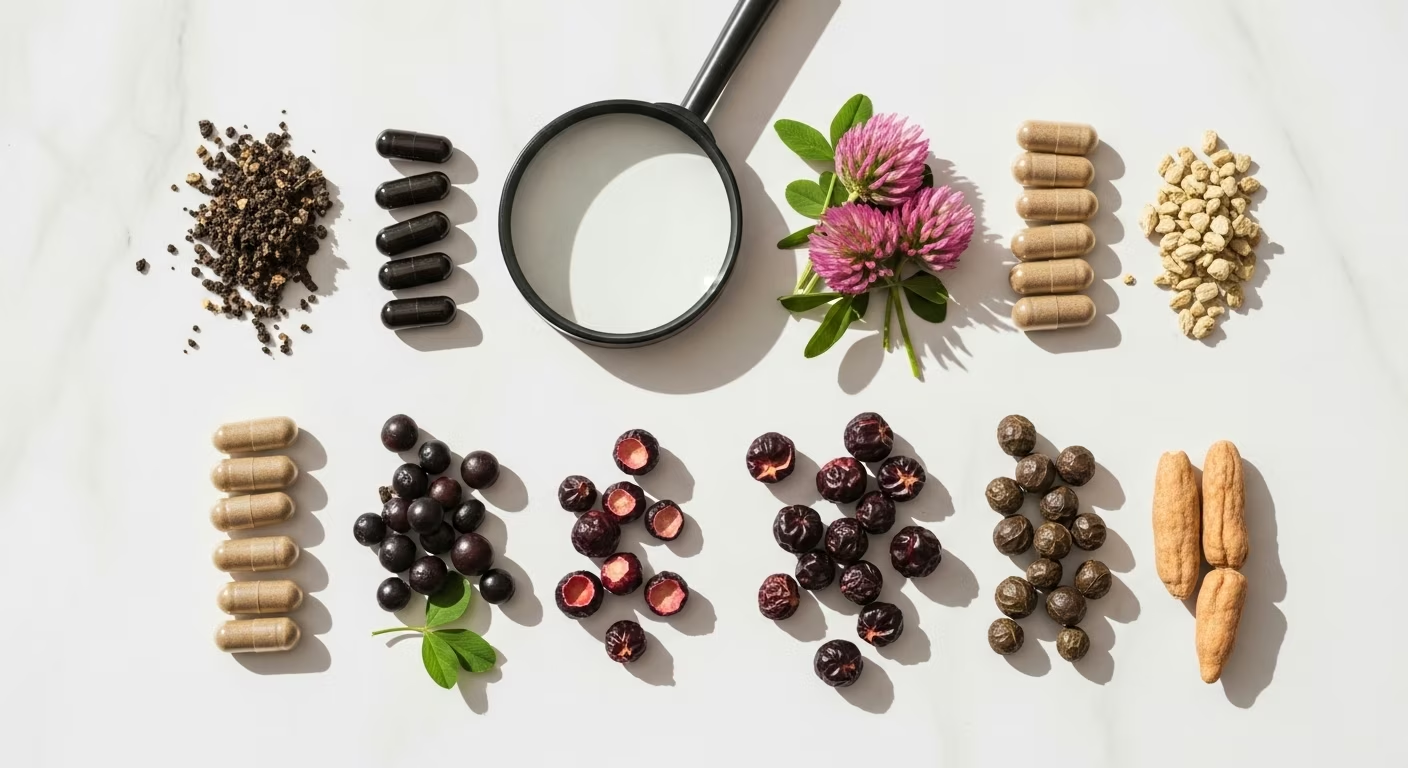
MenoRescue sits at the top of this list because it is formulated around the cortisol-vasomotor-sleep axis that drives the majority of menopause complaints. The core ingredient stack includes ashwagandha (clinically shown to reduce cortisol; Chandrasekhar 2012, Indian Journal of Psychological Medicine), black cohosh (Cochrane-supported for vasomotor symptoms), sage, chasteberry (vitex), red clover, and rhodiola, alongside a sensible B-vitamin base.
Where Provitalize addresses weight through the gut, MenoRescue addresses weight through the cortisol and sleep pathway, which is a closer match for the mechanism driving meno belly. It also covers hot flashes, night sweats, mood, and sleep in the same capsule, which is what most women actually need. The label is transparent about doses, and the pricing on subscription puts it in the same monthly range as Provitalize.
If you are weighing MenoRescue against Provitalize specifically, we did a side-by-side ingredient analysis covering dose, mechanism, and symptom coverage.
Read the full MenoRescue vs Provitalize comparison2. Happy Mammoth Hormone Harmony
Hormone Harmony takes a herbal-and-adaptogen approach and throws a wide net. The formula includes ashwagandha, rhodiola, chasteberry, American ginseng, maca, and a cluster of mushroom extracts. It is a reasonable alternative for women who are more interested in mood, stress, and hormone-pattern support than in probiotics or direct vasomotor intervention.
The tradeoff is that the formula uses a proprietary blend, which obscures the exact dose of each ingredient. That is less rigorous than MenoRescue's transparent labeling, though the underlying ingredient choices are defensible. Price sits on the higher end of the category.
3. Estroven Complete Multi-Symptom Menopause Relief
Estroven is the drugstore option, which has its own advantages: it is widely available, inexpensive, and straightforward. The Complete formula pairs black cohosh and soy isoflavones (for vasomotor symptoms) with a modest multivitamin. For women whose symptoms are primarily hot flashes and who want a lower-commitment trial, it is a reasonable starting point.
The limitations are the flip side of its simplicity: no cortisol-targeting adaptogen, no sleep-specific support, and no chasteberry for perimenopausal cycle issues. If symptoms are purely vasomotor, fine. For anything broader, you will outgrow it.
4. Amberen
Amberen takes a different angle, using a non-herbal complex of amino acids, minerals, and vitamin E positioned as 'hypothalamic support.' The mechanism claims are less well established in independent literature than black cohosh or ashwagandha, and the ingredient list is shorter on the botanical side.
It is a reasonable choice for women who specifically do not want phytoestrogens or herbal extracts (for instance, some women on hormone-sensitive cancer follow-up, though that always warrants oncology input). For a broader alternative to Provitalize, the evidence-to-breadth ratio lands it in the middle of this list.
5. Remifemin
Remifemin is a single-ingredient product: a standardized black cohosh extract that has the largest body of clinical research of any menopause botanical. If you already know your main issue is hot flashes and night sweats and you want the best-evidenced single ingredient rather than a multi-ingredient formula, Remifemin is hard to beat on a cost-per-effect basis.
The obvious tradeoff is that it does only one thing. For women who also need cortisol support, sleep help, or perimenopausal cycle support, Remifemin will underdeliver, and stacking it with ashwagandha, magnesium, and a B-complex starts to look expensive compared with a comprehensive formula like MenoRescue.
Where Provitalize Actually Fits
None of this means Provitalize is a bad product. The L. gasseri research (Kadooka 2013) documented roughly 4 to 5 percent reductions in visceral fat over 12 weeks of daily consumption. That is a meaningful effect size in a clinical trial and translates to a modest but real benefit for the right user. The right user is probably a woman who has already addressed her hot flashes and sleep, is training consistently, is eating well, and wants a targeted probiotic layer. As a standalone menopause supplement for a symptomatic woman who has not yet dealt with cortisol, vasomotor symptoms, or sleep, it is an undersized tool.
A Closer Look at the Ingredient Gaps
When I audit menopause supplements side by side, the recurring gaps in narrower formulas like Provitalize show up in predictable places. The first is cortisol: without ashwagandha, rhodiola, or a comparable adaptogen at a clinical dose, the HPA axis is untouched, and sleep and belly fat remain stubborn. The second is vasomotor: without black cohosh or a standardized isoflavone source, hot flashes are not directly addressed. The third is sleep chemistry: magnesium glycinate, L-theanine, or a mild GABAergic ingredient can be the difference between nights that knit together and nights that fragment. The fourth is perimenopausal cycle support: chasteberry is the main evidence-backed option here, and it is absent from most probiotic-forward formulas. A complete menopause formula does not need to include all of these, but it should cover the subset that matches the user's symptom picture. This is why I keep recommending MenoRescue at the top of this list: it genuinely covers cortisol, vasomotor, and sleep within a single capsule rather than forcing the user to stack.
How to Pick Between These Five
- If you want the most complete formula for cortisol, hot flashes, sleep, and mood in one capsule: MenoRescue.
- If you want broad herbal coverage and are comfortable with a proprietary blend: Happy Mammoth Hormone Harmony.
- If you want a drugstore option focused purely on hot flashes: Estroven Complete.
- If you specifically avoid phytoestrogens or herbal extracts: Amberen.
- If hot flashes are your only symptom and you want the best-evidenced single ingredient: Remifemin.
Safety Considerations When Switching Products
A few practical notes before you switch from Provitalize to one of these alternatives. First, if you are taking any medication that interacts with botanicals (tamoxifen, blood thinners, thyroid medication, dopamine-affecting drugs), clear the new product with your prescriber. Second, give the new product at least 8 to 12 weeks before deciding whether it is working; the same rule of patience that applies to Provitalize applies to its alternatives. Third, if you are genuinely responding well to Provitalize on some symptoms and want the broader coverage, it is usually safe to stack it with a non-probiotic formula like MenoRescue, since the mechanisms do not overlap. I would not stack two botanical-heavy formulas without checking for duplicate ingredients.
What No Supplement Will Do Alone
This section is the quiet truth behind every menopause supplement list, including this one. No product, Provitalize or its alternatives, will outperform a baseline of strength training twice a week, 25 to 35 grams of protein per meal, consistent sleep, and limited alcohol. The formulas on this list make that plan easier to execute by softening the symptoms that get in the way. They are the accelerant, not the foundation. Any product that promises otherwise is selling a feeling rather than a result.
The Bottom Line
Provitalize does one thing, and it does it backed by respectable research. If your menopause picture extends beyond visceral fat, as it does for most women, you are better served by a broader formula. MenoRescue is the most complete alternative in the 2026 market, Happy Mammoth Hormone Harmony is a reasonable runner-up, and Estroven, Amberen, and Remifemin each fit narrower use cases. Match the formula to the symptom picture, give it 8 to 12 weeks, and pair whichever you choose with the lifestyle basics that do the heavier lifting. We break that runner-up down ingredient by ingredient in our MenoRescue vs Hormone Harmony comparison.
Frequently Asked Questions
Is MenoRescue actually better than Provitalize?
For most women with a full menopause symptom picture, yes, because MenoRescue addresses cortisol, vasomotor symptoms, sleep, and mood in one formula, while Provitalize is a narrower probiotic-focused product. For a woman whose only concern is visceral fat and who is already on top of other symptoms, Provitalize is a reasonable narrower tool.
Can I take Provitalize and a broader formula at the same time?
Usually yes, because Provitalize's probiotic mechanism does not duplicate a cortisol and vasomotor-focused formula like MenoRescue. Check the labels to avoid stacking duplicate ingredients (like turmeric) at very high doses, and introduce one product at a time so you can tell what is doing what.
Does L. gasseri really reduce belly fat?
The Kadooka 2013 trial in the European Journal of Clinical Nutrition documented about 4 to 5 percent reductions in visceral fat over 12 weeks of daily L. gasseri consumption. The effect is real but modest, and the strain was used at a specific dose alongside a standardized dairy product, which is not identical to every capsule on the market.
Is Provitalize a scam?
No. It has real ingredients with real research behind the hero strain. The issue is scope, not legitimacy. A woman with broader menopause symptoms will often feel that Provitalize underdelivers because the formula was not built to cover those symptoms in the first place.
How long before I can evaluate a new menopause supplement?
Plan on 8 to 12 weeks of consistent daily use before judging. Botanical and probiotic effects build gradually, and shorter trials often miss benefits that only show up after hormonal and microbial systems have had time to shift.
Should I just take black cohosh by itself?
If hot flashes are genuinely your only symptom, a standardized black cohosh product like Remifemin is evidence-backed and inexpensive. Most perimenopausal and menopausal women have more than one symptom, though, and in that case a comprehensive formula tends to be simpler and cheaper than buying three or four single-ingredient bottles.
Get honest health tips & reviews
Join our newsletter for science-backed supplement reviews and wellness advice.
No spam. Unsubscribe anytime.