
If you have looked at more than one menopause supplement label in the last two years, you have seen ashwagandha. The ingredient has moved from niche adaptogen to mainstream staple, and the reason is straightforward: women in perimenopause and postmenopause are often dealing with a nervous system stuck in high gear. Ashwagandha has meaningful human evidence for lowering cortisol, improving sleep, and blunting the physiological stress response. What it is not is a direct estrogen replacement or a pure hot flash remedy. Knowing the difference is the difference between a supplement that helps and one that disappoints.
What Ashwagandha Is and How It Works
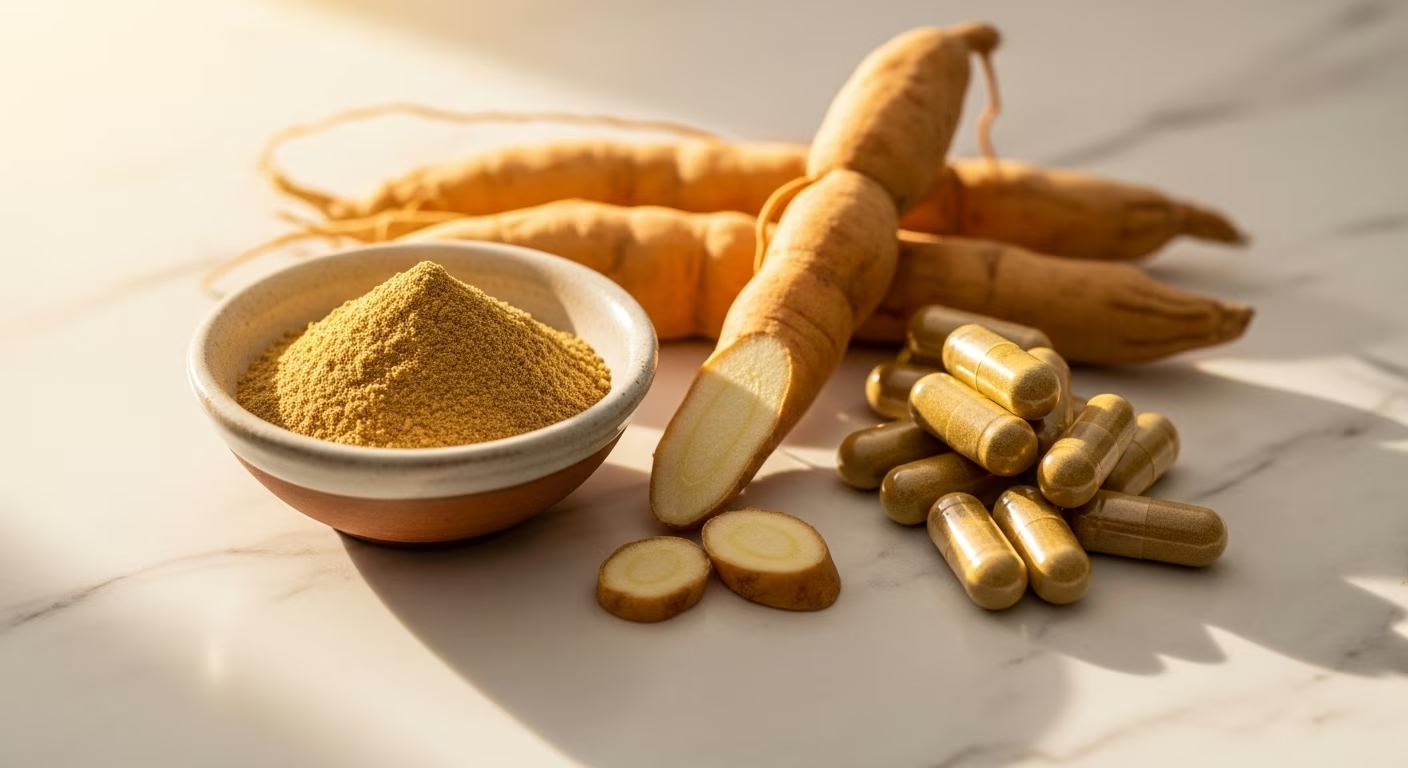
Ashwagandha (Withania somnifera) is a root used for centuries in Ayurvedic medicine and classified pharmacologically as an adaptogen, meaning a compound that helps the body modulate its response to stress. The active constituents are a family of steroidal lactones called withanolides, concentrated in the root and, in some extracts, the leaf. The most researched standardized extracts in human trials are KSM-66 (a root-only extract) and Sensoril (a root-and-leaf extract), and those are the forms that show up in the better menopause formulas.
Mechanistically, ashwagandha appears to dampen activity along the hypothalamic-pituitary-adrenal axis, the feedback loop that drives cortisol output. It also interacts with GABA receptors, which partially explains its sleep and anxiety-calming effects. For women in the menopausal transition, whose cortisol is often chronically elevated and whose sleep is fragmented by night sweats and anxiety, that mechanism maps directly onto the symptoms that matter.
The Research on Ashwagandha
Cortisol Reduction in Chronically Stressed Adults
The most cited study is Chandrasekhar and colleagues (2012, Indian Journal of Psychological Medicine), a double-blind placebo-controlled trial in 64 adults with chronic stress. Participants taking 300 mg of a full-spectrum root extract twice daily for 60 days showed a 27.9 percent reduction in serum cortisol compared with placebo, alongside significant improvements in perceived stress and anxiety scores. For menopausal women whose belly fat and sleep disruption are partly cortisol-driven, that magnitude of effect is clinically meaningful.
Stress Resilience and Anxiety
Auddy and colleagues (2008) examined the Sensoril extract in a stressed adult population and reported reductions in cortisol alongside improvements in fatigue, sleep, and overall quality of life. A later trial by Lopresti and colleagues (2019, Medicine journal) tested 240 mg daily of a standardized extract over 60 days and found significant reductions in cortisol and DHEA-S dysregulation along with lower scores on the Hamilton anxiety scale. Wankhede and colleagues (2015) added evidence on stress resilience, showing improved recovery from physical and psychological stressors.
Sleep Quality
Separate trials of ashwagandha have shown improvements in sleep onset latency and perceived sleep quality, particularly in adults with mild insomnia. For women whose menopausal sleep problems are driven by a racing mind and anxious wake-ups (as opposed to physical night sweats alone), this is the most relevant endpoint. The effect is not sedating like a sleeping pill; it is a downshift in sympathetic nervous system activity that makes sleep easier to fall into and maintain.
Hot Flashes: A Modest Indirect Effect
This is where expectations need calibrating. Ashwagandha is not a primary hot flash treatment in the way black cohosh or low-dose estrogen are. It does not act on estrogen receptors, and the trials specifically measuring vasomotor symptoms with ashwagandha as a standalone are small. What it does is lower the underlying stress reactivity that amplifies hot flashes. Because the vasomotor response is partially triggered by sympathetic nervous system activation (Freedman 2014, Autonomic Neuroscience), calming that system often reduces hot flash intensity even if frequency does not change dramatically. Women in my practice who add ashwagandha typically describe hot flashes as less intense rather than absent.
When Ashwagandha Makes Sense in Menopause
Ashwagandha is most useful for the menopausal woman whose symptom picture is weighted toward stress, anxiety, and fragmented sleep. If your perimenopause or postmenopause feels like a constantly buzzing nervous system, if you are waking at 3 a.m. with your mind racing, if your shoulders live by your ears, or if the belly fat has arrived alongside a feeling of being permanently wired, this is a botanical that targets the underlying physiology.
It is less useful as a standalone for women whose primary complaint is purely hot flashes without stress or sleep involvement. For that picture, black cohosh has the stronger evidence base. The two work well together because they address different mechanisms, and this is why a handful of the better-formulated menopause supplements combine them.
Rather than buying ashwagandha, black cohosh, and sleep support as separate bottles, a clinically formulated menopause supplement can stack the evidence-based ingredients at their tested doses in one place.
See our top menopause supplement picksDosage and Form
The doses used in the most rigorous trials sit between 240 and 600 mg per day of a standardized extract, either taken once daily or split into two doses. KSM-66 is typically dosed at 300 mg twice daily; Sensoril is typically dosed at 125 to 250 mg daily and uses a lower dose because it is a more concentrated extract. Raw powdered root capsules usually require higher doses (around 1,000 to 2,000 mg) to match the standardized extract effect, and the quality control is more variable.
Timing can matter. Many women notice better sleep effects when ashwagandha is taken in the evening, particularly if the dose is split. For women whose main issue is daytime stress and afternoon cortisol, morning dosing works. If you are trying ashwagandha for the first time, starting at the lower end of the dose range for two weeks is prudent, then adjusting up if needed.
Safety, Side Effects, and When to Avoid
Ashwagandha has a strong safety record in studies lasting up to 12 weeks. The most common side effects are mild gastrointestinal upset, drowsiness at higher doses, and, rarely, headache. There are three specific contraindications to know about.
- Thyroid conditions: ashwagandha can raise thyroid hormone levels. Women on levothyroxine or with hyperthyroidism should not use it without medical supervision.
- Autoimmune conditions: because ashwagandha can stimulate immune activity, women with lupus, rheumatoid arthritis, or Hashimoto's should consult their clinician first.
- Sedative medications: the mild GABAergic effect means ashwagandha can amplify benzodiazepines, sleep medications, or alcohol. Stacking is not advised.
Ashwagandha is in the nightshade family, and a small number of people with nightshade sensitivity will not tolerate it. Pregnancy and breastfeeding are not relevant windows for most menopausal women, but it is worth noting that ashwagandha is contraindicated in pregnancy. Rare cases of liver enzyme elevation have been reported with very high doses or poor-quality products, which is another argument for using a clinically standardized extract rather than a bulk powder of uncertain origin.
Ashwagandha Versus Other Adaptogens
Adaptogens are not interchangeable, and understanding the differences saves money and disappointment. Rhodiola is more stimulating than ashwagandha and is better suited to daytime fatigue and cognitive fog than to sleep; some women find it too activating in the evening. Holy basil (tulsi) has mild cortisol-lowering effects and is gentle enough for daily use but is less well studied than ashwagandha at clinically meaningful doses. Eleuthero (Siberian ginseng) supports physical stamina but does not have the same cortisol-specific evidence. For the menopausal symptom picture (cortisol elevation, sleep fragmentation, and stress reactivity), ashwagandha remains the best-evidenced single choice, though rhodiola and holy basil can complement it in specific situations.
How to Stack Ashwagandha with Other Menopause Support
Ashwagandha pairs naturally with several other interventions that address the same stress-sleep-cortisol loop. Magnesium glycinate (200 to 400 mg in the evening) supports sleep through a different mechanism and is rarely duplicative. Black cohosh, at 40 to 80 mg of a standardized extract, addresses vasomotor symptoms more directly. L-theanine at 100 to 200 mg adds a daytime calm without sedation. What does not stack well is piling ashwagandha on top of multiple other sedating or adaptogenic products; you can end up feeling flat rather than calm. More is not better past the clinically tested dose.
What Realistic Results Look Like
Most women who respond to ashwagandha notice it somewhere between two and six weeks of consistent use. The first things to shift are usually sleep quality and a reduction in the 'tired but wired' feeling in the evenings. Anxiety softens, and resilience to daily stressors improves. Cortisol-related symptoms like midsection fat and sugar cravings shift more slowly and rarely on ashwagandha alone; they need the supporting pieces of protein, strength training, and blood sugar stability.
If you see no change after eight weeks at a proper dose of a standardized extract, ashwagandha is probably not your answer, and the symptom picture may be driven more by estrogen itself (better addressed with black cohosh or, for appropriate candidates, hormone therapy) or by sleep apnea, thyroid dysfunction, or iron deficiency. Persistent menopausal symptoms are always worth a full workup rather than stacking more supplements.
Common Mistakes Women Make with Ashwagandha
- Using it for too short a window: two weeks is rarely enough. Plan on at least six to eight weeks at a consistent daily dose before judging results.
- Buying a bulk unstandardized powder and assuming it matches the trial doses: the withanolide content varies widely, and clinically studied extracts (KSM-66, Sensoril) are the more reliable path.
- Stacking it on top of a sleeping pill, alcohol, or multiple sedating supplements: the additive effect can leave women feeling flat or groggy rather than calm.
- Expecting it to directly eliminate hot flashes: ashwagandha softens the stress response that amplifies them but is not a primary vasomotor treatment.
- Skipping it on weekends or 'bad' days: adaptogens work through consistent exposure, not acute dosing. Missing three days a week erodes the benefit.
The Bottom Line
Ashwagandha is one of the best-evidenced adaptogens for the cortisol-driven dimension of menopause. It is not a replacement for estrogen, it is not the strongest hot flash intervention on its own, and it is not for women with thyroid or autoimmune issues without medical oversight. Within those limits, it is a quiet workhorse that can reliably take the edge off stress, improve sleep, and make the rest of the menopause plan easier to execute.
Frequently Asked Questions
How long does ashwagandha take to work for menopause symptoms?
Most women notice sleep and stress improvements within two to six weeks at a standardized dose of 300 to 600 mg daily. Cortisol-driven effects like belly fat and sugar cravings shift more slowly and require the broader lifestyle plan.
Is ashwagandha safe to take with HRT?
There is no known direct interaction between ashwagandha and estrogen or progesterone therapy, and many women use them together without issue. That said, any supplement layered onto HRT is worth running by the prescribing clinician, especially if thyroid function is being monitored.
KSM-66 or Sensoril: which is better for menopause?
Both have solid evidence. KSM-66 is root-only and has the broadest trial base, including for cortisol reduction. Sensoril is a more concentrated extract and tends to have stronger calming and sleep effects at lower doses. If sleep is the main issue, Sensoril in the evening is a reasonable first pick.
Can ashwagandha cause weight gain?
Ashwagandha itself does not cause weight gain. A very small number of users report increased appetite, and at high doses it can be mildly sedating, which can reduce activity. Most women using it for cortisol regulation see neutral or slightly favorable effects on body composition.
Do I need to cycle ashwagandha?
The trial data extends to about 12 weeks of continuous use without safety concerns. Beyond that, some clinicians recommend taking a one to two week break every three months to see whether ongoing use is still producing benefit, though this is a precaution rather than a strict requirement.
Does ashwagandha help with hot flashes?
Indirectly. It does not act on estrogen receptors, but by lowering stress reactivity and improving sleep, it typically reduces hot flash intensity and the distress they cause. For frequency reduction, pair it with black cohosh or discuss hormone therapy with your clinician.
Get honest health tips & reviews
Join our newsletter for science-backed supplement reviews and wellness advice.
No spam. Unsubscribe anytime.