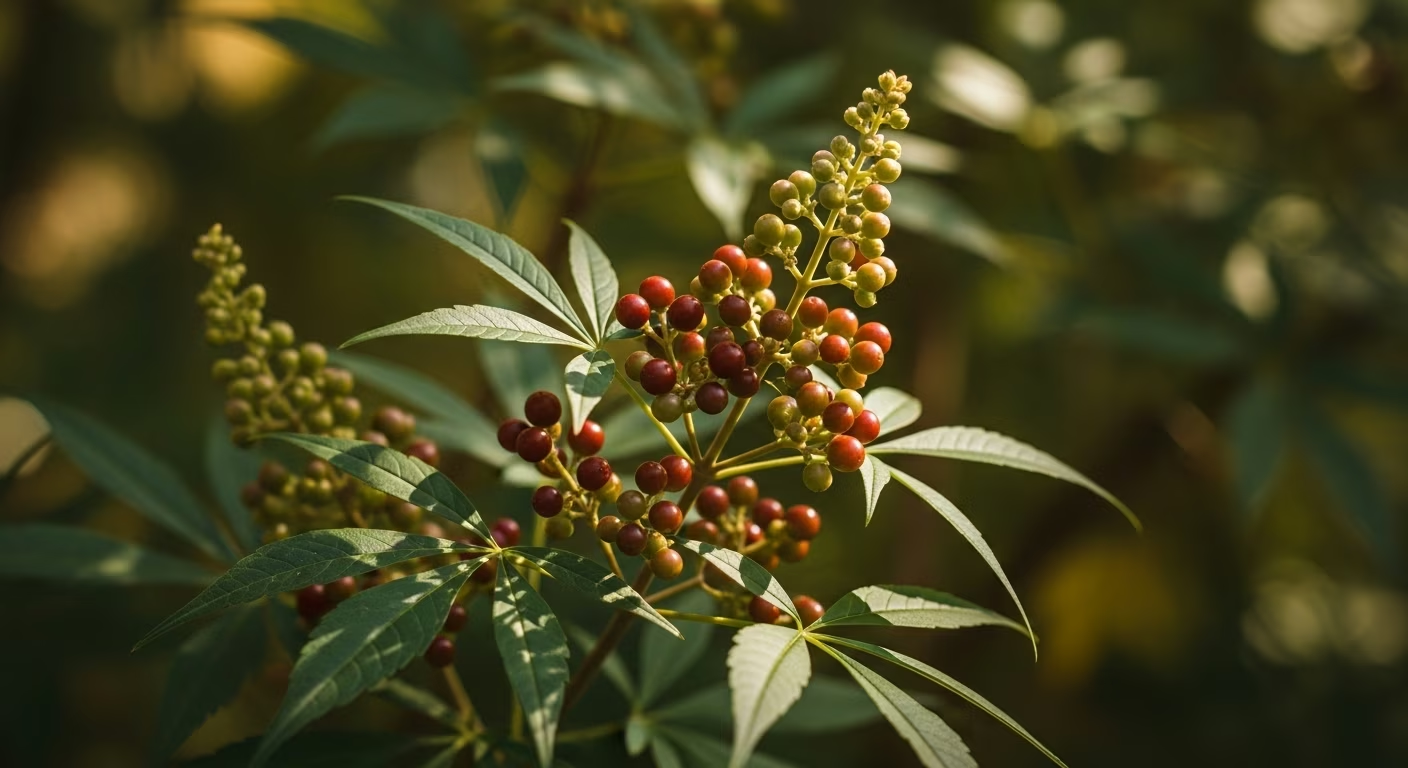

Chasteberry, also called vitex or Vitex agnus-castus, has been a staple of European phytomedicine for cycle and hormone support for decades. It is better known for premenstrual syndrome and irregular cycles than for menopause, but a surprising number of women land on it during perimenopause because the symptom picture overlaps: irregular periods, breast tenderness, mood swings, and sleep disruption. The honest answer to 'does chasteberry help with menopause?' depends on which stage of menopause you are in, and what symptoms you are actually trying to shift.
What Chasteberry Is and How It Works
Chasteberry is the dried fruit of the Vitex agnus-castus tree, native to the Mediterranean. Unlike black cohosh or soy isoflavones, it does not contain phytoestrogens. It works upstream, at the level of the pituitary gland, where it appears to bind to dopamine D2 receptors and lower prolactin secretion. Lower prolactin in turn allows for a more normal progesterone response in the second half of the cycle, which is why chasteberry is classically used for luteal phase defects, PMS, and cycle irregularity.
The implication for perimenopause is important. In early and mid-perimenopause, progesterone typically drops before estrogen does, which is part of why cycles shorten, breasts become tender, and sleep becomes lighter. Anything that supports a more robust luteal phase can soften those symptoms. Chasteberry is one of the few botanicals that acts on this specific axis rather than trying to substitute for declining estrogen.
The Research on Vitex
The Foundational Safety Review
Daniele and colleagues (2005, Drug Safety) published a systematic review of adverse events and drug interactions for vitex across the preceding two decades. Their conclusion was that chasteberry is well tolerated, with side effects occurring in fewer than 5 percent of users and mostly limited to mild gastrointestinal upset, skin reactions, and headache. The review established vitex as one of the better-documented botanicals in women's health, even if the efficacy trials were largely concentrated in PMS and cyclical complaints rather than menopause.
Premenstrual Syndrome and Cycle Regulation
Webster and colleagues (2005, Journal of Reproductive Medicine) conducted a randomized placebo-controlled trial of a vitex extract in women with PMS and found statistically significant reductions in irritability, mood alteration, anger, headache, and breast tenderness. Because perimenopausal symptom flares often mimic an amplified PMS pattern (what many women describe as 'PMS from hell'), this data extrapolates reasonably well to early perimenopause, where cycles still exist but have become erratic.
Menopausal Symptoms Specifically
van Die and colleagues (2013, Planta Medica) reviewed the broader evidence base for vitex, including trials extending into peri- and postmenopausal populations. Their findings were mixed: benefits were clearest for cyclical, luteal-phase-related symptoms and less consistent for core menopausal endpoints like hot flashes and night sweats. This is a consistent pattern across the literature. Vitex helps where progesterone support is the underlying need and underperforms where estrogen decline is the main driver.
Breast Tenderness (Mastalgia)
One of the more reproducible findings is reduction in cyclical breast tenderness, which is a common perimenopausal complaint driven by the estrogen-to-progesterone ratio. Several trials have shown meaningful reductions in mastalgia scores with vitex extracts over two to three cycles, likely through the prolactin-lowering mechanism. For women whose perimenopause symptom picture is heavy on breast tenderness, vitex is one of the more evidence-supported single-ingredient options.
When Vitex Makes Sense in Perimenopause
In my practice, I consider chasteberry when a woman in her late 30s or 40s presents with the following constellation: still cycling but with shortened or irregular cycles, worsening PMS, breast tenderness, sleep disruption that tracks with the luteal phase, and mood shifts that feel cyclical rather than constant. That is classic early-perimenopausal progesterone decline, and it is the mechanism vitex is best suited to address.
It is less useful once a woman is clearly postmenopausal (12 consecutive months without a period) and the complaint is hot flashes, vaginal dryness, or bone density. For that stage, the hormonal landscape has changed, and tools that address estrogen decline directly (black cohosh, soy isoflavones, or hormone therapy) are better aligned. Vitex is also not a stress, anxiety, or cortisol tool the way ashwagandha is, even though the symptom overlap can make them look similar on the surface.
Perimenopause often needs a layered approach because symptoms move through different hormonal windows. A comprehensive menopause formula can cover the bases without stacking five individual bottles.
Compare our top menopause supplement picksDosage and Form
The doses used in clinical trials generally fall between 20 and 40 mg per day of a standardized extract, though some studies have gone up to 160 mg of dried berry extract. The extracts used most often in research are Ze 440 (from Europe) and BNO 1095. Tincture-based products exist but are harder to standardize; capsule or tablet forms with a declared extract strength are more reliable.
Vitex is typically taken once a day in the morning, ideally on an empty stomach. It is a slow-acting botanical. Most trials report that benefits accumulate over two to three menstrual cycles, which means perimenopausal women should plan on a minimum of 90 days before deciding whether it is working. Starting and stopping vitex in a two or three week window rarely demonstrates its value.
Safety, Side Effects, and When to Avoid
Vitex has a reassuring safety profile for a botanical with this much history of use. Side effects are uncommon and usually mild, including occasional nausea, headache, acne, and menstrual cycle changes in the first one or two months as the hormonal pattern adjusts. Specific situations warrant avoiding chasteberry.
- Hormonal contraception: vitex may reduce the effectiveness of the combined oral contraceptive pill through its effect on the pituitary. Women still relying on the pill for birth control should not combine them.
- Dopamine-affecting medications: because vitex acts on dopamine receptors, it is contraindicated with antipsychotics, Parkinson's medications, and some antidepressants that affect dopamine.
- Estrogen-sensitive cancers: while vitex is not phytoestrogenic, the shift in prolactin and progesterone warrants caution. Women with a history of breast cancer or on tamoxifen should not take it without oncology input.
- Pregnancy and breastfeeding: not recommended, as vitex can affect prolactin and milk supply.
- Pituitary disorders: conditions like hyperprolactinemia should be evaluated and managed by an endocrinologist, not self-treated with vitex.
Vitex Compared with Other Perimenopause Botanicals
The perimenopause supplement aisle is crowded with botanicals that sound similar but work through different mechanisms. Vitex acts on prolactin and progesterone through the pituitary. Black cohosh works on vasomotor symptoms through a non-estrogenic central pathway and is more relevant later in the transition when hot flashes begin. Soy isoflavones and red clover supply phytoestrogens that weakly occupy estrogen receptors; these are better suited to mid and late perimenopause when estrogen has started to decline. DIM (diindolylmethane) affects estrogen metabolism but does not raise or lower progesterone. Maca is a hormone-neutral adaptogen with evidence for energy and libido but not for cycle support. If the complaint is luteal-phase-dominated (PMS amplification, breast tenderness, shortened cycles), vitex is the best match. If the complaint is estrogen-decline-dominated (hot flashes, vaginal dryness), the others serve better.
How Vitex Fits with Other Menopause Support
Vitex can sit alongside magnesium, B-complex vitamins, and targeted sleep support without overlap. It does not duplicate ashwagandha (which addresses cortisol and the stress axis) or black cohosh (which acts primarily on vasomotor symptoms through a non-estrogenic mechanism). In practice, the most useful pairings I see are vitex plus magnesium glycinate for luteal-phase sleep issues, or vitex plus B6 for PMS-flavored mood symptoms in perimenopause. Stacking vitex with a full-spectrum menopause formula can work, but check whether the formula already contains it to avoid double-dosing.
Common Mistakes with Chasteberry
- Quitting at four weeks: the botanical works across cycles, not days. Ninety days is the honest minimum before judging.
- Using it alongside hormonal contraception: the pill suppresses the axis vitex is trying to modulate, and the combination can reduce contraceptive reliability.
- Expecting it to fix hot flashes: vitex is a progesterone-axis tool, not an estrogen-decline tool.
- Using low-quality tincture products without standardization: potency varies widely, and a 40 mg standardized extract is not the same as 40 drops of a homemade tincture.
- Stacking vitex with multiple other cycle-modifying herbs at the same time: it becomes impossible to tell which is helping, and interactions are harder to trace if a problem appears.
What to Expect on Vitex
Realistic expectations matter with this one. The first month on vitex can feel unremarkable, or cycles may shift slightly as the pituitary-ovarian feedback loop adjusts. By cycle two or three, women who are going to respond typically notice reduced breast tenderness, steadier mood through the second half of the cycle, less severe PMS-like flares, and better sleep in the days leading up to a period. Hot flashes, if present, are usually not significantly affected. If there is no change by 90 days, it is reasonable to stop and look at the symptom picture again.
The Bottom Line
Chasteberry is not a universal menopause supplement. It is a targeted tool for the early and mid-perimenopausal window when progesterone is dropping, cycles are irregular, and PMS-type symptoms have intensified. Within that window it is well evidenced, well tolerated, and a sensible first botanical to try. Outside that window, the right tool is probably different, and that is a feature of good herbal medicine rather than a failure of vitex.
Frequently Asked Questions
Does chasteberry help with hot flashes?
Not directly. Vitex works through the prolactin and progesterone axis rather than estrogen, so it is not a strong hot flash remedy. Women whose main symptom is vasomotor will usually do better with black cohosh or, where appropriate, hormone therapy.
How long should I take chasteberry before deciding if it works?
Plan on a minimum of 90 days, which is about three menstrual cycles if you are still cycling. Vitex is a slow-acting botanical and stopping at the four-to-six-week mark usually sells it short.
Can I take chasteberry if I am postmenopausal?
It is generally less useful once cycles have stopped entirely. The mechanism relies on influencing the pituitary-ovarian feedback loop, which is no longer cycling in postmenopause. Other botanicals are better matched to that stage.
Can I take vitex with ashwagandha?
Yes. They work on different pathways (ashwagandha on cortisol and stress response, vitex on prolactin and progesterone) and do not duplicate each other. Many perimenopausal women take both, especially when symptoms span both cortisol-driven and cycle-driven categories.
Will chasteberry make my cycles more regular in perimenopause?
Often, yes, especially when the irregularity is driven by luteal phase shortening rather than anovulation. It is not a substitute for a medical evaluation if cycles are wildly irregular or if there is heavy bleeding; those warrant a clinician visit.
Is vitex the same as DIM or myo-inositol?
No. DIM is derived from cruciferous vegetables and affects estrogen metabolism. Myo-inositol is an insulin-sensitizing sugar alcohol used mainly for PCOS. Vitex is a separate botanical acting through the pituitary. They address different problems.
Get honest health tips & reviews
Join our newsletter for science-backed supplement reviews and wellness advice.
No spam. Unsubscribe anytime.