Head-to-Head Comparison · 2026
Joint Genesis vs JointVive (2026): Printed Doses or a Cheaper Dropper?
Joint Genesis vs JointVive: five ingredients with every amount printed against nine with none. We checked both against the osteoarthritis trials.
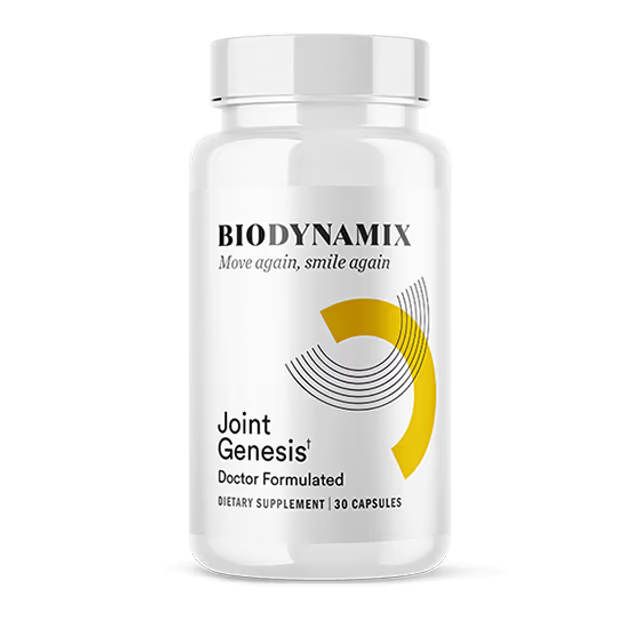
Joint Genesis
4.2/5
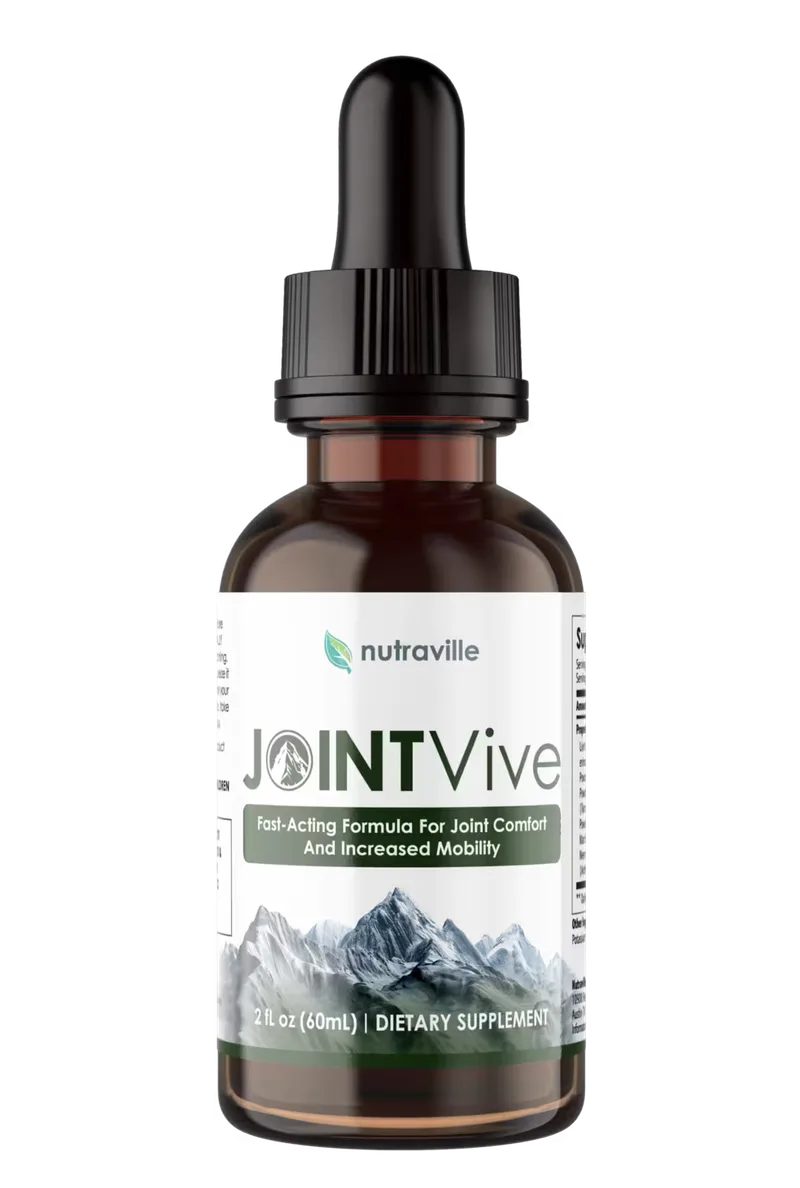
JointVive
3.9/5

In 60 seconds
Joint Genesis prints every amount — Mobilee hyaluronic acid 80 mg, Pycnogenol pine bark 100 mg, ginger 200 mg, Boswellia 150 mg, BioPerine 5 mg — and its pine bark and Boswellia amounts land where the published trials put them. JointVive publishes no amount for anything, including the pine bark its whole case rests on, and four of its nine ingredients have antioxidant research but no joint outcome while three are cognitive botanicals that also appear in the same company's memory formula. JointVive is cheaper ($29 against $39 at best bundle) with a longer guarantee (365 days against 180). Joint Genesis is the one you can actually check.
Joint Genesis approach
One capsule daily with a meal containing some fat. Mobilee hyaluronic acid matrix 80 mg, Pycnogenol (French maritime pine bark) 100 mg, ginger root extract 200 mg, Boswellia serrata extract 150 mg, BioPerine black pepper extract 5 mg. Every amount disclosed.
JointVive approach
One drop daily under the tongue or stirred into a drink; shake first, because the ingredients separate. Pine bark extract, tamarind, chlorella, spirulina, moringa, neem, ginkgo biloba, lion's mane and bacopa monnieri. No amounts disclosed for any ingredient.
The 60-Second Honest Take
These two take opposite bets on the same category. Joint Genesis is a one-capsule formula with five ingredients and every amount printed: Mobilee hyaluronic acid matrix 80 mg, Pycnogenol French maritime pine bark 100 mg, ginger root extract 200 mg, Boswellia serrata 150 mg, BioPerine 5 mg. Three of those five appear in the published joint literature at amounts close to what the label provides. JointVive is a sublingual drop with nine ingredients and no amounts printed for any of them. Its lead ingredient, pine bark, is the best-evidenced joint botanical there is. But four of the nine rest on general antioxidant research with no joint outcome, and three are cognitive botanicals that also appear in the same company's memory formula. Joint Genesis wins this one, and the reason is simple enough to state in a sentence: you can check its claims against the trials, and you cannot check JointVive's. That said, JointVive is a third of the price at its best bundle and comes with a 365-day guarantee against Joint Genesis's 180, which makes it the cheaper way to find out whether pine bark does anything for you.
What Joint Genesis Gets Right
It prints every amount. In a category where "proprietary blend" is the default, a five-line label with milligrams next to each entry is the single most useful thing a manufacturer can do. It lets you do the one check that matters. The pine bark amount matches the trials exactly. Pycnogenol was one of only seven supplements out of twenty to show large, clinically important short-term effects on pain in a systematic review of 69 osteoarthritis trials published in the British Journal of Sports Medicine (pubmed.ncbi.nlm.nih.gov/29018060). The trials behind that: 156 patients taking 100 mg a day for three months, where the overall WOMAC score fell 56% against 9.6% on placebo and treadmill walking distance went from 68 to 198 metres (pubmed.ncbi.nlm.nih.gov/18386255), and 100 patients taking 150 mg a day with significant improvement in WOMAC score and pain (pubmed.ncbi.nlm.nih.gov/18570266). Joint Genesis lists 100 mg. That is the trial dose, not a gesture toward it. One caveat worth naming: a researcher associated with the branded extract co-authored both trials. Boswellia at 150 mg is in the right territory too. A meta-analysis of seven trials covering 545 patients found Boswellia and its extracts reduced pain on a visual analogue scale by 8.33 points and WOMAC pain by 14.22 points against control, and recommended at least four weeks of use (pubmed.ncbi.nlm.nih.gov/32680575). The BJSM review placed Boswellia serrata extract in the same large-effect group as pine bark. The practical details are sound. One capsule a day with a meal containing some fat, a 180-day guarantee, and $39 a bottle against a $69 regular price. Six months is long enough to see the three-month separation the pine bark trials reported, with room to spare.
Where Joint Genesis Falls Short
Its headline ingredient has the weakest file in its own formula. Mobilee is the thing the marketing leads with, and oral hyaluronic acid is the thing with the least support. The closest trial we found used a hyaluronic-acid-rich extract at 80 mg a day — the same amount Joint Genesis lists — in 20 subjects over eight weeks, and the primary outcome, WOMAC pain, was no different from placebo (P = 0.943) (pubmed.ncbi.nlm.nih.gov/18208600). That trial used a different branded extract, and we found no published osteoarthritis trial of Mobilee itself. The amount is right; the evidence behind the amount is not there yet. Ginger at 200 mg is the largest entry and a weak one. A systematic review of ginger in knee and hip osteoarthritis found only three trials met inclusion criteria, with mixed results, and participants on ibuprofen improved more than those on ginger. Its conclusion was blunt: current evidence is weak (pubmed.ncbi.nlm.nih.gov/21631828). Ginger was well tolerated, which is worth something, but it is filler in evidence terms. No trial of the finished formula, and the company's own marketing leans on ingredient research rather than product research. It is the more expensive option at $39 against $29 for JointVive's best bundle.
What JointVive Gets Right
It picked the right lead ingredient. Pine bark is not a filler choice. It is the most consistently positive botanical in the joint literature, as the BJSM review above shows, and a company building a joint formula around it has read something. The guarantee is the longest in the category. 365 days. Joint research needs three months to show separation from placebo, so a year-long window is genuinely generous rather than a marketing number — it removes any excuse for not running a proper test. It is the cheapest way in. $29 a bottle at the six-bottle tier, against $39 for Joint Genesis and $49 for most of the category. There is also a pricing quirk worth knowing: the six-bottle order totals $174 while the three-bottle order totals $177, so the larger order costs less in absolute terms. Check the current page, but if that holds, three bottles is the one tier never to buy. The format solves a real problem. One drop under the tongue, or stirred into coffee, is easier to sustain than another capsule for anyone already swallowing several pills a day. Adherence is not a trivial advantage in a product that needs three months to show anything.
Where JointVive Falls Short
No amounts for anything, including the one ingredient that justifies the product. The pine bark trials used 100 to 150 mg a day. JointVive does not say what it contains, so there is no way to know whether it reaches that range or sits an order of magnitude below it. In a formula whose case rests entirely on one ingredient, that is the only number that matters, and it is missing. Four ingredients have no joint outcome behind them. Chlorella, spirulina, moringa and tamarind all have real antioxidant and anti-inflammatory research. None of it measures a joint endpoint. The BJSM review examined twenty supplements studied for osteoarthritis; none of those four was among them. Three ingredients look like a shared base formula rather than a design choice. Lion's mane, bacopa monnieri and ginkgo biloba are cognitive botanicals with deep memory literature and no joint research, and they also appear in the same manufacturer's memory product. That is the most plausible explanation for their presence here, and the sales page offers no rationale for it. It is not dishonest — it is a formulation shortcut, and buyers deserve to know they are paying for it. Ginkgo brings an interaction worth raising. Ginkgo has a documented antiplatelet effect, and it appears in a review of dietary supplements that can affect coagulation and platelet function around surgery (pubmed.ncbi.nlm.nih.gov/26949700). People buying a joint supplement often take daily aspirin or an NSAID and would not think to check. Bacopa may also interact with thyroid medication and sedatives. Neither is a reason to avoid the product; both are reasons to show the bottle to a prescriber. The social proof is unverifiable. The "based on 19,651 reviews" figure on the sales page is not attributed to any platform you can go and read.
What the Category Evidence Says About Both
One finding should temper any decision here. The BJSM review of 20 supplements across 69 trials concluded that supplements produced moderate, clinically meaningful effects on pain and function in the short term — but that the overall quality of evidence was very low, and that no supplement had clinically important effects on pain or function at medium-term or long-term follow-up. Read that twice before spending on a six-bottle bundle. The realistic expectation for either product is a few months of modest improvement that may not persist, on top of whatever movement, weight management and strength work you are already doing. Neither bottle is a substitute for those, and neither is a substitute for an examination if a joint is hot, swollen, locking, or painful since a fall. Where the two are genuinely equal: both are sold online only, neither has been tested as a finished formula, both need at least six weeks before a verdict is fair, and both come from the same part of the market.
How to Decide, and How to Test Either One
Choose Joint Genesis if you want to know what you are taking. Its pine bark and Boswellia amounts sit where the trials put them, the label hides nothing, and 180 days is plenty of window. Accept that its headline hyaluronic acid ingredient is the least-supported thing in the bottle and that you are paying a premium for disclosure. Choose JointVive if price and format decide it for you, or you have already tried capsules and want the cheapest honest shot at the pine bark idea with a year to change your mind. Take the six-bottle tier if that pricing quirk still holds, skip the three, and ask your prescriber about the ginkgo if you take anything that affects bleeding. Test either one the same way. Pick one number — minutes of morning stiffness, stairs without the handrail, or a 0-to-10 rating at the same hour each day. Record it for a week before your first dose. Change nothing else for six weeks. The pine bark trials saw separation from placebo around week six and ran three months, so a four-week verdict is not a verdict. Then decide with room left inside your guarantee: day 160 for Joint Genesis, and any time in the first year for JointVive. For the wider picture, start with our joint supplements guide, then glucosamine vs collagen for joints and turmeric for joint pain. Both products also face the category's top seller head to head: Joint Genesis vs Joint Glide and JointVive vs Joint Glide. If the undisclosed-amounts problem is what bothers you here, our write-up on whether Joint Glide works runs the same arithmetic on a seven-ingredient blend. Disclosure: TheNewsHealth may earn a commission if you buy through our links. It never changes what a study reports. This page is education, not medical advice, and it is not a guide to treating arthritis or any joint condition.
Quick Verdict
Choose Joint Genesis if you want:
- ✓Adults 40+ experiencing age-related joint stiffness
- ✓Active people wanting to support joint health long-term
- ✓Those dealing with morning stiffness and reduced flexibility
May not be ideal for:
People under 18, pregnant, or nursing
Choose JointVive if you want:
- ✓People who have already tried glucosamine and chondroitin without much to show for it
- ✓Anyone who struggles with large capsules or is already swallowing several pills a day
- ✓Adults over 45 with mild, everyday stiffness rather than diagnosed advanced arthritis
May not be ideal for:
Anyone who specifically wants glucosamine, chondroitin, MSM or collagen — none of them are in this bottle
Side-by-Side Comparison
| Feature | Joint Genesis | JointVive |
|---|---|---|
| Our Rating | 4.2/5 | 3.9/5 |
| Starting Price | $39 | $29 |
| Guarantee | 180-day money-back | 365-day money-back |
| Key Ingredients | 5 active ingredients | 9 active ingredients |
| Best For | Adults 40+ experiencing age-related joint stiffness | People who have already tried glucosamine and chondroitin without much to show for it |
Pros & Cons
Joint Genesis
Pros
- ✓Targets hyaluronan — a research-backed approach to joint lubrication that goes beyond basic glucosamine
- ✓Patented Mobilee® ingredient with clinical studies on joint health
- ✓Simple one-capsule-per-day dosing — easy to maintain
- ✓180-day money-back guarantee gives you real time to evaluate results
- ✓Natural ingredients with established safety profiles
Cons
- ✗Only available through the official website — can't pick it up locally or on Amazon
- ✗Takes 2-4 weeks before most people notice changes — patience is required
- ✗Premium pricing compared to basic glucosamine supplements
- ✗Results depend on consistent daily use — skipping doses slows progress
JointVive
Pros
- ✓Pine bark extract has three randomised placebo-controlled trials in knee osteoarthritis with significant WOMAC improvements
- ✓One drop a day — the easiest dosing format in the joint category, and a genuine advantage for anyone with pill fatigue
- ✓Real single-bottle option at $69, so you can test it without buying a bundle
- ✓$29 per bottle on the 6-bottle order, which is inexpensive for this shelf
- ✓Plant-based, stimulant-free and easy to combine with an existing regimen
Cons
- ✗No glucosamine, chondroitin, MSM, collagen, boswellia or turmeric — none of the standard joint compounds
- ✗No milligram amounts published for anything, so there is no way to know whether the pine bark reaches the 100-150mg used in the trials
- ✗Three of the nine ingredients are cognitive botanicals with no joint rationale offered anywhere
- ✗Four ingredients rest on general antioxidant data rather than any joint outcome
Pricing Comparison
Joint Genesis
JointVive
Frequently Asked Questions
Which is better, Joint Genesis or JointVive?
Both Joint Genesis (rated 4.2/5) and JointVive (rated 3.9/5) are solid joint health supplements. Joint Genesis is best for Adults 40+ experiencing age-related joint stiffness, while JointVive excels at People who have already tried glucosamine and chondroitin without much to show for it. The best choice depends on your specific goals and preferences.
What is the price difference between Joint Genesis and JointVive?
Joint Genesis starts at $39 per bottle while JointVive starts at $29 per bottle. Both offer multi-bottle discounts that reduce the per-unit cost. Joint Genesis comes with a 180-day money-back guarantee and JointVive offers a 365-day money-back guarantee.
Which has better ingredients, Joint Genesis or JointVive?
Joint Genesis features 5 key ingredients while JointVive contains 9 active compounds. Both formulas are manufactured in FDA-registered, GMP-certified facilities. The ingredient profiles target joint health from different angles, so the better formula depends on which specific benefits matter most to you.
Can I take Joint Genesis and JointVive together?
We recommend choosing one supplement at a time so you can accurately assess its effects. Taking both simultaneously makes it difficult to determine which product is contributing to your results. If one doesn't meet your needs, you can switch to the other. Always consult your healthcare provider before combining supplements.
Final Verdict
Joint Genesis takes it, on the one ground that can be checked. Its pine bark sits at 100 mg, which is exactly the amount used in a 156-patient trial where the overall WOMAC score fell 56% against 9.6% on placebo, and its Boswellia at 150 mg is in the range of a meta-analysis covering 545 patients. Both ingredients were among only seven of twenty supplements to show large short-term effects on pain in a British Journal of Sports Medicine review of 69 trials. JointVive chose the same lead ingredient and then declined to say how much of it is in the bottle, which leaves its entire case unverifiable, and three of its nine ingredients are cognitive botanicals that also appear in the manufacturer's memory product. JointVive still earns real credit: it is a third cheaper at its best tier, the 365-day guarantee is the longest in the category, and a daily drop is easier to sustain than another capsule. Joint Genesis has its own weak spot, too — the hyaluronic acid it leads with is the least-supported ingredient in its own formula. Choose JointVive if price and format decide it and you will use the long window; choose Joint Genesis if you want a label you can hold against the trials. With either, expect modest short-term change at best: the same review found no supplement held up at medium-term follow-up.