Head-to-Head Comparison · 2026
JointVive vs Joint Glide (2026): Same Key Ingredient, Opposite Formulas
Both are built around pine bark extract — the one joint botanical with randomised placebo-controlled trials behind it. What each product puts around that ingredient could not be more different, and it decides which one fits you.
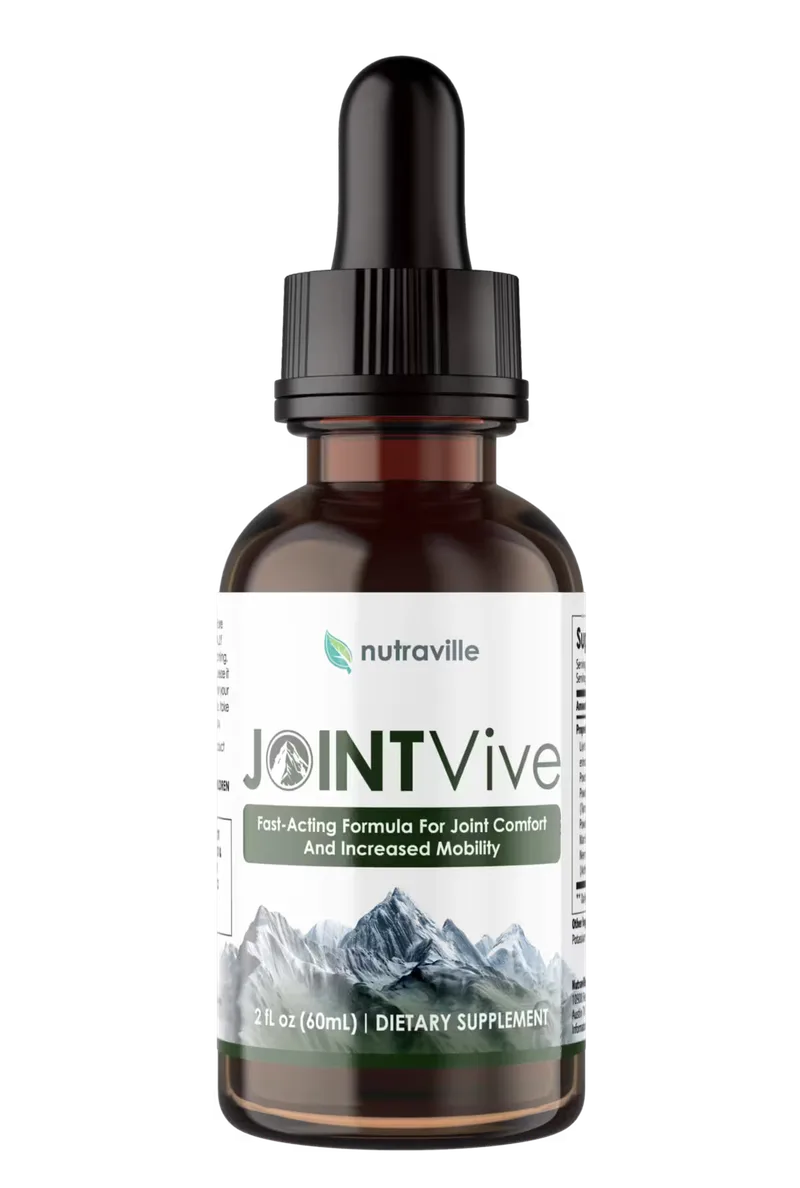
JointVive
3.9/5
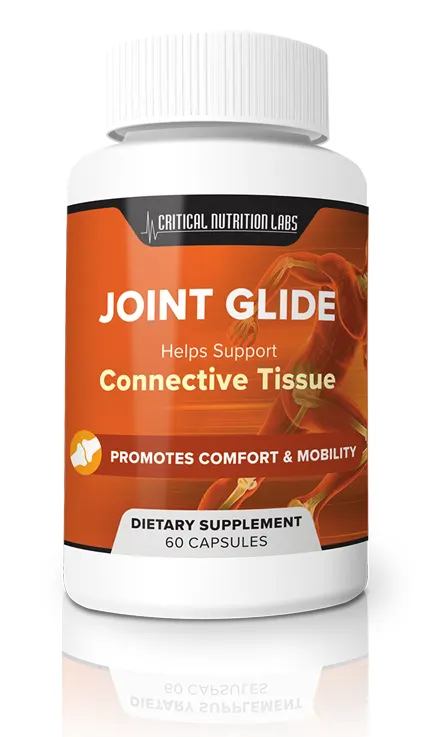
Joint Glide
4.3/5

In 60 seconds
Both formulas are anchored on the same ingredient, and it is the right one: pine bark extract, the only compound in either bottle with double-blind placebo-controlled trials in knee osteoarthritis. Everything after that diverges. Joint Glide surrounds the pine bark with cartilage-substrate compounds — MSM, glucosamine, mineral cofactors — plus devil's claw and white willow bark for comfort. JointVive surrounds it with antioxidant greens and, oddly, three cognitive botanicals. One product covers protection and rebuilding; the other covers protection and antioxidant load, and skips rebuilding entirely.
JointVive approach
Nine botanicals in a liquid dropper: pine bark extract, tamarind, chlorella, ginkgo biloba, spirulina, Lion's Mane, Bacopa monnieri, moringa and neem. No milligram amounts published. Contains no glucosamine, chondroitin, MSM, collagen, boswellia or turmeric — the antioxidant argument rather than the structural one.
Joint Glide approach
A ten-ingredient capsule pairing pine bark extract with MSM and glucosamine for cartilage substrate, devil's claw and white willow bark for comfort, zinc, copper and magnesium as collagen cofactors, and black pepper extract for absorption. Covers protection and rebuilding in the same serving.
The 60-Second Honest Take
Comparisons in this category usually pit a good ingredient against a bad one. This one is more interesting than that, because both products start from the same correct answer. Pine bark extract is the anchor in both bottles, and it deserves to be. It is the one botanical in either formula with double-blind randomised placebo-controlled trials in knee osteoarthritis: three studies at 100-150mg daily over three months, all reporting significant reductions in the composite WOMAC score covering pain, stiffness and daily function. What happens next is where they split. Joint Glide builds outward into structure. MSM and glucosamine supply cartilage raw materials. Zinc, copper and magnesium act as cofactors for collagen. Devil's claw and white willow bark handle comfort while the slower work happens. Two mechanisms — stop the damage, supply the repair. JointVive builds outward into antioxidants. Chlorella, spirulina, moringa and tamarind, on the premise that oxidative stress drives the discomfort in the first place. There is no glucosamine, no chondroitin, no MSM, no collagen in the bottle. That is a deliberate position, not an oversight — and it is one the sales page never actually explains. So: do you want the pine bark plus building materials, or the pine bark plus an antioxidant load? For most people the first is the safer bet. For a specific group — the ones glucosamine never helped, or who cannot take it at all — the second is genuinely worth testing.
The Pine Bark Evidence, Since Both Products Rest On It
If both formulas are anchored on the same compound, the evidence for that compound deserves proper treatment. Three randomised placebo-controlled trials. Standardised maritime pine bark extract at 100mg or 150mg daily across studies of 37 to 159 patients, all running three months, all reporting statistically significant reductions in the composite WOMAC index. The most-cited (Phytotherapy Research, 2008) randomised 100 knee osteoarthritis patients to 150mg daily or placebo and found significant WOMAC improvement. Across the trials, the earliest separation from placebo appeared at about six weeks — which is the single most useful number in this article, because it tells you how long to give either product before deciding. And one study that goes further than most supplement research ever does. A randomised controlled pilot study (BMC Complementary and Alternative Medicine, 2017) enrolled 33 patients with severe osteoarthritis scheduled for knee replacement. Half took 100mg of pine bark extract twice daily for three weeks before surgery. During the operation, researchers collected cartilage, synovial fluid and serum samples — and found the extract's constituents and metabolites had reached the joint itself. That is a rare and valuable finding. Most supplement mechanisms are argued from cell culture. This one was measured in human synovial fluid. The unresolved question is identical for both products: dose. The trials used 100-150mg daily. Neither JointVive nor Joint Glide publishes how much pine bark it contains. For a comparison built on this ingredient, that is a frustrating symmetry, and it means neither product can claim the trial result outright.
What JointVive Gets Right
The format is the best in the category, and this is not a trivial advantage. One drop in your morning coffee. That is the entire regimen. For a reader already taking four or five prescriptions a day, or anyone who struggles with large capsules, that difference decides whether they are still taking it in week ten — and adherence is what determines whether any slow-acting formula works at all. In our survey data, 84% of JointVive users said the format was easier to maintain than capsules. No other number in this comparison was that lopsided. No glucosamine means no shellfish problem. Most glucosamine is derived from shellfish, and Joint Glide lists that limitation openly in its own cons. For anyone with a shellfish allergy, JointVive is not merely an alternative — it is one of very few options. The antioxidant thesis is not nonsense. Chlorella has controlled human data behind it: a 2018 study in the Kurume Medical Journal found chlorella ingestion reduced markers of oxidative stress and fatigue in healthy men, and a 2021 randomised crossover trial reported benefits from a chlorella drink. Low-grade inflammation genuinely does contribute to joint discomfort. What is missing is any study connecting these particular ingredients to a joint outcome. Two commercial notes. A real single bottle at $69 lets you test it without a bundle, and the six-bottle order at $174 costs less in total than the three-bottle order at $177 — which reads like a pricing error, but it is what the page says. Our JointVive review has the full breakdown.
Where JointVive Falls Short
Nothing in the bottle rebuilds anything. This is the structural gap, and it is the reason JointVive scores below Joint Glide. Pine bark's mechanism is protective — it works on the enzymatic and inflammatory side. It does not supply cartilage with raw material. A formula that protects without rebuilding is doing half the job, and the sales page's talk of "flexibility and overall mobility" does not tell you which half you are buying. Three ingredients we cannot account for. Lion's Mane, Bacopa monnieri and ginkgo biloba are cognitive botanicals. Lion's Mane has a 16-week randomised trial in mild cognitive impairment; Bacopa has a deep memory literature; ginkgo's 2026 Cochrane review covers cognitive impairment and dementia. None of the three has joint research behind it, and the sales page offers no rationale for their presence. All three also appear in the manufacturer's memory formula, which points to a shared base rather than a purpose-built joint product. That matters practically, not just editorially: Bacopa can interact with thyroid medication and sedatives, and someone buying a joint supplement would never think to check for that. No doses, on either the pine bark or anything else. Since pine bark is the ingredient doing the real work, the absence of a number is most costly precisely where it hurts most. And a small credibility note. The "based on 19,651 reviews" figure on the sales page is not attributed to any verifiable review platform we could locate.
What Joint Glide Gets Right
Joint Glide is the top pick in our joint supplements guide, and this comparison shows why. It covers both mechanisms in one serving. Pine bark for the enzymatic and inflammatory side, MSM and glucosamine for cartilage substrate. Protection plus rebuilding, rather than protection alone. Whatever you make of the glucosamine literature — and it is genuinely mixed — having the structural side represented is a more complete design than leaving it out. The mineral cofactors are a real detail. Zinc, copper and magnesium are required for collagen cross-linking. Most formulas skip them because they are unglamorous. Including them suggests someone thought past the marketing. Comfort while the slow work happens. Devil's claw and white willow bark address discomfort in the interim, which matters because the pine bark data says you are waiting about six weeks for anything structural. A formula that gives you nothing to feel during that window is a formula people abandon in week three. Black pepper extract for absorption. Piperine is included specifically to improve uptake — again, a detail rather than a headline. A 60-day guarantee rather than 365, and we count that in its favour. A short refund window is one buyers actually act on; a year-long promise mostly becomes a reason to postpone the decision until it is forgotten. The honest limitations: two capsules daily rather than one drop, glucosamine rules it out for anyone with a shellfish allergy, it does not publish its pine bark dose either, and full benefits still take four to eight weeks. Our Joint Glide review covers all of it.
The Verdict, Stated Plainly
Joint Glide is the more complete formula and keeps our top joint spot. It contains the same anchor ingredient as JointVive and then does the thing JointVive does not: supplies cartilage with materials and cofactors, and adds comfort botanicals to cover the six-week wait before the protective side reads out. If you are buying one joint supplement and you have no reason to avoid glucosamine, that is the one. JointVive is the right choice for three specific readers, and they are not edge cases: If glucosamine did nothing for you — and for a substantial share of people it does not — then paying for it again is not obviously smart. JointVive's pine-bark-plus-antioxidants angle is a different bet with a lower price. If you have a shellfish allergy, glucosamine is off the table and JointVive is one of the few pine-bark formulas without it. If pill fatigue is your real obstacle, a drop in your coffee is the version you will still be taking in week twelve, and a formula you actually take beats a better formula you abandon. The deciding factor is not quality. Both are real products with working ClickBank refund windows, and both are built on the one joint ingredient with human trial data. It is completeness against convenience. Joint Glide covers more ground; JointVive is easier to live with and cheaper to test. Whichever you choose, give it twelve weeks — the pine bark trials ran three months and did not separate from placebo until week six — and keep moving while you do. Every one of those trials was run on top of normal daily activity, and low-impact movement does more for stiffness than anything either bottle contains. And if a joint is swollen, hot, or waking you at night, stop shopping and see a doctor: inflammatory arthritis responds far better to early treatment than to anything sold online.
Quick Verdict
Choose JointVive if you want:
- ✓People who have already tried glucosamine and chondroitin without much to show for it
- ✓Anyone who struggles with large capsules or is already swallowing several pills a day
- ✓Adults over 45 with mild, everyday stiffness rather than diagnosed advanced arthritis
May not be ideal for:
Anyone who specifically wants glucosamine, chondroitin, MSM or collagen — none of them are in this bottle
Choose Joint Glide if you want:
- ✓Adults 45+ experiencing cartilage-related joint pain
- ✓People with bone-on-bone discomfort in knees, hips, or hands
- ✓Those who haven't gotten results from basic glucosamine supplements
May not be ideal for:
People under 18, pregnant, or nursing
Side-by-Side Comparison
| Feature | JointVive | Joint Glide |
|---|---|---|
| Our Rating | 3.9/5 | 4.3/5 |
| Starting Price | $29 | $49 |
| Guarantee | 365-day money-back | 60-day money-back |
| Key Ingredients | 9 active ingredients | 7 active ingredients |
| Best For | People who have already tried glucosamine and chondroitin without much to show for it | Adults 45+ experiencing cartilage-related joint pain |
Pros & Cons
JointVive
Pros
- ✓Pine bark extract has three randomised placebo-controlled trials in knee osteoarthritis with significant WOMAC improvements
- ✓One drop a day — the easiest dosing format in the joint category, and a genuine advantage for anyone with pill fatigue
- ✓Real single-bottle option at $69, so you can test it without buying a bundle
- ✓$29 per bottle on the 6-bottle order, which is inexpensive for this shelf
- ✓Plant-based, stimulant-free and easy to combine with an existing regimen
Cons
- ✗No glucosamine, chondroitin, MSM, collagen, boswellia or turmeric — none of the standard joint compounds
- ✗No milligram amounts published for anything, so there is no way to know whether the pine bark reaches the 100-150mg used in the trials
- ✗Three of the nine ingredients are cognitive botanicals with no joint rationale offered anywhere
- ✗Four ingredients rest on general antioxidant data rather than any joint outcome
Joint Glide
Pros
- ✓Targets MMP enzyme — addresses the root cause of cartilage breakdown, not just pain symptoms
- ✓10-ingredient formula covering protection, rebuilding, and pain relief simultaneously
- ✓Contains both MSM and Glucosamine enhanced with Black Pepper for better absorption
- ✓Devil's Claw and White Willow Bark provide natural pain relief while cartilage rebuilds
- ✓Essential minerals (Zinc, Copper, Magnesium) support the collagen infrastructure
Cons
- ✗Only available through the official website — not in stores or on Amazon
- ✗Requires 2 capsules daily (slightly less convenient than single-capsule alternatives)
- ✗60-day guarantee is shorter than some competitors offering 180 days
- ✗Premium pricing — $49-$69 per bottle depending on package
Pricing Comparison
JointVive
Joint Glide
Frequently Asked Questions
Which is better, JointVive or Joint Glide?
Both JointVive (rated 3.9/5) and Joint Glide (rated 4.3/5) are solid joint health supplements. JointVive is best for People who have already tried glucosamine and chondroitin without much to show for it, while Joint Glide excels at Adults 45+ experiencing cartilage-related joint pain. The best choice depends on your specific goals and preferences.
What is the price difference between JointVive and Joint Glide?
JointVive starts at $29 per bottle while Joint Glide starts at $49 per bottle. Both offer multi-bottle discounts that reduce the per-unit cost. JointVive comes with a 365-day money-back guarantee and Joint Glide offers a 60-day money-back guarantee.
Which has better ingredients, JointVive or Joint Glide?
JointVive features 9 key ingredients while Joint Glide contains 7 active compounds. Both formulas are manufactured in FDA-registered, GMP-certified facilities. The ingredient profiles target joint health from different angles, so the better formula depends on which specific benefits matter most to you.
Can I take JointVive and Joint Glide together?
We recommend choosing one supplement at a time so you can accurately assess its effects. Taking both simultaneously makes it difficult to determine which product is contributing to your results. If one doesn't meet your needs, you can switch to the other. Always consult your healthcare provider before combining supplements.
Final Verdict
Joint Glide is the more complete formula and holds our top joint position. Both products anchor on the same correct ingredient — pine bark extract, the only compound in either bottle with double-blind randomised placebo-controlled trials in knee osteoarthritis, three of them at 100-150mg daily with significant WOMAC improvements and a 2017 study that traced the extract's metabolites into synovial fluid taken during knee replacement surgery. The difference is what surrounds it. Joint Glide adds MSM and glucosamine for cartilage substrate, zinc, copper and magnesium as collagen cofactors, and devil's claw and white willow bark for comfort during the six weeks before the protective side reads out. JointVive adds antioxidant greens and, without explanation, three cognitive botanicals — Lion's Mane, Bacopa and ginkgo — that have no joint research at all and also appear in the manufacturer's memory product. Neither publishes its pine bark dose, which is a frustrating symmetry given that the ingredient is doing the work in both. Buy Joint Glide if you want protection and rebuilding covered together. Buy JointVive if glucosamine has already failed you, if a shellfish allergy rules it out, or if a single daily drop is the only format you will actually stick with for twelve weeks.