Head-to-Head Comparison · 2026
Joint Glide vs Flexafen: Which One Actually Works in 2026?
Joint Glide and Flexafen both aim at joint discomfort, but they come at the problem from very different angles. Joint Glide blocks the MMP enzyme that actively destroys cartilage and supplies rebuilding nutrients, while Flexafen centers its formula on UC-II undenatured type II collagen. We break down the ingredients, pricing, science, and real user experience so you can decide which one belongs in your cabinet.
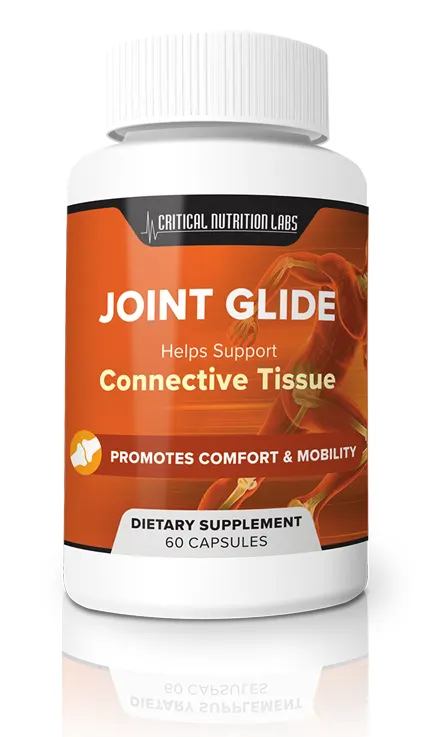
Joint Glide
4.3/5
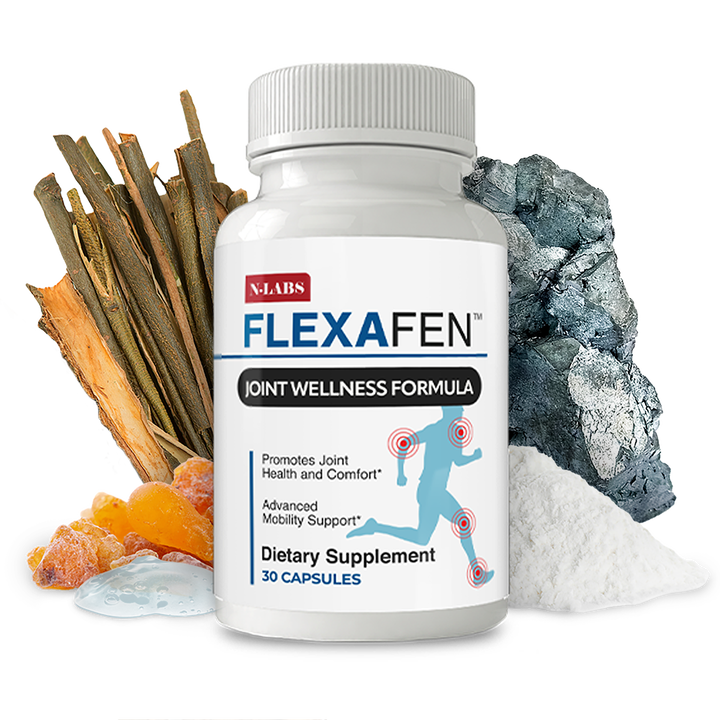
Flexafen
3.7/5

In 60 seconds
Joint Glide targets the root cause of cartilage loss by blocking MMP (matrix metalloproteinase) and feeding the joint with rebuilding materials. Flexafen relies on UC-II collagen to modulate the immune attack on cartilage but does nothing to stop MMP activity or provide the mineral infrastructure cartilage actually needs to repair itself.
Joint Glide approach
10-ingredient formula: Pine Bark Extract (MMP blocker), Devil's Claw, White Willow Bark, MSM, Glucosamine, plus Zinc, Copper, Magnesium mineral trio and Black Pepper for absorption
Flexafen approach
UC-II undenatured type II collagen as the hero ingredient, supported by standard MSM and glucosamine, delivered in a single daily capsule
Overview
Joint Glide and Flexafen are both marketed to adults dealing with stiff, achy joints, but they are built on very different theories of how cartilage is lost and repaired. Joint Glide is a 10-ingredient cartilage-rebuild formula organized around one core mechanism: blocking MMP (matrix metalloproteinase), the enzyme that breaks cartilage down faster than the body can repair it. As we age and accumulate exposure to heavy metals and everyday toxins, MMP activity climbs. Joint Glide combines an MMP-blocking cornerstone with pain-relief botanicals and the minerals cartilage actually needs to reform. Flexafen is a collagen-first joint supplement. Its hero ingredient is UC-II undenatured type II collagen, supported by MSM and glucosamine. The pitch is that UC-II helps calm the immune response that drives some cartilage breakdown. It is a simpler formula, built around one newer ingredient and two classic joint staples.
Ingredients Comparison
Joint Glide leads with Pine Bark Extract (Pinus massoniana), clinically studied for neutralizing MMP activity and supporting collagen regeneration. Devil's Claw Extract supplies harpagoside, with published research on joint pain reduction and cartilage support. White Willow Bark delivers natural salicin for anti-inflammatory relief without the GI side effects of synthetic NSAIDs. MSM and Glucosamine provide the sulfur and amino sugars cartilage needs to rebuild. A mineral trio of Zinc, Copper, and Magnesium supports collagen infrastructure and chondrocyte function, and Black Pepper Extract improves absorption of the rest of the formula. Flexafen centers on UC-II undenatured type II collagen at a small clinical dose, then rounds the formula out with MSM and glucosamine. UC-II has some promising small studies behind it, but the supporting cast is simply the same glucosamine-and-MSM pairing that has been on shelves for two decades. There is no MMP-blocking ingredient, no Pine Bark Extract, no Devil's Claw, and no mineral trio. The structural difference is hard to miss. Joint Glide hits four mechanisms at once - protection, rebuilding, pain relief, and mineral support - with disclosed dosing. Flexafen hits one and a half.
How They Work
Joint Glide interrupts the cartilage destruction cycle at the source. Pine Bark Extract neutralizes MMP activity so the cartilage you still have stops being chewed up. At the same time, MSM, Glucosamine, and the Zinc-Copper-Magnesium trio supply the raw materials chondrocytes need to build new tissue. The result is the two-pronged sequence most adults actually need after 40: stop the damage, then rebuild. Flexafen works primarily through immune modulation. The small daily dose of UC-II collagen is thought to help the immune system recognize and tolerate joint cartilage, potentially reducing the low-grade autoimmune component of joint wear. MSM and glucosamine contribute mild raw-material support. It can take a steady eight to twelve weeks before most users notice a difference, and the effect plateaus once the immune signaling has shifted. Joint Glide's formula also tends to produce earlier comfort feedback. Many users report meaningful comfort changes within the first three to seven days, with deeper cartilage-rebuild benefits building through weeks four to eight. Flexafen's one-pathway design simply cannot match that pace or depth.
Pricing & Value
Joint Glide offers tiered pricing that rewards commitment. The 6-bottle package drops the price to roughly $49 per bottle with free shipping, and every order is backed by a 60-day 100% money-back guarantee. That window is long enough to feel real cartilage improvements, not just a few days of anti-inflammatory effect. Flexafen typically runs $59-69 per bottle for a 30-day supply. Multi-bottle pricing exists but is less aggressive, and the guarantee terms are shorter than Joint Glide's 60-day policy. You are paying premium pricing for a UC-II-centered formula even though UC-II is one ingredient among many in more comprehensive alternatives. On a per-mechanism basis the value gap is wide: Joint Glide delivers 10 active ingredients across four pathways for around $49 per bottle in the multi-pack, while Flexafen delivers a narrower single-pathway formula at a similar or higher sticker price.
User Experience
Joint Glide users tend to describe a fairly consistent arc. Comfort improves within the first week, morning stiffness eases next, and by weeks four to eight people notice they can do things - stairs, yard work, long walks - without dreading the day after. The 2-capsule daily routine is easy to stick with. Flexafen users report a slower, milder experience. Some users do notice reduced joint discomfort after eight to twelve weeks of daily use, consistent with UC-II's expected timeline. Others describe only subtle changes and note that the formula feels thin once you compare it to multi-pathway alternatives. A recurring theme is that results plateau early, which tracks with a single-pathway mechanism. Both products are generally well tolerated. Flexafen's single daily capsule is convenient. Joint Glide's 2-capsule dose is slightly more demanding but delivers a far more complete ingredient profile for the trade-off.
Our Verdict
Flexafen is a reasonable choice for someone with very mild, early joint discomfort who wants to try a newer UC-II-based product with a simple daily capsule. Its formula is clean and the approach has a legitimate immune-modulation rationale. The problem is scope. If you are actually dealing with meaningful cartilage wear or age-related joint decline, a collagen-first formula without MMP blocking or mineral support will give you partial, plateau-prone results. Joint Glide's multi-mechanism approach stops cartilage destruction, rebuilds tissue, relieves pain, and supports collagen infrastructure at the same time. For a similar or lower price, more ingredients, disclosed dosing, and a stronger money-back guarantee, Joint Glide is the clear recommendation.
Quick Verdict
Choose Joint Glide if you want:
- ✓Adults 45+ experiencing cartilage-related joint pain
- ✓People with bone-on-bone discomfort in knees, hips, or hands
- ✓Those who haven't gotten results from basic glucosamine supplements
May not be ideal for:
People under 18, pregnant, or nursing
Choose Flexafen if you want:
- ✓People with very early, mild joint stiffness
- ✓Users who prefer a single-capsule daily routine
- ✓Those curious about UC-II collagen as a standalone approach
May not be ideal for:
People with meaningful cartilage wear or osteoarthritis
Side-by-Side Comparison
| Feature | Joint Glide | Flexafen |
|---|---|---|
| Our Rating | 4.3/5 | 3.7/5 |
| Starting Price | $49 | $59 |
| Guarantee | 60-day money-back | Limited money-back guarantee |
| Key Ingredients | 7 active ingredients | 4 active ingredients |
| Best For | Adults 45+ experiencing cartilage-related joint pain | People with very early, mild joint stiffness |
Pros & Cons
Joint Glide
Pros
- ✓Targets MMP enzyme — addresses the root cause of cartilage breakdown, not just pain symptoms
- ✓10-ingredient formula covering protection, rebuilding, and pain relief simultaneously
- ✓Contains both MSM and Glucosamine enhanced with Black Pepper for better absorption
- ✓Devil's Claw and White Willow Bark provide natural pain relief while cartilage rebuilds
- ✓Essential minerals (Zinc, Copper, Magnesium) support the collagen infrastructure
Cons
- ✗Only available through the official website — not in stores or on Amazon
- ✗Requires 2 capsules daily (slightly less convenient than single-capsule alternatives)
- ✗60-day guarantee is shorter than some competitors offering 180 days
- ✗Premium pricing — $49-$69 per bottle depending on package
Flexafen
Pros
- ✓Contains UC-II undenatured type II collagen
- ✓Includes MSM and glucosamine as supporting ingredients
- ✓Convenient single daily capsule format
- ✓Simple, clean label with no proprietary blends
Cons
- ✗Collagen alone doesn't block MMP or rebuild cartilage
- ✗Does not block MMP enzyme that drives cartilage loss
- ✗Limited independent clinical data on the finished formula
- ✗Newer brand with a shorter track record
Pricing Comparison
Joint Glide
Flexafen
Available on the manufacturer's website and select retailers
Frequently Asked Questions
Which is better, Joint Glide or Flexafen?
Both Joint Glide (rated 4.3/5) and Flexafen (rated 3.7/5) are solid joint health supplements. Joint Glide is best for Adults 45+ experiencing cartilage-related joint pain, while Flexafen excels at People with very early, mild joint stiffness. The best choice depends on your specific goals and preferences.
What is the price difference between Joint Glide and Flexafen?
Joint Glide starts at $49 per bottle while Flexafen starts at $59 per bottle. Both offer multi-bottle discounts that reduce the per-unit cost. Joint Glide comes with a 60-day money-back guarantee and Flexafen offers a Limited money-back guarantee guarantee.
Which has better ingredients, Joint Glide or Flexafen?
Joint Glide features 7 key ingredients while Flexafen contains 4 active compounds. Both formulas are manufactured in FDA-registered, GMP-certified facilities. The ingredient profiles target joint health from different angles, so the better formula depends on which specific benefits matter most to you.
Can I take Joint Glide and Flexafen together?
We recommend choosing one supplement at a time so you can accurately assess its effects. Taking both simultaneously makes it difficult to determine which product is contributing to your results. If one doesn't meet your needs, you can switch to the other. Always consult your healthcare provider before combining supplements.
Final Verdict
Joint Glide is our recommended choice over Flexafen. Joint Glide blocks the MMP enzyme that destroys cartilage and supplies the full stack of rebuilding nutrients - MSM, glucosamine, Pine Bark Extract, and the Zinc-Copper-Magnesium trio - while Flexafen leans on a single UC-II collagen mechanism with classic supporting ingredients. For most adults dealing with real stiffness and cartilage wear, a multi-pathway formula will deliver deeper and more lasting results than a collagen-first product. Flexafen can work as an entry-level option for very early discomfort, but Joint Glide is the more complete and better-backed pick.