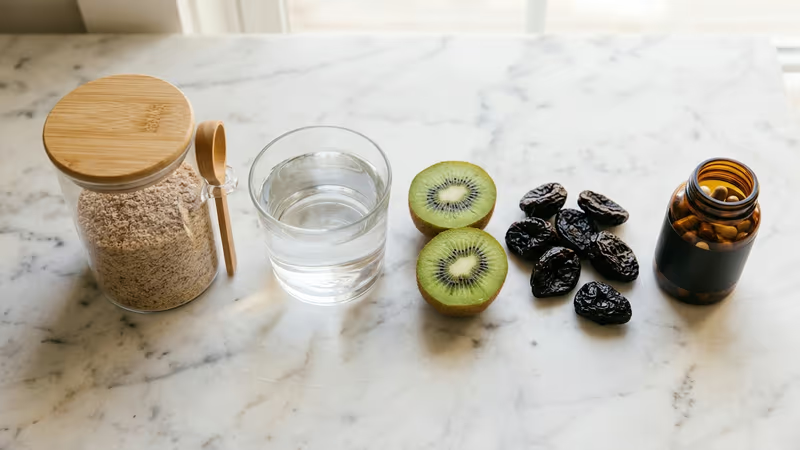

If you have ever picked up an antibiotic prescription and then spent the next week running to the bathroom, you already know why people search for probiotics for diarrhea. The idea makes sense: antibiotics wipe out helpful bacteria along with harmful ones, so why not put some good ones back? The honest answer is that it depends on the kind of diarrhea. For antibiotic-associated diarrhea, the evidence is fairly strong. For traveler's diarrhea, it is modest. For a stomach bug that has already started, it is weaker than most people assume. This guide walks through what the research shows, strain by strain. And because diarrhea can occasionally signal something serious, we start with the warning signs that mean it is time to call a doctor, not a supplement.
What You'll Learn
- The red flags that mean diarrhea needs a doctor, not a probiotic
- Which strains have the best evidence for antibiotic-associated diarrhea, and how to time them
- What guidelines say about probiotics and C. difficile prevention
- How probiotics perform for traveler's diarrhea, stomach bugs, and IBS-D
- Why probiotics can sometimes cause loose stools
- How to choose a product, plus hydration and food while you recover
When Diarrhea Is a Probiotic Question and When It Is a Doctor Question
Most episodes of diarrhea are short and self-limiting; your body clears the cause within a day or two. That is the kind where a probiotic might be reasonable to try. Some situations are different, and no supplement should delay a call to your doctor. Treat the following as a stop sign.
- Blood in the stool, or stool that looks black and tarry
- A fever of 102°F (38.9°C) or higher
- Diarrhea lasting more than 48 hours in an adult, or more than 24 hours in a child
- Signs of dehydration: very dark urine, little or no urination, dizziness when standing, dry mouth, extreme thirst
- Severe belly pain that does not ease up
- Six or more loose stools in 24 hours
- Diarrhea in an infant, anyone over 65, a pregnant woman, or anyone with a weakened immune system, kidney disease, or heart failure
- Watery, frequent diarrhea with cramping or fever during or shortly after antibiotics. This can be C. difficile, which needs testing and specific treatment.
One more note. Probiotics are living organisms. For most healthy adults they are very safe, but people who are severely immunocompromised, critically ill, have a central IV line, or have had recent bowel surgery should not take them without a doctor's okay.
Probiotics for Antibiotic-Associated Diarrhea: The Strongest Evidence
Antibiotic-associated diarrhea, or AAD, is where probiotics for diarrhea have the most support. Roughly one in five people who take an antibiotic will get loose stools from it, and it tends to be worse with broad-spectrum drugs like amoxicillin-clavulanate, clindamycin, and the fluoroquinolones. The antibiotic thins out the bacteria that normally ferment fiber and keep the colon in balance, and the result is more water in the stool.
The largest analysis to date is a 2012 meta-analysis by Hempel and colleagues in JAMA. It pooled 63 randomized trials with more than 11,000 participants and found that taking a probiotic alongside an antibiotic cut the risk of diarrhea by about 42 percent, with a number needed to treat of 13: for every 13 people who take a probiotic with their antibiotic, one avoids diarrhea. The authors noted the trials were mixed in quality and used many different strains, so the exact size of the benefit is uncertain.
In children, the picture is even clearer. A 2019 Cochrane review by Guo and colleagues covered 33 trials with more than 6,300 children and found diarrhea in about 8 percent of children given a probiotic versus about 19 percent given placebo or nothing, or one case prevented for every nine children treated. Doses of 5 billion CFU per day or more worked better than lower doses, and no serious side effects were attributed to probiotics.
The Two Strains With the Best Track Record
Not all probiotics are equal, and the research points most consistently to two organisms. The first is Saccharomyces boulardii CNCM I-745, a beneficial yeast that antibiotics cannot kill, which is a practical advantage. Szajewska and Kołodziej's 2015 meta-analysis in Alimentary Pharmacology and Therapeutics covered 21 trials and more than 4,700 participants; S. boulardii roughly halved the risk of antibiotic-associated diarrhea in children and adults. The second is Lactobacillus rhamnosus GG, or LGG, which the same group reviewed separately with similar findings. Both appear in the 2020 American Gastroenterological Association guideline as the options with the most data.
Timing: When to Take Probiotics With Antibiotics
Timing matters more here than in almost any other use of probiotics. Most trials that showed a benefit started the probiotic on the same day as the antibiotic, not after diarrhea had begun. A sensible routine:
- Start the probiotic the same day you start the antibiotic, ideally with the first dose.
- Separate the two by at least two hours so the antibiotic does not kill a bacterial probiotic in the gut. S. boulardii can be taken any time, since antibiotics do not affect yeast.
- Take it every day for the full antibiotic course, even if you feel fine.
- Continue for one to two weeks after the last antibiotic dose, while the microbiome is still recovering.
New to probiotics?
Strains, CFU counts, refrigeration, and timing can feel like a lot. We cover all of it, including what probiotics can and cannot do for everyday digestion, in one place. Read our full guide to probiotics for gut health.
Read our full guide to probiotics for gut healthC. Difficile Prevention: What the Guidelines Say
Clostridioides difficile, usually called C. diff, is the most serious form of antibiotic-associated diarrhea. It is an infection, not just an imbalance, and it can cause severe colitis. Here the evidence for probiotics is more contested, and it is worth being balanced.
A 2017 Cochrane review by Goldenberg and colleagues found that taking a probiotic with antibiotics reduced C. diff diarrhea, with the benefit concentrated in people whose baseline risk was already above 5 percent, such as hospitalized patients on strong antibiotics. Based on that data, the 2020 AGA guideline by Su and colleagues in Gastroenterology gave a conditional recommendation for S. boulardii or a few specific multi-strain combinations to prevent C. diff in adults and children on antibiotics. Conditional means the panel thought the benefit probably outweighs the downsides, but the certainty was low.
The Infectious Diseases Society of America has not endorsed probiotics for C. diff prevention because of the low quality of the evidence. The practical reading: a healthy adult on a short antibiotic course has a low C. diff risk that a probiotic is unlikely to change much. If you are older, hospitalized, or on multiple or prolonged antibiotics, ask your doctor whether a probiotic makes sense. And watery diarrhea with cramping or fever during or after antibiotics needs a test, not a supplement.
Traveler's Diarrhea: Modest Help, Not a Guarantee
Traveler's diarrhea is usually caused by bacteria in food or water, most often a strain of E. coli. The best protection is still bottled or treated water, cooked food served hot, and skipping ice and raw produce you cannot peel. Probiotics are a possible add-on, not a replacement.
A 2007 meta-analysis by McFarland in Travel Medicine and Infectious Disease pooled 12 trials and found that probiotics reduced the risk of traveler's diarrhea by about 15 percent. S. boulardii and a combination of Lactobacillus acidophilus and Bifidobacterium bifidum showed the clearest effects. That reduction is real but small. If you want to try it, start S. boulardii or LGG a few days before you leave and continue through the trip. Do not expect it to protect you from a contaminated meal, and pack oral rehydration salts regardless.
Acute Infectious Diarrhea: Adults vs. Children
This is where honesty matters most, because popular advice has not caught up with the research. For years, probiotics were recommended to shorten a stomach bug, especially in children. Then two large trials changed the picture.
In 2018, Schnadower and colleagues published a trial in the New England Journal of Medicine that enrolled nearly 1,000 children ages 3 months to 4 years who came to U.S. emergency rooms with acute gastroenteritis. Half received five days of high-dose LGG, half received placebo. There was no meaningful difference in the severity or duration of illness. A companion Canadian trial in the same issue tested a different probiotic combination and found the same thing.
Those results drove a major update of the Cochrane review on this topic. The 2020 review by Collinson and colleagues concluded that, once the large trials and publication bias were accounted for, probiotics probably make little or no difference to how long acute infectious diarrhea lasts. Earlier versions had said the opposite.
If you or your child has a stomach bug right now, focus on fluids. A probiotic is unlikely to hurt a healthy person, but the evidence does not support it as a way to shorten the illness. Save your money for oral rehydration solution.
IBS With Diarrhea (IBS-D) and Probiotics
If your diarrhea is a recurring pattern tied to cramping, urgency, and bloating rather than a one-time event, irritable bowel syndrome with diarrhea may be the real issue. IBS is a diagnosis of exclusion, so a doctor should rule out celiac disease, inflammatory bowel disease, and infection first.
The best-known strain is Bifidobacterium infantis 35624. A 2006 trial by Whorwell and colleagues in the American Journal of Gastroenterology gave 362 women with IBS either the strain at one of three doses or placebo for four weeks. The 100 million CFU dose improved abdominal pain, bloating, and bowel dysfunction more than placebo. Other strains have shown small benefits in some reviews, but the 2020 AGA guideline judged the overall IBS evidence too inconsistent to recommend a specific product. If you try one, give it four to eight weeks and keep a simple symptom log.
Can Probiotics Cause Diarrhea?
Yes, occasionally. It usually is not a sign that something is wrong, but knowing the common causes lets you adjust rather than give up:
- An adjustment period. In the first few days, some people notice more gas, mild bloating, or looser stools as the gut adapts. This typically settles within one to two weeks.
- Starting too high. Jumping straight to a 50 or 100 billion CFU product can be more than your gut wants at once. Start lower and build up over a week or two.
- Sugar alcohols in gummies. Many gummy probiotics are sweetened with sorbitol, xylitol, or maltitol, which pull water into the bowel and are a well-known cause of loose stools on their own. If a gummy gives you diarrhea, the sweetener is the more likely culprit.
- Added prebiotic fibers. Inulin or FOS bundled with the probiotic can cause gas and loose stools in some people, especially at higher doses.
- An underlying sensitivity. People with lactose intolerance may react to dairy-based probiotics, and some people with histamine sensitivity react to certain fermented products.
If loose stools continue beyond two weeks, or if you develop any of the red flags listed earlier, stop the product and talk to your doctor.
How to Choose and Take Probiotics for Diarrhea
Dozens of bottles say "supports digestive health." Here is how to sort through them for this purpose:
- Look for the strain, not just the species. "Lactobacillus rhamnosus" is a species; "Lactobacillus rhamnosus GG" is the strain that was tested. For antibiotic-associated diarrhea, look for S. boulardii CNCM I-745 or LGG on the label.
- Check the CFU count. The pediatric Cochrane data favored 5 billion CFU per day or more. Most adult S. boulardii capsules deliver 5 to 10 billion CFU, and LGG products typically offer 10 billion or more.
- Confirm CFU at expiration, not at manufacture. Better brands guarantee the count through the end of shelf life.
- Refrigeration depends on the product. S. boulardii is shelf-stable. Many Lactobacillus and Bifidobacterium products need to be kept cold; follow the label.
- With or without food matters less than consistency. A reasonable approach is to take bacterial probiotics with a meal, which buffers stomach acid, and at least two hours away from an antibiotic dose.
- Skip unnecessary extras. For diarrhea, you do not need a 20-strain blend, enzymes, or a large dose of prebiotic fiber. Simpler is often better tolerated.
Considering a daily probiotic beyond an antibiotic course?
Some people want an everyday product once the immediate problem passes. We looked at DigestiStart, a multi-strain formula, and laid out its ingredients, strain list, and what the label does and does not support so you can judge whether it fits your goals. Read our DigestiStart review.
Read our DigestiStart reviewRehydration and Diet Basics While You Recover
Whatever you decide about probiotics, fluids and salts are what actually prevent complications. Diarrhea pulls water, sodium, and potassium out of the body faster than plain water can replace them. Oral rehydration solutions, sold as packets or ready-to-drink bottles, have the right ratio of glucose and electrolytes to help the gut absorb water. Sports drinks are a distant second, and sugary sodas or juice can make diarrhea worse.
For food, the old advice to fast is outdated. Small, bland meals as soon as you can tolerate them help the gut lining recover: rice, oatmeal, bananas, toast, boiled potatoes, plain chicken or eggs. Yogurt with live cultures is a reasonable food-based probiotic if dairy sits well with you. For a few days, limit alcohol, caffeine, fried foods, spicy dishes, and anything sweetened with sugar alcohols. A bout of diarrhea can temporarily lower your ability to digest lactose, so go easy on milk until things settle.
Our Take
Probiotics for diarrhea are not a fix for everything, but for one common situation they are genuinely useful. If you are starting an antibiotic, taking S. boulardii or LGG from day one, spacing it from the antibiotic, and continuing for a week or two afterward is backed by multiple meta-analyses and a Cochrane review. For travel, a probiotic is a modest add-on to food and water precautions. For a stomach bug already underway, the best recent evidence says probiotics do not shorten it, so focus on rehydration. For IBS-D, a strain like B. infantis 35624 is worth a supervised trial. In every case, the red flags come first: blood, fever, dehydration, diarrhea lasting more than two days, or symptoms in someone very young, old, or immunocompromised mean it is time to call your doctor.
Frequently Asked Questions
Do probiotics help with diarrhea?
It depends on the cause. For antibiotic-associated diarrhea, the evidence is fairly strong: a 2012 JAMA meta-analysis and a 2019 Cochrane review both found probiotics reduce the risk when taken alongside the antibiotic. For traveler's diarrhea, the benefit is modest. For a stomach bug that has already started, large recent trials and the 2020 Cochrane review found probiotics make little or no difference to how long it lasts. For IBS with diarrhea, specific strains like Bifidobacterium infantis 35624 have some supporting data. Always see a doctor for blood in the stool, fever, or diarrhea lasting more than two days.
Which probiotic is best for antibiotic-associated diarrhea?
The two strains with the most consistent evidence are Saccharomyces boulardii CNCM I-745, a beneficial yeast, and Lactobacillus rhamnosus GG, often called LGG. Both have been tested in multiple randomized trials and pooled in meta-analyses showing roughly a 40 to 50 percent reduction in antibiotic-associated diarrhea. S. boulardii has a practical edge because antibiotics do not kill yeast, so timing is less critical. Look for the exact strain name on the label and a dose of at least 5 billion CFU per day, which the pediatric Cochrane data suggested works better than lower doses.
When should I take probiotics with antibiotics?
Start the probiotic on the same day you begin the antibiotic, ideally with the first dose, since most trials that showed a benefit began early rather than after diarrhea had already set in. If you are using a bacterial probiotic like LGG, take it at least two hours after the antibiotic so the drug does not kill it in the gut. S. boulardii can be taken any time because it is a yeast. Keep taking it daily for the entire antibiotic course, and then continue for one to two weeks afterward while the gut microbiome recovers.
Can probiotics make diarrhea worse?
Occasionally, yes, though it is usually temporary. Some people notice looser stools or extra gas during the first week or two as the gut adjusts, especially if they start at a very high CFU dose. Gummy and chewable probiotics are a common hidden cause because they are often sweetened with sorbitol or xylitol, sugar alcohols that pull water into the bowel. Added prebiotic fibers like inulin can have the same effect. If loose stools persist beyond two weeks, or if you develop fever, blood, or dehydration, stop the product and check with your doctor.
How long should I take probiotics after antibiotics?
A reasonable target is one to two weeks after your last antibiotic dose. The gut microbiome does not bounce back the moment the prescription ends; studies show it can take weeks to months to fully recover its diversity, and the first couple of weeks are when diarrhea risk is highest. Several of the trials included in the major meta-analyses continued the probiotic for a week or more past the antibiotic course. If you feel well after that window, you can stop. Continuing longer is generally safe for healthy adults but is not required for this purpose.
Get honest health tips & reviews
Join our newsletter for science-backed supplement reviews and wellness advice.
No spam. Unsubscribe anytime.