
Constipation is one of those problems people rarely talk about and quietly search for at midnight. Probiotics for constipation are a popular first stop because they feel gentle and natural. The truth is more nuanced. Certain strains do have measurable effects on how often you go and how long food takes to move through you, but those effects are modest and depend heavily on which strain is in the bottle. Meanwhile, an inexpensive fiber called psyllium has stronger evidence than any probiotic, and a few simple habits matter more than either. This guide lays out what the research supports, in what order to try things, and when constipation is a reason to see your doctor.
What You'll Learn
- The most common reasons constipation happens
- What a major meta-analysis found about probiotics, transit time, and stool frequency
- The specific strains with clinical trial evidence for regularity
- How to use psyllium properly, and why it is the best-supported supplement
- Other options with evidence: magnesium, kiwifruit, prunes, and PHGG
- A step-by-step routine, red flags that need a doctor, and who should skip probiotics or psyllium
Why Constipation Happens
Doctors define constipation as fewer than three bowel movements a week, or stools that are hard, lumpy, or difficult to pass. The cause matters because the fix depends on it. A probiotic will not help much if the real issue is a medication or a pelvic floor problem.
- Slow transit. In some people the colon's contractions are sluggish, so stool spends longer inside and more water gets pulled out of it. This type is most likely to respond to fiber, fluids, and possibly probiotics.
- Low fiber and low fluid. Most Americans eat about 15 grams of fiber a day, roughly half the recommended amount. Fiber holds water and adds bulk; without enough of both, stool becomes small and hard.
- Pelvic floor dysfunction. The muscles that should relax during a bowel movement tighten instead, causing straining and a feeling of incomplete emptying. Fiber and probiotics tend not to help; pelvic floor physical therapy does.
- Medications. Opioids, some blood pressure drugs, iron supplements, certain antidepressants, antacids with aluminum or calcium, and anticholinergics are common causes.
- Thyroid and other conditions. An underactive thyroid slows the gut. Diabetes, Parkinson's disease, and multiple sclerosis can also affect bowel function.
- Lifestyle changes. Travel, ignoring the urge to go, a sudden drop in activity, or a change in routine can all trigger short-term constipation.
Do Probiotics for Constipation Work? What the Research Shows
The most-cited answer comes from a 2014 systematic review and meta-analysis by Dimidi and colleagues in the American Journal of Clinical Nutrition. It pooled 14 randomized controlled trials with more than 1,100 adults with functional constipation, meaning constipation without a structural or medical cause. Overall, probiotics shortened whole-gut transit time by about 12 hours, increased stool frequency by about 1.3 bowel movements per week, and modestly improved stool consistency compared with placebo.
Those numbers are worth pausing on. An extra bowel movement or so per week is a real difference if you are currently going twice a week, but it is not dramatic, and the authors described the results as grounds for cautious optimism rather than a firm recommendation. Two other points matter for anyone shopping for probiotics for constipation. First, the effect was strain-specific: Bifidobacterium lactis showed the clearest benefit, while Lactobacillus casei Shirota did not significantly improve frequency or consistency in the pooled data. Second, many trials were small and some were manufacturer-funded, so the true effect may be smaller than reported.
A 2020 meta-analysis in Clinical Nutrition by Zhang and colleagues, covering 15 trials, reached a similar conclusion: probiotics, especially multi-strain products, increased stool frequency and improved consistency, with effects that were significant but modest. The honest summary is that certain probiotics help some people with constipation, but you should expect a nudge, not a transformation.
Probiotic Strains With Evidence for Regularity
The strain name on the label, the letters and numbers after the species, tells you which organism was studied. These have the most human data for regularity.
Bifidobacterium lactis HN019
In a 2011 trial by Waller and colleagues in the Scandinavian Journal of Gastroenterology, 100 adults with functional digestive symptoms took a high dose (17.2 billion CFU), a low dose (1.8 billion CFU), or placebo for 14 days. Whole-gut transit time, measured by X-ray, fell significantly in both probiotic groups in a dose-dependent way. A larger 2018 trial by Ibarra and colleagues in Gut Microbes, with 228 constipated adults, found no significant difference in transit time overall, but a follow-up analysis showed that people starting with fewer than three bowel movements a week did see improved frequency. The strain may help most for people who are truly constipated.
Bifidobacterium lactis DN-173 010
This is the strain in Activia yogurt. Marteau and colleagues showed in a 2002 crossover study in Alimentary Pharmacology and Therapeutics that 36 healthy women who ate the fermented milk three times a day had significantly shorter colonic transit times than during the control period. The effect is modest, but it is a reasonable food-based option if you enjoy yogurt and tolerate dairy.
Bifidobacterium lactis BB-12
BB-12 has one of the largest single trials in this area. Eskesen and colleagues, writing in the British Journal of Nutrition in 2015, randomized 1,248 healthy adults with low stool frequency and abdominal discomfort to 1 billion CFU, 10 billion CFU, or placebo for four weeks. Both doses produced a small but significant increase in bowel movement frequency compared with placebo, and the lower dose performed at least as well as the higher one, a useful reminder that more CFU is not automatically better.
Lactobacillus casei Shirota
This is the strain in Yakult. A 2003 trial by Koebnick and colleagues in the Canadian Journal of Gastroenterology gave 70 adults with chronic constipation a daily 65 mL probiotic drink or placebo for four weeks and found fewer hard, lumpy stools in the probiotic group. When Dimidi's team pooled the Shirota trials, though, the benefit did not reach significance, so the evidence is thinner than for the Bifidobacterium strains.
Multi-Strain Products
Several trials have used blends of Bifidobacterium and Lactobacillus strains, and the 2020 meta-analysis found multi-strain products were, if anything, slightly more consistent than single strains. Still, a blend is only as good as the strains it contains. A label listing ten species with no strain designations tells you very little about whether any of them were studied for constipation.
Feed the bacteria you already have
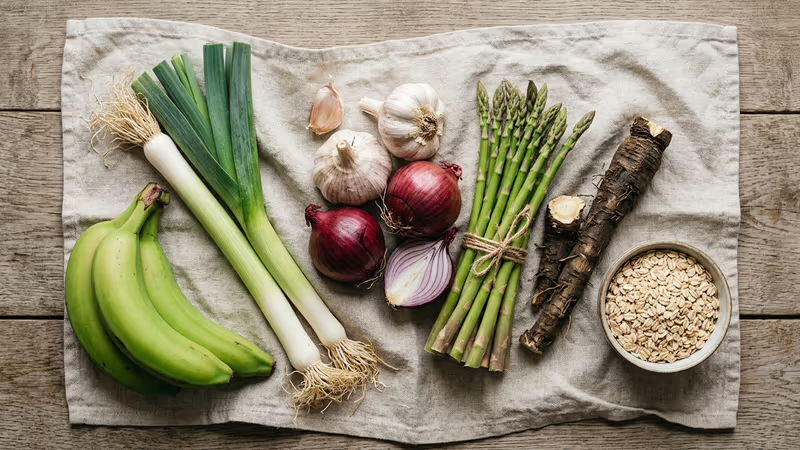
Probiotics add organisms; prebiotics feed the ones already living in your colon. Fibers like inulin, GOS, and resistant starch produce short-chain fatty acids that help keep the gut moving, and they are a natural partner to any probiotic routine. Read: prebiotics for gut health.
Read: prebiotics for gut healthPsyllium and Constipation: The Best-Supported Supplement
If you only try one supplement for constipation, the evidence says it should be psyllium husk, not a probiotic. Psyllium is a soluble, gel-forming fiber from the seeds of the Plantago ovata plant, sold as Metamucil and many generic powders and capsules. It holds water, softens stool, and adds bulk, which stimulates the colon to move.
A 2022 systematic review and meta-analysis by van der Schoot and colleagues in the American Journal of Clinical Nutrition looked at 16 randomized trials of fiber supplements in adults with chronic constipation. Fiber increased stool frequency and softened stool, and psyllium was the most effective type, with the best results at doses above 10 grams per day for at least four weeks. The American College of Gastroenterology also gives psyllium a strong recommendation for chronic constipation, which is more than any probiotic has received.
A few practical rules make psyllium work better:
- Start low and ramp up. Begin with about 3 to 5 grams once a day (roughly one teaspoon of powder) and increase every few days toward 10 to 15 grams. Jumping to a full dose is the main reason people get gas and bloating.
- Drink plenty of water. Mix each dose in at least 8 ounces of water and drink another glass afterward. Psyllium without enough water can make constipation worse or, rarely, cause a blockage.
- Give it time. Many people notice softer stools within days, but the meta-analysis found the clearest benefit after four weeks of consistent use.
- Space it from medications. Psyllium can reduce absorption of some drugs. Take it at least two hours before or after prescriptions, and ask your pharmacist if you take a drug with a narrow therapeutic window.
- Expect some gas at first. It usually fades within a week or two.
Other Options With Evidence
Magnesium
Magnesium works as an osmotic laxative: it draws water into the bowel, which softens stool and triggers movement. A 2021 randomized, placebo-controlled trial by Morishita and colleagues in the American Journal of Gastroenterology gave 90 adults with chronic constipation 1.5 grams of magnesium oxide a day, senna, or placebo for four weeks. About 68 percent of the magnesium group reported overall improvement versus 12 percent on placebo. Magnesium citrate works similarly and is often gentler; typical doses are 300 to 500 mg of elemental magnesium at bedtime. People with kidney disease should not use magnesium for constipation without medical supervision.
Kiwifruit and Prunes
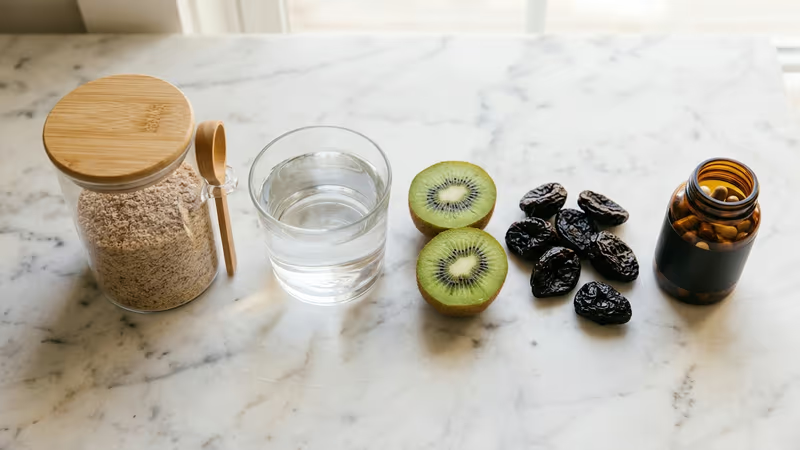
Food can be as effective as supplements. A 2021 trial led by Chey in the American Journal of Gastroenterology compared two green kiwifruit a day, 100 grams of prunes, or 12 grams of psyllium in 79 adults with chronic constipation for four weeks. All three increased complete bowel movements per week to a similar degree. Kiwifruit caused the fewest side effects and was the only one to significantly improve bloating; psyllium caused the most. Prunes combine fiber with sorbitol, a natural sugar alcohol that pulls water into the bowel.
Partially Hydrolyzed Guar Gum (PHGG)
PHGG is a soluble fiber that dissolves clear and tasteless in water and ferments slowly, so it causes less gas than psyllium. Small trials show improved stool frequency and consistency at 5 to 10 grams a day. The evidence base is smaller than for psyllium, but it is a sensible second choice if psyllium was too bloating.
How to Build a Routine for Regularity
The order matters. Most people reach for a probiotic first, but the basics have bigger effects and cost less. Add one step at a time and give each a week or two before adding the next.
- Fiber first. Aim for 25 to 30 grams a day from food: beans, oats, berries, pears, vegetables, whole grains. If food alone does not get you there, add psyllium and ramp up slowly.
- Then fluid. Fiber without water is a recipe for bloating. Most adults do well with roughly 8 cups of fluid a day, more in hot weather or with exercise.
- Then movement. Even a 20-minute walk after meals stimulates the colon.
- Then timing. The colon is most active in the morning and after meals. Sit on the toilet 15 to 30 minutes after breakfast, unhurried, with your feet on a small stool so your knees are above your hips. Do not ignore the urge to go.
- Then a probiotic. If you are still not regular after a few weeks, add a Bifidobacterium lactis strain with clinical data, such as HN019 or BB-12, and give it four weeks.
- Then magnesium or a food strategy. Magnesium citrate at bedtime, two kiwifruit a day, or a serving of prunes can fill remaining gaps.
Comparing digestive supplements?
If you are weighing a probiotic against a fiber blend or a combination product, we put the popular options side by side, including strain lists, doses, and where the evidence is thin. See our digestive health roundup.
See our digestive health roundupRed Flags That Need a Doctor
Most constipation is uncomfortable but not dangerous. Some patterns, though, need to be checked, and no supplement should delay that visit. See your doctor promptly if you notice any of the following.
- New or worsening constipation after age 50, especially if your bowel habits were stable before
- Blood in the stool, or stool that is black or tarry
- Unintended weight loss
- Severe or persistent abdominal pain, or pain with vomiting
- A pencil-thin change in stool shape that persists
- Constipation alternating with diarrhea that lasts more than a few weeks
- A family history of colon cancer or inflammatory bowel disease
- Constipation that does not respond to fiber, fluids, and over-the-counter measures after several weeks
- Iron-deficiency anemia found on a blood test
None of these mean something is definitely wrong; they are the signs doctors use to decide when testing such as a colonoscopy is warranted.
Who Should Avoid Probiotics or Psyllium
Both are safe for most healthy adults, with these exceptions:
- Psyllium and swallowing problems. Because psyllium swells quickly, anyone with difficulty swallowing or esophageal narrowing should avoid it or use it only under medical guidance. Always take it with a full glass of water.
- Psyllium and bowel obstruction. If you have a known or suspected bowel obstruction, severe abdominal pain, or a history of strictures from Crohn's disease or surgery, do not take bulk-forming fiber.
- Psyllium and opioid constipation. Bulk fiber often does not help and can make opioid-related constipation worse. Ask your doctor about other options.
- Probiotics and immune compromise. People who are severely immunocompromised, critically ill, have a central IV line, or have had recent bowel surgery should not take probiotics without a doctor's approval.
- Probiotics and SIBO. Some people with small intestinal bacterial overgrowth feel worse on probiotics. If a probiotic increases bloating rather than easing it, stop and talk to your doctor.
- Magnesium and kidney disease. Reduced kidney function can let magnesium build up to unsafe levels. Do not use magnesium laxatives without medical supervision if you have kidney disease.
Our Take
Probiotics for constipation are a reasonable tool, but a second-line one. The best evidence, from the Dimidi meta-analysis and the individual strain trials, points to Bifidobacterium lactis strains like HN019 and BB-12, with modest gains in frequency and transit time after about four weeks. Psyllium has stronger evidence, costs less, and is the supplement guidelines actually recommend, provided you ramp up slowly and drink enough water. Kiwifruit, prunes, and magnesium are solid additions. Put the basics first, add one thing at a time, and give each change a few weeks. And if constipation is new after 50, comes with blood, weight loss, or severe pain, or does not respond to these steps, skip the supplement aisle and see your doctor.
Frequently Asked Questions
Do probiotics help with constipation?
Modestly, and only certain strains. A 2014 meta-analysis of 14 randomized trials in the American Journal of Clinical Nutrition found that probiotics shortened whole-gut transit time by about 12 hours and added roughly 1.3 bowel movements per week compared with placebo, with Bifidobacterium lactis showing the clearest benefit. That is a real but small effect, and the authors described it as grounds for cautious optimism rather than a firm recommendation. Probiotics work best as one piece of a routine that starts with fiber, fluids, movement, and consistent bathroom timing, and they are not a substitute for seeing a doctor about red-flag symptoms.
Which probiotic strain is best for constipation?
Bifidobacterium lactis strains have the most consistent data. B. lactis HN019 reduced whole-gut transit time in a dose-dependent way in a 2011 trial, and a larger 2018 trial suggested it helps most in people with fewer than three bowel movements a week. B. lactis BB-12 increased stool frequency in a 1,248-person trial published in 2015, even at a modest 1 billion CFU dose. B. lactis DN-173 010, found in Activia, shortened colonic transit in a 2002 crossover study. Lactobacillus casei Shirota has some positive trials but weaker pooled results. Look for the exact strain designation on the label.
How long do probiotics take to relieve constipation?
Most clinical trials ran for two to four weeks before measuring results, and that is a reasonable window to judge whether a probiotic is helping you. The HN019 trial showed transit changes within 14 days, while the BB-12 and Shirota trials used four weeks. If you notice no change in frequency or stool consistency after four weeks of daily use, that strain is probably not the right fit, and it makes more sense to switch strains or move to a better-supported option like psyllium or magnesium than to keep waiting. Keep a simple log of bowel movements so you can judge objectively rather than by feel.
Is psyllium or a probiotic better for constipation?
For most people, psyllium. A 2022 meta-analysis of 16 randomized trials found psyllium was the most effective fiber supplement for chronic constipation, and the American College of Gastroenterology gives it a strong recommendation, which no probiotic has received. Psyllium reliably softens stool and increases frequency at doses above 10 grams a day taken for at least four weeks. Probiotics offer a smaller, strain-dependent nudge. The two are not mutually exclusive: many people do well with psyllium as the foundation and a Bifidobacterium lactis probiotic added later. Ramp psyllium up slowly and drink plenty of water to avoid bloating.
Can probiotics cause constipation?
It is uncommon, but some people do report feeling more backed up or bloated when they start a probiotic, particularly in the first one to two weeks. This is usually a temporary adjustment as the gut microbiome shifts, and it often eases on its own. Certain Lactobacillus-heavy products seem more likely to cause this than Bifidobacterium strains, and probiotics combined with large doses of prebiotic fiber can add gas. If constipation or bloating persists beyond two weeks, stop the product, make sure you are drinking enough water and getting enough fiber, and consider trying a different strain or discussing it with your doctor.
Get honest health tips & reviews
Join our newsletter for science-backed supplement reviews and wellness advice.
No spam. Unsubscribe anytime.