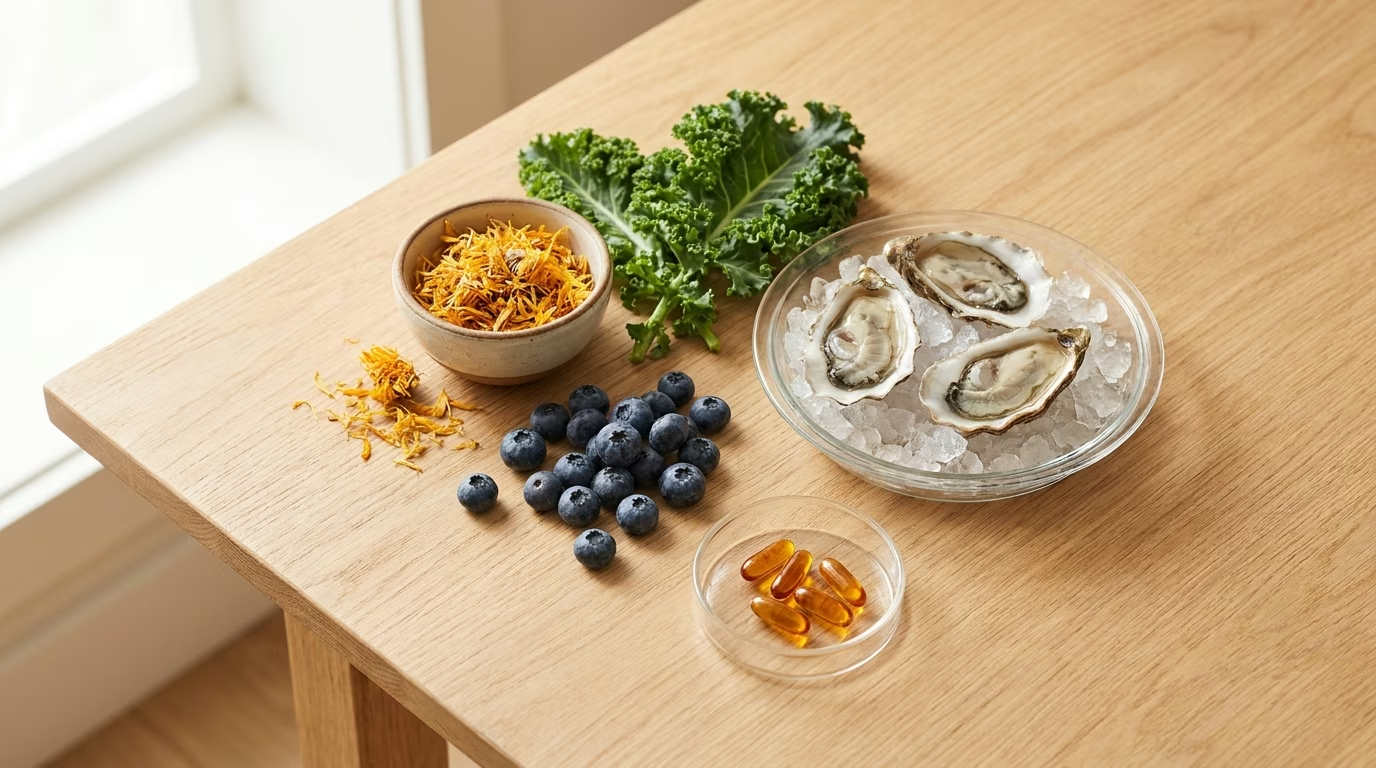

Two complaints bring most people to this category, and they are not the same problem. One is eyes that feel dry, gritty and heavy after a long day at a screen. The other is headlight glare on the drive home that takes longer to clear than it used to. Different mechanisms, different nutrients, different timelines. Buying a formula aimed at the wrong one is the most common way people conclude that eye supplements do nothing.
Why Screen Fatigue and Night Vision Are Different Problems
Digital eye strain is mostly mechanical and mostly about the surface of the eye. You blink roughly a third as often when you stare at a screen, which lets the tear film thin out and the surface dry. At the same time the ciliary muscle — the ring of muscle that changes your lens shape to focus close up — holds a sustained contraction for hours. Dry surface plus tired muscle is the gritty, heavy, slightly blurred feeling at 5pm.
Night vision difficulty is a different system entirely. It depends on rod photoreceptors, on the retinal pigment cycle that regenerates the light-sensitive molecules those rods use, and on macular pigment density — the yellow lutein and zeaxanthin filter over your central vision that reduces glare scatter and speeds recovery after a bright light passes.
The first responds to antioxidants and circulation over weeks. The second depends on a pigment layer that takes months to build. Which is why one person says an eye supplement worked in three weeks and another says it did nothing in eight — they were measuring different things.
For Screen Fatigue: Astaxanthin and Bilberry
These two have the most directly relevant randomised evidence for the screen problem, and they work on the two halves of it.
Astaxanthin
A carotenoid from red algae that sits inside lipid membranes rather than at the surface of them, which changes how it behaves in tissue. A 2025 randomised double-blind placebo-controlled trial in Advances in Therapy found astaxanthin improved both acute and chronic digital eye strain (PMID 40014233). If you had to pick one ingredient for a monitor-heavy job, this is the one with the trial behind it.
Bilberry
Bilberry targets the muscular half. A 2020 randomised double-blind placebo-controlled trial in Nutrients found twelve weeks of bilberry extract produced objective improvement in ciliary muscle contraction (PMID 32106548) — an actual measured change in the focusing mechanism rather than a self-reported impression. A 2015 randomised trial in The Journal of Nutrition, Health & Aging found reduced eye fatigue among video display terminal workers (PMID 25923485).
Expect screen-fatigue benefits earlier than anything else in this category — often inside the first month for the antioxidant effects, and around the twelve-week mark for the focusing changes, which is exactly how long the bilberry trial ran.
For Night Driving: Lutein, Zeaxanthin and Patience
Glare recovery is a macular pigment story, and macular pigment is built entirely from dietary lutein and zeaxanthin. Your body cannot manufacture either one.
That pigment layer absorbs high-energy blue wavelengths before they scatter across the retina. Denser pigment means less scatter, less veiling glare from oncoming headlights, and faster recovery after the car passes. Pigment optical density varies enormously between people, tracks dietary intake, and changes over months rather than weeks.
The AREDS2 trial used 10mg of lutein and 2mg of zeaxanthin daily (JAMA, 2013, PMID 23644932). That is the reference amount for any formula claiming to help here, and it is worth checking against because most products will not tell you what they contain.
Ginkgo biloba is the other night-vision-adjacent ingredient with published data — a 1999 randomised trial in the Journal of Ocular Pharmacology and Therapeutics measured increased ocular blood-flow velocity (PMID 10385132). Worth knowing that ginkgo has antiplatelet activity and interacts with blood thinners.
The timeline mismatch nobody warns you about
Screen fatigue responds in weeks. Night vision depends on pigment that builds over months. If you buy a formula for night driving and judge it at six weeks, you will conclude it failed when you simply have not given it long enough. Mark twelve weeks on a calendar before you start.
Two Things That Beat Any Supplement
We would rather tell you this than sell you something. Both of these are free and both have better evidence than anything in a bottle.
- The 20-20-20 rule. Every twenty minutes, look at something twenty feet away for twenty seconds. It releases the ciliary muscle contraction and prompts a burst of blinking that restores the tear film. It costs nothing and does more for screen fatigue than any capsule.
- Genuine UV-blocking sunglasses. Cumulative UV exposure is one of the better-established modifiable risk factors for age-related eye change. A cheap pair that actually blocks UV beats an expensive supplement.
- A dilated eye exam every year after 50. Difficulty with night driving is occasionally the first noticeable sign of something a supplement does not address — early cataract, for instance. An exam distinguishes 'my macular pigment is thin' from 'my lens is clouding', and those need entirely different responses.
Which Formulas Actually Cover These Ingredients
We checked the direct-to-consumer vision formulas we could verify at the checkout rather than the sales page. Two carry the relevant ingredients.
VisiFlora is the better fit if screen fatigue is your main complaint, because it contains astaxanthin and iGenics does not. It also carries the full AREDS2 set plus bilberry and saffron, in one daily capsule with a 60-day guarantee. iGenics covers the AREDS2 core with ginkgo as its lead ingredient plus bilberry and saffron, and its 180-day return window is a better match for the night-vision timeline — a process that takes four months deserves more than sixty days to evaluate.
Neither publishes ingredient amounts, which is the standing problem across this whole category. The side-by-side comparison covers the trade-offs, and the full eye health supplement guide goes deeper on the underlying research. If you are still deciding whether any of this is worth doing, start with whether eye vitamins actually work.
How to Run a Fair Test
- Write down a specific baseline on day one. 'Headlight glare takes about four seconds to clear.' 'Eyes feel gritty by 4pm on monitor days.' Not 'my eyes are tired.'
- Take it with a meal containing fat. Astaxanthin, lutein and zeaxanthin are all fat-soluble. On an empty stomach you waste much of the dose.
- Judge screen fatigue at eight weeks, night vision at twelve. Different mechanisms, different clocks.
- Do not change three things at once. If you start a supplement, buy new glasses and adopt the 20-20-20 rule in the same week, you will never know what helped.
The Bottom Line
Match the formula to the complaint. Astaxanthin and bilberry for screens, with results in weeks. Lutein and zeaxanthin for night driving, with results in months. Take it with dinner, keep a written baseline, and do the free things — the 20-20-20 rule, real sunglasses, and the annual eye exam — regardless of what you buy.
Looking for Vision Health supplements?
Our experts have reviewed and compared the top vision health supplements to help you find the right one.
See our expert comparisonFrequently Asked Questions
What is the best supplement for digital eye strain?
Astaxanthin has the most directly relevant evidence. A 2025 randomised double-blind placebo-controlled trial in Advances in Therapy found it improved both acute and chronic digital eye strain. Bilberry is the useful companion, targeting the ciliary muscle rather than the surface — a 2020 randomised trial in Nutrients measured objective improvement in ciliary muscle contraction after twelve weeks. Look for a formula containing both, and expect changes in weeks rather than days.
Can supplements improve night vision?
Indirectly and slowly. Glare recovery when driving at night depends heavily on macular pigment density, which is built from dietary lutein and zeaxanthin — your body cannot manufacture either. Increasing intake raises pigment density over months, which reduces glare scatter. The AREDS2 trial used 10mg lutein and 2mg zeaxanthin daily. What supplements will not do is improve low-light vision in someone whose difficulty comes from an early cataract, which is why an eye exam matters before you start buying.
How long do eye strain supplements take to work?
Screen fatigue responds fastest — antioxidant effects on comfort and dryness often show up inside the first month, and the ciliary muscle improvements measured in the bilberry trial appeared at twelve weeks. Night vision is slower because macular pigment builds over months. If you are buying for night driving, plan on twelve weeks minimum before you judge anything.
Does the 20-20-20 rule actually help eye strain?
Yes, and it costs nothing. Every twenty minutes, look at something twenty feet away for twenty seconds. It releases the sustained ciliary muscle contraction of close work and prompts a burst of blinking, which restores the tear film that thins out when you stare at a screen. For most people it does more for screen fatigue than any supplement, and it works alongside one rather than instead of it.
Why do my eyes feel dry and gritty after using a computer?
Mostly because you stop blinking. Blink rate drops by roughly two-thirds during screen work, which lets the tear film evaporate and leaves the ocular surface dry. Add hours of sustained close focus and low-humidity office air and you get the gritty, heavy feeling by late afternoon. Deliberate blinking breaks, a humidifier and lowering your monitor slightly below eye level all help, and astaxanthin has trial evidence for the same complaint.
Should I see a doctor about night driving difficulty?
If it has changed noticeably, yes — book a dilated eye exam before you buy anything. Increasing trouble with headlight glare is sometimes the first noticeable sign of early cataract, which no supplement addresses. It can also relate to prescription changes that are simple to correct. Supplements are a reasonable thing to add after an exam has ruled out the things that need a different answer.
Get honest health tips & reviews
Join our newsletter for science-backed supplement reviews and wellness advice.
No spam. Unsubscribe anytime.