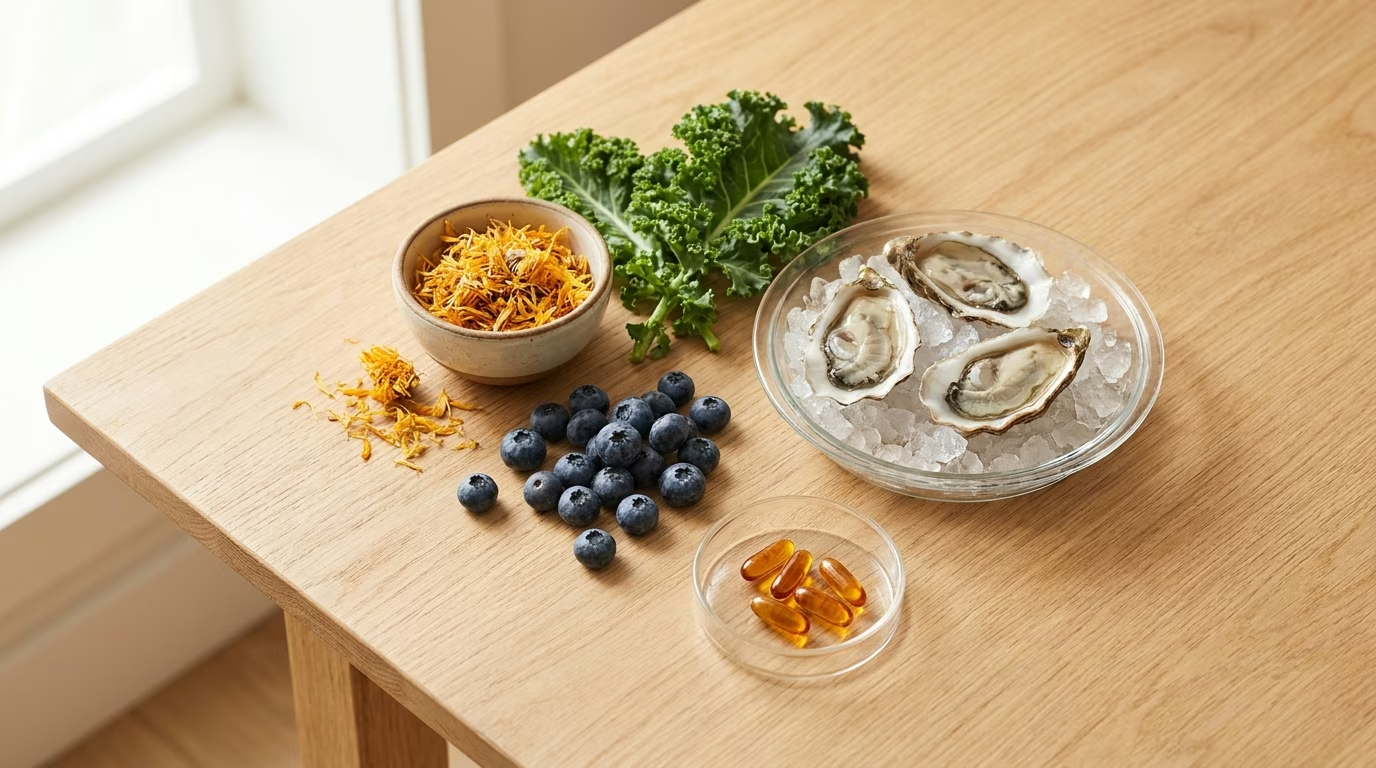

Walk down the eye-health aisle, or scroll through the ads that follow you after one search about night driving, and you will find dozens of formulas making broadly identical promises. Almost none of them are built on anything. There is, however, one exception — a single nutrient combination that has been through a large randomised trial run by the US National Eye Institute, published in JAMA, and followed for a decade afterwards. Everything worth knowing about eye supplements starts there, and most of what gets sold has nothing to do with it. This guide separates the two.
The One Thing With Real Evidence: AREDS2
In 2013, JAMA published the Age-Related Eye Disease Study 2 — AREDS2 — a large multicentre randomised trial run by the National Eye Institute. It asked a specific question: in an antioxidant formula for age-related macular change, is beta carotene the right carotenoid, or would lutein and zeaxanthin work better? (PMID 23644932)
The answer was lutein and zeaxanthin. Ten-year follow-up published in JAMA Ophthalmology in 2022 confirmed it — the lutein and zeaxanthin arm slowed progression to late age-related macular degeneration more effectively than the original formulation (PMID 35653117). A 2025 analysis in Ophthalmology from the same dataset found the combination slowed geographic atrophy spreading toward the fovea, the part of the retina responsible for the centre of your vision (PMID 39025435).
A 2023 Cochrane systematic review reached the same conclusion independently: antioxidant vitamin and mineral supplementation slows progression of established age-related macular degeneration (PMID 37702300). Cochrane also added a caveat worth repeating, because supplement marketing never does — the evidence does not support these nutrients as a way to prevent macular disease in healthy eyes. What they do is slow something that has already started.
The AREDS2 formulation is six components, and if a product does not contain all six it is starting behind whatever else is on its label:
- Lutein — 10mg. A carotenoid that concentrates in the macula, forming the yellow pigment layer over your central vision.
- Zeaxanthin — 2mg. Lutein's structural partner, concentrated in the very centre of the macula.
- Vitamin C — 500mg. Water-soluble antioxidant, present in high concentration in ocular tissue.
- Vitamin E — 400 IU. The lipid-phase antioxidant counterpart.
- Zinc — 25 to 80mg. A cofactor for enzymes involved in retinal metabolism.
- Copper — 2mg. Included specifically because sustained zinc supplementation depletes copper.
Write those numbers down, because they are the measuring stick for everything that follows. A supplement that names all six ingredients but will not tell you the amounts is asking you to assume it matches a trial it is quietly citing.
Macular Pigment: The Mechanism Worth Understanding
Lutein and zeaxanthin are not general-purpose antioxidants that happen to be good for eyes. They are the physical material your macula uses to build a filter.
That filter does two jobs. It absorbs high-energy blue wavelengths before they reach the photoreceptors underneath, and it quenches the oxidative by-products of the enormous metabolic workload the retina carries. Your body cannot manufacture either carotenoid. Every molecule of macular pigment you have came from something you ate — dark leafy greens, egg yolks, corn, and not much else in a typical American diet.
Macular pigment optical density is measurable, it varies enormously between individuals, and it responds to dietary intake over months. This is why eye nutrition is such a slow category and why anyone judging a formula at four weeks is measuring nothing. Pigment does not accumulate on a weekly timescale.
The single habit that matters most
Lutein, zeaxanthin, astaxanthin, lycopene and vitamins A and E are all fat-soluble. Taken with black coffee or on an empty stomach, a substantial portion of what you paid for passes straight through. Taken with a meal containing fat — eggs, olive oil, avocado, cheese — absorption improves substantially. This one detail probably matters more than which brand you buy.
Food First, Because It Is Cheaper and Better Absorbed
Before you buy anything, it is worth knowing that the nutrients in question are available at a supermarket, in forms your body handles at least as well as a capsule. Supplements exist to close a gap, and it is reasonable to find out how big yours is first.
- Kale, spinach and collard greens. By a wide margin the densest dietary source of lutein and zeaxanthin. A single cooked cup of kale can exceed the 10mg of lutein used in AREDS2.
- Egg yolks. Lower in absolute carotenoid content than greens, but the lutein arrives packaged in fat, which makes it unusually well absorbed. Two eggs a day is a genuinely evidence-supported habit here.
- Orange peppers and sweet corn. Among the few common foods with meaningful zeaxanthin specifically, which is scarcer in the diet than lutein.
- Oily fish. Salmon, sardines and mackerel for omega-3s. AREDS2 tested omega-3 supplementation and did not find added benefit for macular outcomes, but dietary fish intake associates with better eye health in observational work.
- Oysters, beef and pumpkin seeds. The practical dietary zinc sources, if you would rather not supplement a mineral that needs copper alongside it.
The honest case for supplementing is this: most American adults eat nowhere near a cup of kale a day, and macular pigment is built entirely from what arrives. If you already eat greens most days, a formula adds less than the marketing implies. If your last week of vegetables was a side salad, the gap is real and a capsule is a reasonable way to close it.
Four Ingredients Beyond AREDS2 That Have Their Own Trials
A handful of nutrients outside the core six have genuine randomised evidence behind them. Not landmark evidence, and generally in smaller trials with narrower endpoints — but real, published, and specific enough to be useful when you are matching a formula to your actual complaint.
Astaxanthin — for screen fatigue
A carotenoid from red algae with an unusual structure: it spans the lipid membrane rather than sitting on one side of it, which changes how it behaves in tissue. A 2025 randomised double-blind placebo-controlled trial in Advances in Therapy found astaxanthin improved both acute and chronic digital eye strain (PMID 40014233). If your complaint is nine hours at a monitor and gritty eyes by 5pm, this is the most directly relevant trial in eye nutrition.
Bilberry — for the focusing muscle
The story about WWII pilots eating bilberry jam for night vision is folklore that will not die. The actual modern data is better than the folklore deserves. A 2020 randomised double-blind placebo-controlled trial in Nutrients found twelve weeks of bilberry extract produced objective improvement in ciliary muscle contraction — the muscle that changes your lens shape when you shift focus (PMID 32106548). A 2015 randomised trial in The Journal of Nutrition, Health & Aging found reduced eye fatigue among video display terminal workers (PMID 25923485).
Saffron — for visual function in early macular change
Small trials, but properly randomised ones, and consistent in direction. A 2010 trial in Investigative Ophthalmology & Visual Science measured improved retinal flicker sensitivity in early age-related macular degeneration (PMID 20688744). A 2019 randomised trial in Graefe's Archive and a 2024 trial in BMJ Open Ophthalmology followed with visual acuity outcomes (PMID 30343354, PMID 38485112). Saffron is among the most expensive botanicals on earth, so its presence on a mid-priced label is either meaningful or homeopathic — and without a published dose you cannot tell which.
Ginkgo biloba — for ocular circulation
A 1999 randomised trial in the Journal of Ocular Pharmacology and Therapeutics measured a genuine increase in ocular blood-flow velocity after ginkgo supplementation (PMID 10385132), and a 2011 study in the Korean Journal of Ophthalmology found similar short-term effects on peripapillary retinal blood flow (PMID 21976939). Ginkgo is also the one ingredient in this category with a serious interaction profile — it has antiplatelet activity and should be discussed with your prescriber if you take warfarin, apixaban, clopidogrel or daily aspirin.
What About the Gut-Eye Connection?
Several newer formulas build their pitch around a gut-eye axis: the idea that intestinal barrier integrity influences inflammatory load reaching the retina. It sounds like invented marketing, and the presentation usually is theatrical. The underlying research is not.
A 2024 randomised clinical trial in Nutrients examined micronutrient supplementation and the gut-retina axis in patients with neovascular age-related macular degeneration, and found supplementation shifted the altered microbiota profile (PMID 39599758). The gut-retina axis is a real and reasonably active area of ophthalmology research. What it is not, yet, is a demonstrated route to better vision through supplementation — the mechanism is plausible and the outcome data is thin. Buy those formulas for their carotenoids, and treat the gut story as a bonus rather than the reason.
Two Products Worth Considering in 2026
We reviewed the direct-to-consumer vision formulas we could verify — checking prices and refund windows at the actual checkouts, not the marketing pages — and two made the cut on ingredient evidence rather than persuasive copy.
VisiFlora is the broader formula. It carries all six AREDS2 nutrients plus astaxanthin, bilberry and saffron, in one vegan capsule daily, with a 60-day money-back guarantee. Its weakness is that only the zinc dose (11mg) is published, and fitting 22 ingredients into a single capsule raises a fair question about how much of each you actually get.
iGenics is the shorter, plainer option: twelve ingredients built around ginkgo biloba and the AREDS2 core, with bilberry, saffron and turmeric. Two capsules daily. Its two real advantages are a $59 single-bottle trial and a 180-day return window — genuinely useful on a process that takes four months. It publishes no doses at all.
Neither publishes a full supplement facts panel, which is the standing indictment of this entire category. We put them side by side in a full comparison if you want the detail, and the 2026 vision health roundup covers the ranking logic.
A third product comes up constantly in the same ads and fails the measuring stick above outright. EyeFortin is a 500 mg amino-acid dropper — L-glutamic acid, L-tyrosine, taurine, alpha-GPC — with no lutein and no zeaxanthin in it at all. Our EyeFortin review covers what the label does contain, and why that matters in a category whose only landmark trial was built on carotenoids.
How to Judge Whether It Is Working
Most people evaluate eye supplements badly, and it is not their fault — the timeline is genuinely counterintuitive. Here is what a fair assessment looks like.
- Write a baseline on day one. Not 'my eyes feel tired' — specifics. 'Headlight glare takes about four seconds to clear.' 'Menu at the Italian place needs the phone flashlight.' 'Eyes feel gritty by 4pm on monitor days.' Vague impressions three months later are useless.
- Weeks 1-4: comfort, not vision. Less dryness, less end-of-day grittiness. This comes from the antioxidant group and is the earliest thing anyone notices.
- Weeks 5-12: focusing comfort. Switching between a monitor and something across the room takes less effort. The bilberry ciliary muscle trial ran exactly twelve weeks, so this window is on schedule.
- Weeks 13 and beyond: glare and low light. This depends on macular pigment density, which builds slowly. It is also why a 60-day guarantee on a 120-day process is a mismatch worth planning around.
- Take it with food containing fat, every single time. Skipping this wastes a meaningful share of what you paid for.
This is support, not treatment
Eye supplements are dietary supplements. They are not intended to diagnose, treat, cure or prevent any disease, they do not change a refractive prescription, and they do not reverse damage that has already occurred. Sudden vision changes, flashes of light, a curtain across your visual field or a shower of new floaters need same-day attention from an eye doctor. If you are over 50 and have not had a dilated eye exam in the past year, that appointment is worth more than anything in this article.
The Short Version
Buy for the AREDS2 six and treat everything else as optional. Match the extras to your actual complaint — astaxanthin if you live on screens, bilberry if focusing is the problem, saffron if early macular change is the concern. Prefer a brand that publishes doses, and if you cannot find one, at least prefer a short label over a long one, because 22 ingredients in a single capsule is a physical constraint no marketing can talk its way around.
Take it with dinner. Give it twelve weeks. And book the eye exam.
Looking for Vision Health supplements?
Our experts have reviewed and compared the top vision health supplements to help you find the right one.
See our expert comparisonFrequently Asked Questions
Do eye supplements actually work?
One combination does, within limits. The AREDS2 formula — lutein, zeaxanthin, zinc, copper, vitamin C and vitamin E — slowed progression of established age-related macular change in a large randomised trial published in JAMA in 2013, and the ten-year follow-up in JAMA Ophthalmology confirmed it. A 2023 Cochrane review reached the same conclusion. What the evidence does not support is using these nutrients to prevent eye disease in healthy eyes, or to improve a prescription. Beyond AREDS2, astaxanthin, bilberry, saffron and ginkgo have smaller randomised trials for specific outcomes.
How long do eye supplements take to work?
Three months minimum before you judge anything. Comfort changes — less dryness, less end-of-day fatigue — often appear inside the first month. Focusing comfort follows around weeks four to twelve. Anything involving night vision or glare recovery depends on macular pigment density, which builds over months. The single most common mistake in this category is quitting at week four and concluding it does nothing.
Should I take eye supplements with food?
Always, and with food that contains some fat. Lutein, zeaxanthin, astaxanthin, lycopene and vitamins A and E are all fat-soluble, and taking them on an empty stomach wastes a substantial share of the dose. Eggs, olive oil, avocado or cheese in the same meal is enough. This detail probably matters more than which brand you choose.
What is the difference between AREDS and AREDS2?
The original AREDS formula used beta carotene as its carotenoid. That created a problem: high-dose beta carotene was associated with increased lung cancer risk in current and former smokers. AREDS2 tested lutein and zeaxanthin as replacements and found they performed better, which is why every modern eye formula is built on the AREDS2 version. If you have a smoking history, check whether a product still contains beta carotene and raise it with your doctor.
Do eye supplements interact with any medications?
The main one is ginkgo biloba, which appears in most vision formulas and has antiplatelet activity. If you take warfarin, apixaban, rivaroxaban, clopidogrel or daily aspirin, discuss it with your prescriber before starting, and stop ginkgo-containing supplements roughly two weeks before scheduled surgery. High-dose zinc over long periods can also deplete copper, which is why AREDS2 includes copper alongside it.
Can supplements replace my glasses or an eye exam?
No. Eye supplements do not change a refractive prescription and they do not substitute for a dilated eye exam, which catches conditions that develop without symptoms. If you are over 50 and have not had one in the past year, book it. And treat sudden vision changes, flashes of light, a curtain across your field of view or a sudden increase in floaters as an emergency rather than something to research.
Get honest health tips & reviews
Join our newsletter for science-backed supplement reviews and wellness advice.
No spam. Unsubscribe anytime.