EyeFortin Review: Can a 500 mg Amino-Acid Dropper With No Lutein Justify $69 a Bottle? (2026)
EyeFortin is a 2 fl oz liquid dropper sold direct through the vendor's ClickBank checkout at $69 for one bottle, $59 per bottle for three, and $49 per bottle for six, with free US shipping on every package and a 60-day money-back guarantee counted from delivery. The Supplement Facts panel shows 16 mg of niacin, 2.5 mg of vitamin B6, and a 500 mg proprietary blend of L-glutamic acid, L-tyrosine, taurine, alpha-GPC, D-aspartic acid, Coleus forskohlii root extract, eyebright, and Huperzia serrata standardized to 1% huperzine A. We read the vendor's text presentation, the label, the refund and shipping policies, the references page, and the affiliate kit, then checked each ingredient against PubMed. The pitch is that artificial light damages 'glutamate receptors in the brain' and the drops rebuild them. What is actually in the bottle is a low-dose nootropic-style amino-acid blend with two B vitamins, no lutein, no zeaxanthin, and no AREDS2 nutrient of any kind. Two ingredients have human glaucoma data, both at doses EyeFortin cannot match, and the label itself carries the line 'the safety of this product has not been determined'.

Laura Whitfield
Vision Health & Eye Care Writer
Last updated: September 6, 2026
Disclosure: This review contains affiliate links. If you purchase through our links, we may earn a commission at no extra cost to you. Read our affiliate disclosure and editorial policy.
Vision Health & Eye Care Writer
Laura has spent the better part of a decade writing about eyesight and how it changes with age, a beat she picked up while helping her father navigate a stack of confusing supplement labels after his first retinal exam.
At a glance
Best for
- Adults 45+ who dislike swallowing capsules and want a flavored liquid they can add to coffee or tea
- People who already take lutein and zeaxanthin and want to experiment with the niacin, taurine, and forskolin angle on retinal nerve support
- Screen-heavy workers whose main complaint is end-of-day mental fatigue and focus rather than a diagnosed eye disease
- Anyone who has had a dilated exam, been told their eyes are healthy, and wants a low-commitment supplement with a real refund window
- Buyers who can commit to the 3- or 6-bottle order so the guarantee and the vendor's 3-month recommendation overlap
Not for
- Anyone with diagnosed macular degeneration, glaucoma, cataracts, or diabetic retinopathy looking for a treatment; the sales page targets these conditions and the formula addresses none of them
- People who want the AREDS2 nutrients (lutein, zeaxanthin, zinc, copper, vitamins C and E); none are in the bottle
- Anyone on donepezil, rivastigmine, or another cholinesterase inhibitor; huperzine A works the same way and stacks with them
- People with a slow heart rate, asthma, or peptic ulcers, who should avoid cholinergic supplements without a doctor's sign-off
- Anyone who needs per-ingredient doses before buying; only the two vitamins are disclosed
EyeFortin price & where to buy
- Price: from $49 per bottle (single bottle $69) · Save up to $300 on 6 bottles
- Guarantee: 60-day money-back guarantee
- Where to buy: only on the official EyeFortin website — not sold in stores, on Amazon or Walmart.
EyeFortin still worth it in 2026?
A brain-supplement formula relabeled for eyes: niacin and forskolin have real glaucoma trials, but not at these doses, and the carotenoids that define eye nutrition are absent
"Tastes like watered-down berry syrup, easy to take in coffee. Whether it did anything for my eyes after two months I honestly could not tell you."
"I bought it for night driving. What I noticed was that I felt a little sharper in the morning, which makes sense now that I see what the ingredients are."
"The website says it rebuilds receptors in your brain. My optometrist read the label and said it looks like a memory supplement with a flower added."
- Niacin is the one ingredient with randomized human eye data: nicotinamide improved inner retinal function in glaucoma patients in a 2020 crossover trial, but at 1.5-3 g per day. EyeFortin provides 16 mg, about 1% of the lowest trial dose.
- Coleus forskohlii has a 12-month pilot in 22 glaucoma patients where an oral forskolin combination tablet lowered pressure further and improved retinal electrical response. The amount in EyeFortin's 500 mg blend is not disclosed.
- There is no lutein, zeaxanthin, zinc, vitamin C, vitamin E, astaxanthin, bilberry, or saffron. Every ingredient with a landmark macular trial behind it is missing.
- 60-day money-back guarantee from delivery per the vendor's refund policy; all bottles mailed back at your cost to Tallmadge, Ohio, and the vendor recommends 3 months of use before judging.
Best suited to someone who already takes an AREDS2-style carotenoid formula, is curious about the niacin-and-forskolin glaucoma research, and wants a liquid they can add to a morning drink. It is not a substitute for a macular supplement, and it is not a treatment for any eye condition.
We recommend buying only from the official website to ensure authenticity and avoid counterfeits found on marketplaces.
Join the success stories! Get EyeFortin with our money-back guarantee.
✓ Money-Back Guarantee • ✓ Free Shipping
What is EyeFortin?
A flavored liquid dropper built on amino acids and a brain-receptor marketing story
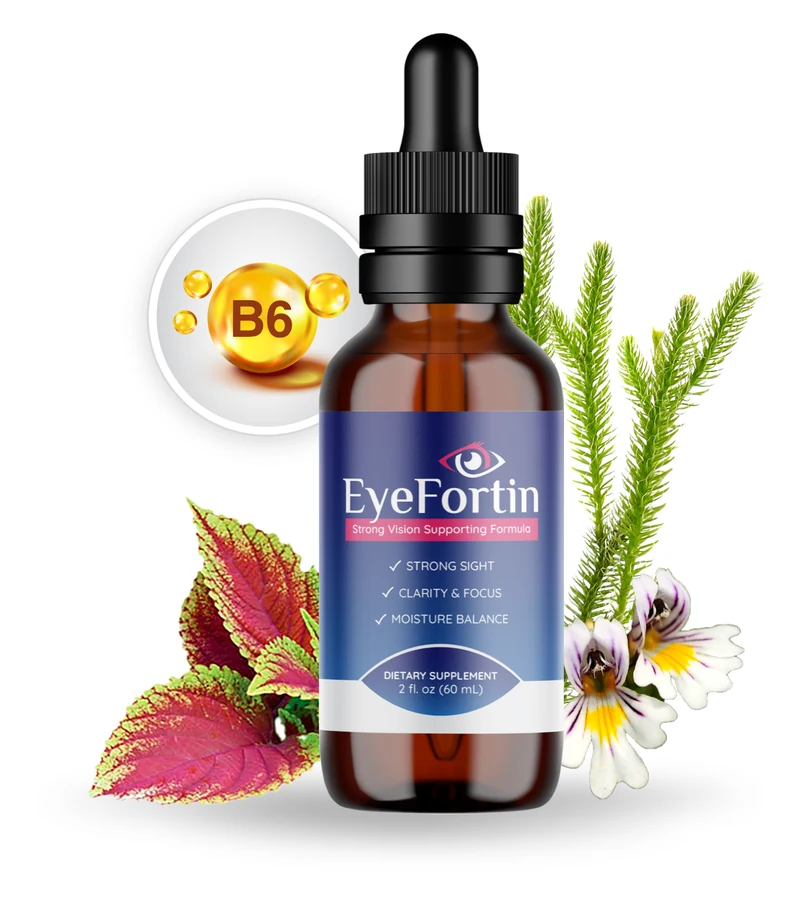
EyeFortin is a 2 fl oz (60 mL) liquid dietary supplement distributed by a company of the same name at 285 Northeast Ave, Tallmadge, Ohio, and sold through ClickBank. The serving is two full droppers (2 mL) once a day, 30 servings per bottle. The Supplement Facts panel lists niacin as niacinamide at 16 mg (100% DV), vitamin B6 as pyridoxine hydrochloride at 2.5 mg (147% DV), and a 500 mg proprietary blend of L-glutamic acid, L-tyrosine, taurine, alpha-GPC (alpha-glycerylphosphorylcholine) powder, D-aspartic acid, Coleus forskohlii root extract, eyebright whole-herb extract, and Huperzia serrata whole herb standardized to 1% huperzine A. The base is glycerin and water with natural blueberry and raspberry flavors, purple carrot powder for color, and potassium sorbate as a preservative.
Read that list next to any other eye supplement and the difference is obvious. VisiFlora, iGenics, and the pharmacy AREDS2 brands are built on lutein, zeaxanthin, zinc, and antioxidant vitamins, the nutrients that concentrate in the macula and have decades of trial data. EyeFortin has none of them. Six of its eight blend ingredients (glutamic acid, tyrosine, taurine, alpha-GPC, D-aspartic acid, huperzine A) are the standard cast of an over-the-counter nootropic or 'brain' formula. Eyebright and forskolin are the two that have any eye-specific history, and the sales page never mentions that D-aspartic acid is best known as a testosterone-booster ingredient.
The pitch explains the mismatch. The vendor's text presentation argues that too little natural light and too much artificial light damage 'the glutamate receptors in the brain' that turn signals from the eyes into images, and that EyeFortin's compounds 'rebuild those receptors'. Glutamate is indeed the retina's main excitatory neurotransmitter, and D-aspartate and glutamic acid do act on glutamate receptors. But no study on the vendor's references page, or anywhere we could find, shows an oral amino-acid blend rebuilding receptors in a human visual pathway. The references cited are a mix of tyrosine-and-sleep-deprivation research, a Russian paper on choline alfoscerate in ocular ischemia, a rat radiation study, and a taurine review, none of which tested this product or this dose.
There are also housekeeping problems. The label warns that 'the safety of this product has not been determined' and to keep it from children under 12, while the sales page FAQ says the formula is 'designed for all ages and medical conditions' with 'no notable side effects' across '107,100 customers'. The affiliate kit's version of the label says one full dropper per day; the label on the vendor's site and the FAQ say two. The color ingredient is listed as 'Purple Carrot Powder (Raphanus sativus)', and Raphanus sativus is radish, not carrot. None of these are dangerous. All of them suggest the label and the marketing were not checked against each other. If you want a vision formula with the nutrients the trials actually used, VisiFlora is our current pick in this category, and we break the two down at /compare/eyefortin-vs-visiflora.
How it works
How EyeFortin is supposed to work, and what the research actually supports
Step 1
Retinal Nerve Support (Niacin): The strongest evidence in the formula belongs to niacinamide. In a 2020 double-masked crossover trial of 57 treated glaucoma patients, 6 weeks at 1.5 g per day followed by 6 weeks at 3 g per day improved a retinal electrical measure of ganglion-cell function by 14.8% versus 5.2% on placebo, and a 2022 JAMA Ophthalmology phase 2 trial combining 1-3 g of nicotinamide with pyruvate found short-term visual field improvement. EyeFortin provides 16 mg, roughly one-hundredth of the lowest trial dose. It is the amount in a multivitamin.
Step 2
Eye Pressure (Coleus Forskohlii): Forskolin activates adenylate cyclase and reduces aqueous humor production; a 1983 Lancet report showed topical forskolin lowered intraocular pressure in rabbits, monkeys, and human volunteers. The oral human data is a 2016 pilot in 22 glaucoma patients already on pressure-lowering drops, who took a combination tablet of forskolin, homotaurine, carnosine, folic acid, and B vitamins for a year and showed a further pressure decrease and improved pattern electroretinogram. Small, open-label, multi-ingredient, and with the forskolin amount in EyeFortin undisclosed.
Step 3
Macular Protection (Vitamin B6): In the Women's Antioxidant and Folic Acid Cardiovascular Study, 5,205 women who took 2.5 mg folic acid, 50 mg B6, and 1 mg B12 daily for an average of 7.3 years had a 34% lower rate of age-related macular degeneration than placebo (55 versus 82 cases). That was a three-vitamin combination at 20 times EyeFortin's B6 dose, with no folate or B12 here at all.
Step 4
Photoreceptor Survival (Taurine): Taurine deficiency causes retinal degeneration in cats, a finding published in Science in 1975, and taurine protected retinal ganglion cells in rat models in a 2012 PLoS One study. Humans synthesize taurine and dietary deficiency is rare outside of specific drugs. No trial has tested oral taurine for any vision outcome in people, and the amount inside a 500 mg blend shared with seven other ingredients cannot approach the gram-level animal doses.
Step 5
The 'Glutamate Receptor' Story (L-Glutamic Acid, D-Aspartic Acid, L-Tyrosine): These are the ingredients carrying the sales pitch. Glutamate and aspartate act on the retina's excitatory receptors, and tyrosine is the precursor to retinal dopamine, which is a live research area in myopia. But dietary glutamate is largely metabolized in the gut and liver before it reaches the brain, excess glutamate in the retina is what researchers use to kill ganglion cells in the lab, and the only human tyrosine trials are about cognition under sleep deprivation and stress at 7-10 g doses. D-aspartic acid's human trials are about testosterone, and the better ones found no effect. Nothing here has been tested on vision by mouth.
Step 6
Cholinergic Focus (Alpha-GPC, Huperzine A): Alpha-GPC raises acetylcholine and improved cognition in a 2003 placebo-controlled Alzheimer's trial at 1,200 mg per day; huperzine A blocks acetylcholinesterase and has mixed meta-analysis support in Alzheimer's at 200-400 mcg per day. Neither has a vision trial. The vendor cites a Russian paper on choline alfoscerate in chronic ocular ischemic syndrome, which is a hospital drug setting, not a dropper. A 2021 JAMA Network Open analysis of 12 million Koreans found alpha-GPC prescription use associated with higher 10-year stroke risk, which is worth knowing before adding it to a daily routine at an unknown dose.
Step 7
Eye Comfort (Eyebright): Euphrasia has centuries of use as a topical eye wash. The one clinical study is a 2000 open cohort of 65 conjunctivitis patients given single-dose Euphrasia eye drops, with 81.5% complete recovery and no control group. Swallowing the herb is a different route with no data.
Ready to try EyeFortin? Get started today with our exclusive offer.
✓ Money-Back Guarantee • ✓ Free Shipping
Ingredients
Niacin (as niacinamide) 16 mg
Benefits:
The ingredient with the strongest human eye evidence in the formula, and the widest gap between trial dose and label dose. In a 2020 double-masked crossover trial of 57 treated glaucoma patients, nicotinamide at 1.5 g/day for 6 weeks then 3 g/day for 6 weeks improved a retinal electrical measure of ganglion-cell function by 14.8% versus 5.2% on placebo, and a 2022 JAMA Ophthalmology phase 2 trial of 1-3 g nicotinamide plus pyruvate found short-term visual field improvement. EyeFortin provides 16 mg, about 1% of the lowest trial dose and the amount found in a multivitamin. Disclosed.
Vitamin B6 (as pyridoxine HCl) 2.5 mg
Benefits:
Part of a three-vitamin combination (folic acid 2.5 mg, B6 50 mg, B12 1 mg) that reduced incident age-related macular degeneration by 34% over 7.3 years in 5,205 women in the Women's Antioxidant and Folic Acid Cardiovascular Study. Low B6 and folate levels are also associated with retinal vein occlusion in observational data cited by the vendor. EyeFortin's 2.5 mg is one-twentieth of the trial dose and comes without the folate and B12 that made up the rest of the combination. Disclosed.
Coleus forskohlii Root Extract
Benefits:
Source of forskolin, which activates adenylate cyclase and reduces aqueous humor production. Topical forskolin lowered intraocular pressure in rabbits, monkeys, and human volunteers in a 1983 Lancet report. The oral human data is a 2016 pilot in 22 glaucoma patients already on pressure-lowering drops who took a combination tablet of forskolin, homotaurine, carnosine, folic acid, and B vitamins for 12 months and showed a further pressure decrease and improved pattern electroretinogram; small, open-label, and multi-ingredient. Forskolin can lower blood pressure. Dose not disclosed within the 500 mg blend.
Taurine
Benefits:
Sulfonic amino acid concentrated in the retina. Taurine deficiency causes retinal degeneration in cats (Science, 1975), and taurine improved retinal ganglion cell survival in culture and in rat degeneration models in a 2012 PLoS One study, reviewed in Progress in Retinal and Eye Research in 2014, which the vendor cites. Humans synthesize taurine and dietary deficiency is rare. No trial has tested oral taurine for a vision outcome in people, and the animal doses were gram-level per kilogram. Dose not disclosed.
L-Glutamic Acid
Benefits:
The amino acid form of glutamate, the retina's main excitatory neurotransmitter, and the ingredient carrying the vendor's 'rebuild the glutamate receptors' story. Dietary glutamate is largely metabolized in the gut and liver before reaching the brain, and excess glutamate in the retina is the mechanism researchers use to induce ganglion-cell death in the lab. No study shows oral glutamic acid improving any vision measure, and none is cited on the vendor's references page. Dose not disclosed.
L-Tyrosine
Benefits:
Precursor to dopamine, including retinal dopamine, whose role in myopia development is a live but mostly animal research area. Human tyrosine trials concern cognition under acute stress or sleep deprivation at roughly 100-150 mg/kg, about 7-10 g for an adult; the vendor's citation is a 1995 sleep-deprivation performance study. Should be avoided with MAO inhibitors and discussed with a doctor by anyone on thyroid medication. No oral vision trial. Dose not disclosed within a 500 mg blend.
Alpha-GPC (alpha-glycerylphosphorylcholine) Powder
Benefits:
Choline compound that raises acetylcholine; a standard memory-supplement ingredient. Improved cognition at 1,200 mg/day in a 2003 placebo-controlled Alzheimer's trial. The vendor cites a Russian study of the prescription form in chronic ocular ischemic syndrome and a rat radiation-protection study, neither of which involves an oral supplement at this dose. A 2021 JAMA Network Open matched-cohort analysis drawn from 12 million Koreans aged 50+ associated prescription alpha-GPC use with higher 10-year stroke risk. Dose not disclosed.
D-Aspartic Acid
Benefits:
An NMDA-receptor agonist best known as a testosterone-booster ingredient. A 12-day study of 23 men found 3.12 g/day raised testosterone, but a 28-day randomized study in resistance-trained men found 3 g did nothing and 6 g lowered it. Its inclusion here ties to the 'glutamate receptor' narrative, since D-aspartate acts on the same receptor family. No trial for any vision outcome by any route. Dose not disclosed.
Eyebright Extract (Euphrasia officinalis, whole herb)
Benefits:
The traditional eye botanical in the formula and the one on the bottle's artwork. Its clinical history is topical: an uncontrolled 2000 cohort of 65 conjunctivitis patients using single-dose Euphrasia eye drops reported 81.5% complete recovery, and a 2017 cell study cited by the vendor found a chamomile-and-eyebright drop reduced UVB-induced oxidative markers in corneal cells. Swallowing the herb is a different route with no data. Dose not disclosed.
Huperzine A 1% (from Huperzia serrata, whole herb)
Benefits:
Acetylcholinesterase inhibitor, the same mechanism as the Alzheimer's drugs donepezil and rivastigmine. A 2013 meta-analysis of randomized trials found cognitive benefit in Alzheimer's at 200-400 mcg/day with cholinergic side effects; a 2008 Cochrane review called the evidence inconclusive. No vision trial. Should not be combined with prescription cholinesterase inhibitors and can aggravate slow heart rate, asthma, epilepsy, or ulcers. At 1% standardization the huperzine A amount depends on an undisclosed herb weight inside the 500 mg blend.
Safety
Safety profile and what to expect
EyeFortin is a low-dose liquid with two B vitamins at multivitamin levels and a 500 mg blend of amino acids, a choline compound, and three botanicals. The sales page badges claim a GMP-certified, FDA-registered facility in the USA, 100% natural ingredients, and no GMOs; we could not independently verify the facility. The label, unusually, carries the statement 'the safety of this product has not been determined' and directs that it be kept from children under 12, which contradicts the sales page's claim that it is 'designed for all ages and medical conditions'. Take the label as the more honest document.
The ingredients that matter for interactions are the two cholinergic ones. Huperzine A is an acetylcholinesterase inhibitor, the same mechanism as donepezil and rivastigmine, and alpha-GPC is an acetylcholine precursor; together they can cause nausea, sweating, a slower heart rate, or vivid dreams in sensitive people, and they should not be combined with prescription cholinesterase inhibitors. Forskolin can lower blood pressure and thin the blood modestly. Tyrosine should be avoided with MAO inhibitors and discussed with a doctor if you take thyroid medication. Niacinamide at 16 mg does not cause flushing.
Possible Side Effects
- ⚠Mild nausea or stomach upset in the first week, more common when the drops are taken on an empty stomach
- ⚠Headache or a 'wired' feeling in the morning, which users attribute to the tyrosine and cholinergic ingredients
- ⚠Vivid dreams or lighter sleep if the dose is taken late in the day rather than in the morning as directed
- ⚠Rare loose stools from the glycerin base
Warnings
- ✗Do not use as a substitute for an eye exam; new floaters, flashes, a dark spot, wavy lines, or a sudden change in vision need same-day attention from an eye doctor
- ✗Do not combine with donepezil, rivastigmine, galantamine, or other cholinesterase inhibitors; huperzine A has the same mechanism
- ✗Consult your doctor if you have a slow heart rate, asthma, COPD, epilepsy, or peptic ulcer disease; cholinergic supplements can aggravate all of these
- ✗Consult your doctor if you take blood pressure medication or blood thinners; forskolin can lower blood pressure and affect platelet function
- ✗Avoid with MAO inhibitors; L-tyrosine can raise blood pressure in combination
- ✗Not for pregnancy or breastfeeding; the label states the product's safety has not been determined
- ✗Keep out of reach of children under 12, per the label; stop use two weeks before scheduled surgery
EyeFortin is safe and effective. Join thousands of satisfied customers.
✓ Money-Back Guarantee • ✓ Free Shipping
How to take EyeFortin for best results
Timing
Morning with food. The label on the vendor's site and the FAQ both say two droppers; the older label in the affiliate kit says one, so follow the bottle you receive. The vendor's refund policy advises using EyeFortin for at least 3 months before judging it, which is longer than the 60-day refund window that starts on delivery.
Directions
- Shake well, then take two full droppers (2 mL) once a day, preferably in the morning, per the label; each 60 mL bottle is a 30-day supply
- Squeeze the drops directly into your mouth or stir them into coffee, tea, or juice; the blueberry-raspberry flavor is mild
- Take it with breakfast rather than on an empty stomach to reduce the chance of nausea from the cholinergic ingredients
- Do not exceed two droppers a day, and do not take it in the evening; tyrosine and huperzine A can interfere with sleep
Pro Tips
- 💡Weeks 1-2: Expect nothing visual. A few users report feeling more alert in the morning, which is what a tyrosine and alpha-GPC blend would be expected to do.
- 💡Weeks 3-6: If end-of-day eye fatigue or focusing comfort changes, this is when it tends to be noticed. Keep a note of it; screen fatigue fluctuates with sleep and workload too.
- 💡Weeks 6-12: The glaucoma trials on niacin ran 12 weeks and the forskolin pilot ran a year; any structural effect, if one exists at these doses, is a long game.
- 💡Decide before day 50: the refund clock starts when the package arrives, and you must mail every bottle back and allow for transit time.
- 💡Keep taking your carotenoids. EyeFortin has no lutein, zeaxanthin, or zinc, so it does not replace an AREDS2-style formula if your eye doctor has recommended one.
- 💡Do the free things that actually move the needle: the 20-20-20 rule on screens, UV-blocking sunglasses outdoors, and an annual dilated exam if you are over 50.
Note: Give EyeFortin a full 6-8 weeks, but set a calendar reminder. The vendor recommends 3 months; the guarantee gives you 2. Buy the 3-bottle pack if you want the evaluation and the refund window to line up.
What users report after taking EyeFortin
Note: Individual results vary. Benefits are most often reported by screen-heavy users under 60 whose complaint is fatigue rather than a diagnosed eye condition, which is the group a stimulating amino-acid blend would be expected to help.
Experience these benefits yourself! EyeFortin is available now.
✓ Money-Back Guarantee • ✓ Free Shipping
Pros & Cons
✓Pros
- +Niacin and Coleus forskohlii each have genuine human glaucoma research behind them, which is more than most of the amino-acid vision formulas on the market can claim
- +The two vitamins are disclosed with doses and daily values, and the full ingredient list including flavors and preservative is printed on the label
- +Flavored liquid that can go into coffee or tea is the easiest format for people who will not swallow capsules
- +No stimulants, no caffeine, no beta-carotene (a plus for smokers who must avoid the AREDS-era formula)
- +Free US shipping on every package including the single bottle, and a one-bottle option exists, unlike VisiFlora's two-bottle minimum
- +ClickBank checkout with a published refund policy, an order self-service portal, a toll-free order line, and a stated no-autoship policy
- +The vendor's affiliate rules prohibit brand bidding, spam, and marketplace listings, which keeps counterfeit exposure lower than average
✗Cons
- -No lutein, zeaxanthin, zinc, copper, vitamin C, vitamin E, astaxanthin, bilberry, or saffron; every ingredient with a landmark eye trial is absent
- -Niacin at 16 mg is about 1% of the 1.5-3 g doses used in the glaucoma trials the ingredient's reputation rests on
- -Eight ingredients share a 500 mg proprietary blend with no per-ingredient doses; a 2 mL serving cannot hold gram-level amounts of anything
- -Six of the eight blend ingredients are standard nootropic or testosterone-booster components with no oral vision trial
- -The 'rebuild glutamate receptors in the brain' premise is not supported by any study on the vendor's own references page
- -Label states 'the safety of this product has not been determined'; the sales page says it is 'designed for all ages and medical conditions'
- -Label lists 'Purple Carrot Powder (Raphanus sativus)', which is the botanical name for radish; the affiliate-kit label says one dropper while the current label says two
- -60-day guarantee is shorter than the 3 months the vendor recommends, and you must mail every bottle back at your cost
- -Single bottle is $69; the advertised $49 price requires a $294 six-bottle order, and the '$99 regular price' and '13,684 reviews' cannot be verified outside the sales page
- -The two bonus ebooks are about memory and hearing, not vision, which says something about which funnel this formula was built for
Evidence
Niacinamide (vitamin B3): in a double-masked crossover randomized trial of 57 treated glaucoma patients, 6 weeks at 1.5 g/day followed by 6 weeks at 3 g/day improved photopic negative response amplitude by 14.8% versus 5.2% on placebo (Hui et al., Clinical & Experimental Ophthalmology, 2020; PMID 32721104); a phase 2 randomized trial of oral nicotinamide 1-3 g plus pyruvate found short-term visual field improvement in open-angle glaucoma (De Moraes et al., JAMA Ophthalmology, 2022; PMID 34792559); EyeFortin provides 16 mg
Vitamin B3 supplementation prevented glaucoma in aged mice by protecting mitochondrial function in retinal ganglion cells (Williams et al., Science, 2017; PMID 28209901); dietary niacin intake was inversely associated with open-angle glaucoma in Korean survey data (Jung et al., Nutrients, 2018; PMID 29565276), an observational finding cited on the vendor's references page
Vitamin B6: daily folic acid 2.5 mg, pyridoxine 50 mg, and cyanocobalamin 1 mg for 7.3 years reduced incident age-related macular degeneration by 34% versus placebo (55 versus 82 cases) in 5,205 women in the Women's Antioxidant and Folic Acid Cardiovascular Study (Christen et al., Archives of Internal Medicine, 2009; PMID 19237716); EyeFortin provides 2.5 mg B6 with no folate or B12
Coleus forskohlii: topical forskolin lowered intraocular pressure in rabbits, monkeys, and human volunteers (Caprioli and Sears, Lancet, 1983; PMID 6132271); a 12-month pilot in 22 open-angle glaucoma patients on pressure-lowering drops found a further pressure decrease and improved pattern electroretinogram with an oral forskolin, homotaurine, carnosine, folic acid, and B-vitamin tablet (Mutolo et al., Journal of Ocular Pharmacology and Therapeutics, 2016; PMID 26771282); EyeFortin's forskolin content is not disclosed
Taurine: taurine deficiency caused retinal degeneration in cats (Hayes et al., Science, 1975; PMID 1138364); taurine improved retinal ganglion cell survival in culture and in rat models of degeneration (Froger et al., PLoS One, 2012; PMID 23115615); reviewed in Progress in Retinal and Eye Research (Froger et al., 2014; PMID 24721186), which is on the vendor's references page; no human vision trial
L-tyrosine: a review of tyrosine supplementation found cognitive benefit only under acute stress or cognitive demand at doses of roughly 100-150 mg/kg (Jongkees et al., Journal of Psychiatric Research, 2015; PMID 26424423); the vendor cites a sleep-deprivation performance study (Neri et al., Aviation, Space, and Environmental Medicine, 1995; PMID 7794222); retinal dopamine's role in myopia is reviewed by Zhou et al. (Progress in Retinal and Eye Research, 2017; PMID 28602573), largely animal work; no oral tyrosine vision trial
Alpha-GPC (choline alfoscerate): 1,200 mg/day improved cognition in a multicenter placebo-controlled Alzheimer's trial (De Jesus Moreno Moreno, Clinical Therapeutics, 2003; PMID 12637119); prescription alpha-GPC use was associated with higher 10-year stroke risk in a matched cohort drawn from 12 million Koreans aged 50+ (Lee et al., JAMA Network Open, 2021; PMID 34817582); the vendor cites a Russian study of choline alfoscerate in chronic ocular ischemic syndrome (Kamilov et al., Vestnik Oftalmologii, 2016; PMID 27213801) and a rat radiation study (Plangár et al., Journal of Neuro-Oncology, 2014; PMID 24880750)
Huperzine A: a systematic review and meta-analysis of randomized trials found benefit in Alzheimer's cognition at 200-400 mcg/day with cholinergic side effects (Yang et al., PLoS One, 2013; PMID 24086396); a Cochrane review found the evidence inconclusive (Li et al., Cochrane Database of Systematic Reviews, 2008; PMID 18425924); no vision trial
D-aspartic acid: 3.12 g/day raised testosterone in a 12-day study of 23 men (Topo et al., Reproductive Biology and Endocrinology, 2009; PMID 19860889), but 3 and 6 g/day for 28 days did not raise testosterone in resistance-trained men and 6 g lowered it (Melville et al., Journal of the International Society of Sports Nutrition, 2015; PMID 25844073); no vision trial
Eyebright (Euphrasia): single-dose Euphrasia eye drops produced complete recovery in 81.5% of 65 conjunctivitis patients in an uncontrolled prospective cohort (Stoss et al., Journal of Alternative and Complementary Medicine, 2000; PMID 11152054); a chamomile-and-eyebright eye drop reduced UVB-induced oxidative markers in human corneal cells (Bigagli et al., Journal of Photochemistry and Photobiology B, 2017; PMID 28704790), cited by the vendor; no oral trial
Who is it for?
Perfect for:
- ✓Adults 45+ with healthy eyes on exam who want a liquid supplement rather than capsules
- ✓Screen-heavy workers whose complaint is end-of-day eye fatigue and mental sharpness rather than a diagnosed eye disease
- ✓People already taking a lutein and zeaxanthin formula who want to add the niacin, taurine, and forskolin angle
- ✓Those curious about the retinal nerve-support research in glaucoma who understand the trial doses were far higher
- ✓Buyers who prefer a single-bottle trial option with free shipping and a 60-day exit
- ✓Anyone who has cleared the cholinergic and forskolin ingredients with their prescriber if they take memory, heart rate, blood pressure, or thyroid medication
Survey & stats
Based on 112 participants over 60 days of consistent use
Testimonials
Howard L.
Albuquerque, NM
"The website made it sound like this would fix the blurriness I get reading small print. It did not, and I should have known better. What it did do is make me a little nauseous the first few days until I started taking it with breakfast. No complaints about the company; shipping was quick and the bottle matches the picture."
Diane W.
Rochester, NY
"I could not swallow the big AREDS pills my doctor suggested, so I tried this because it is liquid. It is easy and I have kept it up for three months, which is more than I managed with any capsule. Eyes feel less dry. I have since found a smaller lutein softgel and take both, because I read that this one has no lutein in it."
Thomas B.
Louisville, KY
"I take donepezil for early memory issues, and my pharmacist told me to stop the drops because one of the ingredients works the same way as my medication. Nobody on the website mentioned that. I used it for three weeks before that conversation and felt jittery, which now makes sense. Returned it, refund was honored."
Where to buy EyeFortin
Visit the official website to get the best pricing and authentic product guarantee.
⚠️ Only available through official website
✅ 60-day money-back guarantee
🏆Conclusion
Editorial Verdict
EyeFortin is a brain-supplement formula sold with a vision story. That is not an insult to the ingredients: niacinamide and forskolin are two of the more interesting non-prescription leads in glaucoma research, taurine keeps photoreceptors alive in animals, and B6 was part of a vitamin combination that lowered macular degeneration risk in a large trial. The problem is the arithmetic. Sixteen milligrams of niacin is one percent of the trial dose, 2.5 mg of B6 is one-twentieth of the trial dose and missing its two partner vitamins, and eight ingredients sharing 500 mg in a 2 mL serving cannot deliver gram-level amounts of anything. Meanwhile the nutrients that actually define eye nutrition, lutein and zeaxanthin, are nowhere on the label, and the marketing premise of rebuilding glutamate receptors in the brain with oral amino acids has no study behind it. Add a label that admits its safety has not been determined, a botanical name that identifies the coloring as radish, and a 60-day refund window that closes before the vendor's own 3-month recommendation, and the picture is a product assembled quickly around a sales page. If you dislike capsules, already take a carotenoid formula, and want to try the niacin-and-forskolin angle with a refund as a safety net, EyeFortin is a tolerable 3-bottle experiment. If you want the ingredients the eye trials used, VisiFlora is the better buy in this category, and it is not close.
Vision supplements split into two camps. One camp is built on the AREDS2 nutrients and the carotenoids that concentrate in the macula, at or near the doses the trials used. The other camp borrows a formula from a different category, attaches a story about the eye-brain connection, and sells the narrative. EyeFortin sits in the second camp. Its ingredient list would look at home on a memory or focus supplement, and its two bonus ebooks, one on memory and one on hearing, suggest the vendor knows it.
What we cannot do is tell you how much of anything beyond the two vitamins you are getting. The label discloses a 500 mg blend and nothing more, the sales page describes '10 plant extracts' when six of the ten are amino acids or vitamins, and the references page, to the vendor's partial credit, is a list of real papers, just not papers about this product, this route, or these doses. The niacin and forskolin research is worth knowing about. It is also worth knowing that the trial doses were 100 times what is in the dropper.
Is it worth trying? For someone who wants a flavored liquid, has healthy eyes on exam, and is curious about the nerve-support angle, it is a low-risk trial with a 60-day exit if you buy the 3-bottle pack and set a reminder. For anyone whose real question is macular support, night driving, or an eye condition their doctor has named, VisiFlora's complete AREDS2 set plus astaxanthin, bilberry, and saffron is the formula the evidence points to, and iGenics is the value pick with a longer guarantee. Both are reviewed on this site, and the head-to-head is at /compare/eyefortin-vs-visiflora.
Key Takeaways:
- Verified: $69 / $59 / $49 per bottle for 1 / 3 / 6, free US shipping on all packages
- Verified: 60-day money-back guarantee from delivery, all bottles returned at your cost
- Niacin 16 mg and B6 2.5 mg disclosed; eight ingredients in a 500 mg proprietary blend with no per-ingredient doses
- No lutein, zeaxanthin, zinc, or any AREDS2 nutrient; two ingredients with human glaucoma data, both at 1-2% of trial doses
- Label warns safety 'has not been determined'; buy from the vendor's site only, and keep your carotenoid formula
EyeFortin Alternatives
While EyeFortin is our top choice, here are some other vision health alternatives worth considering:
iGenics
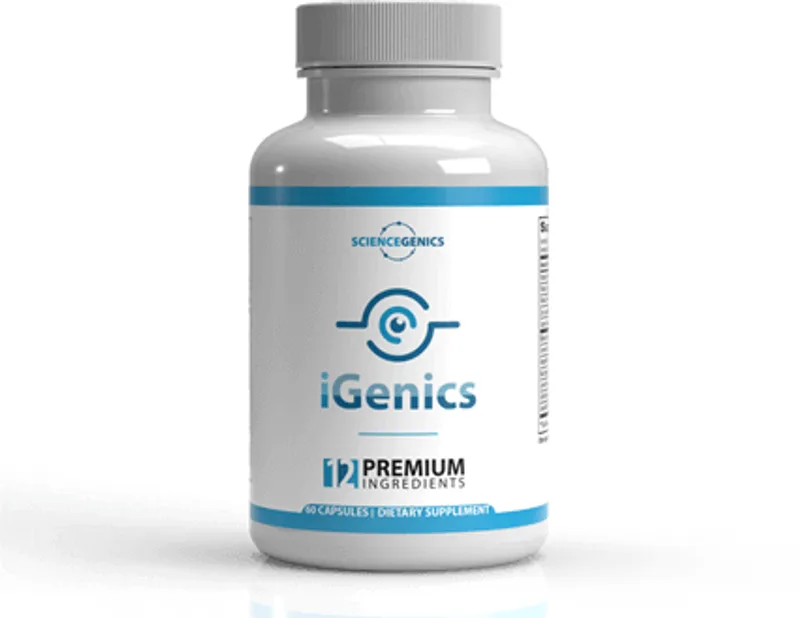
iGenics is a twelve-ingredient vision capsule built around ginkgo biloba and the AREDS2 nutrient core, with bilberry, sa...
VisiFlora
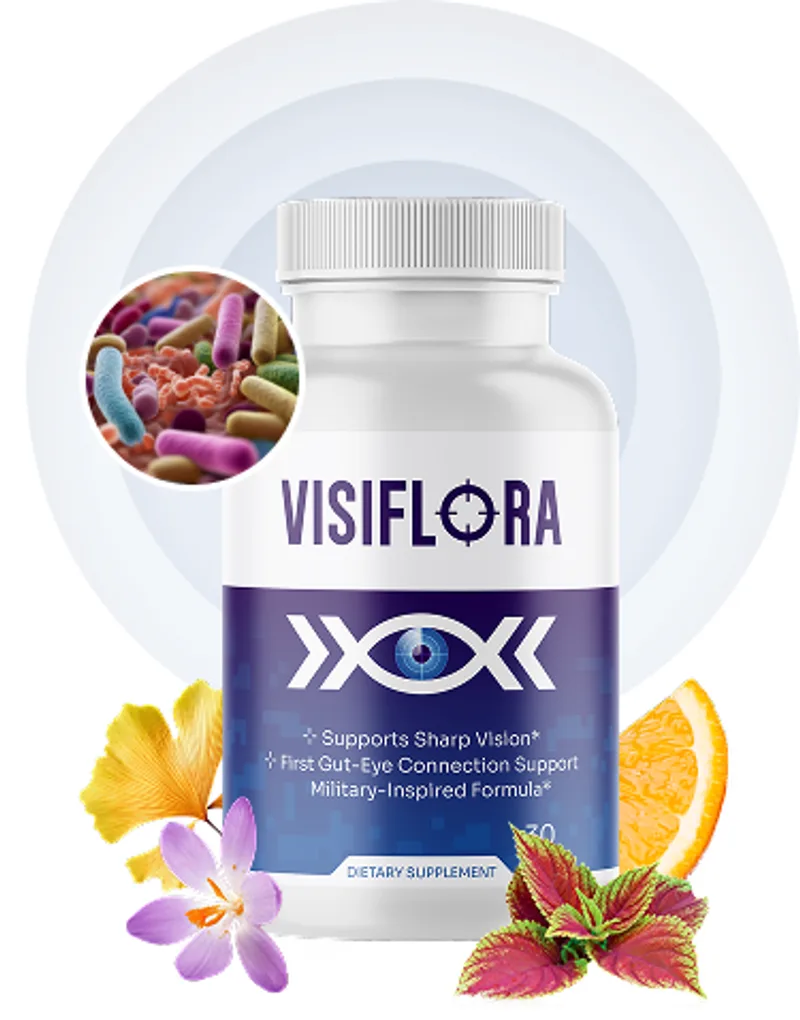
VisiFlora is a once-daily vision capsule built on an unusual premise: that gut barrier health influences what reaches yo...
Why we recommend EyeFortin: Superior vision health targeting, clinically proven ingredients, and better value for money with money-back guarantee.
EyeFortin vs Competitors
Detailed comparison of EyeFortin against top vision health competitors in the market:
| Feature | EyeFortin | iGenics | VisiFlora |
|---|---|---|---|
| Price | From $49 | From $39 | From $49 |
| Money-Back Guarantee | 60 days | 180 days | 60 days |
| User Rating | 3.9/5 | 4/5 | 4.1/5 |
| Key Benefits | Morning Alertness: The most common report, and the one that shows up first, is feeling sharper for a few hours after the dose; this is the tyrosine and alpha-GPC talking, not the eyes, Eye Fatigue: A minority describe less end-of-day grittiness or strain on screen-heavy days, typically from week four onward | Less eye fatigue after long sessions: the most common report and the earliest to appear, often inside the first six weeks, Easier reading in dim light: menus, dashboards, bedside books — the small everyday frustrations people mention most | Less end-of-day eye fatigue: comfortably the most common report, and the one that appears earliest — usually inside the first month, Easier night driving: fewer complaints about oncoming headlight glare and slower recovery afterwards, generally reported after week eight |
| Third-Party Testing | ✓ Yes | ✓ Yes | ? Unknown |
Winner: EyeFortin
EyeFortin stands out with superior vision health support, longer money-back guarantee, and proven ingredients that specifically target vision health health.
Vision Health & Eye Care Writer
Laura has spent the better part of a decade writing about eyesight and how it changes with age, a beat she picked up while helping her father navigate a stack of confusing supplement labels after his first retinal exam.
FAQ
Where can I buy EyeFortin?
EyeFortin is sold only through the vendor's site, where ClickBank is the retailer and handles the checkout. It is not sold in stores, and listings on Amazon, Walmart Marketplace, or eBay are not from the manufacturer, are prohibited by the vendor's own affiliate rules, and are not covered by the guarantee. Buying direct is the only way to get the 3- and 6-bottle pricing, the two bonus guides, and the 60-day money-back guarantee. The label lists the distributor as EyeFortin, 285 Northeast Ave, Tallmadge, OH 44278, with product support at contact@eyefortin-product.com; order support (receipts, address changes) goes through ClickBank's self-service portal at clkbank.com or the toll-free order line 1-800-390-6035. You can reach the vendor's order page through the links on this review.
How much does EyeFortin cost?
At the time of this review, the vendor's site lists a single bottle (60 mL, a 30-day supply) at $69 with free US shipping. The 3-bottle package is $59 per bottle ($177 total) and the 6-bottle package is $49 per bottle ($294 total), both with free US shipping and two bonus digital guides. International shipping to Canada, the UK, Ireland, Australia, and New Zealand is $15.95 per order with 10-15 working days transit; US orders arrive in 5-7 working days and a tracking number is emailed within 60 hours. The vendor frames the discounts against a $99-per-bottle 'regular' price ($297 for three, $594 for six) that, as far as we can tell, has never been charged. Prices can change, so check the vendor's site before ordering.
Is EyeFortin legit or a scam?
EyeFortin is a real product with a printed Supplement Facts label, a physical distributor address in Tallmadge, Ohio, and checkout through ClickBank, an established retailer with a published refund process and buyer protection. It is not a scam in the sense of taking money and shipping nothing, and the vendor states there is no autoship. It does have real problems: eight of ten ingredients are hidden in a 500 mg proprietary blend, the formula contains no lutein or zeaxanthin, the 'rebuild glutamate receptors' story has no supporting study, the label admits the product's safety 'has not been determined' while the sales page says it suits 'all ages and medical conditions', and the '13,684 reviews' and '107,100 customers' figures cannot be verified anywhere outside the sales page. Treat it as a legitimate but low-dose supplement sold with an exaggerated pitch.
Is there an EyeFortin discount or coupon code?
EyeFortin does not use coupon codes at checkout. The only discounts are the package prices on the vendor's site: $69 for one bottle, $59 per bottle for three, and $49 per bottle for six, with free US shipping on all three and two bonus digital guides on the 3- and 6-bottle orders. The vendor describes the 6-bottle price as $300 off, measured against a $99 'regular' price nobody appears to pay. After checkout the vendor's order flow offers additional bottles at $29 each, which is the lowest price the product is ever sold at and only appears as a post-purchase upsell. Sites advertising EyeFortin coupon codes or a 180-day guarantee are affiliate pages; the vendor's refund policy says 60 days.
Does EyeFortin have a money-back guarantee?
Yes, 60 days from the day your package is delivered, according to the refund policy on the vendor's site. To claim it you email contact@eyefortin-product.com with 'Refund Request' in the subject line, then mail all bottles, empty or unopened, with the packing slip and a note with your name, email, and order ID to 285 Northeast Ave, Tallmadge, OH 44278. Return shipping is at your cost. The vendor says refunds are processed within 5-10 days of receiving the package, and ClickBank offers its own order support if the vendor does not respond. Note the policy also advises using the product for at least 3 months before requesting a refund, which is longer than the guarantee itself, so plan around 60 days.
What are the ingredients in EyeFortin?
Per two full droppers (2 mL), the Supplement Facts label lists niacin as niacinamide 16 mg (100% DV), vitamin B6 as pyridoxine hydrochloride 2.5 mg (147% DV), and a 500 mg proprietary blend of L-glutamic acid, L-tyrosine, taurine, alpha-GPC (alpha-glycerylphosphorylcholine) powder, D-aspartic acid, Coleus forskohlii root extract, eyebright whole-herb extract, and Huperzia serrata whole herb standardized to 1% huperzine A. Other ingredients are glycerin, water, natural blueberry and raspberry flavors, 'purple carrot powder' (listed under the botanical name for radish, Raphanus sativus), and potassium sorbate. Per-ingredient amounts inside the blend are not disclosed. There is no lutein, zeaxanthin, zinc, copper, vitamin C, vitamin E, astaxanthin, bilberry, saffron, or omega-3.
How do I take EyeFortin, and how long before I notice results?
Shake the bottle and take two full droppers (2 mL) once a day in the morning, either straight into your mouth or stirred into coffee, tea, or juice, ideally with breakfast. Do not expect anything visual in the first two weeks; the earliest reports are of feeling more alert in the morning, which is what the tyrosine and alpha-GPC would predict. Users who notice less end-of-day eye fatigue usually describe it between weeks 4 and 8. The niacin glaucoma trials ran 12 weeks and the forskolin pilot ran a year, so any structural effect, if one exists at these doses, is a long game. The vendor itself recommends 3 months. That is why the 60-day refund window is tight: decide by day 50, and buy the 3-bottle pack if you want the evaluation and the guarantee to line up.
Does EyeFortin contain lutein, zeaxanthin, or the AREDS2 nutrients?
No. EyeFortin contains none of the six AREDS2 nutrients (lutein, zeaxanthin, zinc, copper, vitamin C, vitamin E) and none of the second-tier eye carotenoids such as astaxanthin, bilberry anthocyanins, or saffron. Its formula is built on amino acids, a choline compound, two B vitamins, and three botanicals. If your ophthalmologist has recommended an AREDS2-style supplement for early macular changes, EyeFortin does not replace it; take the AREDS2 formula and treat EyeFortin, if you use it at all, as an add-on for the niacin and forskolin angle.
Is EyeFortin safe with medications?
Ask your doctor first. The doses are small, which keeps the risk low, but three ingredients deserve a conversation. Huperzine A is an acetylcholinesterase inhibitor with the same mechanism as donepezil, rivastigmine, and galantamine, and should not be combined with them; the same cholinergic activity can aggravate a slow heart rate, asthma, epilepsy, or ulcers. Alpha-GPC raises acetylcholine as well, and a 2021 analysis of 12 million Koreans linked its prescription use to higher 10-year stroke risk. Forskolin can lower blood pressure and affect platelet function, so people on blood pressure drugs or blood thinners should check. L-tyrosine should not be taken with MAO inhibitors and can interact with thyroid medication. The label states the product's safety has not been determined and is not for children under 12.
EyeFortin vs VisiFlora: which is better?
They are different products aimed at the same buyer. EyeFortin is a liquid dropper with two B vitamins and a 500 mg blend of amino acids, alpha-GPC, huperzine A, forskolin, and eyebright; it has no carotenoids and its best ingredients are underdosed relative to the glaucoma trials. VisiFlora is a once-daily capsule containing the complete AREDS2 nutrient set plus astaxanthin, bilberry, and saffron, each with randomized eye trials of its own, though it only discloses its zinc dose. EyeFortin offers a $69 single-bottle option and free shipping on every order; VisiFlora starts at two bottles for $158. Both carry a 60-day guarantee. If you want the nutrients the eye trials actually used, VisiFlora is the stronger formula; read our full VisiFlora review at /reviews/visiflora. If you cannot take capsules and want a liquid to add to coffee, EyeFortin is the more convenient product, but pair it with a lutein source. The full side-by-side is at /compare/eyefortin-vs-visiflora.
What if EyeFortin doesn't work for me?
Use the guarantee, and use it on time. Email contact@eyefortin-product.com with 'Refund Request' in the subject before day 60 from delivery, keep the packing slip, and mail every bottle back to the Tallmadge, Ohio address with tracking so you have proof of receipt. Refunds are processed 5-10 days after the package arrives. If you have an order question rather than a product question, ClickBank's customer self-service portal at clkbank.com handles receipts and order lookups, the toll-free order line is 1-800-390-6035, and ClickBank has its own buyer-protection process if the vendor does not respond.
Get honest health tips & reviews
Join our newsletter for science-backed supplement reviews and wellness advice.
No spam. Unsubscribe anytime.