
Michael Chen
Hearing Health & Audiology Writer
The Health News
Credentials
- 10+ years covering hearing health and audiology
- Certified Health Content Writer
- Member, Association of Health Care Journalists
About
Michael has been writing about hearing health and tinnitus management for over 10 years, driven by a personal interest in how sound shapes quality of life.
He focuses on making hearing science accessible and helping readers navigate age-related hearing changes and modern ear care strategies.
Areas of Expertise
Articles (16)

Best Supplements for Lung Health in 2026: What Science Supports
From NAC to quercetin to vitamin D, several supplements show genuine promise for respiratory health. Here's what the clinical evidence actually supports — and what's just marketing noise.

Does Quietum Plus Really Work for Tinnitus? Honest Analysis
Quietum Plus is one of the most popular tinnitus supplements available. But does it actually work? We analyze the science behind its ingredients, real user reviews, and what you can realistically expect.

How to Improve Respiratory Health: Evidence-Based Strategies
From breathing exercises to air quality to targeted nutrition, there's a lot you can do to protect and strengthen your lungs. Here are the strategies with the strongest scientific backing.

NAC (N-Acetyl Cysteine) Benefits: What the Research Actually Shows
NAC has been called everything from a 'miracle antioxidant' to a 'detox essential.' Here's what the clinical research actually supports — from respiratory health to liver protection to brain function.
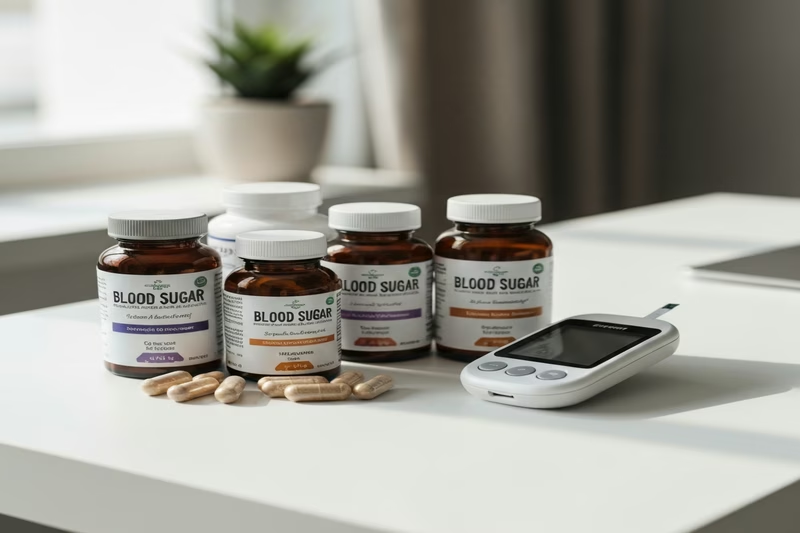
Blood Sugar Supplements: Which Ingredients Actually Work?
The blood sugar supplement market is flooded with products making bold claims. But which ingredients have real clinical evidence behind them? We break down the science on berberine, chromium, cinnamon, alpha-lipoic acid, and more — so you know what to look for and what to skip.
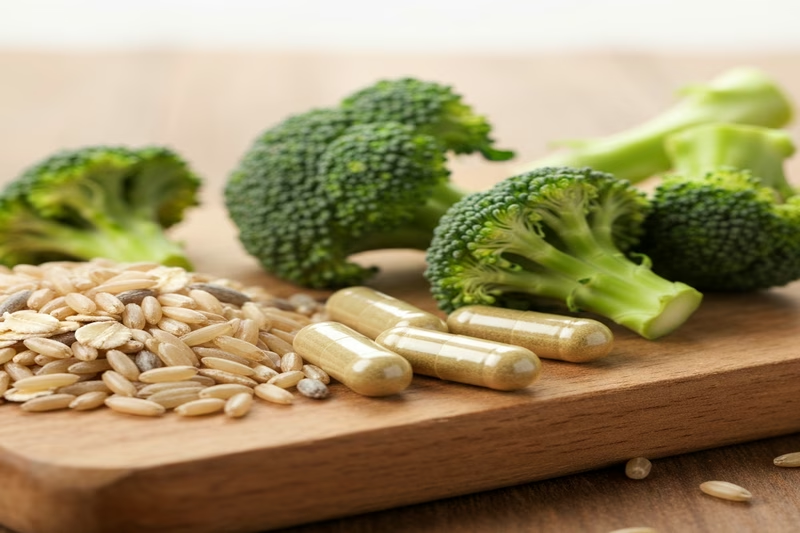
Chromium for Blood Sugar: Does This Mineral Actually Help?
Chromium is one of the most common ingredients in blood sugar supplements, but the evidence behind it is more nuanced than marketing suggests. Here's what the research actually shows about chromium, blood sugar, and whether supplementation makes sense for you.
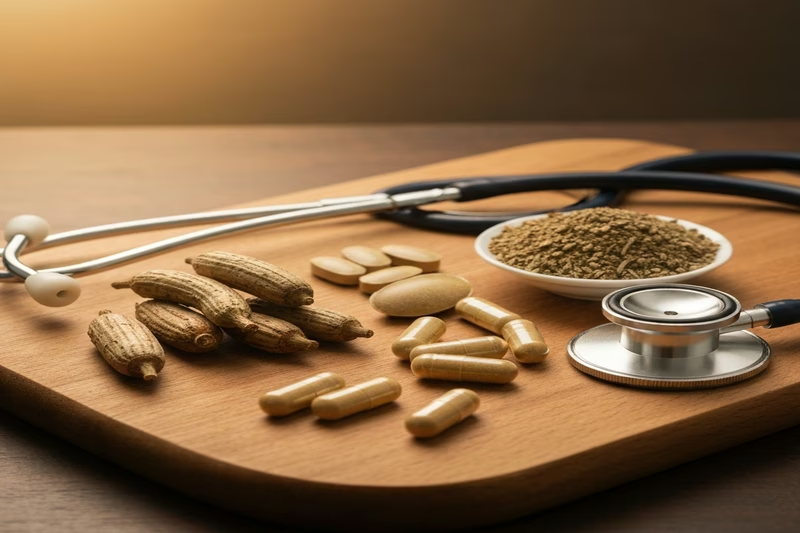
Quietum Plus Ingredients: What's Inside This Tinnitus Supplement?
A detailed analysis of each Quietum Plus ingredient — from Mucuna Pruriens to Ashwagandha — and the research behind how they target the brain-ear connection for tinnitus relief.

The State of Supplements in 2026: Industry Data, Consumer Trends & What It Means for You
A data-driven look at the $200+ billion global supplement industry — covering market size, fastest-growing categories, consumer demographics, regulatory changes, and what smart consumers should know before buying. Backed by real numbers from Grand View Research, CRN, NIH, and FDA data.

Turmeric for Joint Pain: What 30+ Studies Actually Show
Turmeric and its active compound curcumin have been studied extensively for joint pain and inflammation. With over 30 clinical trials to draw from, the evidence is clearer than ever. Here's what the research says about effectiveness, dosage, absorption, and realistic expectations.

Green Coffee Bean Extract for Weight Loss: Does the Science Support It?
Green coffee bean extract was once called a miracle weight loss ingredient. Years later, what does the actual research say? We examine the evidence for chlorogenic acid and its effects on metabolism, blood sugar, and fat loss.

Insomnia: Causes, Types, and What Actually Helps
Insomnia affects up to 40% of adults, but most people don't understand what's actually driving it. Here's a thorough look at the different types, the most common causes, and what the evidence says about treatments that work — from CBT-I to supplements to medication.

Tinnitus and Anxiety: Breaking the Vicious Cycle
Tinnitus and anxiety feed each other in a loop that can feel impossible to break. Here's what research says about why this happens, how your brain gets stuck in the cycle, and the most effective strategies for breaking free.

5 Early Signs Your Hearing Is Declining (and What to Do About It)
Hearing loss often happens so gradually that you don't notice until it's significant. Here are 5 early warning signs to watch for — and practical steps to protect your hearing.

Intermittent Fasting for Beginners: A Complete Guide
Intermittent fasting has become one of the most popular eating patterns — but the hype can make it hard to know what's real. Here's a straightforward, evidence-based look at how it works, who it's right for, and how to start safely.
Natural Sleep Aids That Actually Work (2026 Guide)
Not all natural sleep aids are created equal. Here's what the research actually says about melatonin, magnesium, valerian, and other popular options — and which ones deserve your attention.

Probiotics: A Complete Guide for Beginners
Confused by the wall of probiotic options at the store? This guide breaks down what probiotics actually do, which strains matter, and how to choose the right one for your needs.
Product Reviews (9)
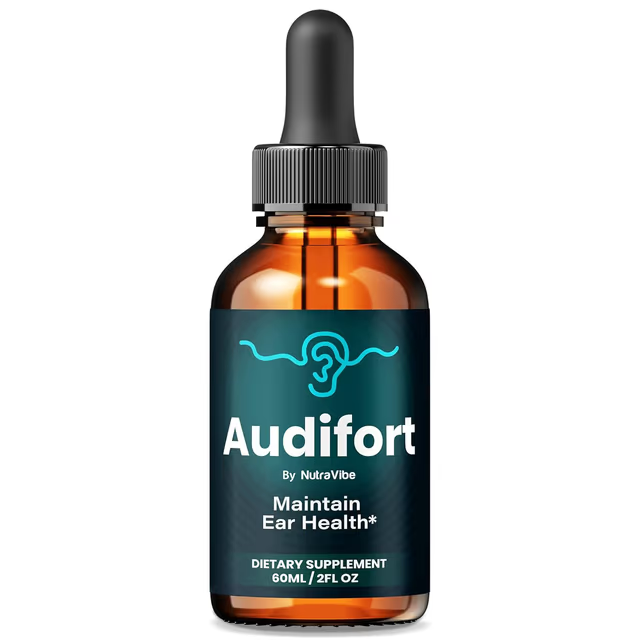
Audifort Review: Can a Liquid Supplement Help With Tinnitus and Hearing Loss?
Audifort is a liquid hearing supplement that combines botanical extracts like Ginkgo Biloba, GABA, and Green Tea to support auditory health. We looked at the ingredient research, the liquid delivery format, and real user feedback to see whether this formula lives up to the marketing around tinnitus and hearing support.
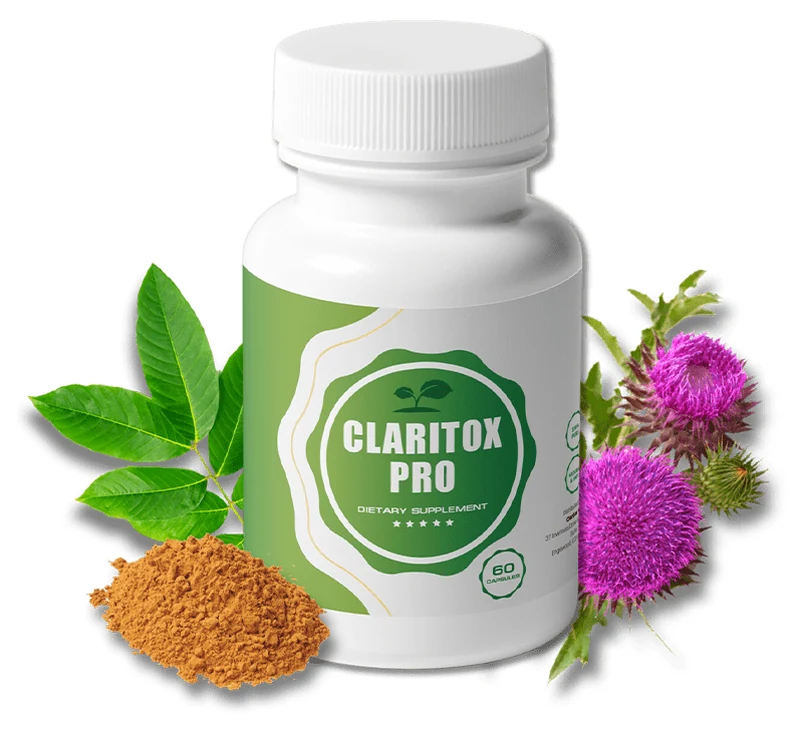
Claritox Pro Review: The Same 10-Ingredient Label as Vertigenics, Sold as an 'Ototoxin' Cure for Dizziness at $69 a Bottle
Claritox Pro is a two-capsule-a-day balance supplement sold direct through the vendor's site with DigiStore24 checkout (it is also listed on ClickBank) at $69 for one bottle, $59 per bottle for three, and $49 per bottle for six, with free US shipping and a 60-day money-back guarantee that starts on delivery. The label discloses every dose: zinc 11 mg, chromium 100 mcg, alpha lipoic acid 150 mg, green tea extract 150 mg, berberine HCl 100 mg, resveratrol 40 mg, and a 112 mg blend of milk thistle, cayenne, Korean ginseng, and banaba. We read the vendor's text presentation, FAQ, refund and shipping policies, reference list, and the printed label, then checked each ingredient on PubMed. Two findings drive this review. First, the Supplement Facts panel is identical, milligram for milligram, to Vertigenics, a product from the same Aurora, Colorado return address that we reviewed separately. Second, the sales pitch, that dizziness is 'brain poisoning with ototoxins' from aspirin and cold medicine that 'get stuck in the body indefinitely', is not supported by anything on the vendor's own reference page, and none of the ten ingredients has a human trial for vertigo or balance at any dose.
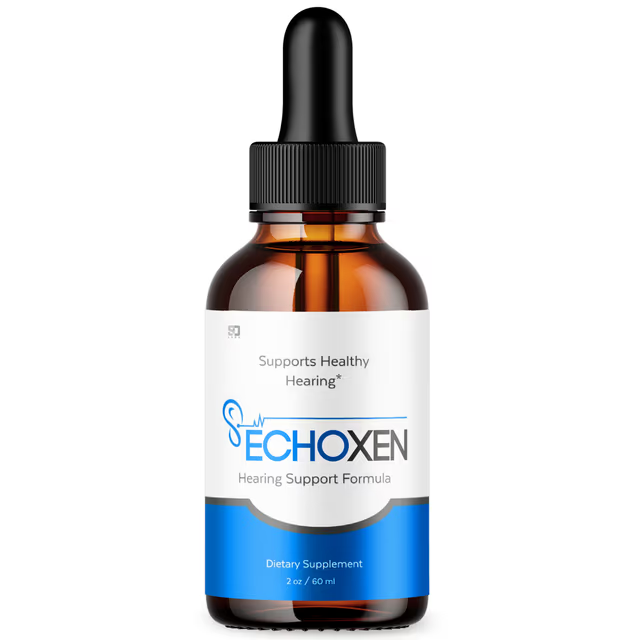
EchoXen Review: Is This Liquid Hearing Formula Worth Trying for Tinnitus?
EchoXen is a liquid hearing support supplement that combines herbal extracts, antioxidants, and circulation-supporting ingredients in a sublingual formula. The pitch is that liquid drops absorb better than capsules and that the blend may help with tinnitus symptoms and general auditory health. We looked at the ingredients, the research behind them, and what users are actually reporting.
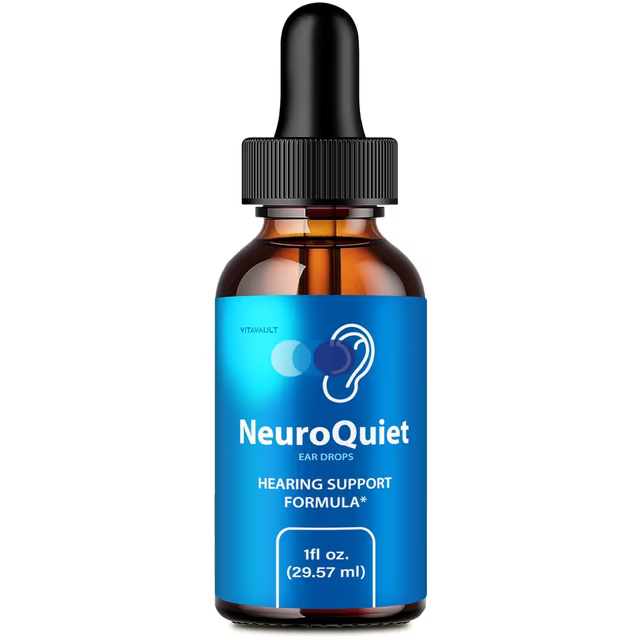
NeuroQuiet Review: Can an Oral Spray Actually Help With Tinnitus and Mental Clarity?
NeuroQuiet takes a different approach to tinnitus relief by using an oral spray instead of capsules, combining ingredients that target both auditory health and cognitive function. We looked at the ingredient research and real user feedback to see whether the spray format and dual-action formula actually deliver.
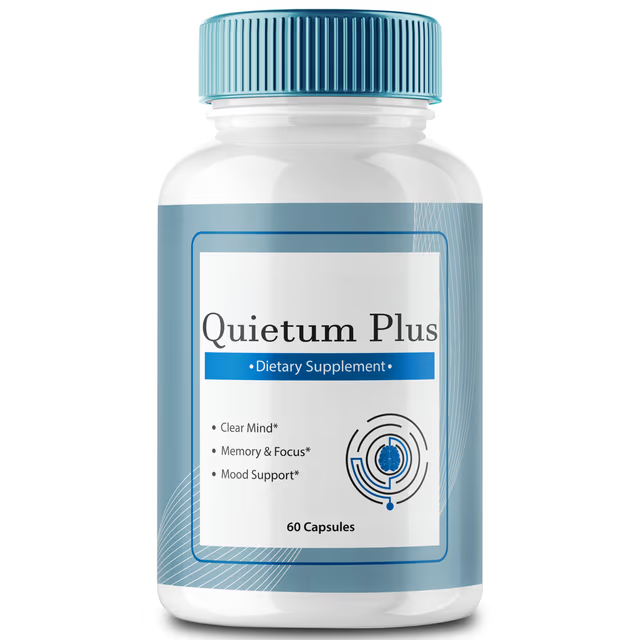
Quietum Plus Review: Does This Brain-Ear Supplement Actually Help With Tinnitus?
Quietum Plus takes a neural-health angle on tinnitus, targeting the brain-ear connection that research shows plays a key role in ringing perception. We reviewed the ingredient research and real user feedback to see how well this approach delivers.
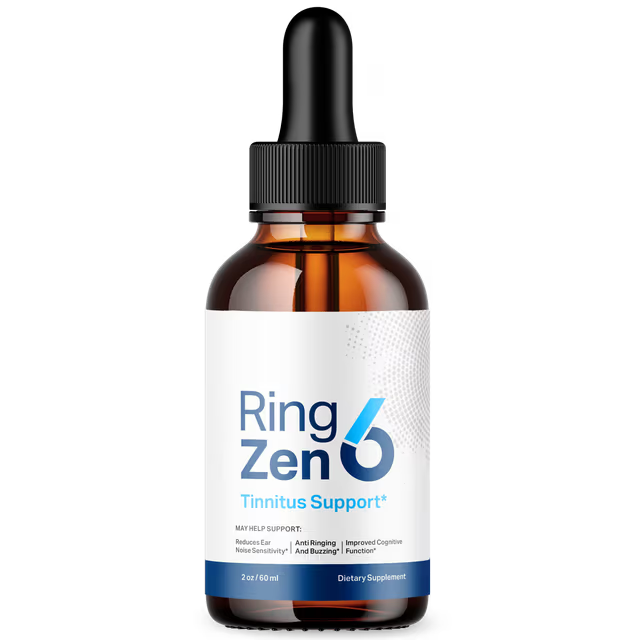
RingZen6 Review: Does This Powder Supplement Help With Tinnitus and Hearing?
RingZen6 is a powder-based hearing supplement that combines over 20 natural ingredients aimed at supporting auditory health and reducing tinnitus. We looked into the ingredient list, the available research on hearing supplements as a category, and gathered user feedback to see whether this formula delivers meaningful results.
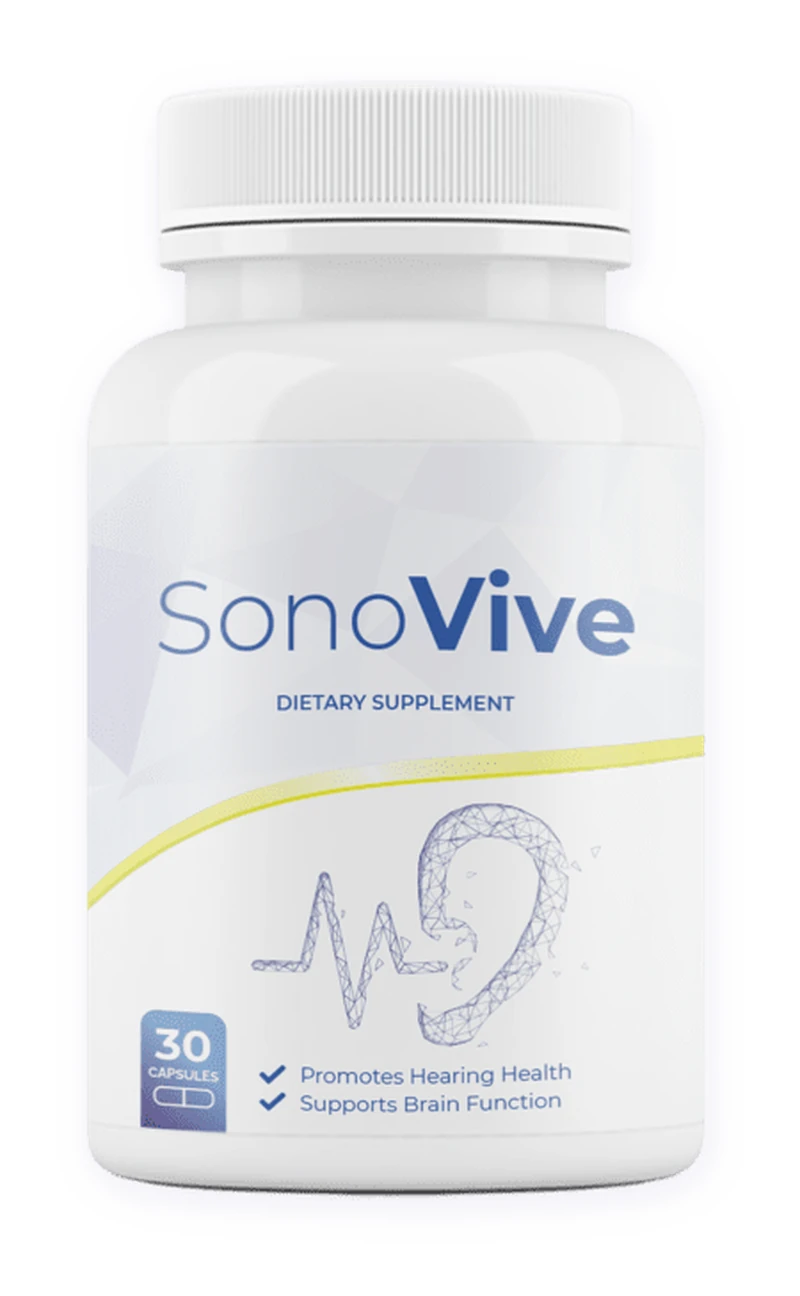
SonoVive Review: An 8-Ingredient Hearing Capsule That Discloses Its Doses, and Why That Is Exactly the Problem
SonoVive is a one-capsule-a-day hearing supplement sold direct through the vendor's site at $69 for one bottle, $59 per bottle for three, and $49 per bottle for six, with free US shipping on every package and a 60-day money-back guarantee. Unlike most products in this category it prints a full Supplement Facts panel with per-ingredient amounts: St. John's Wort 250 mg, L-glutamine 150 mg, a phosphatidylserine 4% complex 125 mg, Bacopa monnieri extract 120 mg, Ginkgo biloba leaf 50 mg, N-acetyl L-carnitine 50 mg, vinpocetine 2 mg, and huperzine-A 10 mcg. We read the vendor's text and video presentations, the label, the refund and shipping policies, and the references page, then checked each ingredient against PubMed. The disclosed doses are the review's central finding: they are a fraction of what any human trial used, none of the eight ingredients has a placebo-controlled trial for hearing loss, the two with the most hearing-adjacent data (ginkgo and vinpocetine) are dosed at 20-40% and 7% of trial levels, and vinpocetine itself carries a 2019 FDA reproductive-safety warning that the label does not repeat. The sales page also calls the capsule a 'dropper' and the video page promises to 'fix' hearing loss in under a month.
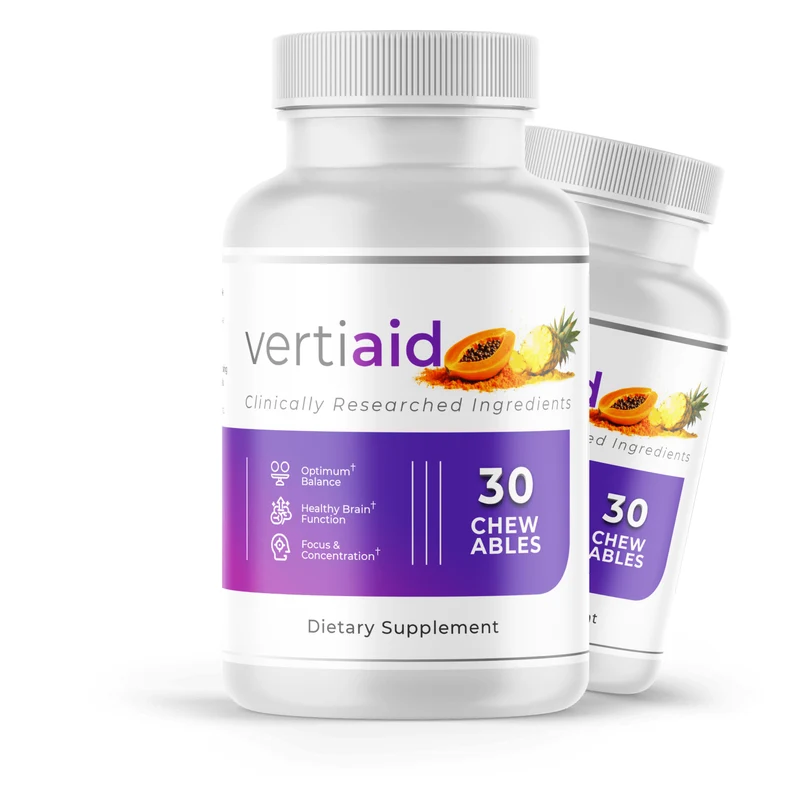
VertiAid Review: A Vitamin D Chewable With a 227 mg Mystery Blend, Sold as an Inner-Ear Membrane Fix for $69 a Bottle
VertiAid is a once-a-day chewable sold direct through the vendor's site with DigiStore24 checkout at $69 for one bottle, $138 for two, $177 for three ($59 each), and $294 for six ($49 each, with free US shipping and two bonus e-books), backed by a 60-day money-back guarantee that starts on delivery. The label discloses six nutrients at exact amounts, vitamin D3 (20 mcg), riboflavin (1.3 mg), vitamin B6 (1.7 mg), calcium from Aquamin (20 mg), zinc as zinc-L-carnosine (5 mg), and potassium (30 mg), then hides the five headline botanicals and collagens inside a 227 mg proprietary blend with no per-ingredient doses. We read the sales page and its price configuration, the refund and shipping policies, the vendor's reference list, and the printed label, then checked each ingredient on PubMed. The honest finding: vitamin D is the one supplement ingredient with a real randomized trial for positional vertigo, and VertiAid has it at a trial-level dose, but everything the marketing leads with (eggshell membrane, marine collagen, papaya, pineapple, ginseng) is undosed and untested for balance.
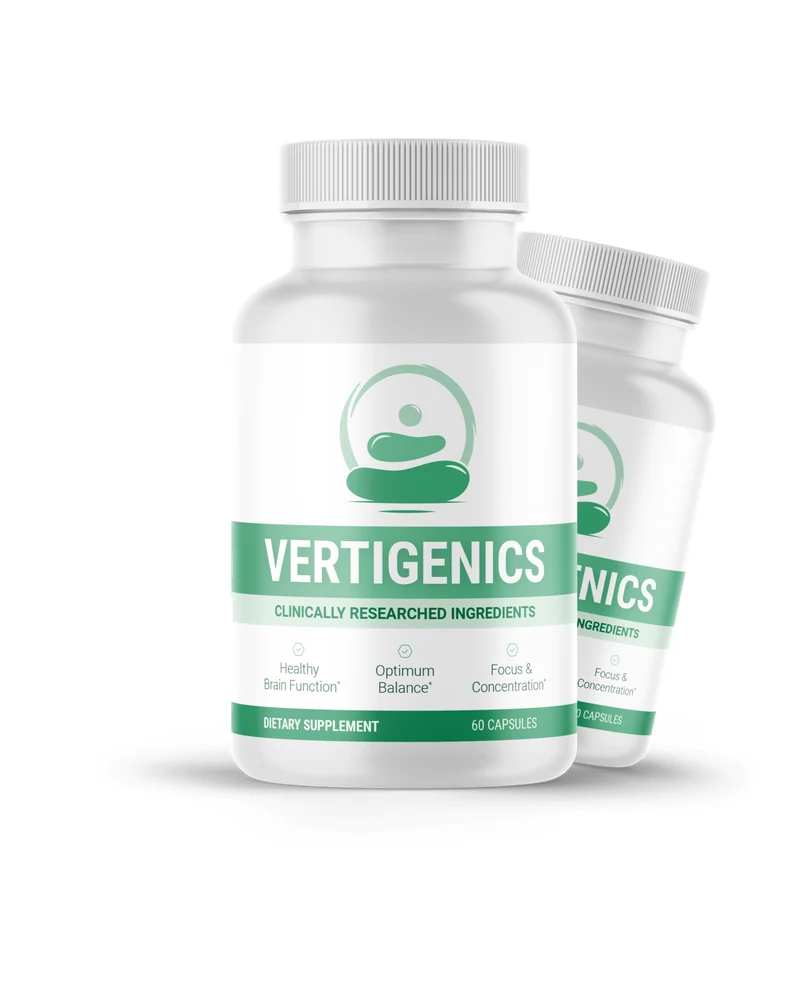
Vertigenics Review: Does a Blood-Sugar-Style Formula Relabeled for Balance Deserve $69 a Bottle?
Vertigenics is a balance and brain-support capsule sold direct through the vendor's site and DigiStore24 checkout at $69 for one bottle, $59 per bottle for three, and $49 per bottle for six, with a 60-day money-back guarantee that starts on delivery. Unlike most products in this space, the label discloses every dose: zinc, chromium, alpha lipoic acid, green tea extract, berberine, resveratrol, and a 112 mg blend of milk thistle, cayenne, Asian ginseng, and banaba leaf. We read the sales page, refund and shipping policies, the vendor's own reference list, and the printed label, then checked each ingredient against PubMed. The honest finding: the doses are real but mostly below what trials used, none of the ten ingredients has a vertigo trial behind it, and the formula reads more like a blood-sugar stack than a vestibular one.