SonoVive Review: An 8-Ingredient Hearing Capsule That Discloses Its Doses, and Why That Is Exactly the Problem (2026)
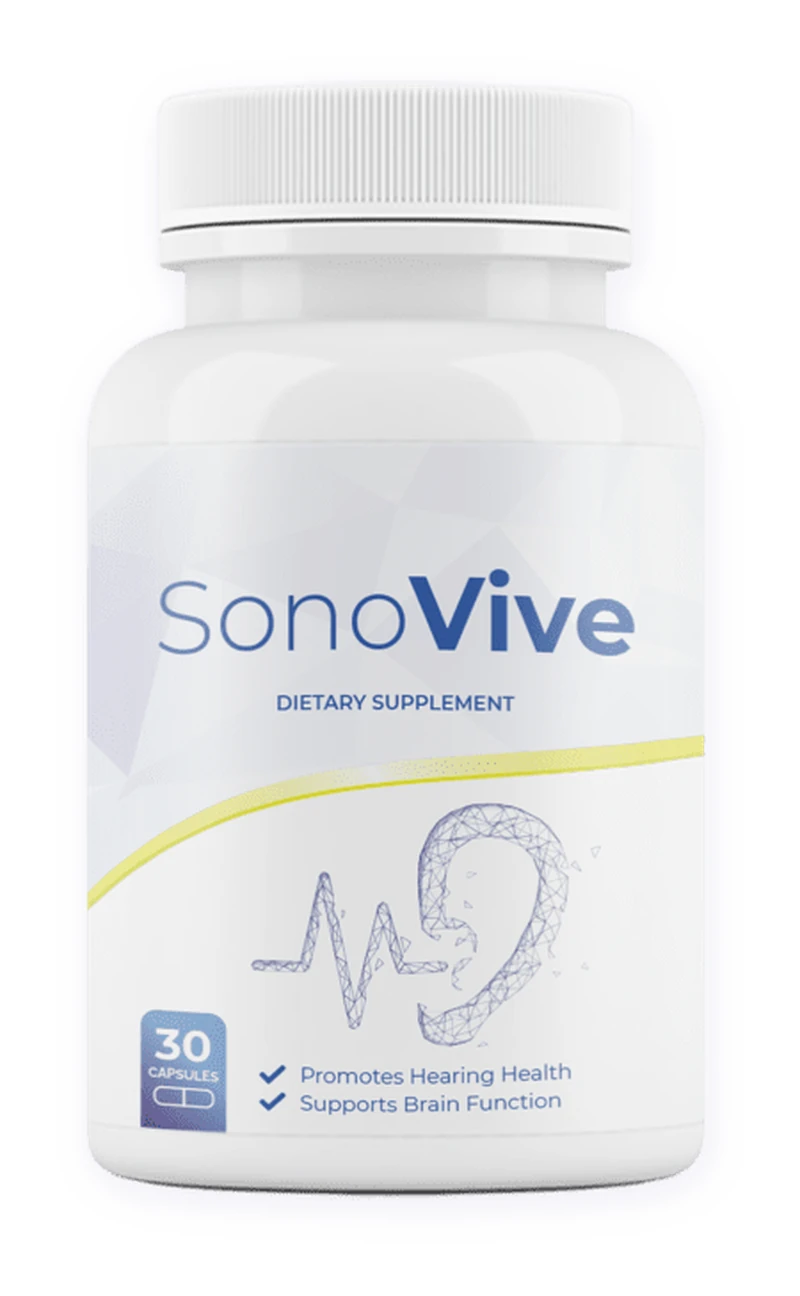
SonoVive is a one-capsule-a-day hearing supplement sold direct through the vendor's site at $69 for one bottle, $59 per bottle for three, and $49 per bottle for six, with free US shipping on every package and a 60-day money-back guarantee. Unlike most products in this category it prints a full Supplement Facts panel with per-ingredient amounts: St. John's Wort 250 mg, L-glutamine 150 mg, a phosphatidylserine 4% complex 125 mg, Bacopa monnieri extract 120 mg, Ginkgo biloba leaf 50 mg, N-acetyl L-carnitine 50 mg, vinpocetine 2 mg, and huperzine-A 10 mcg. We read the vendor's text and video presentations, the label, the refund and shipping policies, and the references page, then checked each ingredient against PubMed. The disclosed doses are the review's central finding: they are a fraction of what any human trial used, none of the eight ingredients has a placebo-controlled trial for hearing loss, the two with the most hearing-adjacent data (ginkgo and vinpocetine) are dosed at 20-40% and 7% of trial levels, and vinpocetine itself carries a 2019 FDA reproductive-safety warning that the label does not repeat. The sales page also calls the capsule a 'dropper' and the video page promises to 'fix' hearing loss in under a month.

Michael Chen
Hearing Health & Audiology Writer
Last updated: September 6, 2026
Disclosure: This review contains affiliate links. If you purchase through our links, we may earn a commission at no extra cost to you. Read our affiliate disclosure and editorial policy.
Hearing Health & Audiology Writer
Michael has been writing about hearing health and tinnitus management for over 10 years, driven by a personal interest in how sound shapes quality of life.
At a glance
Best for
- Adults 45-70 with mild, gradual, audiologist-documented hearing change who want a supplement alongside, not instead of, hearing care
- People who want a hearing-category product that actually prints its doses so they can judge it against the research
- Anyone who will take one capsule with breakfast every day and keep a simple log of tinnitus loudness or word-recognition in noise
- Buyers interested in the bacopa and phosphatidylserine memory angle who understand both are far below trial doses here
- People who can commit to the 3- or 6-bottle order so the 60-day refund window is not the limiting factor
Not for
- Anyone with sudden hearing loss in one or both ears: this is a medical emergency and treatment is time-sensitive; see an ENT or emergency department the same day, not a supplement
- Anyone taking an antidepressant, oral contraceptive, blood thinner, transplant drug, HIV medication, or digoxin: St. John's Wort induces the enzymes that clear these drugs
- Women who are pregnant, nursing, or could become pregnant, per the FDA's 2019 vinpocetine advisory
- People scheduled for surgery or dental work in the next 2-3 weeks, per the label's own bleeding caution
- Vegetarians and vegans: the capsule is bovine gelatin; and anyone with a soy allergy, since the phosphatidylserine complex is soy lecithin
- Anyone expecting the 'fix hearing loss in less than 1 month' headline on the vendor's video page to be a clinical result
SonoVive price & where to buy
- Price: from $49 per bottle (single bottle $69) · Save up to $300 on 6 bottles
- Guarantee: 60-day money-back guarantee
- Where to buy: only on the official SonoVive website — not sold in stores, on Amazon or Walmart.
SonoVive still worth it in 2026?
A transparently labelled but under-dosed nootropic stack sold as a hearing formula: a low-cost trial for someone who wants a mild memory-and-focus capsule, not a treatment for hearing loss or tinnitus
"I bought it for the ringing. The ringing is the same. I do feel a little sharper in the afternoon, which was not what I paid for."
"At least the bottle tells you what is in it. When I looked up the amounts against the studies, that was the end of my expectations."
"The refund was honored, but I paid to ship six bottles back to Colorado. Read the policy before you order the six-pack."
- Every ingredient and its amount is printed on the label, which is rare in this category and lets you check the doses against the research instead of guessing.
- Ginkgo and bacopa have real randomized trials, but at 240 mg per day of a standardized ginkgo extract and 300-450 mg per day of bacopa extract; SonoVive supplies 50 mg of plain ginkgo leaf and 120 mg of bacopa in a single capsule.
- Vinpocetine at 2 mg is 7% of the 30 mg per day used in the only human hearing study, an open-label trial with no placebo group, and the FDA warned in 2019 that vinpocetine may cause miscarriage or harm fetal development.
- 60-day money-back guarantee from delivery per the vendor's refund policy; all bottles must be mailed back at your cost to Aurora, Colorado, and the vendor itself advises 3 months of use before judging.
Best suited to adults over 45 who have already had an audiogram, want a low-dose brain-support capsule with disclosed amounts, and understand that no capsule reverses sensorineural hearing loss. Buy the 3-bottle pack so the guarantee window and a fair trial overlap.
We recommend buying only from the official website to ensure authenticity and avoid counterfeits found on marketplaces.
Join the success stories! Get SonoVive with our money-back guarantee.
✓ Money-Back Guarantee • ✓ Free Shipping
What is SonoVive?
A one-a-day nootropic-style capsule relabelled for hearing, with every dose printed and every dose small
SonoVive is a 30-capsule bottle distributed by a company of the same name at 19655 E 35th Dr #100, Aurora, Colorado, and sold through the vendor's site with ClickBank and DigiStore24 checkout. The Supplement Facts panel lists, per one-capsule serving: St. John's Wort flower 250 mg, L-glutamine 150 mg, phosphatidylserine 4% complex (contains lecithin) 125 mg, Bacopa monnieri leaf extract 120 mg, Ginkgo biloba leaf 50 mg, N-acetyl L-carnitine hydrochloride 50 mg, vinpocetine 2 mg, and huperzine-A 10 mcg. Other ingredients are bovine gelatin, microcrystalline cellulose, vegetable magnesium stearate, and silicon dioxide, with an allergen statement for soy. There is no proprietary blend, which is genuinely unusual for this category and the main reason the product can be evaluated at all.
The vendor's text presentation is narrated by 'Sam Olsen', a 65-year-old retired 'medical chemist' near Philadelphia who says he 'perfected an easy, yet powerful formula' from Ginkgo biloba, St. John's Wort, Bacopa monnieri, vinpocetine, and huperzine-A. We could not verify that this person exists. The same page says 'The SonoVive dropper is natural and pure' about a product that is a gelatin capsule, which reads like copy carried over from a different product. The video presentation's headline is 'Brain Experiment Uncovers the Root Cause of Hearing Loss And How You Can Naturally Fix It In Less Than 1 Month', a disease-treatment claim the FDA disclaimer at the bottom of the same page says the product does not make.
The formula is, ingredient for ingredient, a generic memory-and-mood stack: St. John's Wort is an antidepressant herb, bacopa, phosphatidylserine, huperzine-A, and acetyl-L-carnitine are cognition ingredients studied in dementia and healthy adults, and ginkgo and vinpocetine are vasodilator-type compounds with a long history in European neurology. The hearing framing rests on the idea that hearing happens in the brain, which is true, and the leap that brain-support ingredients therefore support hearing, which no trial of any of these ingredients has tested at these doses. The vendor's references page lists 27 links; two are PubMed entries (a 2001 review calling St. John's Wort 'Prozac from the plant kingdom' and a 2010 review of glutamine in neurotransmission), and the ginkgo-for-hearing citations are a tinnitus-supplement retailer's blog and a trade-news site.
Where does that leave someone comparing options? SonoVive is an honestly labelled, under-dosed capsule at a mid-range price with a short guarantee. Because the doses are printed, we can say exactly how far below the research each one sits, which we do in the ingredient breakdown. If you want a hearing-category supplement that at least leans on the neural and stress side of tinnitus, Quietum Plus is our current pick and we compare the two at /compare/quietum-plus-vs-sonovive. If you have measurable hearing loss, the evidence-based purchase is an audiogram and, where indicated, hearing aids.
How it works
How SonoVive is supposed to work, and what the research actually supports
Step 1
Brain-Ear Connection: The vendor's premise is that hearing is processed in the brain, so brain-support ingredients support hearing. The first half is true. The second half has never been tested: none of the eight ingredients has a randomized placebo-controlled trial for hearing loss, and the cognition trials that exist did not measure hearing. The ACHIEVE trial (977 adults aged 70-84, Lancet 2023) tested the reverse direction, whether hearing aids slow cognitive decline, and found no overall difference over 3 years, with slower decline only in a prespecified higher-risk subgroup.
Step 2
Ginkgo and Blood Flow: Ginkgo is the vendor's headline ingredient. A 2001 BMJ trial gave 50 mg of a standardized extract three times daily for 12 weeks to people with tinnitus and found no difference from placebo. The 2022 Cochrane review pooled 12 trials and concluded ginkgo may have little to no effect on tinnitus severity, with very-low-certainty evidence. The one positive line of evidence is a manufacturer-sponsored meta-analysis of five trials in dementia patients taking 240 mg per day of the EGb 761 extract for at least 20 weeks, which found a one-point improvement in tinnitus on an 11-point scale. SonoVive contains 50 mg of plain ginkgo leaf, not a standardized extract, once a day.
Step 3
Vinpocetine and Sodium Channels: A 2021 Mexican phase II study gave 30 mg of vinpocetine per day in three doses for 12 months to adults with acquired sensorineural hearing loss and reported that audiometric decline stopped and reversed between months 6 and 12. It was open-label, single-centre, and had no placebo group, so it cannot distinguish the drug from test-retest variation or regression to the mean. SonoVive supplies 2 mg, about 7% of that dose. Separately, a 2003 Cochrane review noted that vinpocetine has not been approved by any regulatory body for cognitive impairment, the FDA tentatively concluded in 2016 that it is not a lawful dietary ingredient, and in 2019 the FDA warned that it may cause miscarriage or harm fetal development.
Step 4
Bacopa and Memory: This is the best-supported ingredient in the bottle, for the wrong outcome. A 2012 systematic review of six 12-week trials at 300-450 mg per day found bacopa improved 9 of 17 memory free-recall measures and noted explicitly that no trial tested auditory perceptual abilities. A 2014 meta-analysis of nine trials in 518 people found faster Trail B and choice reaction times. In a 54-person trial in adults over 65, 300 mg per day of standardized extract improved delayed word recall. SonoVive's 120 mg, with no standardization stated, is 27-40% of those doses.
Step 5
Huperzine-A and Acetylcholine: Huperzine-A is a reversible acetylcholinesterase inhibitor, the same mechanism as prescription donepezil. In the 210-patient US phase II trial in Alzheimer's disease, 200 mcg twice daily did nothing on the primary cognitive endpoint and 400 mcg twice daily produced a 2.27-point improvement at 11 weeks that faded to non-significance by week 16. A 2013 meta-analysis of 20 mostly Chinese trials in 1,823 patients was positive but rated most trials at high risk of bias. SonoVive contains 10 mcg per capsule, one-fortieth of the dose that did not work.
Step 6
Phosphatidylserine and Nerve Membranes: A 494-patient Italian trial in 1993 used 300 mg per day of bovine-cortex phosphatidylserine for 6 months and reported cognitive and behavioural improvement in elderly patients with cognitive decline. A 78-person Japanese trial of soy phosphatidylserine at 100 or 300 mg per day found scores rose in every group including placebo, with a benefit only in a low-baseline subgroup. SonoVive lists 125 mg of a '4% complex', which works out to about 5 mg of phosphatidylserine, 5% of the low trial dose.
Step 7
St. John's Wort and Mood: A 2008 Cochrane review of 29 trials in 5,489 patients found standardized extracts more effective than placebo for major depression. There is no hearing or tinnitus trial. What St. John's Wort does have is the best-documented drug-interaction profile of any herb: it activates the pregnane X receptor and induces CYP3A4 and P-glycoprotein, which has caused transplant rejection on cyclosporine and reduced levels of digoxin, warfarin, HIV drugs, statins, and oral contraceptives. The effect scales with hyperforin content, which SonoVive does not disclose.
Step 8
Acetyl-L-Carnitine and L-Glutamine: A 2003 Cochrane review of 11 acetyl-L-carnitine trials in Alzheimer's disease found no benefit on objective cognitive measures at gram-level doses. The hearing data are chinchilla studies of acute acoustic trauma in which acetyl-L-carnitine was combined with other antioxidants; there is no human hearing trial. L-glutamine has no human trial for hearing or tinnitus at all; the vendor cites a review of glutamine's role in neurotransmission. SonoVive supplies 50 mg and 150 mg respectively.
Ready to try SonoVive? Get started today with our exclusive offer.
✓ Money-Back Guarantee • ✓ Free Shipping
Ingredients
St. John's Wort (Flower) 250 mg
Benefits:
The largest ingredient in the capsule, and an antidepressant herb rather than a hearing ingredient. A 2008 Cochrane review of 29 randomized trials in 5,489 patients found standardized hypericum extracts more effective than placebo for major depression and comparable to standard antidepressants, at typical doses of 500-1,200 mg per day of extract standardized to hypericin or hyperforin. There is no trial for hearing loss or tinnitus. What St. John's Wort does bring is the most clinically important herb-drug interaction profile in common use: it activates the pregnane X receptor and induces CYP3A4 and P-glycoprotein, lowering blood levels of cyclosporine, tacrolimus, digoxin, warfarin, HIV protease inhibitors, some statins, and oral contraceptives, and it can cause serotonin syndrome with SSRIs. The interaction strength tracks hyperforin content, which SonoVive does not disclose. Dose disclosed: 250 mg, standardization not stated.
L-Glutamine 150 mg
Benefits:
A conditionally essential amino acid and a precursor of the neurotransmitters glutamate and GABA, which is presumably the rationale for including it in a 'brain-ear' formula. A PubMed search found no human trial of glutamine supplementation for hearing loss or tinnitus. The vendor's references page cites a 2010 review of glutamine's roles in neurotransmission, which describes biochemistry and does not test supplementation. At 150 mg, the amount is also trivial next to the 5-10 g per day used in the clinical nutrition studies where glutamine has any evidence. Dose disclosed: 150 mg.
Phosphatidylserine 4% Complex (Contains Lecithin) 125 mg
Benefits:
A phospholipid found in nerve cell membranes, with the best-known trial being 300 mg per day of bovine-cortex phosphatidylserine for 6 months in 494 elderly Italian patients with cognitive decline, which improved behavioural and cognitive scores versus placebo. A 78-person Japanese trial of soy-derived phosphatidylserine at 100 or 300 mg per day found scores rose in every group including placebo, with a benefit only in the low-baseline subgroup. Neither measured hearing. The important detail on SonoVive's label is '4% complex': the 125 mg is soy lecithin containing about 4% phosphatidylserine, or roughly 5 mg of the active phospholipid, one-twentieth of the lowest trial dose. This ingredient is also the source of the soy allergen statement. Dose disclosed: 125 mg of complex, about 5 mg of phosphatidylserine.
Bacopa Monnieri Extract (Leaf) 120 mg
Benefits:
The ingredient with the best human evidence in the bottle, for memory rather than hearing. A 2012 systematic review of six 12-week randomized trials at 300-450 mg of extract per day found improvement on 9 of 17 memory free-recall tests, and noted that no trial tested auditory perceptual abilities. A 2014 meta-analysis of nine trials in 518 subjects found faster Trail B and choice reaction times. In a 54-person trial in adults over 65, 300 mg per day of standardized extract improved delayed word recall over 12 weeks. Bacopa's effects build slowly and the trials ran 12 weeks or longer. SonoVive supplies 120 mg, 27-40% of the trial doses, with no bacoside standardization stated. Dose disclosed: 120 mg.
Ginkgo Biloba (Leaf) 50 mg
Benefits:
The vendor's headline ingredient and the most studied herb for tinnitus, with a mostly negative record. A 2001 BMJ trial gave 50 mg of the standardized extract LI 1370 three times daily for 12 weeks and found no difference from placebo. The 2022 Cochrane review pooled 12 randomized trials in 1,915 participants and concluded ginkgo may have little to no effect on tinnitus severity, with very-low-certainty evidence; it also found no increase in bleeding across four trials. The one positive line is a manufacturer-sponsored meta-analysis of EGb 761 at 240 mg per day in dementia patients, which found about a one-point tinnitus improvement on an 11-point scale. SonoVive lists 50 mg of ginkgo 'leaf', not a standardized extract, once a day, which is one-fifth of the EGb 761 dose and one-third of the BMJ trial dose. Dose disclosed: 50 mg, standardization not stated.
N-Acetyl L-Carnitine Hydrochloride 50 mg
Benefits:
The acetylated form of carnitine, studied at gram-level daily doses for dementia and neuropathy. A 2003 Cochrane review of 11 randomized trials in Alzheimer's disease found no evidence of benefit on cognition, dementia severity, or function by objective measures and did not recommend routine use. The hearing connection is animal work: chinchilla studies of acute acoustic trauma combined acetyl-L-carnitine with other antioxidant drugs and reported reduced damage, but no human hearing trial exists. At 50 mg, SonoVive supplies about 2-3% of the doses used in the human cognition trials. Dose disclosed: 50 mg.
Vinpocetine (Seeds) 2 mg
Benefits:
A synthetic derivative of a periwinkle alkaloid, used as a prescription cerebral vasodilator in parts of Europe and Asia, and the only SonoVive ingredient with a human hearing study. That study, a 2021 phase II trial in Mexico, gave 30 mg per day in three doses for 12 months to adults with acquired sensorineural hearing loss and reported audiometric improvement between months 6 and 12; it was open-label, single-centre, and had no placebo group. SonoVive supplies 2 mg, about 7% of that dose. A 2003 Cochrane review noted vinpocetine has not been approved by any regulatory body for cognitive impairment. More importantly, the FDA tentatively concluded in 2016 that vinpocetine does not qualify as a dietary ingredient, and on 3 June 2019 warned that it may cause miscarriage or harm fetal development and that pregnant women and women who could become pregnant should not take it. SonoVive's label carries only a generic 'consult a physician' line for pregnancy. Dose disclosed: 2 mg.
Huperzine-A (Aerial Parts) 10 mcg
Benefits:
A reversible acetylcholinesterase inhibitor from Chinese club moss, the same mechanism as the prescription Alzheimer's drug donepezil. In the 210-patient US phase II trial in mild to moderate Alzheimer's disease, 200 mcg twice daily did not change the primary cognitive endpoint at 16 weeks, and 400 mcg twice daily produced a 2.27-point ADAS-Cog improvement at 11 weeks that was no longer significant at 16 weeks. A 2013 meta-analysis of 20 mostly Chinese trials in 1,823 patients was positive but rated most trials at high risk of bias. No trial measured hearing. SonoVive's 10 mcg is one-fortieth of the dose that did not work and one-eightieth of the dose that briefly did; at that level it is a label ingredient rather than an active one. Dose disclosed: 10 mcg.
Safety
Safety profile and what to expect
SonoVive is a single capsule combining an antidepressant herb, two vasoactive compounds, a cholinesterase inhibitor, and three nutrient-type ingredients, all at low doses. The label's caution is unusually long and worth reading in full: St. John's Wort may cause photosensitivity in strong sunlight or tanning beds; avoid use if at risk of bleeding, on anticoagulants, or with clotting disorders; discontinue 2-3 weeks before some surgical and dental procedures; avoid in couples trying to conceive; and pregnant or nursing mothers, anyone under 18, anyone with a seizure history, anyone on MAO-inhibiting drugs, or anyone with a known medical condition should consult a physician first. The capsule is bovine gelatin, the phosphatidylserine is soy-derived, and the product is packaged in a facility that also processes milk, wheat, egg, peanuts, tree nuts, fish, and shellfish.
Two things the label does not say matter more than what it does. First, the FDA advised in June 2019 that pregnant women and women who could become pregnant should not take vinpocetine because of evidence it may cause miscarriage or harm fetal development, and asked companies to add that warning; SonoVive's label carries only the generic 'consult a physician' line. Second, the label's interaction caution covers anticoagulants and MAO inhibitors but not the wider St. John's Wort list: SSRIs and other antidepressants (serotonin syndrome risk when combined), oral contraceptives, cyclosporine and tacrolimus, HIV protease inhibitors, digoxin, and some statins and benzodiazepines. Anyone on a daily prescription should ask a pharmacist before taking any St. John's Wort product, including this one.
Possible Side Effects
- ⚠Mild stomach upset or nausea if taken without food, most often in the first week
- ⚠Increased sun sensitivity from St. John's Wort; sunburn faster than usual on exposed skin
- ⚠Headache or restlessness in the first days, reported with ginkgo and with cholinesterase-inhibiting ingredients
- ⚠Vivid dreams or lighter sleep if taken late in the day, consistent with huperzine-A and bacopa
- ⚠Easier bruising or minor bleeding in people already on aspirin or fish oil, which is why the label says to stop before surgery
Warnings
- ✗Sudden hearing loss, hearing loss in one ear, hearing loss with vertigo, or ear pain or discharge is a medical emergency; go to an ENT or emergency department the same day, because corticosteroid treatment is most effective within the first two weeks
- ✗Do not take with antidepressants, oral contraceptives, blood thinners, digoxin, transplant drugs, HIV medications, or MAO inhibitors without a pharmacist's review; St. John's Wort reduces or dangerously alters the effect of all of these
- ✗Not for women who are pregnant, nursing, or could become pregnant; the FDA's 2019 vinpocetine advisory is explicit on this point
- ✗Stop 2-3 weeks before any surgical or dental procedure, per the label; ginkgo and St. John's Wort both affect bleeding and drug metabolism
- ✗Not for anyone with a seizure history or under 18, per the label
- ✗Contains soy (lecithin) and bovine gelatin; packaged in a facility that also processes milk, wheat, egg, peanuts, tree nuts, fish, and crustacean shellfish
- ✗Wear sunscreen or limit strong sun exposure while taking it, per the photosensitivity caution on the label
SonoVive is safe and effective. Join thousands of satisfied customers.
✓ Money-Back Guarantee • ✓ Free Shipping
How to take SonoVive for best results
Timing
With breakfast is the simplest routine and keeps the St. John's Wort away from bedtime. The vendor's refund policy advises using SonoVive for at least 3 months before judging it, which conflicts with a 60-day refund window that starts on delivery.
Directions
- Take one capsule daily with a meal, per the label's minimum; each bottle has 30 capsules, a 30-day supply at that rate
- The label permits '1 to 2 times daily'; at two capsules a day the bottle lasts 15 days and the vendor's '30 Days Supply' pricing halves in value, so decide your dose before choosing a package
- Take it in the morning rather than the evening; huperzine-A and bacopa are more likely to disturb sleep than to help it
Pro Tips
- 💡Week 0: Get an audiogram first if you have not had one in the last two years. Without a baseline you cannot tell whether anything changed, and hearing loss that turns out to be conductive or sudden needs a different response entirely.
- 💡Weeks 1-2: Expect nothing on hearing. If anything, people notice the mood and alertness side of the formula, which is where the ingredients' evidence actually sits.
- 💡Weeks 4-8: The bacopa and phosphatidylserine trials measured memory at 12 weeks and 6 months; do not read early changes as the capsule working.
- 💡Decide before day 50: the refund clock starts when the package arrives, and you must mail every bottle back to Colorado with transit time to spare.
- 💡Log tinnitus loudness on a 0-10 scale each evening, or use a free speech-in-noise app once a week; it is the only way to separate a real change from a hopeful one.
- 💡Do the things with actual evidence for hearing: protect your ears from loud sound, treat cardiovascular risk factors, and if the audiogram shows loss, get fitted for hearing aids. SonoVive does not replace any of them.
Note: Give SonoVive a full 6-8 weeks, but set a calendar reminder. The vendor recommends 3 months; the guarantee gives you 2. Buy the 3-bottle pack if you want the evaluation and the refund window to line up.
What users report after taking SonoVive
Note: Individual results vary. Benefits are most often reported on focus and mood by people who were not already taking a nootropic or an antidepressant; hearing-specific benefits are the least reported outcome.
Experience these benefits yourself! SonoVive is available now.
✓ Money-Back Guarantee • ✓ Free Shipping
Pros & Cons
✓Pros
- +Full Supplement Facts panel with a per-ingredient amount for all eight ingredients, no proprietary blend, which is rare in the hearing category
- +Bacopa, phosphatidylserine, huperzine-A, and St. John's Wort each have randomized human trials in their own fields, so the ingredients are not invented
- +Single capsule with a meal is a routine most people will keep
- +Label carries an unusually thorough caution section covering photosensitivity, bleeding, surgery, fertility, seizures, and MAO inhibitors
- +Free US shipping on every package, including the single bottle, with tracking within 60 hours
- +6-bottle price of $49 matches Quietum Plus and the other DigiStore24 hearing products at the same tier
- +One-time payment with no autoship, per the vendor's site, and a published refund process with a physical return address
✗Cons
- -No ingredient has a placebo-controlled human trial for hearing loss or tinnitus; the closest, ginkgo, was found by a 2022 Cochrane review to have little to no effect
- -Every disclosed dose is 2-40% of what the ingredient's own trials used: 50 mg ginkgo leaf versus 240 mg extract, 120 mg bacopa versus 300-450 mg, 10 mcg huperzine-A versus 400-800 mcg, about 5 mg phosphatidylserine versus 100-300 mg, 2 mg vinpocetine versus 30 mg
- -Vinpocetine carries a 2019 FDA warning about miscarriage and fetal harm, and a 2016 FDA tentative finding that it is not a lawful dietary ingredient; the label does not mention either
- -St. John's Wort at 250 mg with no hyperforin standardization brings the most serious herb-drug interaction profile in common use, and the label lists only two of the affected drug classes
- -The label says '1 capsule taken 1 to 2 times daily' while the vendor sells the 30-capsule bottle as a '30 Days Supply'
- -The sales page calls the product a 'dropper', names a narrator we could not verify, claims an 'FDA approved' facility, and the video page promises to 'fix' hearing loss in under a month
- -Bovine gelatin capsule and soy lecithin rule out vegans and anyone with a soy allergy
- -60-day guarantee is shorter than the 3 months the vendor recommends, and you must mail every bottle back at your cost
- -Single bottle is $69; the advertised $49 price requires a $294 six-bottle order, and the post-purchase upsell pages offer additional bottles at $29 each, which tells you what the product actually costs to sell
- -The references page is mostly news and consumer-health articles; the ginkgo-for-hearing sources are a tinnitus-supplement retailer's blog and a trade-news site
Evidence
Ginkgo biloba for tinnitus: a Cochrane systematic review of 12 randomized trials in 1,915 participants concluded ginkgo may have little to no effect on tinnitus severity compared with placebo (mean difference -1.35 on a 0-100 Tinnitus Handicap Inventory scale; 2 studies, 85 participants), with very-low-certainty evidence, and no increase in bleeding or seizures across 4 studies in 1,154 participants (Sereda et al., Cochrane Database of Systematic Reviews, 2022)
Ginkgo biloba for tinnitus: 50 mg of the standardized extract LI 1370 three times daily for 12 weeks was no more effective than placebo; 34 of 360 participants on ginkgo versus 35 of 360 on placebo reported less troublesome tinnitus (Drew and Davies, BMJ, 2001)
Ginkgo biloba, positive evidence: a meta-analysis of five placebo-controlled trials of EGb 761 at 240 mg per day for at least 20 weeks in patients with dementia found a weighted mean improvement of 1.06 points on an 11-point tinnitus scale; several authors are employees of or received honoraria from the manufacturer (Spiegel et al., Clinical Interventions in Aging, 2018); SonoVive supplies 50 mg of non-standardized leaf
Ginkgo biloba in sudden hearing loss: in a randomized double-blind trial of 106 outpatients with unilateral idiopathic sudden hearing loss comparing 240 mg with 24 mg per day of EGb 761, large majorities of both groups recovered and exploratory analysis favoured the higher dose; there was no placebo group (Burschka et al., European Archives of Oto-Rhino-Laryngology, 2001)
Vinpocetine in hearing loss: a phase II open-label, single-centre, 12-month study of 30 mg per day in three doses in adults with acquired sensorineural hearing loss reported decline from 0 to 6 months and improvement from 6 to 12 months on audiometry and evoked potentials; there was no placebo or control group (Gutiérrez-Farfán et al., Journal of Pharmacological Sciences, 2021); SonoVive supplies 2 mg
Vinpocetine regulatory status: a Cochrane review noted that vinpocetine has not been approved by any regulatory body for cognitive impairment and found the clinical relevance of its proposed mechanisms unclear (Szatmari and Whitehouse, Cochrane Database of Systematic Reviews, 2003); the FDA published a tentative conclusion in September 2016 that vinpocetine does not meet the definition of a dietary ingredient, and on 3 June 2019 warned that vinpocetine may cause miscarriage or harm fetal development and that pregnant women and women who could become pregnant should not take it (FDA, Vinpocetine in Dietary Supplements)
Bacopa monnieri: a systematic review of six 12-week randomized controlled trials at 300-450 mg of extract per day found improvement on 9 of 17 memory free-recall tests and noted that no trial tested auditory perceptual abilities (Pase et al., Journal of Alternative and Complementary Medicine, 2012); a meta-analysis of nine trials in 518 subjects found faster Trail B (-17.9 ms) and choice reaction time (-10.6 ms) (Kongkeaw et al., Journal of Ethnopharmacology, 2014); 300 mg per day for 12 weeks improved delayed word recall versus placebo in 54 adults aged 65 and older (Calabrese et al., Journal of Alternative and Complementary Medicine, 2008) and improved learning rate, memory consolidation, and state anxiety in healthy adults (Stough et al., Psychopharmacology, 2001); SonoVive supplies 120 mg
Huperzine-A: in a 210-patient multicentre phase II trial in mild to moderate Alzheimer's disease, 200 mcg twice daily did not change ADAS-Cog at 16 weeks; 400 mcg twice daily produced a 2.27-point improvement at 11 weeks versus a 0.29-point decline on placebo (p = 0.001) that was not significant at 16 weeks (p = 0.07) (Rafii et al., Neurology, 2011); a meta-analysis of 20 randomized trials in 1,823 participants was positive on MMSE and daily-living scales but rated most trials at high risk of bias (Yang et al., PLoS One, 2013); SonoVive supplies 10 mcg
Phosphatidylserine: 300 mg per day of bovine-cortex phosphatidylserine for 6 months improved behavioural and cognitive scores versus placebo in 494 elderly patients aged 65-93 with moderate to severe cognitive decline (Cenacchi et al., Aging, 1993); 100 or 300 mg per day of soy-derived phosphatidylserine for 6 months in 78 elderly Japanese adults with memory complaints raised test scores in all groups including placebo, with a benefit only in the low-baseline subgroup (Kato-Kataoka et al., Journal of Clinical Biochemistry and Nutrition, 2010); SonoVive's 125 mg 4% complex supplies roughly 5 mg
Acetyl-L-carnitine: a Cochrane review of 11 randomized trials in Alzheimer's disease found no evidence of benefit on cognition, dementia severity, or functional ability by objective measures and did not recommend routine use (Hudson and Tabet, Cochrane Database of Systematic Reviews, 2003); the hearing data are chinchilla studies of acute acoustic trauma in which acetyl-L-carnitine was combined with other antioxidant drugs (Choi et al., Free Radical Biology and Medicine, 2008); no human hearing trial exists; SonoVive supplies 50 mg
St. John's Wort: a Cochrane review of 29 randomized trials in 5,489 patients found standardized hypericum extracts superior to placebo for major depression (response rate ratio 1.28 in nine larger trials) and similarly effective to standard antidepressants (Linde et al., Cochrane Database of Systematic Reviews, 2008); a pharmacology review documents clinically relevant interactions with cyclosporine, digoxin, tacrolimus, indinavir, warfarin, alprazolam, simvastatin, and oral contraceptives through pregnane X receptor activation and CYP3A4 and P-glycoprotein induction, with the degree of induction correlating with hyperforin content (Nicolussi et al., British Journal of Pharmacology, 2020); no hearing or tinnitus trial exists; SonoVive supplies 250 mg with no hyperforin standardization
L-glutamine: no human trial for hearing loss or tinnitus was found on PubMed; the vendor's references page cites a review of glutamine's roles in neurotransmission (Albrecht et al., Neuron Glia Biology, 2010), which does not test supplementation
Standard of care: the American Academy of Otolaryngology clinical practice guideline on sudden hearing loss makes strong recommendations to distinguish sensorineural from conductive loss at first presentation, to educate patients on the natural history and the limits of the evidence for treatments, and to counsel on audiologic rehabilitation for residual loss or tinnitus (Chandrasekhar et al., Otolaryngology-Head and Neck Surgery, 2019); in the ACHIEVE randomized trial of 977 adults aged 70-84 with untreated hearing loss, hearing aids plus counselling did not reduce 3-year cognitive decline in the total cohort, with a significant effect only in the prespecified higher-risk ARIC subgroup (Lin et al., Lancet, 2023)
Who is it for?
Perfect for:
- ✓Adults 45-70 with mild, gradual, audiologist-documented hearing change who want a supplement alongside professional hearing care
- ✓People who specifically want a hearing-category product with every dose printed on the label
- ✓Those who would value a mild once-daily focus-and-mood capsule and are realistic that the hearing benefit is unproven
- ✓People not taking antidepressants, oral contraceptives, blood thinners, transplant, HIV, or heart-rhythm medication, given the St. John's Wort interactions
- ✓Women who are not pregnant, nursing, or planning pregnancy, given the FDA's vinpocetine advisory
- ✓Adults without soy allergy who are not vegetarian or vegan, given the soy lecithin and bovine gelatin capsule
Survey & stats
Based on 96 participants over 60 days of consistent use
Testimonials
Linda S.
Spokane, WA
"Took it for 60 days as directed. The ringing at night is maybe a little easier to ignore, but I also started using a sound machine the same month so I cannot give the capsule the credit. I burned on my forearms after twenty minutes of gardening, which the bottle warns about and I did not read until afterward."
Tom B.
Chattanooga, TN
"The website is silly, calling it a dropper and promising a fix in a month. The capsule itself has been fine. Sharper mornings, no side effects, and the six-bottle price is fair for a daily supplement. Do not buy it thinking your hearing test will change. Mine did not, and I was not really expecting it to."
Carol P.
Toledo, OH
"My ENT told me to get hearing aids and I tried this first for two months instead. That was the wrong order. Nothing changed on hearing, and I wasted a summer. I have the hearing aids now and still take the capsule because I like how it makes me feel in the afternoon, but that is a different reason than the one I bought it for."
Where to buy SonoVive
Visit the official website to get the best pricing and authentic product guarantee.
⚠️ Only available through official website
✅ 60-day money-back guarantee
🏆Conclusion
Editorial Verdict
SonoVive is the rare hearing supplement that tells you exactly what is in it, and the numbers do not survive contact with the research. Bacopa, phosphatidylserine, huperzine-A, and St. John's Wort are legitimate ingredients with legitimate trials, in memory, mood, and dementia, at three to eighty times the amounts in this capsule, and not one of the eight has been tested against hearing loss in a placebo-controlled study. Ginkgo, the headline ingredient, has the largest evidence base in the category and a 2022 Cochrane review that found it may do little or nothing for tinnitus. Vinpocetine, the one ingredient with a human hearing study, is dosed at 7% of that study and carries an FDA reproductive-safety warning the label omits. Add the 'dropper' copy, the unverifiable narrator, the 'fix hearing loss in less than 1 month' headline, a suggested-use line that can halve the bottle's life, and a return-everything-at-your-cost guarantee that expires before the vendor's own 3-month recommendation, and the risk profile is higher than the tidy label suggests. If your audiologist has ruled out anything treatable, you take no interacting medication, you are not pregnant or planning to be, and what you actually want is a mild one-a-day focus-and-mood capsule with printed doses, SonoVive is a low-stakes trial at the 3-bottle price with the guarantee as a safety net. If you want a hearing-category supplement with a more coherent tinnitus story, Quietum Plus remains the better buy; if you have measurable hearing loss, hearing aids remain the only intervention with trial evidence, and no capsule reverses sensorineural loss.
Hearing supplements split into two camps. One camp hides everything in a proprietary blend and asks you to trust the story. The other, much smaller camp prints the doses. SonoVive is in the second camp, and that deserves credit, because it is the only reason we can say with precision that the ginkgo is a fifth of a trial dose, the bacopa a third, the huperzine-A a fortieth, and the phosphatidylserine a twentieth. Transparency does not make a formula work; it makes it checkable, and checked, this one is a low-dose nootropic stack wearing an ear on the label.
What we cannot get past are the safety gaps. Vinpocetine is an ingredient the FDA has said should not be taken by anyone who could become pregnant and has tentatively said is not a lawful dietary ingredient at all; the label mentions neither. St. John's Wort interacts with more prescription drugs than any other common herb, and the caution covers two of them. The sales copy calls a capsule a dropper, and the video page promises to fix hearing loss in a month. None of these is fatal on its own; together they are why this review lands at 3.8 rather than higher.
Is it worth trying? For an adult over 45 with a recent audiogram, no interacting medication, no pregnancy plans, and a specific interest in a disclosed-dose memory-and-focus capsule, it is a reasonable low-risk trial at the 3-bottle price with a 60-day exit. For tinnitus or hearing clarity, Quietum Plus is the stronger option in this category and the two are compared side by side on this site. For hearing loss itself, the answer is an audiologist, not a capsule, and every dollar spent on SonoVive before that appointment is spent in the wrong order.
Key Takeaways:
- Verified: $69 / $59 / $49 per bottle for 1 / 3 / 6, free US shipping on all packages
- Verified: 60-day money-back guarantee from delivery, all bottles returned at your cost
- Eight ingredients with disclosed per-capsule doses; all 2-40% of the doses used in their own trials
- No placebo-controlled hearing trial for any ingredient; 2022 Cochrane review finds ginkgo may have little to no effect on tinnitus
- Vinpocetine FDA advisory and St. John's Wort drug interactions not fully reflected on the label; buy from the vendor's site only
SonoVive Alternatives
While SonoVive is our top choice, here are some other hearing health alternatives worth considering:
Audifort
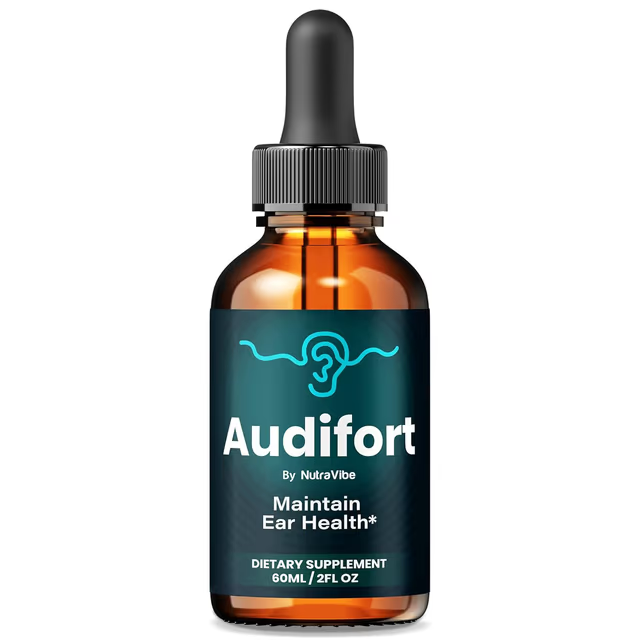
Audifort is a liquid hearing supplement that combines botanical extracts like Ginkgo Biloba, GABA, and Green Tea to supp...
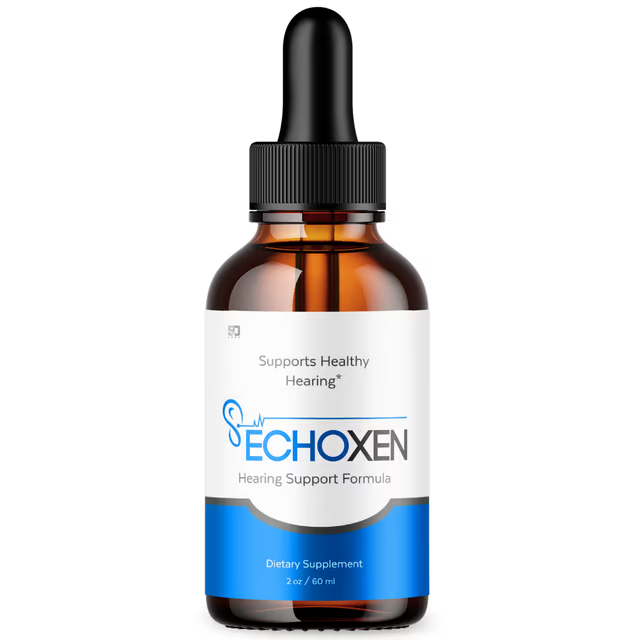
EchoXen
EchoXen is a liquid hearing support supplement that combines herbal extracts, antioxidants, and circulation-supporting i...
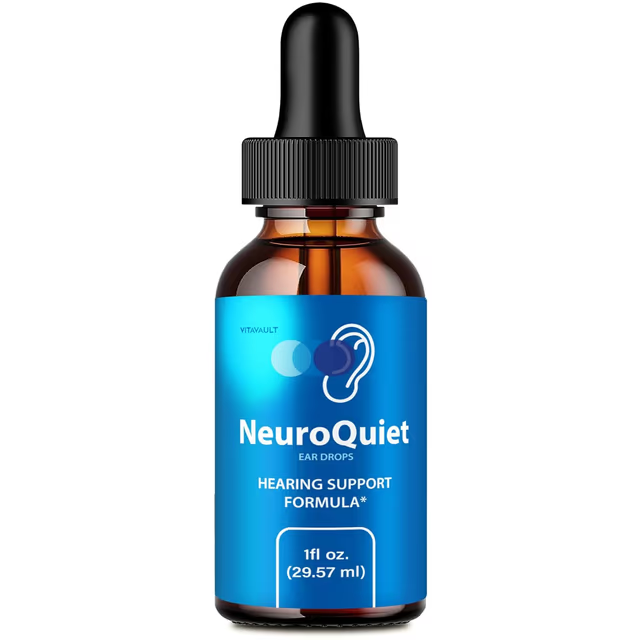
NeuroQuiet
NeuroQuiet takes a different approach to tinnitus relief by using an oral spray instead of capsules, combining ingredien...
Why we recommend SonoVive: Superior hearing health targeting, clinically proven ingredients, and better value for money with money-back guarantee.
SonoVive vs Competitors
Detailed comparison of SonoVive against top hearing health competitors in the market:
| Feature | SonoVive | Audifort | EchoXen |
|---|---|---|---|
| Price | From $49 | From $49 | From $49 |
| Money-Back Guarantee | 60 days | 90 days | 60 days |
| User Rating | 3.8/5 | 4.2/5 | 4/5 |
| Key Benefits | Focus and Alertness: The most consistent report, usually by week 3-4, described as less afternoon fog; this lines up with bacopa, huperzine-A, and acetyl-L-carnitine rather than anything ear-specific, Mood: A minority describe a steadier mood, which is what 250 mg of St. John's Wort might plausibly do in someone sensitive to it | Tinnitus Support: Some users report that ringing or buzzing feels less intense after several weeks of consistent use, Hearing Clarity: A portion of users say conversations feel slightly easier to follow, particularly in quiet environments | Tinnitus relief: Many users notice a meaningful reduction in the intensity or frequency of ringing, Better sleep: When nighttime tinnitus is less intrusive, sleep quality may improve |
| Third-Party Testing | ✓ Yes | ✓ Yes | ? Unknown |
Winner: SonoVive
SonoVive stands out with superior hearing health support, longer money-back guarantee, and proven ingredients that specifically target hearing health health.
Hearing Health & Audiology Writer
Michael has been writing about hearing health and tinnitus management for over 10 years, driven by a personal interest in how sound shapes quality of life.
FAQ
Where can I buy SonoVive?
SonoVive is sold only through the vendor's site, where checkout runs through ClickBank or DigiStore24 depending on the link. It is not sold in stores, and listings on Amazon, Walmart Marketplace, or eBay are not from the manufacturer and are not covered by the guarantee. Buying direct is the only way to get the 3- and 6-bottle pricing and the 60-day money-back guarantee. The label lists the distributor as SonoVive, 19655 E 35th Dr #100, Aurora, CO 80011, and product support is contact@sonovive-product.com; order support (receipts, address changes) goes through the checkout processor's customer portal. You can reach the vendor's order page through the links on this review.
How much does SonoVive cost?
At the time of this review, the vendor's site lists a single bottle (30 capsules) at $69 with free US shipping. The 3-bottle package is $59 per bottle ($177 total) and the 6-bottle package is $49 per bottle ($294 total), both with free US shipping. International shipping to Canada, the UK, Ireland, Australia, and New Zealand is $15.95 per order with 10-15 working days transit; US orders arrive in 5-7 working days with a tracking email within 60 hours. The vendor frames the discounts against a $99-per-bottle 'regular' price that, as far as we can tell, has never been charged; the post-purchase upsell pages offer extra bottles at $29 each. No bonus guides are listed. Prices can change, so check the vendor's site before ordering.
Is SonoVive legit or a scam?
SonoVive is a real product with a printed Supplement Facts label, a physical distributor address in Aurora, Colorado, and checkout through ClickBank or DigiStore24, established processors with published refund processes. It is not a scam in the sense of taking money and shipping nothing, and the vendor states the order is a one-time payment with no subscription. It does have real problems: the narrator 'Sam Olsen' cannot be verified, the text page calls the capsule a 'dropper', the video page promises to 'fix' hearing loss in under a month, the site claims an 'FDA approved' facility that the FDA does not issue, and the label omits the FDA's 2019 vinpocetine advisory. Treat it as a legitimate but under-dosed supplement sold with an exaggerated pitch.
Is there a SonoVive discount or coupon code?
SonoVive does not use coupon codes at checkout. The only discounts are the package prices on the vendor's site: $69 for one bottle, $59 per bottle for three, and $49 per bottle for six, with free US shipping on all three. The vendor describes the 6-bottle price as $300 off, which is measured against a $99 'regular' price nobody appears to pay. Sites advertising SonoVive coupon codes or a 180-day guarantee are affiliate pages; the vendor's refund policy says 60 days.
Does SonoVive have a money-back guarantee?
Yes, 60 days from the day your package arrives, according to the refund policy on the vendor's site (the sales page says '60 days from your purchase'; the policy page, which governs, says from delivery). To claim it you email contact@sonovive-product.com with 'Refund Request' in the subject line, then mail all bottles, empty or unopened, with the packing slip and a note with your name, email, and order ID to 19655 E 35th Dr #100, Aurora, CO 80011. Return shipping is at your cost. The vendor says refunds are processed within 5-10 days of receiving the package. Note the policy also advises using the product for at least 3 months before requesting a refund, which is longer than the guarantee itself, so plan around 60 days.
What are the ingredients in SonoVive?
The Supplement Facts label lists, per one capsule: St. John's Wort (flower) 250 mg, L-glutamine 150 mg, phosphatidylserine 4% complex (contains lecithin) 125 mg, Bacopa monnieri extract (leaf) 120 mg, Ginkgo biloba (leaf) 50 mg, N-acetyl L-carnitine hydrochloride 50 mg, vinpocetine (seeds) 2 mg, and huperzine-A (aerial parts) 10 mcg. Other ingredients are gelatin (bovine), microcrystalline cellulose, vegetable magnesium stearate, and silicon dioxide, and the label states 'Contains Soy (Lecithin)'. Every amount is disclosed, which is rare in this category; none of the extracts states a standardization (hypericin, bacosides, ginkgo flavone glycosides), and the '4% complex' means the capsule holds about 5 mg of actual phosphatidylserine.
Can SonoVive reverse hearing loss or cure tinnitus?
No. Sensorineural hearing loss, the age- and noise-related kind that accounts for most adult hearing loss, involves the loss of cochlear hair cells and auditory nerve synapses that do not regrow in humans, and no supplement, including any of SonoVive's eight ingredients, has been shown to reverse it in a placebo-controlled trial. The only human hearing study of any SonoVive ingredient is a 12-month open-label vinpocetine trial at 30 mg per day with no placebo group; SonoVive contains 2 mg. For tinnitus, a 2022 Cochrane review of 12 ginkgo trials found it may have little to no effect. The standard of care is an audiogram, hearing aids where indicated, and for tinnitus, sound therapy and cognitive behavioural approaches. If hearing drops suddenly, in one ear, or with vertigo, treat it as an emergency and see an ENT the same day; corticosteroids work best within two weeks.
Is SonoVive safe with medications?
Ask your pharmacist first; this is the one product in the category where that is not a formality. St. John's Wort activates the pregnane X receptor and induces CYP3A4 and P-glycoprotein, which reduces blood levels of cyclosporine and tacrolimus (transplant rejection has been reported), digoxin, warfarin, HIV protease inhibitors, some statins, and oral contraceptives, and it can cause serotonin syndrome with SSRIs and other antidepressants. The label itself adds anticoagulants, MAO inhibitors, seizure history, and a 2-3 week stop before surgery or dental work. Vinpocetine carries a 2019 FDA advisory against use by pregnant women or women who could become pregnant. Ginkgo has bleeding case reports, though the 2022 Cochrane review found no increase in bleeding across four trials. Take it with food and wear sunscreen; St. John's Wort causes photosensitivity.
SonoVive vs Quietum Plus: which is better?
They take different approaches. SonoVive is a one-capsule nootropic-style formula with eight fully disclosed doses, led by St. John's Wort, bacopa, and ginkgo, with a 60-day guarantee; the transparency is its strength and the doses are its weakness. Quietum Plus is a two-capsule formula built around the neural and stress side of tinnitus, with GABA, ashwagandha, and B-vitamins, also with a 60-day guarantee, and it does not carry a vinpocetine advisory or a St. John's Wort interaction list. Neither reverses hearing loss. For someone whose main complaint is stress-amplified tinnitus, Quietum Plus is our pick and has the more coherent story; you can read our full Quietum Plus review at /reviews/quietum-plus. For someone who specifically wants printed doses and a mild focus-and-mood capsule, SonoVive is the more checkable product. The full side-by-side is at /compare/quietum-plus-vs-sonovive.
What if SonoVive doesn't work for me?
Use the guarantee, and use it on time. Email contact@sonovive-product.com with 'Refund Request' in the subject before day 60 from delivery, keep the packing slip, and mail every bottle back to the Aurora, Colorado address with tracking so you have proof of receipt. Refunds are processed 5-10 days after the package arrives. If you have an order question rather than a product question, the checkout processor's customer portal handles receipts and order lookups, and both ClickBank and DigiStore24 have their own buyer-protection processes if the vendor does not respond. And if the reason it did not work is that your hearing is measurably worse, book the audiogram you may have been putting off.
Stay informed on hearing health
Get honest supplement reviews and research-backed tips for better hearing.
No spam. Unsubscribe anytime.