Head-to-Head Comparison · 2026
BellyFlush vs PrimeBiome (2026): A Cleanse and a Culture Are Not the Same Purchase
One works overnight and should be put away. The other works over months and should not. We read both Supplement Facts panels, check what the trials actually tested, and set out which situation each product is for.
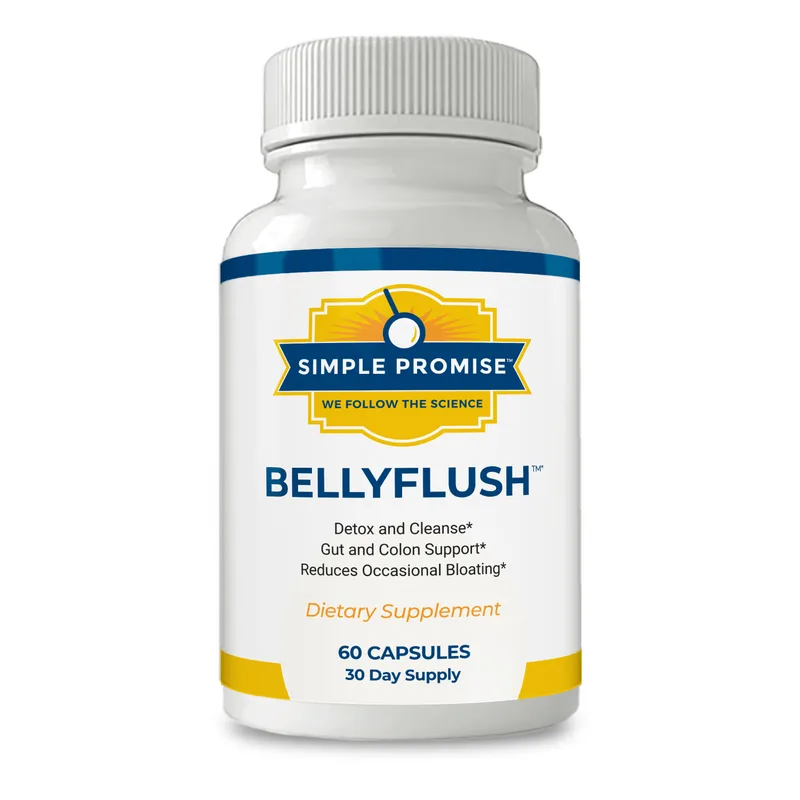
BellyFlush
4/5
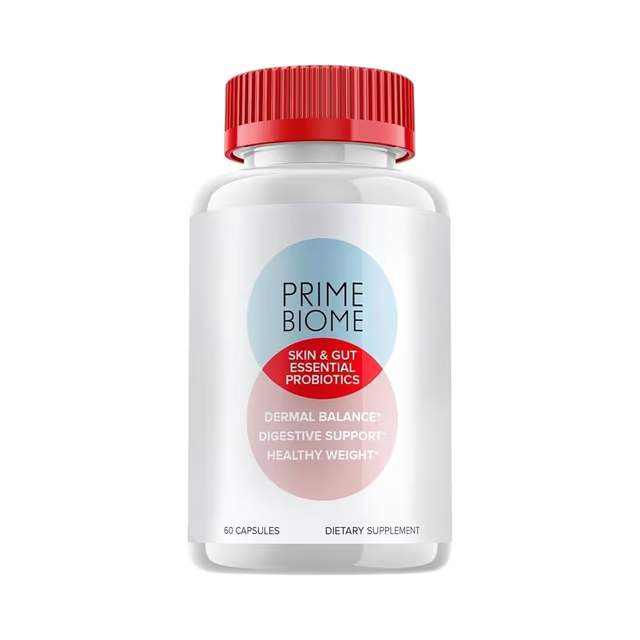
PrimeBiome
4.2/5
In 60 seconds
These two are not competing for the same buyer, and treating them as rivals produces a worse outcome than using them in sequence. BellyFlush is a short-course cleanse: three stimulant anthraquinone botanicals, one of them senna standardized to 20% sennosides, taken before bed and working by morning. PrimeBiome is a daily probiotic-and-botanical gummy with no stimulant component, built for slow microbiome work on a timescale of months. The deciding question is not which formula is better. It is whether your problem is acute or chronic.
BellyFlush approach
60 hypromellose capsules, two per serving, 1,120 mg of actives across three published blends: a 590 mg Body Cleanse Blend (cascara sagrada, Cape aloe, senna standardized to 20% sennosides, Triphala), a 230 mg Digestion Support Blend (fennel, bentonite) and a 300 mg Detox & Gut Health Blend (marshmallow root, licorice standardized to 6% glycyrrhizin, slippery elm, cayenne, milk thistle). Blend totals disclosed; individual amounts not.
PrimeBiome approach
A chewable gummy with per-ingredient doses printed: 500 million CFU Bacillus coagulans, inulin 200 mg, babchi extract 150 mg, lion's mane 100 mg, dandelion root 100 mg, Ceylon ginger 75 mg, fennel seed 75 mg, slippery elm bark 50 mg, fenugreek 50 mg, lemon balm 25 mg. No stimulant laxative component anywhere in it.
The 60-Second Honest Take
Put the two labels side by side and the difference is not subtle. BellyFlush contains three stimulant laxatives. Cascara sagrada, Cape aloe leaf and senna all carry anthraquinone glycosides, which pass to the colon intact, get cleaved by resident bacteria, and then act locally to increase contractions while reducing the reabsorption of water. More push, wetter contents, result by morning. PrimeBiome contains none. Its mechanism is a probiotic strain, a prebiotic fibre and a set of botanicals working on the microbiome over weeks. That single structural fact decides almost everything else about these two products — including, critically, how long each one should be taken. A formula built on anthraquinones has a natural end date. A probiotic gummy does not. Nothing about this makes BellyFlush the lesser product; stimulant laxatives work, they have been used for well over a century, and short courses are well tolerated. It makes it a course where PrimeBiome is a habit. So the real question is not which to buy. It is what your week actually looks like.
What BellyFlush Gets Right
It works, and it works to a schedule. In a category where a great deal of what is sold produces nothing you can feel by week six, BellyFlush produces a result by the next morning. That deserves saying before any caveat. The senna is the quantified part, and senna is the best-evidenced ingredient in either product. In a randomized, double-blind, placebo-controlled trial in 96 women recovering from pelvic reconstructive surgery, senna 8.6 mg with docusate shortened time to first bowel movement against placebo (3.00 vs 4.05 days, P<.002) and cut rescue laxative use to 7.0% from 43.6% (P<.001) (Patel et al., American Journal of Obstetrics and Gynecology, 2010, PMID 20207340). In an earlier randomised double-blind crossover trial in 77 long-stay elderly patients, a senna-fibre combination beat lactulose on daily bowel frequency with no difference in adverse effects (Passmore et al., BMJ, 1993, PMID 8219947). The panel is published, and two ingredients are standardized. This matters more than it sounds. Because the licorice is standardized to 6% glycyrrhizin inside a 300 mg blend, we can bound the glycyrrhizin at 18 mg even in the impossible case where licorice were the whole blend — against European guidance putting habitual intake of concern near 100 mg a day. Licorice is usually the ingredient we flag hardest in a digestive formula. Here the arithmetic closes the question before it opens. The formula shows signs of design. Marshmallow root, slippery elm and licorice are mucilage demulcents; fennel is a carminative. Three soothing botanicals and a carminative sitting next to three stimulants is a formulator who knows cramping is why people abandon this category.
Where BellyFlush Falls Short
Duration, and the way the product is packaged against it. A bottle is sold as a 30-day supply and offered in bundles up to six. The sensible use is a few nights to two weeks. Those two things cannot both be right, and the pricing structure rewards the wrong one: $33 per bottle on the six-pack is the best unit price on the page and the worst fit for the product. The dose that matters most is the one you cannot see. The blends are disclosed but the amounts inside them are not, so your actual sennoside intake is unknowable. For scale: if senna extract were a quarter of the 590 mg Body Cleanse Blend, the 20% standardization would put you near 30 mg of sennosides, against a 17.2 mg starting dose on pharmacy senna labels. That is a wide band to be guessing inside. PrimeBiome, for all its slowness, prints a number next to every ingredient. On the regulatory history, context rather than alarm. On 9 May 2002 the FDA issued a final rule (67 FR 31125, codified at 21 CFR 310.545) stating that aloe and cascara sagrada in over-the-counter drug products are not generally recognized as safe and effective. The agency had requested mutagenicity, genotoxicity and carcinogenicity data and received none for either ingredient. Two points are routinely got wrong: the rule governs OTC drugs rather than dietary supplements, which is why a supplement may legally contain both in 2026, and senna was not covered by it. BellyFlush contains both of the ingredients the rule names, plus senna. And the claim the evidence does not support. A four-week, double-blind, randomized, placebo-controlled trial tested a 1,350 mg detox blend containing cascara sagrada bark, slippery elm bark and senna leaf — three of the same ingredients — in 22 healthy women, and found no beneficial or harmful effects for body composition, waist circumference, gastrointestinal symptoms or blood markers (Tinsley et al., Journal of Dietary Supplements, 2019, PMID 29958034). Read it fairly: those participants were healthy and not constipated, so the trial says nothing about relief of occasional constipation, which this product genuinely delivers. What it refutes is the flat-belly framing on the sales page. Our BellyFlush review works through the rest of the label.
What PrimeBiome Gets Right
PrimeBiome holds the top spot in our digestive health roundup, and its strengths are the precise inverse of BellyFlush's. No stimulant component, so no course-length question. This is the structural advantage. PrimeBiome can be taken for months, and for a chronic, low-grade problem — mild bloating, unpredictable regularity, general discomfort — that matches the shape of the complaint far better than an overnight cleanse does. Every dose is printed. 500 million CFU of Bacillus coagulans, inulin at 200 mg, and so on down the list. For a slow-acting product this is exactly the disclosure that matters, because you are committing months rather than nights. A shorter guarantee that we actually prefer here. PrimeBiome's window is 60 days against BellyFlush's stated 365. Counter-intuitively, the shorter one is the better-matched promise: 60 days is roughly how long a microbiome product needs before you can judge it, whereas a 365-day window on a product that declares itself by the second morning is marketing rather than reassurance. Third-party tested, in an FDA-registered facility. BellyFlush publishes neither, claiming cGMP compliance in the USA. The honest limitation, and it mirrors BellyFlush's exactly: PrimeBiome will not do anything you can feel this week. For someone genuinely stuck right now that is not a minor flaw, it is the whole problem. Our PrimeBiome review sets out realistic timelines.
Note the Overlap — and the Third Option
Something worth seeing before you choose: these two formulas share ingredients. Slippery elm bark and fennel seed appear in both. In PrimeBiome they are part of the main event, dosed at 50 mg and 75 mg. In BellyFlush they sit in the supporting blends, there to soften the stimulants. That overlap is a reminder of how thin the evidence is for the comfort ingredients in either product. Slippery elm's human data amounts to a 16-week open-label study in 43 adults using a seven-ingredient formula, which cannot isolate its contribution (Ried et al., Nutrition Research, 2020, PMID 32151878). Fennel's best result came co-administered with curcumin in 121 IBS patients, not tested alone (Portincasa et al., 2016, PMID 27308645). For marshmallow root we found no human gastrointestinal trial at all. None of this is a reason to avoid either product — it is a reason to buy each for its main mechanism rather than its ingredient list. There is also a third option in this roundup that sits between them. Finessa is a powder containing a single stimulant botanical — cascara — alongside artichoke leaf extract, which carries a 247-patient randomized placebo-controlled trial for functional dyspepsia. It acts in days rather than overnight, and it is the middle setting between BellyFlush's three stimulants and PrimeBiome's none. If BellyFlush reads as too strong and PrimeBiome as too slow, our Finessa vs PrimeBiome comparison covers that middle ground.
The Sequence Most People Should Actually Use
If you are stuck right now — nothing moving for several days, bloated and uncomfortable — start with BellyFlush. Two capsules 20-30 minutes before bed with a full 8 oz glass of water, exactly as the label says. One capsule for the first two nights if you are at all sensitive. Expect a result by morning; if the first night is quiet, give it one more before concluding anything, and do not double the serving. Keep it to days, not weeks. Three to seven nights is usually enough to break a stuck stretch. In the second week move to every other night. By the end of week two, stop. Then add the slow work. This is where PrimeBiome earns its place — holding ground that has already been recovered, on a timescale where its modest effects are enough. Alongside it: 25 to 30 g of dietary fibre a day, adequate water, and a daily walk. Those three do more than either supplement, and neither product substitutes for them. If you are not stuck — your gut works but is uncomfortable or unpredictable — skip BellyFlush entirely. There is no reason to take three anthraquinone botanicals for a problem that is not obstruction. Start with PrimeBiome and give it two months. And if regularity collapses the moment you stop BellyFlush, that is genuinely useful information. It belongs in a conversation with your doctor rather than in a standing order for six more bottles.
The Verdict, Stated Plainly
PrimeBiome keeps the top spot in our digestive health roundup, and it should. It prints every dose, it is third-party tested in an FDA-registered facility, its 60-day guarantee is well matched to how long it takes to judge, and above all it has no stimulant component — which makes indefinite use appropriate and suits the chronic, low-grade discomfort most buyers in this category actually have. BellyFlush is the better product for being stuck tonight, and it is the most effective thing in this roundup at that specific job. Standardized senna has the strongest trial record of any ingredient in either formula, the published panel lets you bound the licorice exposure arithmetically, and the demulcent botanicals are a genuine attempt to solve the cramping problem rather than ignore it. The deciding factor is not quality, and it is not price. It is duration. One of these is a tool you reach for a few nights a year; the other is something you take every day for months. The mistake the pricing page invites — ordering six bottles of a product you should use six nights — is the only serious error available here. Buy BellyFlush, one bottle, if you need tomorrow morning to be different. Buy PrimeBiome if you need the next three months to be different. And in both cases fix the fibre and the water, because that is the part that decides whether anything you gain actually stays.
Quick Verdict
Choose BellyFlush if you want:
- ✓Adults dealing with occasional constipation who want something that works by the next morning
- ✓People who want to see an actual Supplement Facts panel with milligram amounts before swallowing anything
- ✓Anyone who has tried fibre and probiotics, found them too slow, and wants a short reset
May not be ideal for:
Anyone looking for a daily, long-term gut-health supplement — this is the wrong tool entirely
Choose PrimeBiome if you want:
- ✓Adults dealing with digestive issues that seem tied to their skin health
- ✓People over 35 noticing both gut changes and skin dullness
- ✓Those looking for a natural approach to skin clarity from the inside out
May not be ideal for:
People under 18, pregnant, or nursing
Side-by-Side Comparison
| Feature | BellyFlush | PrimeBiome |
|---|---|---|
| Our Rating | 4/5 | 4.2/5 |
| Starting Price | $33 | $49 |
| Guarantee | 365-day money-back | 60-day money-back |
| Key Ingredients | 4 active ingredients | 10 active ingredients |
| Best For | Adults dealing with occasional constipation who want something that works by the next morning | Adults dealing with digestive issues that seem tied to their skin health |
Pros & Cons
BellyFlush
Pros
- ✓Works fast and predictably — senna's published user reports average 4.2 out of 5 across 86 entries, with about 78% describing a positive effect and onset usually inside one night
- ✓Publishes a complete Supplement Facts panel with blend totals in milligrams, which most of this category refuses to do
- ✓Two ingredients carry standardizations: senna at 20% sennosides and licorice at 6% glycyrrhizin — the second one bounds a real safety question
- ✓Senna is the one anthraquinone that remains an FDA over-the-counter laxative active, and it is the quantified one here
- ✓Three mucilage botanicals and a carminative are built in specifically to soften the cramping this class is known for
Cons
- ✗Marketed as a daily 30-day supply when the sensible use is a few nights to two weeks at most
- ✗Proprietary blends mean you cannot calculate your actual sennoside dose, which is the number that matters most here
- ✗Contains three separate anthraquinone sources; aloe and cascara were moved out of the FDA's OTC laxative monograph in 2002 for want of submitted data
- ✗The weight-loss framing on the sales page describes waste and water, not fat, and the page does not make that distinction
PrimeBiome
Pros
- ✓Targets both gut health and skin appearance through the gut-skin axis — a research-backed approach
- ✓Uses Bacillus coagulans, a spore-forming probiotic with better survival through stomach acid
- ✓Gummy format is easy to take daily — no large capsules to swallow
- ✓Includes prebiotics to feed the probiotics and support colonization
- ✓Third-party tested for purity and potency
Cons
- ✗Only available online through the official website — not in stores
- ✗Skin benefits take 4-6 weeks to become noticeable — requires patience
- ✗Some users experience mild digestive adjustment in the first week as the microbiome adapts
- ✗Contains Lion's Mane mushroom, which isn't suitable for people with mushroom allergies
Pricing Comparison
BellyFlush
PrimeBiome
Frequently Asked Questions
Which is better, BellyFlush or PrimeBiome?
Both BellyFlush (rated 4/5) and PrimeBiome (rated 4.2/5) are solid gut health supplements. BellyFlush is best for Adults dealing with occasional constipation who want something that works by the next morning, while PrimeBiome excels at Adults dealing with digestive issues that seem tied to their skin health. The best choice depends on your specific goals and preferences.
What is the price difference between BellyFlush and PrimeBiome?
BellyFlush starts at $33 per bottle while PrimeBiome starts at $49 per bottle. Both offer multi-bottle discounts that reduce the per-unit cost. BellyFlush comes with a 365-day money-back guarantee and PrimeBiome offers a 60-day money-back guarantee.
Which has better ingredients, BellyFlush or PrimeBiome?
BellyFlush features 4 key ingredients while PrimeBiome contains 10 active compounds. Both formulas are manufactured in FDA-registered, GMP-certified facilities. The ingredient profiles target gut health from different angles, so the better formula depends on which specific benefits matter most to you.
Can I take BellyFlush and PrimeBiome together?
We recommend choosing one supplement at a time so you can accurately assess its effects. Taking both simultaneously makes it difficult to determine which product is contributing to your results. If one doesn't meet your needs, you can switch to the other. Always consult your healthcare provider before combining supplements.
Final Verdict
PrimeBiome keeps the top position in our digestive roundup because it prints every dose, is third-party tested in an FDA-registered facility, and contains no stimulant component — which makes it appropriate for the months of daily use that microbiome work actually requires. BellyFlush is the more effective product for someone backed up right now, and the reason is three anthraquinone botanicals, one of them senna standardized to 20% sennosides, the single best-evidenced ingredient across both formulas. It also publishes a full Supplement Facts panel, which is rare for a cleanse and lets a buyer bound the licorice exposure at 18 mg of glycyrrhizin rather than guess. Our criticism is duration rather than formula: a product that works by the second morning is sold in six-bottle bundles as a 30-day supply, and a placebo-controlled trial of a near-identical cascara/senna/slippery elm blend found no change in body composition or waist circumference, so the flat-belly framing does not hold. The best answer for most people is sequential — one bottle of BellyFlush for a few nights to break a stuck stretch, stop by week two, then PrimeBiome plus 25-30 g of daily fibre to hold the ground.