
Nitric oxide is a gas your blood vessels manufacture on demand, and it does one job: it tells the muscle wrapped around each vessel to relax. Relaxed vessels are wider vessels, and wider vessels move blood with less force against the walls. Production of it declines steadily from roughly your forties onward, which is the single fact every supplement in this category is built on. The fact is real. What follows from it is where the marketing and the research start to diverge.
What Nitric Oxide Actually Does in Your Body
The inner lining of every blood vessel you have is a single layer of cells called the endothelium. It is not passive plumbing: it senses the force of blood moving past it and releases nitric oxide into the smooth muscle underneath, which relaxes and widens the vessel. This happens continuously, everywhere, and it is why your circulation adapts within seconds when you stand up or climb a flight of stairs.
Three things reduce how much of it you make. Age is the main one, as the enzyme responsible becomes less efficient over decades. Oxidative stress is the second, because nitric oxide is chemically fragile and is destroyed quickly in an inflamed environment. The third is dietary, and the only one you can act on directly — the backup pathway runs on nitrate from food, and most American diets supply very little of it.
The Two Routes to Raising It
This matters more than any brand comparison, because supplements target one route or the other and they are not interchangeable.
The enzymatic route is the body's primary system. The enzyme converts the amino acid L-arginine into nitric oxide, and it needs oxygen and a cofactor called tetrahydrobiopterin to do it. Supplementing arginine directly is less effective than it sounds, because most oral arginine is destroyed by the liver and gut before it reaches circulation. L-citrulline sidesteps that problem entirely: it passes through the liver untouched and your kidneys convert it to arginine, which is why citrulline raises plasma arginine more reliably than arginine itself does.
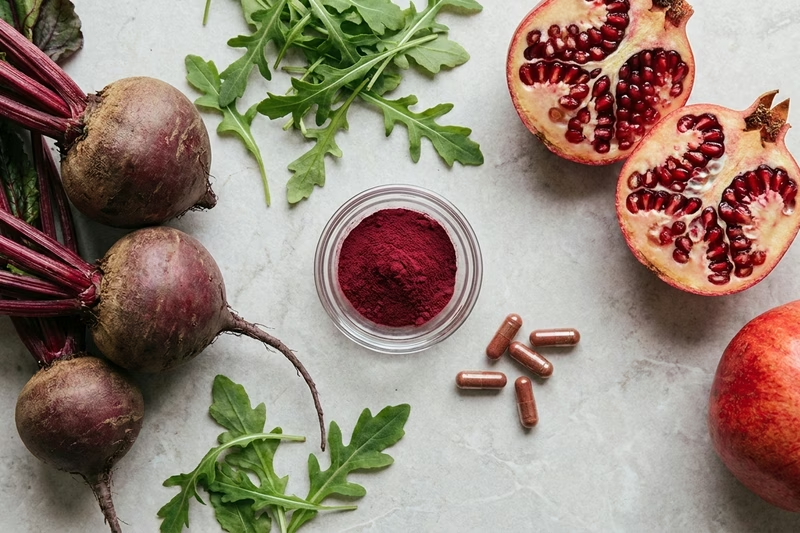
The nitrate-nitrite route does not use the enzyme at all. Dietary nitrate from beetroot, rocket, spinach and other leafy greens is absorbed, concentrated in your saliva, and reduced to nitrite by bacteria living on the back of your tongue. That nitrite becomes nitric oxide in tissue, and the conversion works best in exactly the low-oxygen, acidic conditions where the enzymatic route performs worst. The two systems complement each other, which is a genuine argument for a formula that covers both.
An unglamorous consequence of the bacterial step
Antibacterial mouthwash kills the tongue bacteria that perform the nitrate-to-nitrite conversion, and studies have measured blunted nitrate responses in people using it. If you are spending money on a beetroot product, swilling chlorhexidine twice a day works against you. Scrape, brush, and save the antiseptic rinse for when your dentist asks for it.
The Four Nutrients With Randomised Trials Behind Them
Dietary nitrate from beetroot
The most directly studied. A 2024 systematic review and meta-analysis pooled eleven randomised trials in 349 adults with hypertension and found beetroot juice reduced clinical systolic blood pressure by 5.31 mmHg against placebo, with no significant effect on diastolic pressure or on 24-hour ambulatory measures. The authors rated the certainty of the evidence as low and the heterogeneity between trials as moderate to high, which is the honest framing — a real signal, measured repeatedly, in studies that disagree with each other more than you would like.
The dose that produced it: 200 to 800 milligrams of nitrate per day. That is a specific number, and it is the number almost no supplement label will give you, because most state the weight of beet powder rather than its nitrate content — and the two have almost nothing to do with each other.
L-citrulline, with or without L-arginine
A 2025 meta-analysis of fifteen randomised trials in middle-aged and older adults found L-citrulline supplementation and watermelon intake lowered systolic blood pressure by 4.02 mmHg and diastolic by 2.54 mmHg. The more interesting finding was in the subgroup analysis: combining L-citrulline with L-arginine outperformed either alone, with a 10.44 mmHg systolic reduction. That is a formulation lesson, not a marketing one — the two amino acids work on the same pathway from different ends, and pairing them is a sign someone read the absorption literature.
The dose matters more here than anywhere else in this guide. Those trials typically used three to six grams of citrulline per day. A standard capsule holds 500 to 800 milligrams. Delivering a research dose in capsule form means six to eight capsules daily, indefinitely, which almost nobody sustains — which is why capsule products in this category quietly under-dose and why powders exist.
Vitamin K2 as MK-7
Not a nitric oxide ingredient at all, but it appears in these formulas for a defensible reason and carries the longest trial in the category. Knapen and colleagues randomised 244 healthy postmenopausal women to 180 micrograms of MK-7 daily or placebo and followed them for three years. Carotid-femoral pulse wave velocity, the standard clinical index of arterial stiffness, decreased significantly in the supplemented group, with the clearest effect in women whose arteries were stiffest at the start. The mechanism is that vitamin K2 activates matrix Gla-protein, a molecule that helps keep calcium deposited in bone rather than in vessel walls.
Note the timescale. Three years. A supplement that supports arterial flexibility is making a claim about a process nobody can observe in a month, and anyone presenting K2 as something you will feel is misrepresenting the only good trial they have.
Polyphenols: pomegranate and grape seed
These work mainly by protecting nitric oxide after it is made rather than by producing more of it. A 2024 meta-analysis of 22 randomised trials found pomegranate consumption reduced systolic pressure by 7.87 mmHg and diastolic by 3.23 mmHg, with a greater effect in people starting above 130 mmHg — and with very high heterogeneity between studies, which the authors flag themselves. A 2022 systematic review found grape seed extract improved flow-mediated dilation, a direct ultrasound measure of how well an artery widens, as well as reducing blood pressure.
The caveat on pomegranate is worth stating: most of those trials used juice, in glass-sized quantities. Whether a concentrated extract in a capsule reproduces that is an assumption rather than a finding.
The Dose Problem That Defines This Category
Every number above is attached to a specific amount. The research is not vague about this. And yet almost every direct-to-consumer heart formula names these exact ingredients and declines to say how much of each it contains.
The arithmetic is unforgiving. If a product delivers a 5-gram daily serving and its citrulline is dosed at the three grams the trials used, there are two grams left for everything else — flavouring included. A ten-ingredient label inside that budget means most of those ten are present in amounts that no trial has tested. This is not a conspiracy, it is a formulation constraint, and the only thing that resolves it is a published supplement facts panel.
- Check the format against the dose. Gram-scale ingredients need powders or chews. Capsules are fine for K2, which is measured in micrograms, and poor for amino acids.
- Prefer branded, standardised extracts. MenaQ7, RedNite, Pomella and Enovita have research published under those names. 'Beet root powder' does not, and its nitrate content varies enormously between harvests.
- Count the ingredients against the serving size. Twenty ingredients in a 5-gram scoop is arithmetically a different product from four ingredients in the same scoop.
- Treat a missing panel as information. Brands that hit research doses tend to advertise the numbers, because the numbers are the selling point.
The product we rate highest in this category, and why it is not higher
VenoPlus 8 is the only formula we have found that covers all four mechanisms — nitrate, the citrulline-arginine pathway, vitamin K2 and polyphenols — using branded ingredients, in a 5.4g powder that can physically carry them. It also publishes no doses at all, which is the single reason it scores 4.0 rather than higher.
Read the full VenoPlus 8 reviewFood First, and What That Actually Looks Like
The nitrate route in particular is easy to feed from a supermarket. Rocket is the densest common source, followed by spinach, beetroot, lettuce, celery and radish. A large handful of rocket or a roasted beetroot with dinner puts you in the range the trials used, for the price of a side dish.
Citrulline is harder. Watermelon is the only meaningful food source, and reaching three grams means eating an impractical quantity daily. If the amino acid route is the one you want, a supplement is the realistic option — which is precisely why dose disclosure matters so much for that ingredient and so little for beetroot.
And the interventions with the strongest evidence for endothelial function remain aerobic exercise, adequate sleep and reduced sodium. A formula is a reasonable addition behind those three and a poor replacement for any of them.
Safety: Two Interactions Worth a Phone Call
Nitrate medication. If you take nitroglycerin, isosorbide mononitrate or isosorbide dinitrate for angina, adding a nitric-oxide-raising supplement can cause a serious drop in blood pressure. This is the same mechanism behind the standard warning against combining nitrates with prescription erectile medication. It is a real pharmacological interaction and it is reason enough to speak to a cardiologist before buying anything in this category.
Warfarin and vitamin K2. Warfarin works by interfering with vitamin K-dependent clotting factors. Any K2-containing product therefore acts directly on the pathway the drug is managing, and combining them needs prescriber involvement and INR monitoring rather than reassurance from a website. Apixaban and rivaroxaban do not work through vitamin K, so the concern there is much smaller.
Beyond those two, the category is well tolerated. Beetroot turns urine pink, which alarms people and is entirely harmless. Magnesium loosens stools. Vasodilation can produce a mild headache in the first few days.
How to Judge Whether It Worked
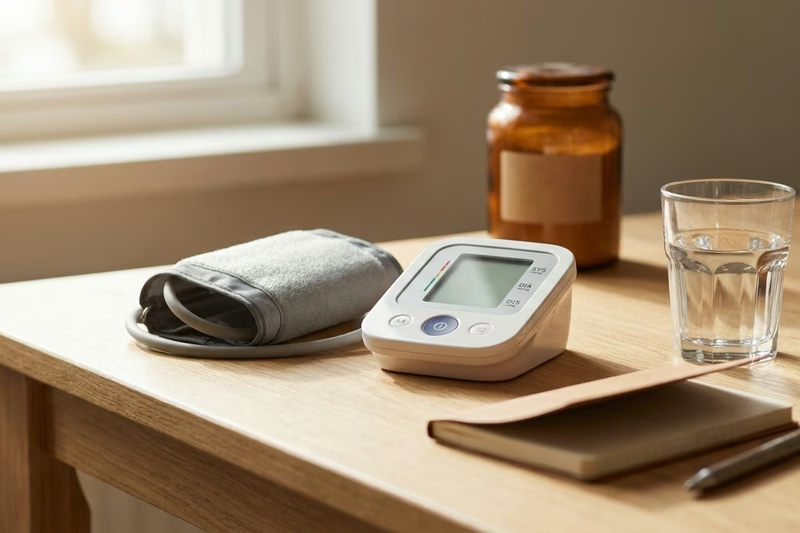
Buy a home blood pressure cuff before you buy a supplement. Take readings for a week before your first dose — same arm, same time of day, seated and still for five minutes first — and average them. Do the same at week eight. That one habit turns this from a question about how you feel into a question with an answer, and it costs less than a jar of most products on this shelf.
Eight to twelve weeks is the honest evaluation window. Judging at three weeks is the most common mistake in this category, and buying a six-month bundle before you know whether you will maintain a daily routine is the second.
The Short Version
- Nitric oxide production genuinely declines with age, and two independent pathways can raise it: the arginine-citrulline enzymatic route and the dietary nitrate route.
- Four nutrient groups have randomised human evidence: nitrate from beetroot, L-citrulline with L-arginine, vitamin K2 as MK-7, and polyphenols from pomegranate and grape seed.
- Every one of those findings is tied to a specific dose, and most products do not disclose theirs. Treat a missing supplement facts panel as a reason to buy one unit rather than six.
- Gram-scale amino acids need a powder. A capsule physically cannot carry a research dose of citrulline.
- If you take nitrate medication or warfarin, speak to your prescriber before ordering anything in this category.
- None of this replaces exercise, sleep, sodium reduction, a prescription or an appointment.
Looking for Heart Health supplements?
Our experts have reviewed and compared the top heart health supplements to help you find the right one.
See our expert comparisonFrequently Asked Questions
What is the best nitric oxide supplement ingredient?
L-citrulline has the strongest case, because it addresses the enzymatic pathway and survives first-pass liver metabolism far better than L-arginine does. A 2025 meta-analysis of fifteen randomised trials found it lowered systolic blood pressure by about 4 mmHg in middle-aged and older adults, and that combining it with L-arginine worked better than either alone. Dietary nitrate from beetroot is the best second ingredient, because it works through an entirely separate pathway rather than duplicating the first.
How much L-citrulline do you need per day?
The trials typically use three to six grams daily. This is the number that makes format matter: a capsule holds roughly 500 to 800 milligrams, so a research dose means six to eight capsules every day indefinitely. Powders can deliver it in one serving, which is the main reason serious nitric oxide products are sold as powders rather than pills.
Does beetroot powder work as well as beetroot juice?
It depends entirely on nitrate content, which is rarely disclosed. The blood pressure trials used concentrated juice delivering 200 to 800 milligrams of nitrate per day. A gram of generic beet root powder may contain a small fraction of that, because nitrate concentration varies enormously with growing conditions, harvest timing and processing. Standardised extracts that state nitrate content are a different proposition from raw powder that states only its weight.
How long do nitric oxide supplements take to work?
Plan on eight to twelve weeks. Perceived energy and exercise tolerance are the first things people report, often inside the first month, and also the most susceptible to expectation. The blood pressure research runs on a scale of weeks. Arterial stiffness is far slower — the vitamin K2 trial ran three years. Take a week of home cuff readings before you start so you have a baseline to compare against at week eight.
Can I take nitric oxide supplements with blood pressure medication?
Usually yes, with your prescriber's knowledge, but there are two exceptions to clear first. Nitrate medication for angina — nitroglycerin, isosorbide mononitrate or dinitrate — can stack dangerously with a nitric-oxide supplement and drop blood pressure sharply. Warfarin interacts with any vitamin K2 ingredient, since the drug works on the vitamin K pathway. For ordinary antihypertensives the advice is simply to mention it, monitor your home readings for a few weeks, and never stop a prescription because a supplement arrived.
Do nitric oxide supplements help with cholesterol?
That is not what the research measures. The trials here use blood pressure, flow-mediated dilation and arterial stiffness as endpoints, not lipid panels. Some ingredients have separate literature touching cholesterol markers, but it is weaker and less consistent than the vascular data, and a product marketed on cholesterol is reaching beyond its own evidence. Judge these formulas on circulation and vascular function, which is where the measurements actually are.
Are nitric oxide supplements safe to take every day?
For healthy adults not taking nitrates or warfarin, these ingredients are well tolerated in daily use and most are ordinary dietary components. The common complaints are mild: pink urine from beetroot, loose stools from magnesium, a brief headache in the first few days from vasodilation. People with kidney disease should clear magnesium-containing products with their nephrologist. This is general information rather than medical advice, and these products are not intended to diagnose, treat, cure or prevent any disease.
Get honest health tips & reviews
Join our newsletter for science-backed supplement reviews and wellness advice.
No spam. Unsubscribe anytime.