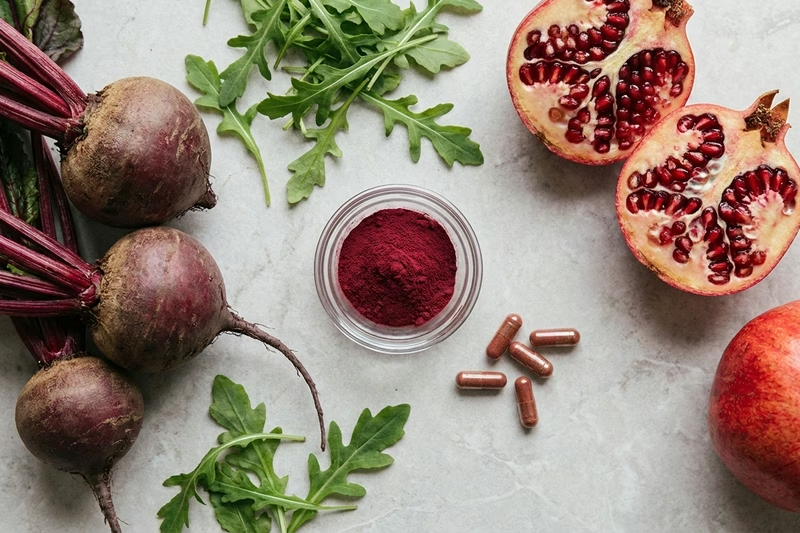

Short answer: the ingredients work, at the doses the trials used, with effects that are modest rather than dramatic. Most products do not use those doses, and most people asking this question have tried one that did not. That gap — between what the research found and what is in the bottle — explains almost every disappointed review in this category.
What the Pooled Evidence Says
Three recent meta-analyses cover the main ingredients, and it is worth reading the numbers rather than the headlines.
- Beetroot: eleven randomised trials in 349 adults with hypertension, pooled in 2024. Clinical systolic blood pressure fell 5.31 mmHg versus placebo. No significant effect on diastolic pressure or on 24-hour ambulatory readings. The authors graded the certainty of evidence as low.
- L-citrulline: fifteen randomised trials in middle-aged and older adults, pooled in 2025. Systolic fell 4.02 mmHg, diastolic 2.54 mmHg. Combining citrulline with arginine did considerably better in subgroup analysis, at 10.44 mmHg systolic.
- Pomegranate: 22 randomised trials, pooled in 2024. Systolic fell 7.87 mmHg, diastolic 3.23 mmHg, with a larger effect in people starting above 130 mmHg — and heterogeneity between studies above 90%, which the authors flag as a serious limitation.
So: yes, these ingredients do something measurable, repeatedly, in controlled conditions. A 4 to 8 mmHg systolic reduction is not nothing — it is roughly what a careful sodium reduction achieves. It is also not what the sales pages imply, and it is averaged across people who often started with elevated readings. If your numbers are already comfortable, the headroom for improvement is smaller by definition.
Low certainty is not the same as no effect
Two of these three meta-analyses explicitly flag low certainty or very high heterogeneity. That means the trials disagree with each other more than ideal and the true effect could be meaningfully smaller than the pooled figure. It does not mean the ingredient does nothing. It means you should buy one unit, measure, and decide — rather than committing to six months on the strength of an average.
Why So Many People Feel Nothing
1. The capsule maths does not work
Citrulline trials use three to six grams per day. A capsule holds roughly 500 to 800 milligrams. A research dose therefore means six to eight capsules daily, indefinitely, and almost nobody does that — so capsule products in this category contain a fraction of the studied amount. If you took a two-capsule-a-day nitric oxide formula and felt nothing, the most likely explanation is that you took about a fifth of the dose the research used.
2. Beet powder is not the same as beet nitrate
The trials delivered 200 to 800 milligrams of nitrate. Labels state grams of beet root powder, which tells you almost nothing — nitrate concentration varies enormously with soil, harvest timing and processing. A gram of generic beet powder may contain a tiny fraction of a trial dose. Standardised extracts that state nitrate content are a genuinely different product from raw powder sold by weight.
3. Mouthwash quietly cancels the beetroot
The nitrate pathway depends on bacteria on the back of your tongue converting nitrate to nitrite. Antibacterial mouthwash kills them, and studies have measured blunted nitrate responses in people who use it regularly. If you rinse with chlorhexidine twice a day and take a beetroot supplement, you are paying for one and defeating it with the other.
4. Three weeks is not a trial
Endothelial function changes over weeks, not days. Eight to twelve weeks is the honest window. The most common failure in this category is a decision made at week three, usually based on how someone feels rather than on anything measured.
The Test That Settles It for You
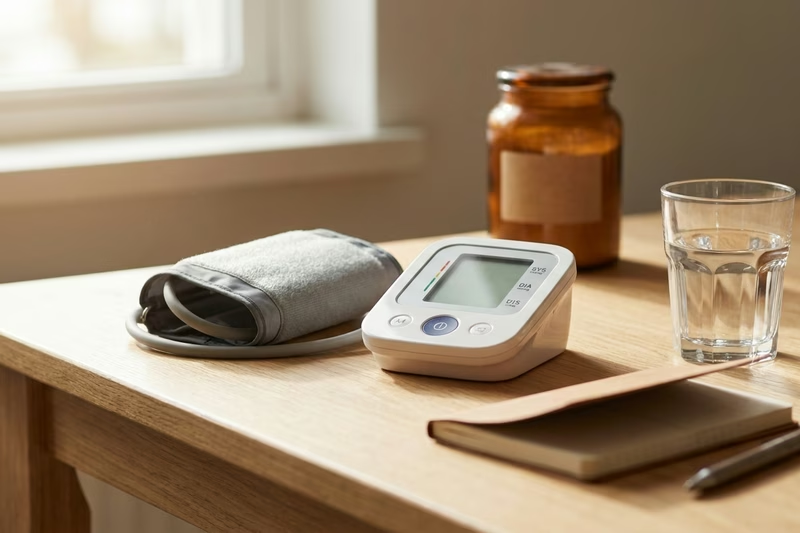
Impressions are unreliable here, in both directions. People who spent $59 are motivated to notice improvement, and people who are sceptical are motivated not to. A home blood pressure cuff removes the argument.
- Take readings for one week before your first dose. Same arm, same time of day, seated and still for five minutes first. Average the week rather than trusting any single reading.
- Start the product and take it daily, with food, without changing anything else at the same time.
- Repeat the week of readings at the eight-week mark and compare the averages.
- If nothing has moved and nothing feels different, stop and request the refund while the window is open.
That protocol costs about $30 for the cuff and tells you more than any review page, including this one.
What Works Better Than Any of This
It would be dishonest to write a buying guide without saying it: aerobic exercise has stronger and more consistent evidence for endothelial function than any supplement discussed here. So does sleep. So does reducing sodium. A nitric oxide formula is a reasonable addition behind those three and a poor substitute for any of them, and the people reporting the clearest results almost always changed something else at the same time — which is also why their testimonials should be read carefully.
If you are going to buy one anyway
Buy a single unit, not a bundle. Prefer a powder if the formula leans on amino acids, prefer branded standardised extracts over generic powders, and treat a missing supplement facts panel as a reason to limit your spend rather than a dealbreaker. Our current top pick in this category covers all four mechanisms and still does not publish its doses, which is exactly why we rate it 4.0.
See the best heart health supplements for 2026The Verdict
Do nitric oxide supplements work? The ingredients do, modestly, at doses most products do not disclose and many do not reach. That is a genuinely different answer from either 'yes' or 'scam', and it points to a specific buying behaviour: pick a format that can carry a real dose, start with one unit, measure a baseline, and judge at eight weeks on numbers rather than impressions. If you take nitrate medication for angina or warfarin for anything, talk to your prescriber before you order — in those two cases the interaction is real.
Looking for Heart Health supplements?
Our experts have reviewed and compared the top heart health supplements to help you find the right one.
See our expert comparisonFrequently Asked Questions
Do nitric oxide supplements actually lower blood pressure?
In pooled randomised trials, the main ingredients produce modest reductions: about 5 mmHg systolic for beetroot in adults with hypertension, about 4 mmHg for L-citrulline in middle-aged and older adults, and about 8 mmHg for pomegranate with very high variability between studies. Those are averages in study populations, usually with elevated baseline readings, and two of the three reviews flag low certainty. They are real effects of a useful size, not transformations, and whether a specific product reproduces them depends on whether it contains the doses the trials used.
How long before a nitric oxide supplement does anything?
Eight to twelve weeks is the honest window for anything measurable. Perceived energy and exercise tolerance sometimes shift inside the first month, but those are also the easiest things to imagine. Judging at week three is the most common mistake people make here. Take a week of home blood pressure readings before your first dose so you have something concrete to compare against later.
Why did a nitric oxide supplement do nothing for me?
Four likely reasons, in order of probability. The dose was too low, which is almost guaranteed if it was a two-capsule-a-day product containing gram-scale amino acids. The beet content was stated by weight rather than nitrate content. You use antibacterial mouthwash, which kills the tongue bacteria the nitrate pathway depends on. Or you judged it before eight weeks. It is also possible your baseline was already good, which leaves little room for measurable improvement.
Is beetroot juice better than a nitric oxide supplement?
For the nitrate pathway specifically, concentrated beetroot juice is what most of the research actually used, so it is the closest thing to a proven dose. The practical problems are taste, cost and consistency over months. A standardised extract that states its nitrate content is a reasonable substitute; generic beet powder sold by weight is not reliably equivalent. Rocket, spinach and beetroot in your meals are the cheapest route of all.
Are nitric oxide supplements worth the money?
They are worth one unit's worth of money if you intend to measure the result. A single jar or bottle, a home blood pressure cuff, a baseline week and an eight-week comparison is a reasonable experiment for most people. A six-month bundle bought before you know whether you will maintain a daily routine, in a product that will not tell you its doses, is not. And none of it is worth buying instead of exercise, sleep and sodium reduction, which have better evidence and cost nothing.
Can nitric oxide supplements be dangerous?
For most healthy adults they are well tolerated, but there are two genuine interactions. Nitrate medication for angina — nitroglycerin, isosorbide mononitrate or dinitrate — can combine with a nitric-oxide supplement to drop blood pressure dangerously. Warfarin interacts with any vitamin K2 ingredient, because the drug works on the vitamin K pathway. Both warrant a prescriber conversation before you order. This is general information, not medical advice, and these products are not intended to diagnose, treat, cure or prevent any disease.
Get honest health tips & reviews
Join our newsletter for science-backed supplement reviews and wellness advice.
No spam. Unsubscribe anytime.