Head-to-Head Comparison · 2026
NeuroPrime vs NeuroSurge (2026): The Easiest Formula to Take, or the One You Can Actually Check
One is a nine-botanical liquid you take one drop of and cannot verify. The other is ten actives in capsules with every milligram printed. An independent look at which trade-off is worth making.
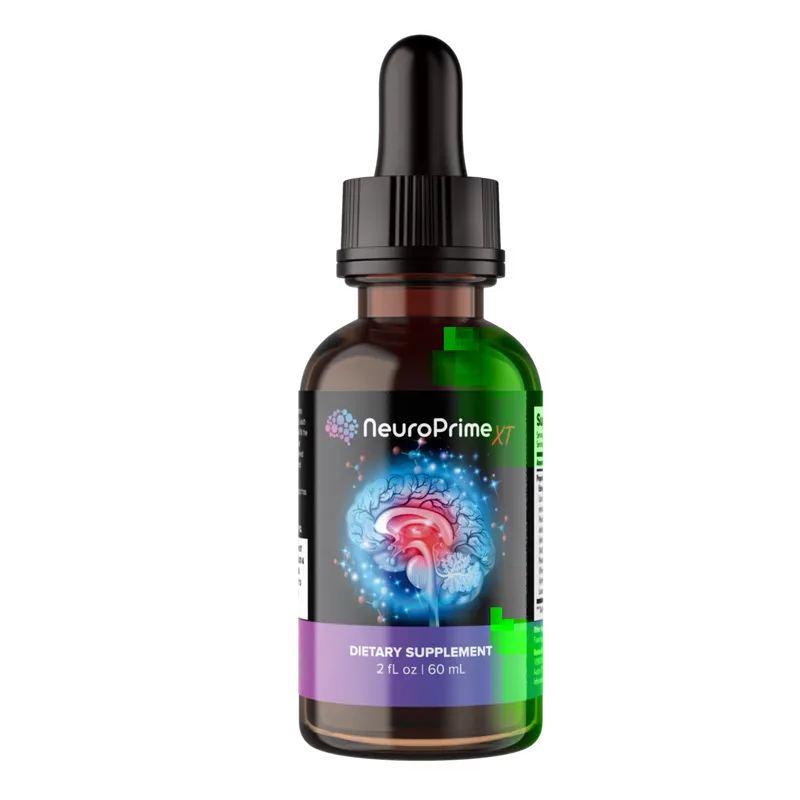
NeuroPrime
3.9/5
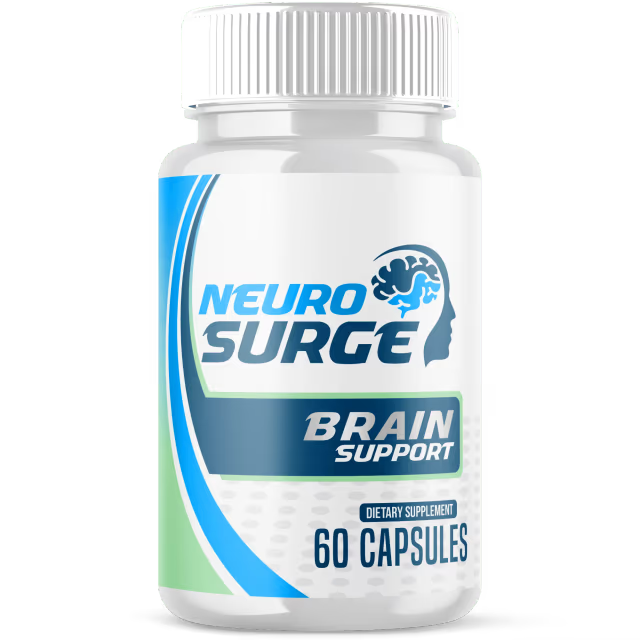
NeuroSurge
4.2/5
In 60 seconds
These two products disagree about what a buyer should have to trust. NeuroPrime is a nine-botanical liquid with a one-drop daily serving — the lowest-friction routine in the category, and the lowest-information label: no supplement facts panel, no bottle volume, not one milligram published. NeuroSurge is ten actives in capsules with every dose printed: Alpha-GPC 300mg, Bacopa monnieri 300mg standardised to 50% bacosides, Lion's Mane 250mg, Phosphatidylserine 100mg, Ginkgo Biloba 120mg, Rhodiola 200mg, Huperzine A 200mcg, N-Acetyl L-Carnitine 500mg, DHA 250mg and a B-complex. You are choosing between the product you are most likely to keep taking and the product you can audit against the published trials.
NeuroPrime approach
Nine named botanicals in a dropper bottle: moringa, pine bark extract, ginkgo biloba, tamarind, Lion's Mane mushroom, chlorella, Bacopa monnieri, spirulina and neem. Three of the nine — Bacopa, Lion's Mane and pine bark — carry randomised, placebo-controlled trials in adults over 60. The other six are nutritional and antioxidant support with no human cognitive trial we could locate. No proprietary blend wrapper over the names, and no amount disclosed for any of them.
NeuroSurge approach
Ten disclosed actives at stated doses, covering four separate mechanisms: acetylcholine supply via Alpha-GPC 300mg, acetylcholine preservation via Huperzine A 200mcg, membrane support via Phosphatidylserine 100mg, and memory consolidation via Bacopa 300mg at 50% bacosides. Ginkgo, Rhodiola, Lion's Mane, N-Acetyl L-Carnitine, DHA and the B-complex fill out the stack. Every figure is on the label, so every figure can be checked against the literature.
The 60-Second Honest Take
Strip the marketing off both and they are answering different questions. NeuroPrime answers: what will you actually take every day? One drop in your morning coffee. Nothing to swallow, no stimulant, no timing to manage. This is a serious point and reviews like ours habitually undervalue it — supplements almost never fail on pharmacology, they fail as a bottle at the back of a cupboard with forty capsules still in it. NeuroSurge answers: can you verify what you are taking? Ten actives, every dose printed, four distinct mechanisms. You can take that label to PubMed and check it yourself, which is the basis of an informed purchase rather than a hopeful one. The difficulty for NeuroPrime is that its own argument runs into a physical limit. A single drop is a very small vehicle, and the trials behind its three best ingredients used 300mg of Bacopa, 3 grams of Lion's Mane and 150mg of standardised pine bark extract per day. Without a published panel you cannot know what fraction of that a drop delivers — and the honest answer is that it is a fraction. That is why NeuroSurge sits first in our brain health ranking and NeuroPrime eighth, even though NeuroPrime wins outright on the one variable that decides whether any of this gets taken at all.
Where NeuroPrime Is Genuinely Better, and It Is Not Nothing
It would be easy to write this as a one-sided win. That would be lazy, and three things go NeuroPrime's way. - Adherence is a real clinical variable, not a marketing one. A formula at a fraction of its trial dose that you take 300 days a year is not obviously worse than one at full dose that you take for 60 days and then abandon. Our own reader reports put daily compliance higher for NeuroPrime than for any capsule product we track. If your last three attempts ended in a half-full bottle, that is the finding that should matter most to you. - It is open to people capsules exclude. Difficulty swallowing pills is common after thyroid or throat surgery, with certain neurological conditions, and simply with age. For those readers most of this category is closed, and a drop in orange juice is not. - The ingredient shortlist is defensible on the evidence. Bacopa monnieri, Lion's Mane and pine bark extract are three of perhaps five botanicals in consumer cognition with randomised, placebo-controlled trials in older adults. Calabrese and colleagues gave 300mg a day of standardised Bacopa to adults 65 and over for 12 weeks and measured improved delayed word recall on the Rey Auditory Verbal Learning Test (Journal of Alternative and Complementary Medicine, 2008; PMID 18611150). Mori and colleagues gave 3 grams a day of Lion's Mane to 30 adults aged 50 to 80 with mild cognitive impairment for 16 weeks and measured significantly higher cognitive scale scores from week 8 onward (Phytotherapy Research, 2009; PMID 18844328). Ryan and colleagues gave 150mg a day of Pycnogenol to 101 adults aged 60 to 85 for three months and measured improved working memory alongside reduced F2-isoprostane levels (Journal of Psychopharmacology, 2008; PMID 18701642). Somebody read the literature before building this list.
The Dose Arithmetic Neither Sales Page Wants You to Do
This is the calculation that decides the comparison, and it is where NeuroPrime's format becomes its constraint rather than its advantage. A drop of liquid is roughly 0.05 millilitres. NeuroPrime does not publish its bottle volume, its serving weight or any ingredient amount, so no exact figure is available — but the order of magnitude is bounded by physics whichever way the formulation goes. Nine botanicals sharing one drop a day cannot each arrive at a dose measured in hundreds of milligrams. So which trial doses survive the arithmetic, and in which product? - Bacopa at 300mg survives in a capsule. NeuroSurge prints 300mg standardised to 50% bacosides, which is the trial dose and the trial standardisation. NeuroPrime almost certainly delivers a small fraction of it and does not say. - Lion's Mane at 3 grams survives in neither. Mori's trial used four 250mg tablets three times a day. NeuroSurge's 250mg is roughly a twelfth of that, and it says so; NeuroPrime's share of a drop is smaller still, and it does not. This is not a criticism unique to either product — it is true of practically every Lion's Mane supplement sold. - Huperzine A at 200mcg survives easily, and only NeuroSurge has it. Micrograms are a different problem entirely. Huperzine works on the opposite end of the acetylcholine pathway from Alpha-GPC, slowing the breakdown of what the body has. - Alpha-GPC at 300mg survives in a capsule, and again only NeuroSurge has it. This is the clearest gap between the two formulas. Alpha-GPC supplies choline for acetylcholine synthesis, and acetylcholine is the neurotransmitter most directly tied to memory consolidation. NeuroPrime addresses that pathway with nothing at all. The conclusion is uncomfortable for both sales pages. NeuroSurge's Lion's Mane is well under its trial dose, which it tells you by printing the number. NeuroPrime's amounts are unknown by design, which is a different and larger problem: not a shortfall you can price in, but one you cannot see.
The Evidence Each Product Cites, and How It Holds Up
We read both reference lists properly, and this is where the comparison stops being close. NeuroPrime publishes five 'scientific references'. Four concern melatonin and sleep — two Harvard Health blog posts and two entries attributed to Kyoto University and the University of Pittsburgh, one of which carries a DOI prefix that does not resolve to a real registrant. Melatonin is not an ingredient in NeuroPrime. The fifth is a genuine indexed paper: Elmaidomy and colleagues on the anti-cognitive-decline potential of Tamarindus indica, a rodent study supported by in vitro and in silico work (RSC Advances, 2022; PMID 35481086). The Royal Society of Chemistry issued an expression of concern over duplicated panels in Figures 2 and 4 in January 2024, then retracted the paper in full in January 2025, stating that the findings are no longer reliable. We checked that twice because it is an unusual thing to find on a live sales page. None of this tells you anything about what is physically in the bottle. It tells you how carefully the claims around it were assembled, and a reference list exists for exactly one purpose — to let a reader check the work. There is also an ingredient in NeuroPrime that the best evidence argues against. Ginkgo biloba is on the label, and the largest trial ever run on it is negative: the Ginkgo Evaluation of Memory study randomised 3,069 older adults to 120mg of standardised extract twice daily or placebo and found no difference in annual rates of cognitive decline in any domain (Snitz and colleagues, JAMA, 2009; PMID 20040554). NeuroSurge carries ginkgo too, at 120mg, so this one is a wash — but it is worth knowing that neither product's ginkgo is doing memory work, and both are better understood as circulatory support. And the Bacopa evidence has moved. The most recent and best-powered trial is null: Lopresti and Smith randomised 101 adults aged 40 to 70 with self-reported memory complaints to 300mg a day for 12 weeks and found no greater improvement than placebo, with digestive complaints and headaches significantly more frequent on Bacopa (Clinical Drug Investigation, 2025; PMID 41091332). That cuts against both products equally, and it is the main reason we would tell anyone buying either to run their own ten-week test rather than trust a summary — including ours.
Buying, Shipping and Getting Your Money Back
The commercial terms are closer than the formulas, with one wrinkle each way. Price. NeuroSurge is $49 a bottle against a $79 list, with free shipping to the US, Canada, UK and Australia. NeuroPrime is $59 for a single bottle, $49 at three and $39 at six, with free shipping from three bottles up. At six bottles NeuroPrime is the cheaper product by $10 a month; at one bottle it is $10 more expensive and adds a shipping charge on top. Since we recommend starting with a single bottle of anything you have not tried, that matters more than the headline bundle price does. The guarantee, which is not the simple win it looks like. NeuroPrime offers 365 days; NeuroSurge offers 60. Our standing view in this category is that a very long window is a funnel decision rather than a confidence signal — year-long guarantees tend to go with high refund rates and heavy bundle pushing, and the practical risk is that the seller is harder to reach in month eleven than in month two. A tight 60-day window alongside a published supplement facts panel tells you more about a seller's confidence than a year-long one with no panel at all. Whichever you buy, the research timelines run out at twelve weeks, so decide at week ten and put it in your calendar on the day the box arrives. Manufacturing and testing. NeuroSurge states FDA-registered, GMP-certified manufacturing with third-party testing. NeuroPrime shows a GMP graphic with no accompanying text, says its ingredients are 'constantly tested for purity', and publishes no certificate of analysis we could find. Neither product is FDA approved, because no dietary supplement is. Independent feedback. NeuroSurge has a review history we can sanity-check our read against. NeuroPrime, as a newer offer, has almost none — no established Trustpilot presence, no substantial Reddit thread, and a first page of search results composed almost entirely of affiliate pages. Its sales page cites 19,651 reviews, a figure we could not verify anywhere independently. That is not evidence against the product, but it does mean there is less to triangulate with, and it is part of why we rate it 3.9 against NeuroSurge's 4.2.
Quick Verdict
Choose NeuroPrime if you want:
- ✓Adults 45+ who have abandoned capsule supplements because they kept forgetting them
- ✓People who want a plant-based, stimulant-free daily habit rather than a stack to manage
- ✓Anyone who finds pills genuinely difficult to swallow — this is the easiest format here
May not be ideal for:
Anyone who will not buy a supplement without a published supplement facts panel
Choose NeuroSurge if you want:
- ✓Working professionals who need sustained focus during long days
- ✓Adults 35+ noticing occasional forgetfulness or mental fatigue
- ✓Students looking for a non-stimulant study aid
May not be ideal for:
People under 18 without healthcare provider supervision
Side-by-Side Comparison
| Feature | NeuroPrime | NeuroSurge |
|---|---|---|
| Our Rating | 3.9/5 | 4.2/5 |
| Starting Price | $39 | $49 |
| Guarantee | 365-day money-back | 60-day money-back |
| Key Ingredients | 9 active ingredients | 10 active ingredients |
| Best For | Adults 45+ who have abandoned capsule supplements because they kept forgetting them | Working professionals who need sustained focus during long days |
Pros & Cons
NeuroPrime
Pros
- ✓The easiest format in the category — one drop in a drink you already make, nothing to swallow, no timing to manage
- ✓Bacopa monnieri, Lion's Mane and pine bark extract all have randomised, placebo-controlled trials in adults over 60
- ✓All nine ingredients are named, with no proprietary blend wrapper
- ✓Stimulant-free and plant-based per the label; nothing that touches sleep
- ✓Mostly food-grade botanicals at a low total daily intake, which makes a comfortable tolerance profile likely
Cons
- ✗No supplement facts panel anywhere — no amount for any of the nine ingredients, and no bottle volume either. The single biggest mark against it
- ✗A one-drop serving cannot carry the trial doses: Lion's Mane's trial used 3 grams a day, Bacopa's 300 mg, Pycnogenol's 150 mg. This is a low-dose botanical, not a clinical-strength formula
- ✗Four of the five references on the vendor's page are about melatonin, which is not an ingredient; one carries a DOI prefix that does not resolve to a real registrant
- ✗The fifth reference — the tamarind paper — was retracted by the Royal Society of Chemistry in January 2025 after an expression of concern about duplicated figure panels
NeuroSurge
Pros
- ✓Combines several well-researched nootropic ingredients in one formula
- ✓Includes Lion's Mane, Phosphatidylserine, and Alpha-GPC — compounds with real published research
- ✓Stimulant-free — no caffeine jitters, no energy crashes
- ✓Benefits tend to build over time rather than wearing off
- ✓60-day money-back guarantee lets you try it with low risk
Cons
- ✗Only available through the official website — not sold in stores
- ✗Takes 2-4 weeks before most people notice clear improvements
- ✗Priced higher than basic single-ingredient nootropics
- ✗Capsules are on the larger side — some people find them hard to swallow
Pricing Comparison
NeuroPrime
NeuroSurge
Frequently Asked Questions
Which is better, NeuroPrime or NeuroSurge?
Both NeuroPrime (rated 3.9/5) and NeuroSurge (rated 4.2/5) are solid brain health supplements. NeuroPrime is best for Adults 45+ who have abandoned capsule supplements because they kept forgetting them, while NeuroSurge excels at Working professionals who need sustained focus during long days. The best choice depends on your specific goals and preferences.
What is the price difference between NeuroPrime and NeuroSurge?
NeuroPrime starts at $39 per bottle while NeuroSurge starts at $49 per bottle. Both offer multi-bottle discounts that reduce the per-unit cost. NeuroPrime comes with a 365-day money-back guarantee and NeuroSurge offers a 60-day money-back guarantee.
Which has better ingredients, NeuroPrime or NeuroSurge?
NeuroPrime features 9 key ingredients while NeuroSurge contains 10 active compounds. Both formulas are manufactured in FDA-registered, GMP-certified facilities. The ingredient profiles target brain health from different angles, so the better formula depends on which specific benefits matter most to you.
Can I take NeuroPrime and NeuroSurge together?
We recommend choosing one supplement at a time so you can accurately assess its effects. Taking both simultaneously makes it difficult to determine which product is contributing to your results. If one doesn't meet your needs, you can switch to the other. Always consult your healthcare provider before combining supplements.
Final Verdict
NeuroSurge is the better buy for most people, and not because its formula is cleverer — because you can check it. Alpha-GPC 300mg and Huperzine A 200mcg cover the acetylcholine pathway that NeuroPrime does not touch, its Bacopa is printed at the 300mg trial dose standardised to 50% bacosides, shipping is free, and at a single bottle it is cheaper once NeuroPrime's shipping charge is counted. Its 60-day window is shorter, and we think that is a feature rather than a flaw. NeuroPrime earns its place for a narrower but very real reader: someone whose honest problem is that they do not take capsules. If you have abandoned two or three bottles, or you cannot swallow pills at all, then a drop in your morning coffee is not a compromise — it is the only version of this that will ever get used, and the three lead botanicals on its label are the right ones to have chosen. Buy the single bottle at $59, write down the three lapses that bother you most, take it every morning for ten weeks, and judge it on what you observe. If adherence has never been your problem, NeuroSurge does the same job with its homework shown.