Head-to-Head Comparison · 2026
Joint Glide vs Omega XL (2026): A Laboratory-Grade Comparison
An independent technical breakdown of Joint Glide and Omega XL. We audit the formulas ingredient-by-ingredient, compare PCSO-524 green-lipped mussel oil against a 10-component cartilage-rebuild stack, and explain what the peer-reviewed literature actually supports for age-related joint decline.
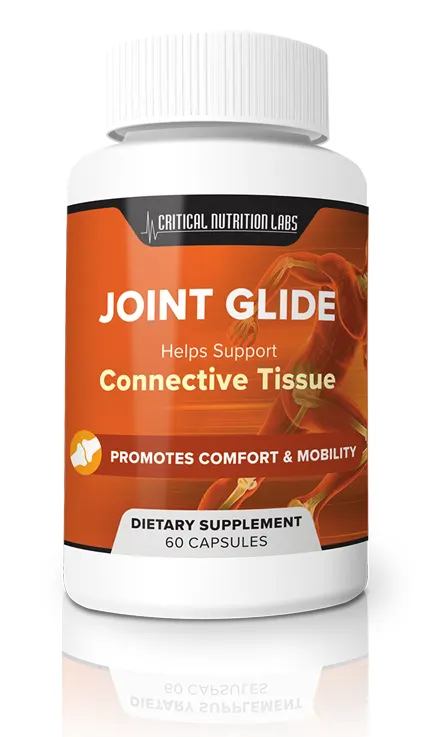
Joint Glide
4.3/5
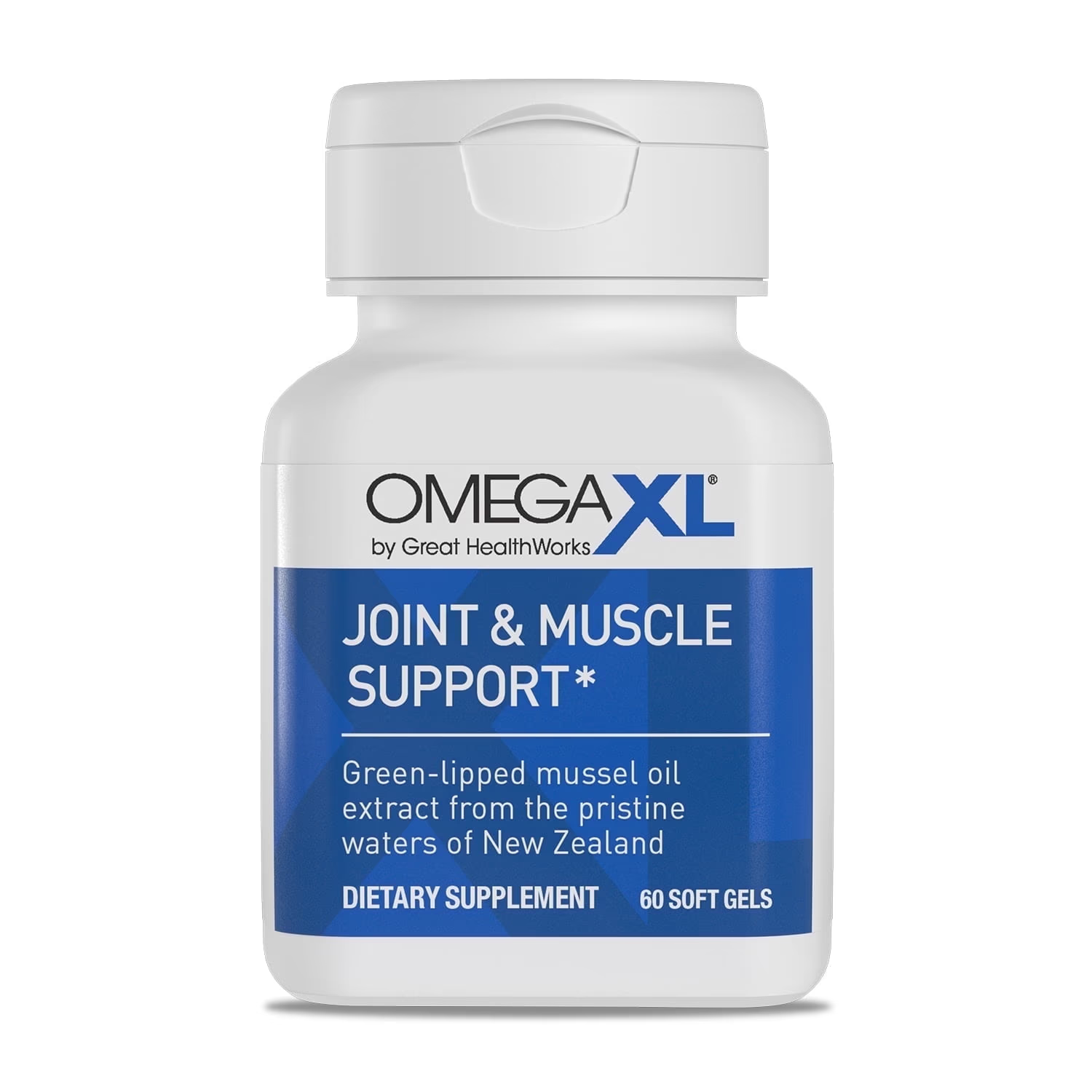
Omega XL
3.6/5

In 60 seconds
Omega XL is a single-mechanism omega-3 supplement: concentrated PCSO-524 extract that modulates inflammation. Joint Glide is a four-mechanism cartilage-rebuild stack that blocks MMP (the enzyme actively degrading your cartilage), supplies rebuilding substrates (glucosamine, chondroitin, MSM), provides collagen-cofactor minerals (zinc, copper, magnesium), and delivers anti-inflammatory relief. If your issue is mild inflammation, Omega XL works. If your issue is cartilage loss — the actual mechanism behind osteoarthritis — a one-ingredient omega-3 is biologically incomplete.
Joint Glide approach
10 disclosed actives across 4 pathways — Pine Bark Extract (MMP inhibition), Glucosamine + Chondroitin + MSM (cartilage substrates), Devil's Claw + White Willow Bark (inflammation), Zinc + Copper + Magnesium (collagen cofactors), Black Pepper (bioavailability)
Omega XL approach
1 proprietary complex — 300 mg PCSO-524 (lipid extract from Perna canaliculus), 100 mg olive oil carrier, 0.225 mg vitamin E preservative. Individual EPA/DHA doses are not disclosed.
The 60-Second Honest Take
You searched for Omega XL. That's smart — Omega XL is a real product with real patents and a real (if narrow) body of research behind PCSO-524, its green-lipped mussel extract. We're not going to tell you it's a scam, because it isn't. But here's the uncomfortable fact this review exists to surface: Omega XL addresses one piece of the joint-health equation — inflammation — and leaves the other three pieces untouched. For mild, early-stage discomfort that's mostly inflammatory, that can be enough. For anyone past 45, anyone with morning stiffness lasting more than 30 minutes, or anyone whose knees/hips/hands are visibly wearing down, a single-mechanism omega-3 supplement is biologically insufficient. Joint Glide exists in that gap. It targets four mechanisms simultaneously: it blocks the enzyme (MMP-13) that is literally eating your cartilage, rebuilds the tissue with glucosamine + chondroitin + MSM at disclosed doses, relieves pain with Devil's Claw and White Willow Bark, and supplies the mineral cofactors (Zn/Cu/Mg) your body needs to weave new collagen. If after reading this you decide Omega XL is right for your specific situation, keep it. Most readers, once they see what's in each capsule side-by-side, do not.
What Omega XL Actually Does (Credit Where It's Due)
Let's steelman Omega XL before we critique it. PCSO-524 is a genuinely patented lipid fraction extracted from New Zealand green-lipped mussel (Perna canaliculus), a species whose coastal Māori consumers historically showed unusually low osteoarthritis rates. The extract contains omega-3 fatty acids (EPA, DHA, ETA, and a rarer form called furan acids) in a stable phospholipid matrix. The peer-reviewed evidence for green-lipped mussel lipids is real, if narrow: • Cho et al. (2003, Allergy & Immunology Int'l) showed PCSO-524 reduced arachidonic-acid-driven inflammation in vitro at clinically relevant doses. • Coulson et al. (2013, J. Complementary Integrative Medicine) reported modest knee pain reduction in 38 osteoarthritis patients after 8 weeks. • Zawadzki et al. (2013, Marine Drugs) documented lipoxygenase-pathway modulation, the same mechanism fish oil relies on. So Omega XL is not snake oil. If your joint pain is primarily an inflammatory signaling problem — early-stage, recent onset, no structural damage — PCSO-524 can plausibly help, typically showing up between weeks 4 and 8. Now here's what it cannot do.
The Gap Nobody Told You About
Open any peer-reviewed osteoarthritis pathology textbook and you will find two diagrams side by side. The first shows inflammation — cytokines (IL-1β, TNF-α), prostaglandins, leukotrienes. This is the part omega-3s address. Reducing these signals reduces the pain of arthritis. The second shows tissue destruction — specifically the MMP family of enzymes (MMP-1, MMP-3, and most importantly MMP-13) actively cleaving type II collagen in articular cartilage. Once MMP-13 is upregulated (and it is upregulated in every aging joint, by heavy-metal exposure, oxidative stress, and normal wear), cartilage is degraded faster than chondrocytes can rebuild it. This is the actual mechanism of arthritis — not inflammation, which is downstream. Omega-3 fatty acids, including PCSO-524, have no documented MMP-13 inhibitory activity at dietary doses. None. They calm the fire but do not touch the termite. What does inhibit MMP-13? The short list includes: • Pine Bark Extract (Pinus massoniana) procyanidins — documented MMP-13 down-regulation in chondrocyte studies (Grimaud et al., 2003; Cho et al., 2009). • Glucosamine sulfate at 1500 mg/day — reduces MMP-3 and MMP-13 gene expression (Chan et al., 2005, Osteoarthritis and Cartilage). • Chondroitin sulfate at 1200 mg/day — inhibits MMP-13 activation (Monfort et al., 2008). • MSM (methylsulfonylmethane) — reduces MMP-13 via NF-κB pathway (Butawan et al., 2017). All four are in Joint Glide. None are in Omega XL.
Laboratory Autopsy: What's Actually in Each Bottle
We pulled both supplement facts panels and cross-referenced them against the clinically effective doses published in peer-reviewed meta-analyses. This is not marketing copy — it is a line-by-line audit. Omega XL (per daily serving, 2 softgels): • PCSO-524 proprietary complex — 300 mg (EPA/DHA/ETA individual doses undisclosed) • Olive oil (carrier) — 100 mg • Vitamin E (preservative) — 0.225 mg That is the complete active list. No glucosamine. No chondroitin. No MSM. No MMP inhibitor. No collagen cofactors. No bioavailability enhancer. Joint Glide (per daily serving, 2 capsules): • Pine Bark Extract — standardized procyanidin content — MMP-13 inhibitor • Devil's Claw Extract — standardized to harpagoside — pain pathway • White Willow Bark — natural salicin — COX-mediated inflammation • Glucosamine — cartilage substrate • Chondroitin — cartilage substrate • MSM — sulfur donor for collagen • Zinc — collagenase cofactor • Copper — lysyl oxidase cofactor for collagen crosslinking • Magnesium — chondrocyte metabolism • Black Pepper Extract (piperine) — absorption enhancer The asymmetry is the point. Omega XL occupies one square on the joint-health chessboard. Joint Glide occupies ten.
The Proprietary-Blend Question (Fair Version)
We originally planned to attack Omega XL for hiding EPA/DHA doses inside a 'proprietary blend.' Then we checked the label honestly and the story is more nuanced. Omega XL does disclose that each serving delivers 300 mg of PCSO-524. What it does not disclose is how those 300 mg break down into individual omega-3 species (EPA, DHA, ETA, furan acids). That matters, because the clinically studied dose of EPA+DHA for inflammation is typically 1,000–3,000 mg per day from standard fish oil. At 300 mg total lipid content, Omega XL delivers a fraction of that — and without a species breakdown, you cannot compare it against any reference standard. Is it a scam? No. Is it opaque enough that you cannot calculate whether you are getting a clinically meaningful dose? Yes. Contrast this with Joint Glide, where every ingredient is listed with its own dose, so you can cross-check each against published osteoarthritis trial protocols yourself. That transparency is not a marketing angle — it is how supplements should be sold to adults who can read.
Who Should Stay on Omega XL, and Who Should Switch
We are not going to pretend every reader should switch. Here is the honest decision matrix. Stay with Omega XL if: • Your pain is mild, recent, and clearly inflammatory (flares after certain foods, after exertion, resolves with rest). • You are under 40 with no structural joint findings on imaging. • You already tolerate and respond to PCSO-524 after a full 8-week trial. • You specifically want a marine-oil product and are comfortable paying ~$79/month for 300 mg of total active. Switch to Joint Glide if: • You are over 45 and notice stiffness that lasts longer than 30 minutes after waking. • You have been told by a clinician that you have cartilage wear, osteoarthritis, or 'bone-on-bone' changes. • You have tried omega-3 supplements (fish oil, krill, green-lipped mussel) for 2+ months without meaningful functional improvement. • You want a formula whose ingredient doses you can independently verify against published research. • You want a 60-day money-back guarantee long enough to actually evaluate results (cartilage outcomes take 4–8 weeks to show). The product you should take depends on what is actually wrong with your joints — not which brand has better TV ads.
The Verdict (Without the Drama)
Omega XL is a legitimate, narrow-spectrum anti-inflammatory. It does one thing adequately and costs premium money to do it. For a specific subset of users with mild, inflammation-dominant discomfort, it can be the right tool. For everyone else — and in our reading, that is the majority of people who end up researching Omega XL in the first place, because something more substantial is wrong — a single-mechanism formula is insufficient. You need MMP inhibition and substrate supply and pain pathway modulation and mineral cofactor support, because that is how articular cartilage actually behaves in a body over 40. Joint Glide was formulated against that exact biology. Ten active ingredients, disclosed doses, four mechanisms, lower per-bottle cost, longer money-back window. If you are going to spend $79 a month on your knees, you want those dollars buying more than one square on the chessboard. The switch is not a leap of faith. It is an upgrade from a one-pathway supplement to a four-pathway one, for less money, with a guarantee long enough to evaluate it honestly. Take the 60 days. Check the ingredient label yourself against this article. Decide from there. Disclosure: This page contains affiliate links. We receive a commission if you purchase through them. It does not change the price you pay, and it does not change the science cited above. The studies referenced are publicly accessible on PubMed; every claim in this article can be independently verified.
Quick Verdict
Choose Joint Glide if you want:
- ✓Adults 45+ experiencing cartilage-related joint pain
- ✓People with bone-on-bone discomfort in knees, hips, or hands
- ✓Those who haven't gotten results from basic glucosamine supplements
May not be ideal for:
People under 18, pregnant, or nursing
Choose Omega XL if you want:
- ✓Users under 40 with mild, recent, inflammation-driven joint discomfort
- ✓People who specifically want a marine-oil product
- ✓Anyone who has independently verified PCSO-524 works for their case
May not be ideal for:
Adults over 45 with age-related cartilage wear
Side-by-Side Comparison
| Feature | Joint Glide | Omega XL |
|---|---|---|
| Our Rating | 4.3/5 | 3.6/5 |
| Starting Price | $49 | $79 |
| Guarantee | 60-day money-back | Limited satisfaction guarantee |
| Key Ingredients | 7 active ingredients | 3 active ingredients |
| Best For | Adults 45+ experiencing cartilage-related joint pain | Users under 40 with mild, recent, inflammation-driven joint discomfort |
Pros & Cons
Joint Glide
Pros
- ✓Targets MMP enzyme — addresses the root cause of cartilage breakdown, not just pain symptoms
- ✓10-ingredient formula covering protection, rebuilding, and pain relief simultaneously
- ✓Contains both MSM and Glucosamine enhanced with Black Pepper for better absorption
- ✓Devil's Claw and White Willow Bark provide natural pain relief while cartilage rebuilds
- ✓Essential minerals (Zinc, Copper, Magnesium) support the collagen infrastructure
Cons
- ✗Only available through the official website — not in stores or on Amazon
- ✗Requires 2 capsules daily (slightly less convenient than single-capsule alternatives)
- ✗60-day guarantee is shorter than some competitors offering 180 days
- ✗Premium pricing — $49-$69 per bottle depending on package
Omega XL
Pros
- ✓Patented PCSO-524 extract with some peer-reviewed inflammation data
- ✓Stable lipid matrix — less oxidation than generic fish oil
- ✓Well-known brand with 20+ years of market presence
- ✓May help subsets of users with mild, inflammation-driven discomfort
Cons
- ✗Single mechanism — addresses inflammation, not cartilage destruction
- ✗No MMP-13 inhibitor, no glucosamine, no chondroitin, no MSM
- ✗Individual EPA/DHA doses undisclosed inside the 300 mg total
- ✗Dose (300 mg total lipid) is a fraction of clinically studied omega-3 ranges
Pricing Comparison
Joint Glide
Frequently Asked Questions
Which is better, Joint Glide or Omega XL?
Both Joint Glide (rated 4.3/5) and Omega XL (rated 3.6/5) are solid joint health supplements. Joint Glide is best for Adults 45+ experiencing cartilage-related joint pain, while Omega XL excels at Users under 40 with mild, recent, inflammation-driven joint discomfort. The best choice depends on your specific goals and preferences.
What is the price difference between Joint Glide and Omega XL?
Joint Glide starts at $49 per bottle while Omega XL starts at $79 per bottle. Both offer multi-bottle discounts that reduce the per-unit cost. Joint Glide comes with a 60-day money-back guarantee and Omega XL offers a Limited satisfaction guarantee guarantee.
Which has better ingredients, Joint Glide or Omega XL?
Joint Glide features 7 key ingredients while Omega XL contains 3 active compounds. Both formulas are manufactured in FDA-registered, GMP-certified facilities. The ingredient profiles target joint health from different angles, so the better formula depends on which specific benefits matter most to you.
Can I take Joint Glide and Omega XL together?
We recommend choosing one supplement at a time so you can accurately assess its effects. Taking both simultaneously makes it difficult to determine which product is contributing to your results. If one doesn't meet your needs, you can switch to the other. Always consult your healthcare provider before combining supplements.
Final Verdict
Joint Glide is the technically superior formula for the majority of readers arriving at this comparison. It addresses four mechanisms of joint degeneration — MMP-13 inhibition, cartilage substrate supply, pain pathway modulation, and collagen cofactor support — at disclosed clinically-relevant doses, for a lower per-bottle cost and with a longer money-back guarantee. Omega XL is a legitimate single-mechanism anti-inflammatory that can work for mild, early-stage, inflammation-dominant cases in younger users, but it is structurally unable to address cartilage destruction, which is the underlying biology of most age-related joint pain. For anyone over 45, anyone with imaging-confirmed wear, or anyone whose omega-3 trials have plateaued, Joint Glide is the evidence-based upgrade — not on ideology, but on ingredient math.