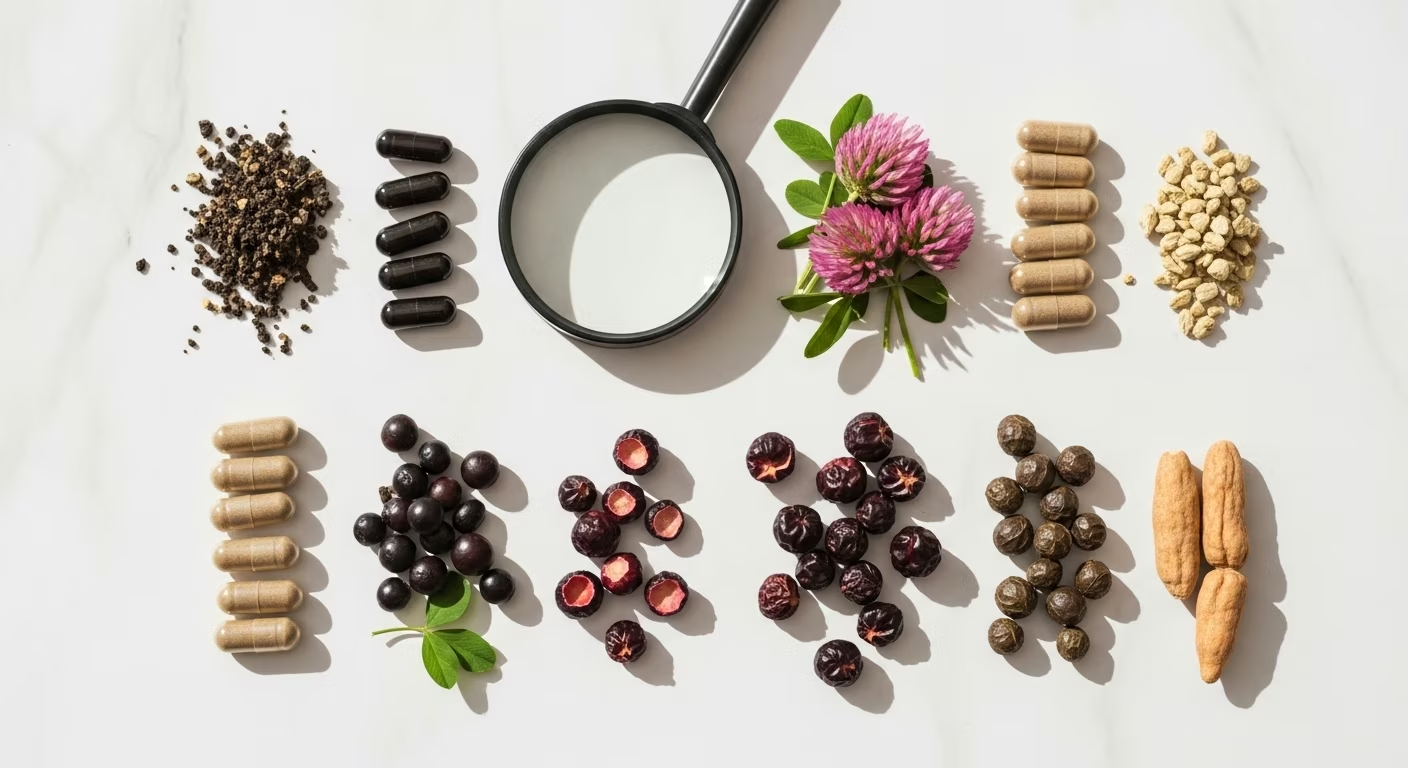

The menopause supplement shelf is crowded and the marketing is loud. Some of the products on it are thoughtfully formulated around ingredients with real clinical evidence. Others are proprietary blends built around one studied ingredient surrounded by filler. A few are actively risky. This guide walks through the ingredients that belong in a hot flash supplement, the ones that don't, and what a good formula actually looks like in 2026.
What Actually Happens During a Hot Flash
A hot flash is a sudden, intense sensation of heat and sweating that lasts 30 seconds to 5 minutes. Freedman (2014, Autonomic Neuroscience) described the mechanism as a narrowing of the brain's thermoregulatory comfort zone. Small rises in body temperature that a younger nervous system would ignore trigger an aggressive heat-dumping response. Declining estrogen changes the sensitivity of specific hypothalamic neurons that regulate this process. That mechanism is why the best supplements target either estrogen receptor signaling, stress and cortisol, or the autonomic nervous system, rather than just masking symptoms.
Ingredients With the Strongest Evidence
Black Cohosh
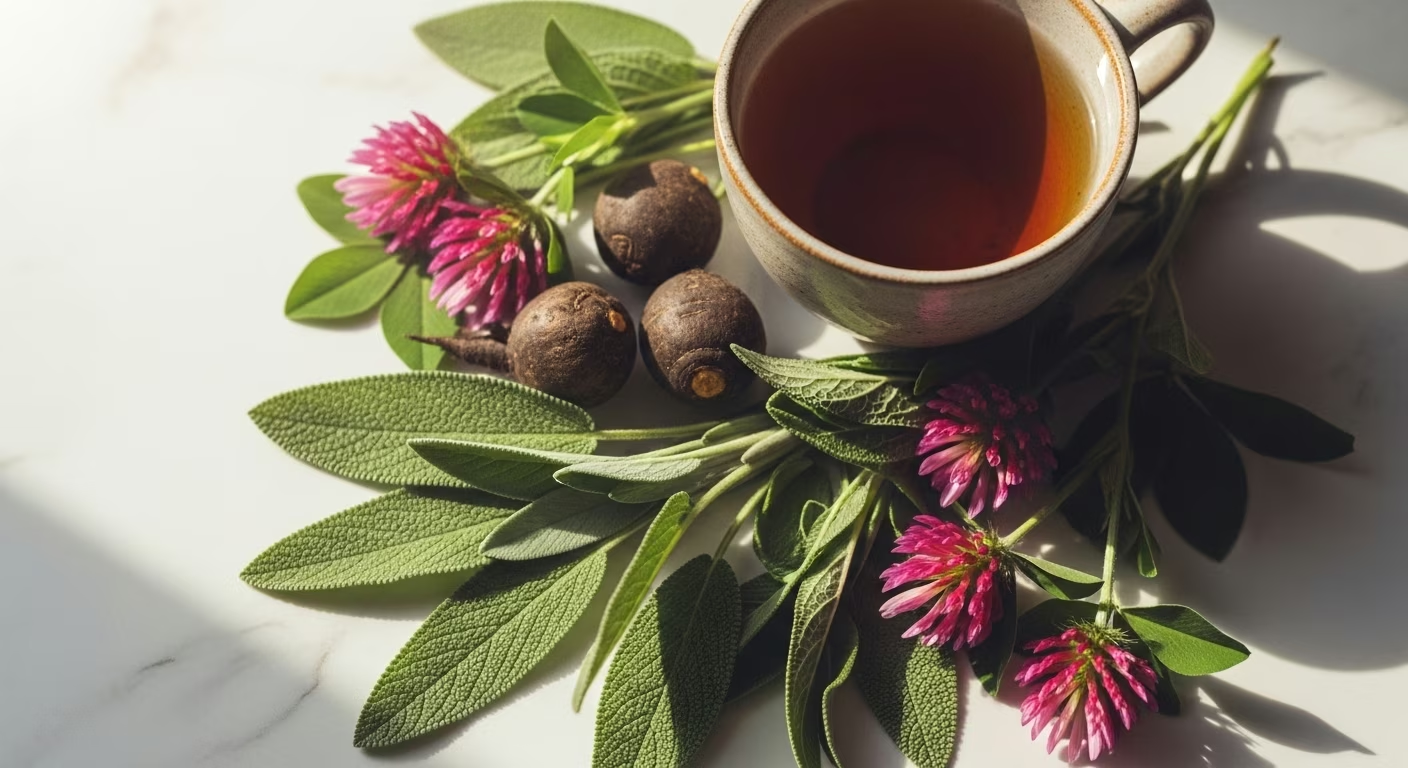
Black cohosh is the most-studied botanical for vasomotor symptoms. A Cochrane review by Leach and Moore (2012) examined the trial data and found modest but consistent reduction in hot flash frequency and severity for some women. An earlier randomized trial by Frei-Kleiner and colleagues (2005) showed similar results at 40 mg daily. Look for a standardized extract such as Remifemin-style preparations delivering 20 to 40 mg per day. Most women need 4 to 8 weeks to judge effect.
Soy Isoflavones
Soy isoflavones are phytoestrogens that bind weakly to estrogen receptors. Messina (2014, Journal of Nutrition) reviewed the body of trials and concluded that regular intake reduces hot flash frequency and severity, particularly when the formulation is rich in genistein. Effective doses in trials range from 50 to 80 mg of isoflavones daily, equivalent to a serving or two of whole-food soy plus supplementation for many women.
Red Clover Isoflavones
Lipovac and colleagues (2012, Maturitas) ran a placebo-controlled trial of 80 mg daily red clover isoflavone extract over 12 weeks and found significant hot flash reduction versus placebo. The evidence base is smaller than for soy, but red clover is a reasonable choice for women who prefer to avoid soy or who do not respond to it.
Ashwagandha for the Stress-Flash Loop
Ashwagandha does not act directly on hot flashes, but it has strong evidence for cortisol reduction (Chandrasekhar and colleagues, 2012, Indian Journal of Psychological Medicine). For women whose flashes are clearly worsened by stress or broken sleep, addressing cortisol can meaningfully lower the frequency of triggered flashes, especially nighttime ones. Doses of 300 to 600 mg of a standardized extract, often KSM-66 or Sensoril, are typical.
Maca for Mood and Energy Overlay
Brooks and colleagues (2008, Menopause) found modest improvements in mood, sexual function, and well-being with maca, with weaker evidence specifically for hot flashes. Maca is a reasonable add-on for women whose symptom picture is as much about fatigue, low libido, and mood as it is about vasomotor symptoms. It is not a first-line pick for hot flashes alone.
Ingredients That Don't Earn Their Place
- Dong quai alone: multiple trials show no benefit over placebo for hot flashes.
- Evening primrose oil: repeatedly fails to outperform placebo for vasomotor symptoms.
- Wild yam cream: does not convert to human progesterone in the body.
- Vitamin E alone: older studies suggested modest benefit; newer trials have not confirmed it.
- Proprietary blends with 20 ingredients at undisclosed doses: dilute the evidence-based actives.
What a Good Hot Flash Supplement Looks Like
Transparent Dosing
A label should tell you exactly how much of each active ingredient you are getting, not hide them inside a 'proprietary blend'. If the label reads '500 mg proprietary menopause blend', you have no way to know whether the black cohosh in it is at 2 mg or 40 mg. Skip.
Standardized Extracts, Not Raw Powder
Botanicals vary dramatically in potency from harvest to harvest. Standardized extracts, for example black cohosh standardized to 2.5 percent triterpene glycosides, are the forms used in the clinical trials and are what you actually want in your bottle.
Ingredients With Layered Mechanisms
The best formulations combine at least one phytoestrogen or thermoregulation-active ingredient (black cohosh, soy, or red clover) with a cortisol or sleep support ingredient (ashwagandha, rhodiola, or a standardized magnesium form). That layering addresses the underlying biology more completely than a single-ingredient product.
Third-Party Testing
Look for USP, NSF, or ConsumerLab verification where possible, or at minimum a manufacturer that publishes third-party test results for purity and contaminants. The supplement industry is inconsistently regulated; third-party testing is the closest thing to a guarantee of label accuracy.
If you want a worked example of a formulation that combines several of these evidence-based ingredients in a single daily dose, our MenoRescue review breaks down the label, the dosing, and the tradeoffs.
Read our MenoRescue reviewHow to Evaluate a Label in the Supplement Aisle
- Does the label disclose the exact milligram amount of each active ingredient?
- Are the botanicals listed as standardized extracts with a named standardization percentage?
- Is there a clinically meaningful dose, for example 20 to 40 mg of black cohosh, not 5 mg?
- Does the product combine at most two or three evidence-backed ingredients rather than 15 at trace doses?
- Is there third-party testing or a certification mark such as USP, NSF, or ConsumerLab?
- Does the manufacturer have a track record beyond a single flashy landing page?
- Are any risky ingredients present, such as St. John's wort, DHEA, or high-dose iodine?
Realistic Expectations
Even the best-formulated hot flash supplement is not going to deliver hormone-therapy-level relief. In the trials, the typical reduction in hot flash frequency with black cohosh or isoflavones is in the range of 25 to 50 percent, not 90 percent. For women with mild to moderate symptoms, that reduction can be the difference between disrupted daily life and manageable. For women with severe symptoms, a supplement alone may take the edge off but rarely solves the problem on its own. Setting that expectation up front prevents the disappointment that leads women to cycle through product after product without ever giving any one of them enough time to work.
Safety Considerations
Black Cohosh and the Liver
Black cohosh has been associated with rare case reports of liver enzyme elevations. It is still considered safe at standard doses for most women, but it should be avoided by women with liver disease and should be discussed with your clinician if you are on multiple medications. Stop and seek evaluation if you develop unexplained fatigue, nausea, or yellowing of the skin or eyes while taking it.
Phytoestrogens and Hormone-Sensitive Conditions
Women with a personal history of hormone-receptor-positive breast cancer, endometrial cancer, or ovarian cancer should discuss any phytoestrogen-containing supplement with their oncology team before starting. The evidence on whole-food soy in this population is reassuring, but concentrated supplements are a separate conversation.
Drug Interactions
St. John's wort, sometimes marketed for menopause mood, interacts with a long list of medications, including some antidepressants, birth control, and blood thinners. It does not belong in a hot flash supplement. Separately, if you are on tamoxifen or an aromatase inhibitor, discuss any supplement with your oncology team; several botanicals can interfere.
Single-Ingredient vs Combination Formulas
There is a reasonable debate about whether to take individual botanicals or a combination formula. Single ingredients let you identify exactly what is working, and they are usually cheaper per dose. The downside is that most women end up stacking two or three bottles by the time they cover phytoestrogen, cortisol, and sleep support, which is more pills to remember and more cost in total. A well-formulated combination product solves that problem if, and only if, it discloses doses, uses clinically meaningful amounts, and sticks to a short list of evidence-backed ingredients. If you are starting from scratch and symptoms are moderate, one solid combination product for 8 to 12 weeks is a reasonable first experiment. If it underperforms, swapping to a single high-dose ingredient or escalating to a clinical conversation is the next step.
What the Research on Individual Women Looks Like
A useful nuance most supplement marketing skips: in the clinical trials, there are always responders and non-responders. Roughly 40 to 60 percent of women taking black cohosh or isoflavones see meaningful reduction; a subset of women see dramatic improvement; and a subset see little or no change. Genetics, gut microbiome composition (particularly whether you are an equol producer, which affects how soy isoflavones are metabolized), and baseline symptom severity all influence individual response. The practical implication is that if an evidence-based supplement is not working for you at 8 to 12 weeks, it is more likely a mismatch than a reason to lose faith in the category. Trying a different class, such as switching from soy to black cohosh, or adding an ashwagandha layer for the cortisol side, is often productive.
When to See a Doctor
If hot flashes are severely disrupting sleep, work, or quality of life, or if you have tried evidence-based supplements for 8 to 12 weeks without adequate response, it is worth a conversation with a menopause-literate clinician. Menopausal hormone therapy is the most effective treatment for vasomotor symptoms, and for women under 60 or within 10 years of menopause without contraindications, the benefit-risk profile is more favorable than older headlines suggested. Non-hormonal prescription options, including low-dose SSRIs, gabapentin, and the newer neurokinin receptor antagonists, are also real options for women who cannot or prefer not to take hormones.
The Bottom Line
The best supplement for hot flashes is not a single magic ingredient; it is a thoughtfully dosed, transparently labeled formula built around a small number of ingredients with actual clinical evidence: black cohosh, soy or red clover isoflavones, and ashwagandha for the cortisol layer. Skip proprietary blends, skip ingredients without evidence, and give whatever you choose at least 8 weeks before deciding. For women whose symptoms are severe or who don't get enough relief from supplements, the conversation about prescription options, including hormone therapy, is absolutely worth having. You have more choices than the supplement aisle suggests. For a worked example of applying those filters to two well-known products, see our MenoRescue vs Hormone Harmony comparison.
Frequently Asked Questions
How long before a hot flash supplement starts working?
Most evidence-based botanicals require 4 to 8 weeks of consistent daily use before the effect is judgeable. If you are not seeing any change at 8 to 12 weeks, it is reasonable to switch or to add a clinical conversation.
Is black cohosh or soy better?
They work through different mechanisms and either can be a reasonable first choice. Black cohosh has a slightly longer research track record; soy is easy to add in whole-food form and has cardiometabolic benefits beyond hot flashes. Many women do well combining them.
Can I take a hot flash supplement with HRT?
Most combinations are considered low risk, but it is a conversation worth having with the prescribing clinician. There is rarely a good reason to stack phytoestrogens on top of systemic hormone therapy at full therapeutic dose.
Are 'natural' and 'plant-based' the same as safe?
No. Natural is a marketing word, not a safety claim. Some botanicals have meaningful drug interactions, rare side effects, or cancer-related cautions. Always check with a clinician who knows your history if you are on medications or have a hormone-sensitive condition.
Do gummies work as well as capsules?
Gummies usually deliver lower doses of active ingredients and add sugars. For evidence-based botanical dosing, capsules or tablets from a reputable brand are generally the better format.
Is there one hot flash supplement that does it all?
A good formulation combines a phytoestrogen or black cohosh with a cortisol-support ingredient and sometimes a sleep or mood layer. That kind of combination product, with transparent dosing, is closer to 'one supplement that does it all' than any single-ingredient bottle.
Get honest health tips & reviews
Join our newsletter for science-backed supplement reviews and wellness advice.
No spam. Unsubscribe anytime.