
If you've ever struggled to lose weight despite eating well and exercising, the answer might lie somewhere unexpected — your gut. Over the past decade, research from institutions like Washington University, the Weizmann Institute, and King's College London has revealed that the trillions of bacteria living in your digestive tract don't just help you digest food. They actively influence how many calories you extract from meals, how your body stores fat, how hungry you feel, and even which foods you crave. This isn't fringe science or wellness hype. The gut-weight connection is now one of the most active areas of metabolic research, and the findings are changing how scientists think about obesity, weight management, and why standard 'calories in, calories out' advice fails so many people.
The Firmicutes-to-Bacteroidetes Ratio: Why It Matters
Two bacterial phyla dominate the human gut: Firmicutes and Bacteroidetes. Together, they make up roughly 90% of your intestinal bacteria. In 2006, researchers at Washington University made a groundbreaking discovery: obese individuals consistently had a higher ratio of Firmicutes to Bacteroidetes compared to lean individuals. When obese subjects lost weight, their microbiome shifted — the Firmicutes proportion decreased and Bacteroidetes increased, moving closer to the 'lean' profile.
Why does this ratio matter? Firmicutes bacteria are more efficient at extracting calories from food — particularly from complex carbohydrates and fiber. In practical terms, two people can eat the exact same meal and absorb different amounts of energy depending on their gut bacterial composition. Studies in mice have shown that transplanting gut bacteria from obese mice into germ-free (bacteria-free) mice caused the recipients to gain significantly more fat than those receiving bacteria from lean mice — even when both groups ate identical diets. The bacteria themselves were driving fat accumulation.
How Gut Bacteria Control Your Appetite
Your gut bacteria don't just affect how you process food — they influence what and how much you want to eat. This happens through several mechanisms. First, gut microbes produce short-chain fatty acids (SCFAs) like butyrate, propionate, and acetate when they ferment dietary fiber. These SCFAs trigger the release of satiety hormones GLP-1 and PYY from intestinal cells, telling your brain you're full. People with less diverse microbiomes produce fewer SCFAs and, as a result, may experience weaker fullness signals after meals.
Second, gut bacteria influence ghrelin (the 'hunger hormone') and leptin (the 'satiety hormone') levels. A 2023 study in Nature Metabolism demonstrated that specific bacterial metabolites can cross the blood-brain barrier and directly affect hypothalamic appetite circuits. Third — and this is particularly fascinating — certain bacteria may drive cravings for the foods they thrive on. Sugar-loving bacteria produce signaling molecules that may increase your desire for sugar, effectively manipulating your behavior to feed themselves. It sounds like science fiction, but the research is increasingly compelling.
Gut Inflammation and Metabolic Dysfunction
One of the most important mechanisms linking gut health to weight gain is low-grade chronic inflammation — sometimes called 'metabolic endotoxemia.' When the gut barrier becomes compromised (due to poor diet, stress, or dysbiosis), bacterial fragments called lipopolysaccharides (LPS) leak into the bloodstream. LPS triggers a systemic inflammatory response that interferes with insulin signaling, promotes fat storage (particularly visceral abdominal fat), and impairs the body's ability to use stored fat for energy.
This creates a vicious cycle: a poor diet damages the gut barrier, leading to inflammation that promotes weight gain, which further disrupts the microbiome, which increases inflammation. Breaking this cycle requires addressing the gut environment directly — not just cutting calories. Research published in Gut in 2024 found that restoring gut barrier integrity through targeted interventions improved insulin sensitivity independent of weight loss, suggesting that gut health may need to come before weight loss, not after.
What You Can Do: Reshaping Your Microbiome for Better Metabolism
- Increase fiber diversity: Aim for 30+ different plant foods per week. Each type of fiber feeds different bacterial populations, shifting the balance toward species associated with leanness.
- Prioritize fermented foods: The Stanford University study showed that 6+ servings of fermented foods daily increased microbiome diversity and reduced inflammatory markers within 10 weeks.
- Cut ultra-processed foods: Emulsifiers, artificial sweeteners, and preservatives in processed foods disrupt the gut barrier and favor pro-inflammatory bacteria. Even 'diet' products can be counterproductive.
- Exercise regularly: Moderate aerobic exercise has been shown to increase Akkermansia muciniphila, a bacterial species strongly associated with leanness and metabolic health, independent of diet changes.
- Manage stress: Chronic stress shifts the microbiome toward an 'obese-type' profile through cortisol's effects on gut motility, barrier function, and bacterial behavior.
- Consider sleep quality: Poor sleep alters the gut microbiome within 48 hours, reducing diversity and shifting the Firmicutes-to-Bacteroidetes ratio in an unfavorable direction.
Can Supplements Help the Gut-Weight Connection?
Certain probiotic strains have shown weight-related benefits in clinical trials. Lactobacillus gasseri BNR17 reduced visceral fat in a 12-week randomized trial. Akkermansia muciniphila (in pasteurized form) improved metabolic markers in overweight subjects. Bifidobacterium lactis B420 reduced body fat mass and waist circumference in a 6-month study. However, the effects are modest — typically 1-3% reductions in body fat — and they work best alongside dietary changes, not as standalone solutions.
Gut Health Supplements for Metabolic Support
If you're exploring supplements that target the gut-weight connection, our review of PrimeBiome covers how its probiotic strains and prebiotic ingredients may support metabolic health alongside a healthy diet. We also cover weight management supplements in our weight loss category for those looking at the metabolic side of the equation.
Read Our PrimeBiome ReviewThe Bottom Line
The research is clear: your gut microbiome is a significant player in weight regulation, operating through calorie extraction, appetite signaling, inflammation, and metabolic hormone modulation. This doesn't mean gut bacteria are the sole determinant of your weight — genetics, diet quality, physical activity, sleep, and stress all matter enormously. But it does mean that ignoring gut health while pursuing weight loss is like trying to drive with the parking brake on. Addressing your microbiome through dietary diversity, fermented foods, stress management, and potentially targeted supplementation can remove a hidden barrier that no amount of calorie counting alone can fix.
Frequently Asked Questions
Can fixing your gut bacteria help you lose weight?
Improving your gut microbiome can support weight loss, but it's not a magic solution on its own. Research shows that a healthier, more diverse microbiome improves satiety signaling, reduces chronic inflammation, and optimizes calorie metabolism — all of which make weight loss easier. The most effective approach combines microbiome-supportive habits (diverse fiber, fermented foods, stress management) with an overall healthy diet and regular physical activity. Think of gut health as removing a metabolic roadblock rather than a standalone weight loss strategy.
What foods increase Bacteroidetes (the 'lean' bacteria)?
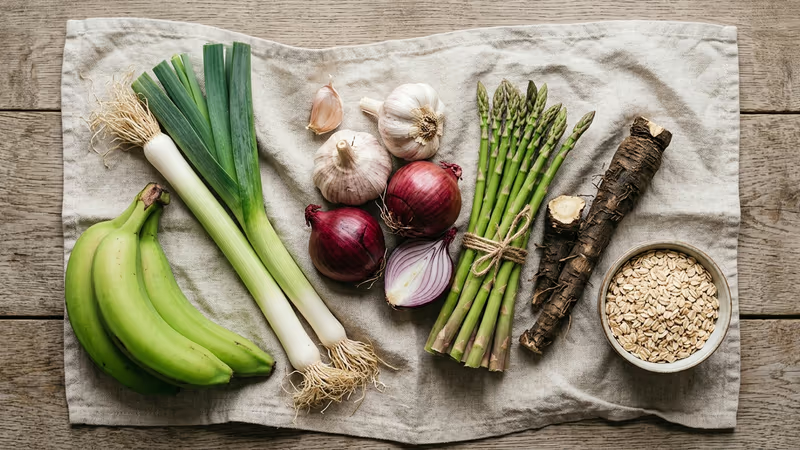
Foods rich in diverse plant fibers tend to promote Bacteroidetes populations. Specifically, polyphenol-rich foods (berries, green tea, dark chocolate, red grapes), high-fiber vegetables (artichokes, leeks, asparagus), whole grains (oats, barley, quinoa), and legumes (lentils, chickpeas, black beans) have been associated with higher Bacteroidetes levels in clinical studies. The variety of plant foods matters as much as the quantity — aim for 30 or more different plant species per week.
Do artificial sweeteners affect gut bacteria and weight?
Yes. A landmark 2014 study in Nature showed that artificial sweeteners (saccharin, sucralose, and aspartame) altered the gut microbiome in ways that impaired glucose tolerance — essentially making blood sugar control worse, not better. A follow-up 2022 study in Cell confirmed that sucralose and saccharin significantly altered human gut microbial composition within two weeks of regular consumption. This may partly explain why diet soda consumption is paradoxically associated with weight gain in observational studies.
Get honest health tips & reviews
Join our newsletter for science-backed supplement reviews and wellness advice.
No spam. Unsubscribe anytime.