
Type "digestive health supplements" into a search bar and you get thousands of products and almost no guidance. Probiotics, enzymes, fiber powders, amino acids, herbal blends: on the label, most sound the same. Some have solid clinical trials behind them. Others are built on marketing. This guide sorts the two. We look at what the research says about each category of digestive supplement, who it tends to help, what dose the studies used, and which products deserve a closer look in 2026. We also cover the gut health supplements that are mostly hype so you can skip them. Nothing here replaces a conversation with your doctor if you have ongoing pain, bleeding or unexplained weight loss. But for everyday bloating, irregularity, or a stomach that never settled after antibiotics, this is a good place to start.
What you'll learn
- Four checks that separate a well-made digestive supplement from an expensive guess.
- Which probiotic strains have human trials, what CFU count is reasonable, and how long to give them.
- When digestive enzymes help (and when they don't), plus how to read FCC units.
- How to add psyllium or PHGG without the gas that scares most people off.
- What the strongest L-glutamine trial found, and the dose it used.
- Which supplements to skip: detox teas, gut cleanses, colon cleansers and vague "bitters" claims.
- A starter stack for bloating, regularity, after antibiotics, and general maintenance.
How to judge digestive health supplements
Before the categories, a filter. We ask four questions about any digestive supplement, and they screen out most of the noise fast.
First, is there evidence for this ingredient at this dose? A product can list a well-studied strain or fiber and still include far less than the trials used. Second, is the formula transparent? For probiotics, that means the full strain name (genus, species and strain code, like Lactobacillus rhamnosus GG) and a CFU count guaranteed through expiration, not just at manufacture. For everything else, it means each ingredient with its own amount. A "proprietary blend" that hides doses is a red flag.
Third, is it third-party tested? Supplements are not reviewed by the FDA before sale, so an outside lab is the only independent check on purity and potency. Look for a USP, NSF or Informed Choice seal, or a certificate of analysis you can view. Fourth, are the claims realistic? "Supports regularity" or "helps with occasional bloating" is the honest range. Anything promising to "reset" your gut in seven days is describing a fantasy, and the company knows it.
Quick label test
If you can't find the exact strain, the exact dose, and a third-party seal in under a minute, put the bottle back. The best digestive health supplements make those easy to find because they have nothing to hide.
Probiotics: what the evidence supports
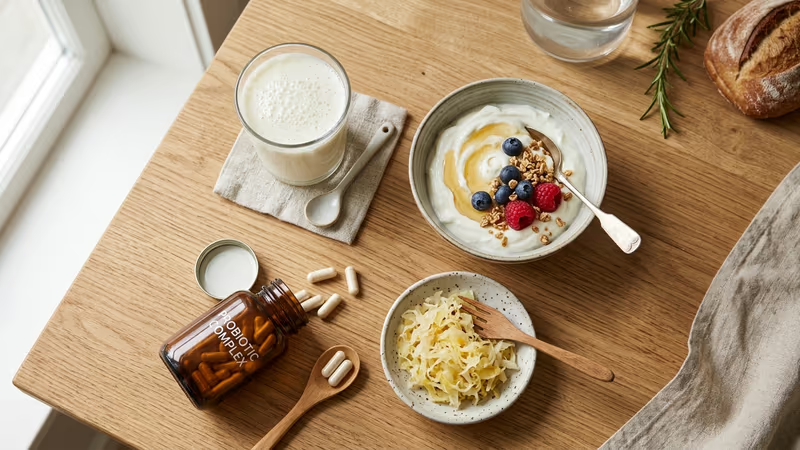
Probiotics are the most popular digestive supplement and the most studied. The single most useful thing to understand is that results are strain-specific. "Lactobacillus acidophilus" on a label is like "dog" on an adoption form: the breed matters. One strain may have good data for diarrhea and none for bloating, which is why strain codes matter so much.
The strongest evidence is for antibiotic-related digestive upset. A meta-analysis by Hempel and colleagues, published in JAMA in 2012, pooled 63 randomized trials with more than 11,000 participants and found that people taking probiotics alongside antibiotics were about 42 percent less likely to develop antibiotic-associated diarrhea, roughly one case prevented for every 13 people. Saccharomyces boulardii and Lactobacillus rhamnosus GG have the most consistent data for this use.
For irritable bowel syndrome (IBS), the picture is positive but messier. Ford and colleagues, writing in Alimentary Pharmacology & Therapeutics in 2018, reviewed the randomized trials of probiotics in IBS and concluded that probiotics as a group improved overall symptoms, pain and bloating compared with placebo, but the trials were too varied to say which strain or dose works best. Among single strains, Bifidobacterium infantis 35624 and Lactobacillus plantarum 299v have some of the better trial records for IBS-type bloating.
On CFU count: more is not better. Most successful trials used between 1 and 10 billion CFU per day of a specific strain. A 100-billion-CFU blend of 15 unstudied strains is not stronger than a 5-billion-CFU product built around one strain with real trials. Give any probiotic at least four weeks of daily use before you judge it; four to eight weeks is the honest window. If nothing has changed by then, switch strains rather than adding more of the same.
Digestive enzymes: who they actually help
Your body makes its own enzymes to break down protein, fat, starch and sugars. Supplemental enzymes help when there is a specific gap, and single-purpose products are the clearest examples. Lactase breaks down the milk sugar lactose for people who don't make enough of it. If dairy reliably gives you gas and loose stools, a lactase tablet with the first bite is one of the most predictable digestive supplements you can buy.
Alpha-galactosidase (the enzyme in Beano) handles the sugars in beans, lentils and cruciferous vegetables that human enzymes can't split. Di Stefano and colleagues tested it in a randomized, double-blind trial in Digestive Diseases and Sciences in 2007. After a large bean meal, a 1,200 GalU dose significantly cut both breath hydrogen (a marker of gas production) and flatulence severity versus placebo. The lower 300 GalU dose did little, a good reminder that dose matters.
Broad-spectrum blends (protease, lipase, amylase, lactase, alpha-galactosidase and sometimes cellulase) are a reasonable option for people who feel heavy or bloated after large mixed meals, and for adults over 50 whose enzyme output has slowed. The evidence for blends in otherwise healthy people is thinner than for single enzymes, so think of them as a "try it and see" purchase.
One label tip: enzyme strength is measured in activity units set by the Food Chemicals Codex (FCC), not milligrams. You'll see DU for amylase, HUT for protease, FIP or LU for lipase, ALU for lactase, and GalU for alpha-galactosidase. A label that lists enzymes only in milligrams tells you the weight of the powder, not how much work it can do. Take enzymes at the start of the meal, and don't expect them to help if your discomfort comes from stress or a food intolerance.
Prebiotic fiber: psyllium, PHGG and inulin
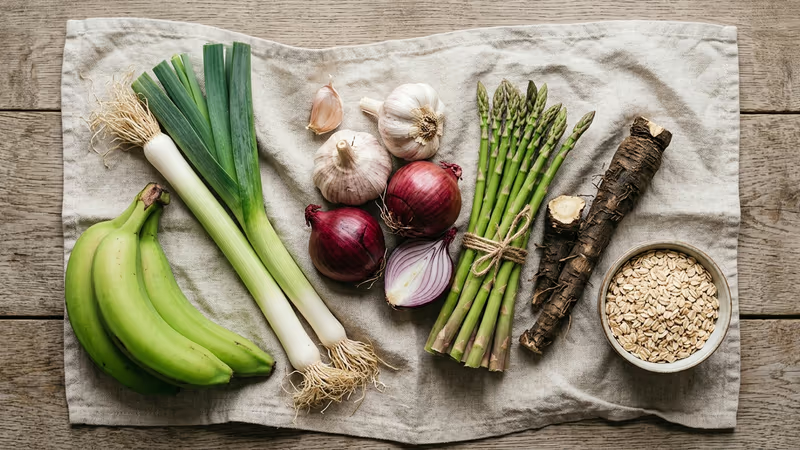
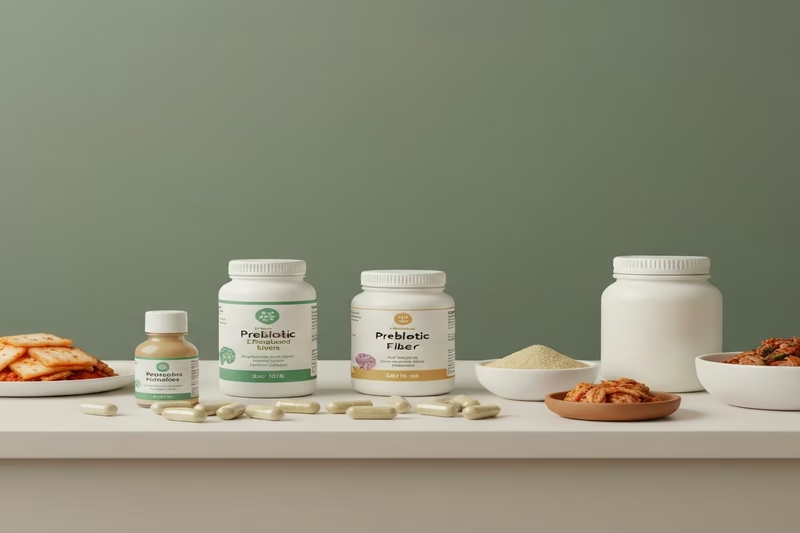
Prebiotic fiber feeds the bacteria you already have, and for many people it does more for regularity and bloating than a probiotic does. The three you will see most often are psyllium husk, partially hydrolyzed guar gum (PHGG) and inulin from chicory root, and they behave differently.
Psyllium has the best trial record. Bijkerk and colleagues ran a 12-week randomized trial in 275 primary-care patients with IBS, published in the BMJ in 2009. Ten grams of psyllium a day beat placebo for adequate symptom relief in the first month (57 percent versus 35 percent) and again in the second, while wheat bran did not clearly help and some patients found it made things worse. Psyllium holds water and forms a gel rather than fermenting fast, which is why it helps with both constipation and mild diarrhea.
PHGG is the gentle option. It ferments slowly, produces little gas, and dissolves clear in water or coffee, so it is easy to stick with. Inulin has good data for raising Bifidobacterium levels, but it ferments quickly and is the most likely of the three to cause gas and cramping, especially above 5 grams. If you have SIBO or your IBS flares with fermentable foods, inulin is the one to avoid.
The mistake almost everyone makes is starting too high. Begin with about a third of the label dose (2 to 3 grams), hold for a week, then add 2 to 3 grams each week until you reach the target, with a full glass of water every time. Most of the gas people blame on fiber comes from skipping this ramp.
L-glutamine: barrier support and the dose that was studied
L-glutamine is an amino acid that the cells lining your small intestine use as their main fuel. It is marketed heavily for "leaky gut," a phrase researchers avoid, but one well-designed human trial is worth knowing about.
Zhou and colleagues, publishing in Gut in 2019, ran an eight-week randomized, double-blind, placebo-controlled trial in 115 adults with diarrhea-predominant IBS that began after a gut infection, all with measurably increased intestinal permeability. They took 5 grams of glutamine three times a day (15 grams total) or placebo. About 80 percent of the glutamine group hit the main goal of a meaningful drop in symptom score, versus about 6 percent on placebo, and the permeability measurement also improved. It is a striking result, though it comes from a specific group of patients and has not yet been repeated at the same scale.
Practical takeaways: the studied dose is higher than most capsules deliver, so a powder is the better format. Glutamine is generally well tolerated, but people with liver or kidney disease, a seizure history, or a cancer diagnosis should ask their doctor first. Give it six to eight weeks, and think of it as an add-on for a post-infection or post-antibiotic gut, not a default for everyone.
Other digestive supplements with some evidence
Peppermint oil is the best-supported herbal option for IBS-type cramping and bloating. Alammar and colleagues pooled 12 randomized trials with 835 patients in BMC Complementary and Alternative Medicine in 2019 and found peppermint oil more than twice as likely as placebo to produce overall symptom improvement. Use enteric-coated capsules so the oil reaches the intestine rather than the stomach, where it can cause heartburn.
Ginger has good data for nausea and some for stomach emptying. In a small randomized crossover study by Hu and colleagues in the World Journal of Gastroenterology in 2011, 1.2 grams of ginger sped up gastric emptying in people with functional dyspepsia (half-emptying time about 12 minutes versus 16 with placebo), though symptoms in that short test did not change. It is a sensible choice if your main issue is queasiness or a heavy, slow-to-empty feeling after meals.
Zinc carnosine is a zinc-and-amino-acid complex used for decades in Japan for stomach lining support. Mahmood and colleagues, in Gut in 2007, gave healthy volunteers a high dose of the painkiller indomethacin, which normally triples gut permeability. With 37.5 milligrams of zinc carnosine twice a day, that rise did not occur. It is a small study, but the kind of direct human measurement most gut-lining supplements never get.
Magnesium deserves a mention because so many people take it for constipation without knowing whether it works. It does. Morishita and colleagues, in the American Journal of Gastroenterology in 2021, randomized 90 adults with chronic constipation to magnesium oxide (1.5 grams a day), senna, or placebo for four weeks. About 68 percent of the magnesium group reported overall improvement versus 12 percent on placebo. Start low, since the main side effect is going too far the other way, and check with your doctor first if you have kidney disease.
Digestive supplements that are overhyped
Detox teas are the biggest offender. Most contain senna or another stimulant laxative, which is why they "work" overnight. That is not detox; it is a laxative in a pretty box, and daily use can leave your bowel dependent on it. Psyllium or magnesium does the job without the crash.
"Gut cleanses" and "gut resets" sold as multi-day kits usually combine a laxative, a fiber and a probiotic at unstated doses. No clinical trial shows a cleanse improves your microbiome, and flushing the colon tends to lower bacterial diversity temporarily rather than raise it. Colon cleansers and colonic irrigation fall into the same category. Your colon is not a pipe that needs clearing; it works best when left alone and fed well.
Digestive bitters have a long history and a pleasant story about "stimulating digestive juices," but the generic claim is not backed by modern trials. A few individual bitter herbs, like gentian or artichoke leaf, have small studies for indigestion, so a specific extract at a specific dose can be reasonable. A dropper of unspecified bitters before dinner is folklore. Apple cider vinegar belongs in the same bucket: safe in small amounts, unproven for the claims on the bottle, and hard on tooth enamel.
How to build a stack by goal
- For bloating and gas: Start with a broad-spectrum enzyme blend with meals (make sure it includes alpha-galactosidase and lactase). Add enteric-coated peppermint oil before meals if cramping is part of the picture. If a probiotic helps, it is more likely to be a single studied strain like B. infantis 35624 or L. plantarum 299v than a large blend. Skip inulin.
- For regularity: Psyllium is the foundation, ramped up over three to four weeks to about 10 grams a day with plenty of water. If that is not enough, add magnesium citrate or oxide in the evening, starting at the low end of the label. A probiotic is optional.
- After antibiotics: Begin S. boulardii or L. rhamnosus GG on the same day as the antibiotic and continue for two weeks after the course ends. Add PHGG or psyllium to feed the rebuilding bacteria. If your gut stayed unsettled for months afterward, L-glutamine powder at the studied dose is a reasonable six-to-eight-week trial.
- For general maintenance: Keep it simple. A daily prebiotic fiber (PHGG for zero fuss, psyllium if regularity matters) and, if you like, one multi-strain probiotic from a company that names its strains and tests its products. Reassess every three months and stop anything that isn't clearly helping.
Our picks for 2026
Most combination products we review fail the label test above by hiding doses in a blend. Two that we keep coming back to are worth mentioning, though no single product is right for every gut.
PrimeBiome takes the multi-action approach: named probiotic strains paired with prebiotic fiber and a few supporting botanicals in one daily serving. Its appeal is simplicity for people who want one maintenance product rather than three bottles. DigestiStart leans toward the enzyme side, pairing a digestive enzyme blend with ingredients aimed at post-meal comfort, which makes it a closer fit for bloating than for regularity. Neither is a miracle, and we say so in the reviews; both are transparent enough about what is inside to be judged on the evidence.
Two other labels in this category are worth naming because they are, for practical purposes, the same product. Both sell a 1.5 g blend of psyllium husk, bentonite clay, flaxseed and oat bran with an undisclosed probiotic amount; the difference is the checkout, where GutOptim offers a single bottle and SynoGut starts at two. Neither clears the label test above, and a plain tub of psyllium costs a fraction of either.
Compare the top digestive supplements side by side
We ranked the leading probiotics, enzyme blends and combination formulas by strain transparency, dose, third-party testing and value. See how PrimeBiome, DigestiStart and the rest stack up.
See Our Best Digestive Health Supplements 2026 RoundupPrimeBiome: our in-depth review
Curious whether a one-bottle combination formula is worth it? We break down PrimeBiome's strains, prebiotic content, dosing, price per serving and how it compares with standalone products.
Read Our Full PrimeBiome ReviewOur take
The best digestive health supplements are not the ones with the longest ingredient lists. They are the ones that match your actual problem at a dose someone has tested. Probiotics earn their place after antibiotics and for some IBS-type symptoms, as long as you pick a named strain. Enzymes are close to a sure thing for lactose or bean-related gas. Psyllium and PHGG quietly outperform most probiotics for regularity. L-glutamine has one strong trial in a specific group. Peppermint, ginger, zinc carnosine and magnesium each have a narrow, real job.
Pick one category, run it for four to eight weeks, and write down what changes. Add the next only if you need it. If your symptoms are new, severe, or come with weight loss, bleeding, or pain that wakes you at night, that is a doctor's visit, not a supplement decision.
Frequently Asked Questions
What are the best digestive health supplements?
It depends on the problem you're solving. For antibiotic-related upset, a probiotic with Saccharomyces boulardii or Lactobacillus rhamnosus GG has the strongest evidence. For bloating after meals, a digestive enzyme blend with lactase and alpha-galactosidase is the most predictable option, with enteric-coated peppermint oil for cramping. For regularity, psyllium fiber and magnesium have better trial data than most probiotics. For barrier support after a gut infection, L-glutamine at 15 grams a day has one strong randomized trial. Whatever category you choose, look for named strains or specific enzymes, a clear dose, and third-party testing.
Should I take probiotics or digestive enzymes?
They do different jobs, so the answer depends on when your symptoms show up. Enzymes act on the meal you just ate. If you feel heavy, gassy or bloated within an hour or two of eating, especially after dairy, beans or large mixed meals, enzymes are the more direct fix and you'll usually know within a few days whether they help. Probiotics work on the bacterial community in your gut over weeks. They fit better when the issue is ongoing (irregularity, a gut that never settled after antibiotics, IBS-type symptoms that don't track with a specific food). Plenty of people use both, but if you're starting with one, match it to the timing of your symptoms.
How long do digestive supplements take to work?
Digestive enzymes and magnesium act within hours to a couple of days because they work directly on food or on water in the bowel. Peppermint oil usually shows an effect within one to two weeks. Probiotics and prebiotic fiber take longer, typically two to four weeks for the first noticeable changes and four to eight weeks for a fair judgment. L-glutamine for barrier support was studied over eight weeks. A reasonable rule: give any digestive supplement four weeks before deciding, and if nothing has changed by eight weeks, stop it or switch rather than doubling the dose.
Can I take probiotics, enzymes and fiber together?
Yes, and many well-designed routines do exactly that. Enzymes go with the first bites of a meal. Probiotics can be taken with or without food; consistency matters more than timing. Prebiotic fiber can be taken any time of day, ideally with a full glass of water, and it actually feeds the bacteria a probiotic supplies (the combination is called a synbiotic). The one caution is to add them one at a time, a couple of weeks apart, so you know which one is helping or causing side effects. Fiber in particular should be ramped up slowly to avoid gas.
Are digestive health supplements safe long term?
The well-studied ones have good safety records. Probiotics have been used in trials lasting up to a year without serious problems in healthy adults, and psyllium, PHGG and moderate magnesium are used long term by millions of people. L-glutamine and zinc carnosine are generally well tolerated, but glutamine should be cleared with a doctor if you have liver or kidney disease, a seizure history, or a cancer diagnosis. Digestive enzymes are best used as needed rather than at every meal forever unless you have a diagnosed deficiency. The products to avoid long term are stimulant laxatives hidden in detox teas and cleanse kits, which can make the bowel dependent on them. If you're pregnant, immunocompromised, or on prescription medication, check with your provider before starting any digestive supplement.
Get honest health tips & reviews
Join our newsletter for science-backed supplement reviews and wellness advice.
No spam. Unsubscribe anytime.