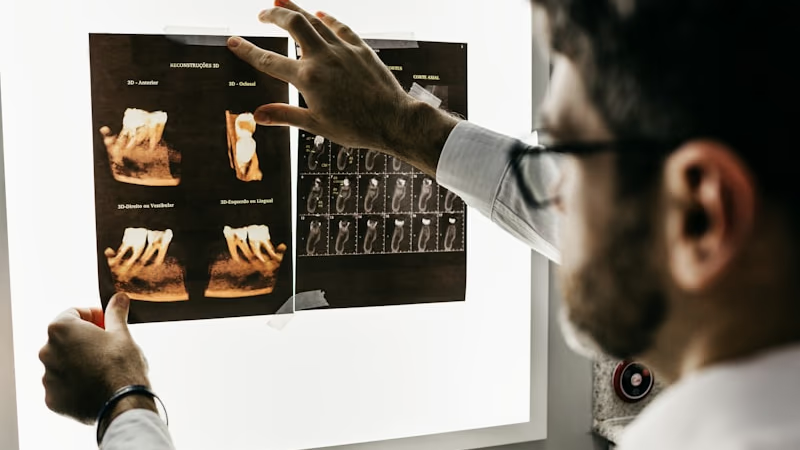

Does Synadentix work? It is a nightly chewable tablet that promises stronger enamel, fresher breath, and healthier gums. The ingredients are not random. Several come straight from real dental research. But most of that research tested toothpaste, a single tablet over half an hour, or a lab dish, not a chewable supplement taken for months. So the right question is not whether there is science behind Synadentix. It is whether the science matches the product. This guide checks each ingredient against the studies, links every one, and gives you a straight answer.
What you'll learn in this guide:
- What Synadentix is and how you take it
- Why hydroxyapatite is its strongest ingredient, and the one catch
- What the lactoferrin, cranberry, and zinc studies really measured
- Our honest verdict, plus a simple way to test it yourself
- Side effects, price, and the 90-day guarantee
How we wrote this
Every study linked below was checked on PubMed in September 2026. TheNewsHealth may earn a commission if you buy through our links, which does not change our reading of the research. This article is for education only. It is not dental or medical advice, and no supplement replaces brushing, flossing, or a dentist.
What Synadentix Is
Synadentix is a chewable tablet for adults who want extra support for their teeth and gums. You chew one tablet at bedtime, after your last brushing and flossing, and you do not rinse afterward. The idea is to leave the ingredients in contact with your teeth overnight.
All seven ingredients sit inside a proprietary blend. The label names them but does not say how much of each is in a tablet. There is also no published trial of the finished Synadentix formula. Keep both facts in mind as you read the studies below.
The Synadentix Ingredient List
- Microcrystalline hydroxyapatite (mHA)
- Lactoferrin
- Lactoperoxidase
- Cranberry extract (A-type proanthocyanidins)
- Berberine
- Zinc citrate
- Guava fruit powder
Hydroxyapatite: The Strongest Ingredient, With One Catch
Hydroxyapatite is the mineral that makes up most of your tooth enamel. The microcrystalline form has been tested in toothpaste head to head against fluoride, and it has held up well.
In an 18-month randomized trial published in 2023 in Frontiers in Public Health, 189 adults brushed with either a fluoride-free hydroxyapatite toothpaste or a toothpaste with 1,450 ppm fluoride. Among those who finished, 89.3% of the hydroxyapatite group had no increase in decayed, missing, or filled tooth surfaces, compared with 87.4% of the fluoride group. The hydroxyapatite paste was not inferior to fluoride. One fair caveat: three of the authors work for a company that makes hydroxyapatite toothpaste.
A six-month German trial found a similar pattern in 150 orthodontic patients wearing braces, a group prone to early enamel spots. New early enamel changes appeared in 56.8% of the hydroxyapatite group and 60.9% of the fluoride group, and the difference was not significant.
Now the catch. Both studies used toothpaste brushed onto the teeth every day. Synadentix delivers hydroxyapatite in a tablet you chew once at night, in an amount the label does not disclose. Leaving mineral on your teeth overnight is a sensible idea, and it explains the no-rinse direction. But no published study has tested that format, so the toothpaste results are a reason for interest, not proof.
Lactoferrin and Lactoperoxidase: Mixed Results
Lactoferrin and lactoperoxidase are proteins found naturally in saliva and milk. They have been tested in tablet form, which makes them the closest match to how Synadentix is taken. The results point in two directions.
In a 12-week randomized trial published in 2011 in the International Journal of Dentistry, 72 adults with existing gum problems took tablets containing lactoferrin and lactoperoxidase or control tablets every day. Gum measurements and bacteria counts ended up about the same in both groups. The authors concluded that the effect might be weak.
Breath is a different story. In a 2016 crossover trial in BMC Oral Health, 39 adults with measurable bad breath took a single tablet with 20 mg of lactoferrin, 2.6 mg of lactoperoxidase, and 2.6 mg of glucose oxidase, or a placebo. Ten minutes later, the sulfur compounds that cause bad breath were significantly lower after the real tablet. The study was funded and run by the ingredient maker, and it measured a short-term effect, not a long-term one.
Cranberry and Zinc: Promising, but Early or Indirect
Cranberry is on the label because of lab and animal work. In a 2010 study in Caries Research, purified cranberry proanthocyanidins reduced the sticky film that Streptococcus mutans builds on a tooth-like surface. In rats, twice-daily cranberry applications led to fewer and less severe cavities than a control. That is a solid reason to study cranberry further. It is not a human result.
Zinc citrate has human data, but again in toothpaste. A 2024 double-blind trial in Clinical Oral Investigations gave 100 healthy adults either a fluoride toothpaste with zinc citrate, hydroxyapatite, and potassium citrate, or a plain fluoride toothpaste for four weeks. The zinc and hydroxyapatite paste lowered Streptococcus mutans in saliva by a bigger percentage, and people reported less tooth sensitivity. Plaque and gum scores did not differ between groups.
We did not find human oral health trials for berberine or guava powder in a form like this that we could cite, so we are not counting them for or against the product.
So, Does Synadentix Work? Our Honest Read
Synadentix is built on better science than most oral health chewables. Hydroxyapatite has matched fluoride toothpaste in long, well-run trials. A lactoferrin tablet has shown a short-term effect on breath. Where Synadentix gets ahead of the evidence is format and dose. Nearly all of the positive human data comes from toothpaste, and the label does not tell you how much of any ingredient you get.
Our view: Synadentix is a sensible add-on for adults who already brush and floss, want a fluoride-free extra step at night, and care most about enamel and fresh breath. The 90-day guarantee is long enough to fit a dental cleaning in and compare notes with your hygienist. It is not a substitute for brushing, flossing, cleanings, or treatment, and it will not fix a problem that needs a dentist.
How to Test Synadentix Fairly
- Pick one or two things to track before you start: morning breath, sensitivity to cold drinks on a 1-to-10 scale, or whether flossing draws blood.
- Keep your toothpaste, floss, and mouthwash the same, so the tablet is the only change.
- Chew one tablet every night after brushing and flossing, and do not rinse.
- Book a dental cleaning for around week 10 or 11 and ask your hygienist what they see.
- Decide before day 90, while the money-back guarantee still applies.
Synadentix Side Effects and Cautions
Our Synadentix review lists the label cautions. Lactoferrin and lactoperoxidase are milk-derived proteins, so skip Synadentix if you have a dairy protein allergy. Some people notice a chalky texture or a brief change in taste during the first few days. Ask your dentist before using it if you have implants or recent oral surgery. Keep the tablets away from children.
And if you have tooth pain, swelling, loose teeth, or bleeding that does not settle, see a dentist rather than trying a supplement first. Our guide to gum health causes and prevention explains which signs need a professional.
Synadentix Price and Guarantee
As of our September 2026 review, one bottle of Synadentix costs $79. Three bottles cost $207, or $69 each. Six bottles cost $294, or $49 each. Shipping is free on the three- and six-bottle packages, and every order carries a 90-day money-back guarantee. Offers change, so confirm the price before you buy. Check current Synadentix pricing on the official site.
How Synadentix Compares
Synadentix takes a mineral-first approach, while most oral supplements are built around probiotics. To see that difference side by side, read ProDentim vs Synadentix, ProvaDent vs Synadentix, and DentaBiome vs Synadentix. For background on why the bacteria in your mouth matter, start with our guide to the oral microbiome and health, then see our roundup of the best oral probiotics.
The bottom line: Synadentix puts well-researched ingredients in an untested format. If you understand that trade-off and want a simple bedtime habit with a long guarantee, it is a reasonable one to try.
Read the Full Synadentix Review
Our full review covers the label, customer feedback, bundle pricing, and who Synadentix suits best.
Read our Synadentix reviewLooking for Oral Health supplements?
Our experts have reviewed and compared the top oral health supplements to help you find the right one.
See our expert comparisonFrequently Asked Questions
Does Synadentix really work?
Synadentix has not been tested as a finished product in a published trial. Its lead ingredient, hydroxyapatite, matched fluoride toothpaste in an 18-month adult trial, and a lactoferrin tablet lowered bad-breath compounds for a short time in a 2016 study. Most of that evidence comes from toothpaste or single-dose tests, and the label does not disclose ingredient amounts. It is a reasonable add-on to brushing and flossing, not a replacement.
What are the ingredients in Synadentix?
Synadentix contains microcrystalline hydroxyapatite, lactoferrin, lactoperoxidase, cranberry extract with A-type proanthocyanidins, berberine, zinc citrate, and guava fruit powder. All seven are in a proprietary blend, so individual amounts are not listed.
How do you take Synadentix?
Chew one tablet at bedtime after your final brushing and flossing. Do not rinse with water afterward, so the ingredients stay on your teeth overnight.
How long does Synadentix take to work?
There is no trial of Synadentix to answer that directly. The hydroxyapatite toothpaste studies ran for six to eighteen months, while the breath study measured an effect within ten minutes of one tablet. Give it most of the 90-day guarantee window, and ideally schedule a dental cleaning near the end so a professional can weigh in.
Does Synadentix have side effects?
Reported issues are mild, such as a chalky texture or a brief change in taste. Because lactoferrin and lactoperoxidase come from milk, people with a dairy protein allergy should avoid it. Ask your dentist first if you have implants or recent oral surgery.
Can Synadentix replace fluoride toothpaste?
No. The hydroxyapatite studies compared toothpaste with toothpaste, not a chewable tablet with toothpaste. Keep brushing with your regular toothpaste and use Synadentix, if you choose it, as an extra step.
How much does Synadentix cost?
As of September 2026, one bottle costs $79, three bottles cost $207 ($69 each), and six bottles cost $294 ($49 each), with free shipping on the three- and six-bottle packages. All orders include a 90-day money-back guarantee.
Get honest health tips & reviews
Join our newsletter for science-backed supplement reviews and wellness advice.
No spam. Unsubscribe anytime.