
Ashwagandha is the most clinically studied adaptogen in the men's health space and one of the few herbs with genuinely clean data behind it. The problem is that most people take the wrong form at the wrong dose for the wrong goal. If you want a testosterone and libido bump, you need a different extract and a different dose than if you want cortisol control, and both are different from what works for sleep. Choosing wrong does not just reduce the effect, it can mean you pay for a bottle and feel nothing for 6 weeks. Here is exactly what the evidence says, with honest ratings for each use case.
Why the Form of Ashwagandha Matters More Than the Dose
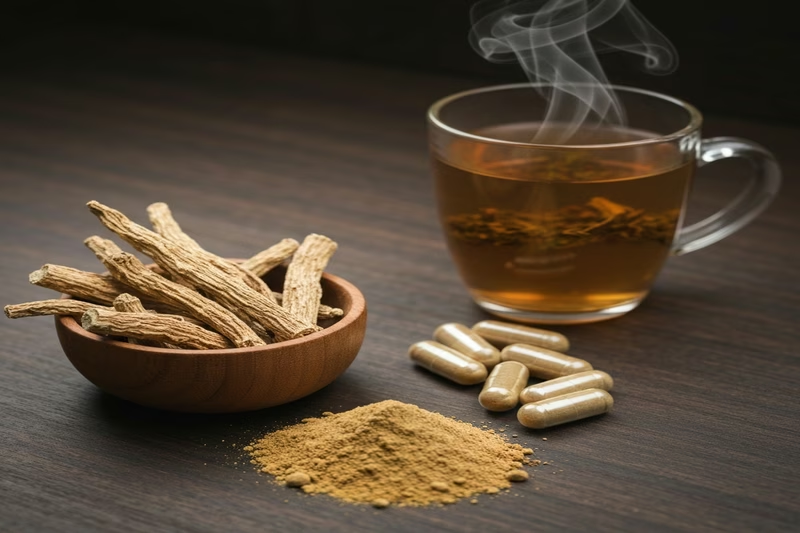
Ashwagandha is not one product. It is a family of extracts, each with a different ratio of the two active compound groups: withanolides (concentrated more in the root) and withanolide glycosides (more in the leaf). The two main branded extracts dominate the clinical literature and they are not interchangeable.
KSM-66 is a root-only extract standardized to 5% withanolides, produced by Ixoreal. It has most of the published testosterone and libido evidence. Sensoril is a root-and-leaf extract standardized to 10% withanolides, produced by Natreon, with more of the published cortisol and anxiety evidence. Generic root powder, which is what most cheap supplements use, is far weaker than either and has little clinical backing. If a label does not say KSM-66 or Sensoril (or list a specific withanolide percentage with a reputable extract), you are probably getting the weakest version.
The Stress Dose: 300 mg Sensoril, Twice Daily
If your primary goal is cortisol and anxiety control, Sensoril has the better dataset. Chandrasekhar 2012 (Indian Journal of Psychological Medicine) gave 300 mg of a KSM-like extract twice daily to chronically stressed adults for 60 days and measured a 28% drop in serum cortisol alongside significant reductions in anxiety and perceived stress scales. Subsequent Sensoril trials have reproduced similar effects on cortisol at 125 to 250 mg doses.
Practical protocol for stress: 300 mg Sensoril in the morning with food, 300 mg early evening. If 600 mg is too stimulating for some men (yes, adaptogens can feel slightly activating), start at 300 mg once daily in the morning for a week before adding the second dose. Rating for stress and cortisol: 4.3 out of 5. This is one of the cleaner adaptogen plays available.
The Testosterone and Libido Dose: 600 mg KSM-66, Daily
For T and libido, KSM-66 is the extract with the better data. Lopresti 2019 (American Journal of Men's Health) gave 600 mg of KSM-66 daily for 16 weeks to overweight men aged 40 to 70 and measured a 14.7% increase in total testosterone and an 18% increase in DHEA-S, both statistically significant versus placebo. A smaller trial by Ambiye 2013 in men with low sperm count and parameters showed meaningful improvement in sperm concentration, motility, and serum testosterone at the same dose.
For libido specifically, Chauhan 2022 (Health Science Reports) looked at 600 mg of KSM-66 daily for 8 weeks in men reporting low sexual desire and found significant improvements on validated sexual function scores. The mechanism is probably a combination of modest endocrine effects (T, DHEA) and central nervous system adaptogenic action (reduced HPA axis reactivity, which indirectly supports libido).
Practical protocol for T and libido: 600 mg KSM-66 daily, in the morning with food, for at least 8 to 12 weeks before judging the effect. Splitting 300 mg AM and 300 mg PM works too. Rating: 4.2 for testosterone support in men with low or low-normal T, 4.3 for libido.
The Sleep Dose: 300 to 600 mg in the Evening
Ashwagandha's effect on sleep is modest but consistent, and it is mostly mediated through cortisol reduction and parasympathetic shift rather than a direct sedative action. A meta-analysis by Cheah 2021 (PLOS One) across 5 trials found meaningful improvements in sleep quality metrics, especially in subjects with insomnia. Doses used ranged from 120 to 600 mg, taken in the evening.
Practical protocol for sleep: 300 to 600 mg in the evening, roughly 1 to 2 hours before bed. Can be stacked with magnesium glycinate (300 to 400 mg) and glycine (3 g) for a more complete wind-down stack. Rating for sleep: 4.0 out of 5, modest but real.
Side-by-Side: Which Dose for Which Goal
- Stress and cortisol: 300 mg Sensoril twice daily (or 300 mg KSM-66 twice daily).
- Testosterone and libido: 600 mg KSM-66 daily, morning or split.
- Sleep: 300 to 600 mg of either extract, taken in the evening.
- Combined stress plus T support (most men's situation): 300 mg KSM-66 AM and 300 mg KSM-66 PM is a reasonable compromise.
- Avoid: generic root powder at undisclosed standardization; capsules without a branded extract name; proprietary blends where the ashwagandha dose is not itemized.
What to Actually Expect in the First 12 Weeks
Ashwagandha is not a stimulant. You do not feel it in 30 minutes. Realistic timeline: sleep and stress improvement within 10 to 14 days. Mood and energy within 3 to 4 weeks. Testosterone and libido within 6 to 12 weeks, with the clearer lab change appearing around the 16-week mark in the Lopresti 2019 data. Men who judge ashwagandha at week 2 and quit have not given it the time it needs to work.
Ashwagandha is one of the core ingredients worth looking for in a men's vitality formula because it covers stress, T support, and sleep at once. Our roundup compares the top formulas on ingredient quality and transparency.
See our top male vitality supplement picksWho Should Think Twice Before Taking Ashwagandha
Ashwagandha is generally well tolerated, but there are a few situations where caution or clinician input matters.
- Autoimmune thyroid conditions, particularly Hashimoto's and Graves'. Ashwagandha can mildly raise T4 and T3 output and has been reported to destabilize thyroid in some sensitive individuals.
- Men taking thyroid hormone medication. Levels can shift enough to require a dose adjustment; check with your clinician and retest TSH after 8 weeks.
- Immunosuppressant medications. Ashwagandha has mild immunomodulatory activity.
- Sedative medications (benzodiazepines, hypnotics). The combination can be additive.
- Pregnancy. Ashwagandha is traditionally avoided during pregnancy and most clinicians recommend against it.
- Rare reports of liver enzyme elevation. Stop if you develop unexplained nausea, jaundice, or right-upper-quadrant discomfort.
Stacking Ashwagandha With Other Men's Ingredients
Ashwagandha plays well with almost everything in the men's vitality space. The most complementary pairings: Tongkat Ali (endocrine support from a different angle), zinc (testosterone synthesis cofactor), magnesium glycinate (sleep and vascular tone), and L-citrulline (vascular and erection support). For men over 45 with early prostate symptoms, adding Saw Palmetto covers the urinary side. A sensible daily stack looks like 600 mg KSM-66 ashwagandha, 200 to 400 mg Tongkat Ali, 15 to 25 mg zinc, 300 to 400 mg magnesium glycinate, 3 to 6 g L-citrulline, and vitamin D3 if your level is under 40 ng/mL.
Endopeak includes ashwagandha alongside Tongkat Ali, zinc, L-citrulline, and several other ingredients discussed here, in one capsule. Worth comparing to a pieced-together stack.
Read the full Endopeak reviewCycling: Do You Need to Take Breaks?
Most of the clinical trials ran 8 to 16 weeks continuously without tolerance developing. In practice, cycling is not strictly necessary, but some men feel the effect plateaus after 3 to 4 months. A reasonable pattern is 12 weeks on, 2 to 4 weeks off, then resume. If you are using ashwagandha primarily for acute stress support, taking it as needed during high-stress periods is also reasonable rather than continuous year-round use.
Common Mistakes Men Make With Ashwagandha
- Buying cheap root powder capsules with no branded extract. Underdosed by 5x or more on active compounds.
- Taking 300 mg once a day and expecting the 600 mg testosterone effect. Dose matters.
- Judging the effect at week 2. Sleep and mood move first; endocrine changes take 8 to 16 weeks.
- Taking it at high doses with thyroid medication without rechecking labs.
- Relying on ashwagandha alone without the lifestyle fundamentals (sleep, strength training, protein, fat loss). Adaptogens amplify fundamentals; they do not replace them.
- Mixing multiple proprietary blends that all contain undisclosed ashwagandha doses; this can stack to uncomfortably high levels without you realizing.
Cost and Value
A quality KSM-66 or Sensoril bottle runs about $25 to $40 for a 2-month supply at the right dose. Generic root powder costs a quarter of that, but is almost certainly not delivering the clinical effect. If you are going to take ashwagandha at all, pay for the branded extract. The math on ashwagandha as a solo supplement is excellent. As part of a men's vitality formula that covers multiple mechanisms, the math is usually better still because you are getting ashwagandha plus 5 to 10 other ingredients at a combined cost comparable to buying ashwagandha alone.
The Bottom Line
Ashwagandha is one of the better-supported adaptogens for men, but only if you match the form and dose to the goal. For cortisol and stress, lean Sensoril at 300 mg twice daily. For testosterone and libido, KSM-66 at 600 mg daily. For sleep, 300 to 600 mg of either in the evening. Give it a full 8 to 12 weeks, pair it with the lifestyle fundamentals, and pay for a branded standardized extract rather than generic root powder. Chandrasekhar 2012 (28% cortisol reduction), Lopresti 2019 (14.7% T increase, 18% DHEA-S), and Ambiye 2013 on libido and fertility give this herb genuine clinical legitimacy. Used correctly, ashwagandha is one of the most cost-effective levers in the men's health toolkit. If you are looking at multi-ingredient formulas that include it, our Spartamax vs Endopeak comparison shows how each one doses the adaptogen layer.
Frequently Asked Questions
What is the best ashwagandha dose for testosterone?
600 mg of KSM-66 daily, taken in the morning with food, based on Lopresti 2019 which measured a 14.7% increase in total testosterone and 18% increase in DHEA-S over 16 weeks. The dose can be split 300 mg AM and 300 mg PM if tolerated better that way.
KSM-66 vs Sensoril, which is better?
They are different tools. KSM-66 is a root-only extract with more data on testosterone, libido, and strength. Sensoril is a root-and-leaf extract with more data on cortisol reduction and anxiety. For T and libido, KSM-66. For stress and cortisol, Sensoril. For most men wanting both, KSM-66 is the single-product choice.
How long does ashwagandha take to work?
Sleep and stress improvements within 10 to 14 days. Mood and energy within 3 to 4 weeks. Testosterone and libido effects typically become meaningful between weeks 6 and 12, with the clearer lab change around the 16-week mark. Judging ashwagandha at week 2 is premature.
Can ashwagandha affect my thyroid?
Yes, modestly. Ashwagandha can raise T4 and T3 output slightly. This is usually not clinically significant in healthy men, but in autoimmune thyroid conditions (Hashimoto's, Graves') or for men on thyroid medication, it can destabilize levels. Check with your clinician and recheck TSH after 8 weeks if you are on levothyroxine.
Should I cycle ashwagandha or take it continuously?
Most clinical trials ran 8 to 16 weeks continuously without tolerance issues. Continuous use is acceptable, but a reasonable pattern for long-term users is 12 weeks on, 2 to 4 weeks off. Some men prefer to use it seasonally or during high-stress periods rather than year round.
Is ashwagandha safe to combine with other men's health supplements?
Yes, with the usual caveats. It pairs well with Tongkat Ali, zinc, magnesium, L-citrulline, and vitamin D. The main interactions to watch are with thyroid medication, sedatives, and immunosuppressants. Check with a clinician if you are on prescription medications before stacking.
Get honest health tips & reviews
Join our newsletter for science-backed supplement reviews and wellness advice.
No spam. Unsubscribe anytime.