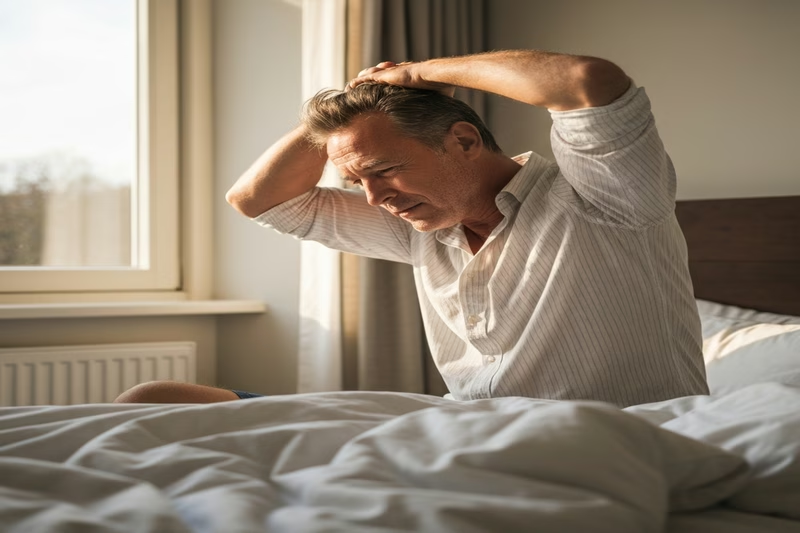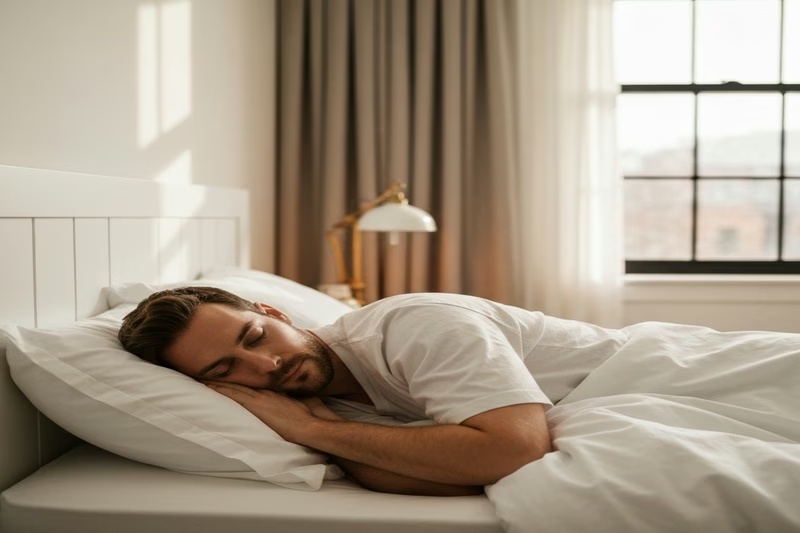

If you wanted to pick one lever that moves testosterone, erections, energy, and mood more than any supplement on the market, it would be sleep. Not sleep duration alone, sleep architecture: how much time you actually spend in deep (N3) sleep and REM, and whether those stages are uninterrupted. Most of the men who walk into my inbox wondering if they need TRT have been averaging 6 fragmented hours a night for years and assuming that is fine. It is not. Sleep is where testosterone is actually produced, where the HPG axis resets, and where the erection machinery cycles through its nightly maintenance. This is how the biology works, and how to fix it.
Why Testosterone Is Made at Night
Testosterone follows a strong circadian rhythm. The production cycle begins during sleep and peaks in the early morning, between roughly 4 a.m. and 8 a.m. The peak is real: morning total T can be 20 to 40% higher than afternoon levels in healthy men. This matters because the pulses of luteinizing hormone (LH) that trigger testicular T production are coupled to specific sleep stages, and they require enough total sleep time to complete their cycle.
Leproult and Van Cauter 2011 (JAMA) demonstrated this more clearly than anyone. Healthy young men (average age 24) were restricted to 5 hours of sleep per night for 1 week. Their daytime testosterone dropped by 10 to 15%, which is roughly the decline you would expect from 10 to 15 years of normal aging. One week. In young men. That tells you how sensitive the hormonal axis is to sleep loss, even short term.
Deep Sleep (N3): The Anabolic Window
N3 sleep (also called slow-wave or deep sleep) dominates the first third of the night. This is when growth hormone peaks, when testosterone pulses are highest, and when tissue repair happens. Men who lose deep sleep, from alcohol, late eating, chronic stress, or aging itself, lose hormonal output in parallel. N3 also correlates strongly with cognitive recovery, memory consolidation, and metabolic cleanup. If you are waking up groggy despite 7 hours in bed, the most likely culprit is poor N3, not poor duration.
REM Sleep: The Erection Machinery
REM sleep is concentrated in the second half of the night. It is when nocturnal penile tumescence (NPT) cycles happen, 3 to 5 per night in healthy men, each lasting 20 to 30 minutes. These cycles are not sexual; they are maintenance. They flush the penile tissue with oxygenated blood, preserve smooth muscle function, and are a reliable marker of both vascular and neurological health. When REM is fragmented, NPT drops, and morning erections fade. Penev 2007 (Sleep) showed that even with unchanged total sleep time, sleep fragmentation reduced NPT frequency substantially.
The Alcohol Problem
This is the most underestimated driver of low T in men over 40. Alcohol within 3 hours of bed wrecks sleep architecture. It suppresses REM in the first half of the night and causes rebound awakenings in the second half. A man having 2 drinks with dinner may technically sleep 7 hours but is getting perhaps half the REM and significantly less N3 than he would have sober. The hormonal consequence is predictable: lower morning T, fewer morning erections, and more daytime fatigue. Men who cut evening alcohol for 30 days often notice the change without any other intervention.
Sleep Apnea: The Silent T-Killer
Obstructive sleep apnea (OSA) is dramatically underdiagnosed in men over 40, and its effect on testosterone is one of the strongest in the literature. Gambineri 2003 (Journal of Clinical Endocrinology and Metabolism) found that men with untreated moderate-to-severe OSA had testosterone levels 20 to 30% lower than matched controls. Treating OSA with CPAP typically restores T within 3 to 6 months, and the improvement in morning erections is often one of the first things men notice.
The classic signs of OSA worth flagging for assessment.
- Loud or chronic snoring, especially if a partner reports gasping or choking sounds.
- Witnessed breathing pauses during sleep.
- Waking with dry mouth, headaches, or a heavy throat.
- Unrefreshing sleep despite 7 or more hours in bed.
- Daytime sleepiness, especially in the early afternoon or while driving.
- Neck circumference over 17 inches in men is one of the strongest predictive markers.
- Unexplained morning high blood pressure or atrial fibrillation.
Any 2 of those together are worth a home sleep study. If you have been chasing low T for years without success and have not ruled out OSA, that is the first place to look.
The Sleep Hierarchy: Fix These in Order
1. Room Environment
Cool (65 to 68 F), dark (blackout curtains or a proper mask), and quiet (earplugs if needed). These three are cheaper than any supplement and have a larger effect on deep sleep than most pills.
2. Alcohol Cutoff
Zero alcohol within 3 hours of bed is the single highest-leverage move for men over 40. If a full cut is unrealistic, move it earlier and cap it at one or two drinks.
3. Consistent Schedule
Going to bed and waking within a 30-minute window, including weekends, entrains the circadian rhythm. Irregular schedules suppress both morning T and daytime energy even if total sleep hours look fine.
4. Wind-Down Protocol
45 minutes of lower-stimulation activity before bed: dim lighting, no screens, no work email. This is when the parasympathetic nervous system needs to take over. Men who skip this step go from stress to bed and then wonder why they cannot fall asleep.
5. Light Exposure in the Morning
10 to 15 minutes of outdoor light within an hour of waking anchors the circadian rhythm from the top of the clock. It is also one of the more underappreciated interventions for morning T because it reinforces the AM peak.
Supplements That Support Sleep Architecture
Supplements are the last layer, not the first, but a few have real support and are worth knowing about.
- Magnesium glycinate, 300 to 400 mg 60 minutes before bed. Supports N3 depth and parasympathetic tone. Rating: 4.2.
- Glycine, 3 g before bed. Modest but consistent effect on subjective sleep quality and next-day alertness. Rating: 4.0.
- Ashwagandha KSM-66, 300 to 600 mg in the evening. Lowers cortisol reactivity and helps the transition into sleep, especially for stressed men. Rating: 4.2.
- L-theanine, 200 mg before bed. Useful if the wind-down problem is mental, not physical. Rating: 4.0.
- Melatonin, 0.3 to 1 mg. Low dose. The common 3 to 10 mg doses are supraphysiological and can disrupt architecture. Rating: 3.9.
- Avoid: benzodiazepines and Z-drugs long term; they suppress N3 and REM even as they increase total time asleep.
If sleep and stress are driving your morning T and erection issues, a men's vitality formula that includes ashwagandha and sleep-supporting minerals addresses the hormonal downstream effect alongside the root cause.
See our top male vitality supplement picksHow Sleep Fragmentation Hits Erections Specifically
Three mechanisms, stacked. First, fewer REM cycles equals fewer NPT cycles, so the penile tissue gets less oxygenated-blood perfusion, which over time worsens smooth muscle and vascular function. Second, lower morning testosterone means weaker upstream signaling to the erection machinery. Third, chronically poor sleep elevates sympathetic tone all day, making parasympathetic-driven erections harder to initiate even with desire. Fix sleep and you address all three at once.
Timeline for Recovery
If you fix sleep genuinely (not just add hours, but protect architecture), here is what to expect. Week 1 to 2: daytime energy and mood stabilize. Week 3 to 4: morning T starts climbing back. Week 6 to 8: morning erections return more reliably if sleep was the primary driver. Month 3 to 6: if OSA was present and is now treated, full restoration of the hormonal axis. Some men feel the difference faster, but 8 weeks is a fair benchmark for the hormonal and vascular systems to catch up.
Sleep also powers cognitive recovery. Our top brain supplement picks complement a sleep-first approach for men focused on long-term mental sharpness alongside vitality.
See our top brain supplement picksWhen Sleep Alone Is Not Enough
For some men, even well-protected sleep does not fully restore T or erections because other drivers (fat mass, vitamin D deficiency, insulin resistance, genuine hypogonadism) are also contributing. Sleep is the foundation, but a complete approach typically layers in strength training, a targeted supplement stack (zinc, magnesium, vitamin D, Tongkat Ali, ashwagandha), and attention to body composition. If labs show persistently low T after 3 months of full-court-press lifestyle work, that is a clinician conversation.
The Bottom Line
Testosterone is produced at night. Erections are maintained during REM. If sleep is broken, both fall. Leproult and Van Cauter 2011 showed that one week of 5-hour nights dropped T by 10 to 15% in healthy young men; OSA drops it 20 to 30% in the population that has it. Before you chase TRT, a booster, or the next supplement, look honestly at your sleep. Protect the environment, cut evening alcohol, anchor the schedule, screen for apnea if the signs are there, and layer in simple sleep-supporting supplements (magnesium, glycine, evening ashwagandha). Most men who do this fully for 8 to 12 weeks see their morning T, morning erections, and daytime energy recover without needing anything more aggressive. Sleep is not a soft lever, it is the primary one. If you do decide to add a formula on top of the sleep work, our Spartamax vs Iron Boost comparison covers two of the options men ask us about most.
Frequently Asked Questions
How many hours of sleep does testosterone production actually need?
Most of the published evidence points to 7 to 9 hours of consolidated sleep as the range where testosterone production is fully supported. Leproult and Van Cauter 2011 showed that cutting to 5 hours per night for 1 week dropped T by 10 to 15% in healthy young men.
Does sleep apnea really lower testosterone that much?
Yes. Gambineri 2003 and subsequent studies have shown 20 to 30% reductions in testosterone in men with untreated moderate-to-severe obstructive sleep apnea. Treating OSA with CPAP typically restores T within 3 to 6 months.
If I can only change one thing about my sleep, what should it be?
Cut alcohol within 3 hours of bed. For men over 40, this single change is often the highest-leverage intervention on sleep architecture and, by extension, testosterone and morning erections.
Is 6 hours of sleep really not enough?
For many men, no. Individual variation exists, but the large-scale data on 5 to 6 hour sleepers consistently shows lower testosterone, worse insulin sensitivity, and higher cortisol. If you feel fine on 6 hours, track morning energy, libido, and erection frequency honestly for a month at 7.5 to 8 hours before concluding 6 is optimal.
Do sleep supplements like melatonin lower testosterone?
Low-dose melatonin (0.3 to 1 mg) does not meaningfully suppress T in healthy men. High-dose melatonin (5 to 10 mg, common in US products) is supraphysiological and can disrupt sleep architecture itself, which is the indirect way it might hurt T. Lower is better.
How long after fixing sleep will I feel the hormonal improvement?
Daytime energy and mood stabilize within 1 to 2 weeks. Morning testosterone tends to climb back over 3 to 4 weeks. Morning erection frequency typically improves over 6 to 8 weeks if sleep was the primary driver. If OSA was present and is now treated, allow 3 to 6 months for full recovery.
Get honest health tips & reviews
Join our newsletter for science-backed supplement reviews and wellness advice.
No spam. Unsubscribe anytime.