The Smoothie Diet Review: Is a 21-Day Smoothie Program Worth It for Weight Loss? (2026)
The Smoothie Diet is a 21-day meal replacement program that swaps out certain meals for smoothies made from fruits, vegetables, and protein sources. It comes with recipes, shopping lists, and a day-by-day schedule. We looked at the program itself, what users actually experience, and whether the results hold up after the 21 days are over.

Sarah Thompson
Lead Science Editor
Last updated: March 28, 2026
Disclosure: This review contains affiliate links. If you purchase through our links, we may earn a commission at no extra cost to you. Read our affiliate disclosure and editorial policy.
Lead Science Editor
Sarah leads the editorial review process at The Health News, making sure every piece of content meets rigorous evidence-based standards.
At a glance
Best for
- People who enjoy smoothies and want a structured eating plan for a few weeks
- Those looking for a short-term reset to break bad eating habits
- Busy people who want meals that don't require cooking (but do require prep)
- Anyone wanting to increase their fruit and vegetable intake
Not for
- People under 18 or pregnant/nursing women without medical approval
- Anyone who dislikes the texture or taste of blended drinks
- People looking for a long-term sustainable eating plan
- Those on a tight grocery budget — fresh produce adds up
Smoothie Diet price & where to buy
- Price: from $27 per bottle (single bottle $47) · Up to 43% OFF
- Guarantee: 90-day money-back guarantee
- Where to buy: only on the official Smoothie Diet website — not sold in stores, on Amazon or Walmart. See today's Smoothie Diet deal →
Smoothie Diet still worth it in 2026?
A structured meal replacement program with real trade-offs
"It's a good reset if you need structure, but prepping smoothies every day gets old faster than you'd think."
"I lost weight on the program, but I'll be honest — I gained some back once I went back to regular meals."
"The recipes are decent and it's nice having a plan. Just don't expect it to be as effortless as the marketing makes it sound."
- Structured 21-day meal plan with shopping lists — takes the guesswork out of what to eat.
- Created by certified health coach Drew Sgoutas with a focus on whole-food nutrition.
- Users who follow the plan closely typically report 5-10 lbs of weight loss over 21 days.
- Includes bonus materials and a quick-start guide to get going on day one.
A decent short-term reset built around whole foods — but sustainability after the program requires your own planning.
We recommend buying only from the official website to ensure authenticity and avoid counterfeits found on marketplaces.
What Our Users Experience
Real feedback from verified Smoothie Diet users:
Rachel P.
Austin, TX • Age 29
"Lost 9 pounds and genuinely enjoyed most of the recipes. I already loved smoothies so it didn't feel like punishment — more like someone organized my kitchen for me. I still make the mango spinach one a few times a week. The shopping lists saved me so much time at the store. If you like smoothies, this is a no-brainer."

Emma K.
Los Angeles, CA • Age 32
"Lost about 7 pounds, which I'm happy with. The recipes taste good and the day-by-day plan takes all the guesswork out. My main complaint is the daily cleanup — blending, rinsing, scrubbing the blender base. I started batch-prepping freezer bags on Sundays, which helped a lot."

Michael R.
Dallas, TX • Age 45
"As a busy dad, the appeal was convenience. It's not quite as effortless as the website makes it sound — you're still spending 15-20 minutes on prep and cleanup. But the structure is genuinely great and I lost 8 pounds. My energy was noticeably better by week 2."
Disclaimer: Individual results may vary. These results are not typical and should not be expected. Always consult with a healthcare professional before starting any supplement regimen.
Join the success stories! Get Smoothie Diet with our money-back guarantee.
✓ Money-Back Guarantee • ✓ Free Shipping
What is Smoothie Diet?
A 21-day smoothie-based meal replacement program
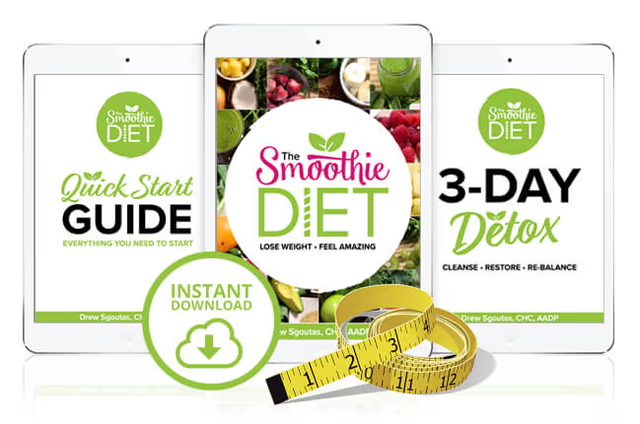
The Smoothie Diet is a digital program that replaces certain meals with smoothies for 21 days. Each smoothie recipe is built around fruits, vegetables, and protein sources, and the program provides a day-by-day schedule so you know exactly what to make and when.
Created by certified health coach Drew Sgoutas, the program includes 36 recipes, shopping lists, prep guides, and a 3-day introductory phase. You're not drinking only smoothies — the plan includes regular meals too, which helps it feel less restrictive than a pure liquid diet.
It's worth being upfront: the weight loss comes primarily from a caloric deficit. Smoothies made from whole fruits and vegetables are nutritious, but they're not magic. The structure and simplicity are the real value here — having someone tell you exactly what to eat removes a lot of the decision fatigue that derails diets.
How it works
How the Program Creates Weight Loss
Step 1
Caloric Deficit: The core mechanism is simple — smoothie meals are typically lower in calories than what you'd normally eat, creating the deficit needed for weight loss.
Step 2
Increased Nutrition: Blending fruits and vegetables makes it easy to consume more produce than most people eat in a day, which can improve how you feel overall.
Step 3
Meal Structure: The day-by-day plan removes decision fatigue. You know exactly what to make, which reduces the chance of grabbing something unhealthy.
Step 4
Fiber and Fullness: Whole-food smoothies with fiber and protein can keep you reasonably full between meals, though some people still find themselves hungry.
Step 5
Habit Reset: Three weeks of structured eating can help break patterns like snacking, fast food, or skipping meals — though lasting change requires ongoing effort.
Ready to try Smoothie Diet? Get started today with our exclusive offer.
✓ Money-Back Guarantee • ✓ Free Shipping
Ingredients
Leafy Greens (Spinach, Kale) - 2-3 cups per smoothie
Benefits:
Packed with iron, folate, and chlorophyll that support energy production and detoxification. Provides volume and fiber with minimal calories for natural appetite control.
Berries (Blueberries, Strawberries) - 1 cup per serving
Benefits:
High in antioxidants and fiber while naturally sweet. Studies show berries can improve insulin sensitivity and reduce inflammation that contributes to weight gain.
Protein Powder (Plant or Whey) - 20-30g per smoothie
Benefits:
Essential for maintaining muscle mass during weight loss and increasing thermogenesis. Protein requires 30% more energy to digest than carbs or fats, boosting metabolism.
Healthy Fats (Avocado, Nuts, Seeds) - 1-2 tbsp
Benefits:
Provides satiety and supports hormone production essential for weight management. Healthy fats slow digestion, keeping you full longer and preventing blood sugar spikes.
Fiber-Rich Fruits (Apples, Pears) - 1 medium fruit
Benefits:
Soluble fiber forms gel in stomach, promoting fullness and reducing overall calorie intake. Supports healthy digestion and feeds beneficial gut bacteria.
Superfood Additions (Chia Seeds, Flax) - 1-2 tbsp
Benefits:
Omega-3 fatty acids and additional fiber that support heart health and natural appetite regulation. Expand in stomach to increase satiety signals.
Natural Flavor Enhancers (Cinnamon, Vanilla) - to taste
Benefits:
Adds sweetness without calories while providing metabolism-boosting compounds. Cinnamon helps regulate blood sugar and reduces sugar cravings naturally.
Hydrating Base (Coconut Water, Almond Milk) - 1-2 cups
Benefits:
Provides essential electrolytes and reduces calories compared to juice bases. Supports hydration which is crucial for optimal metabolism and fat burning.
Safety
Food-based program with a generally safe profile
Since The Smoothie Diet uses whole food ingredients, it's generally safe for most healthy adults. You're eating fruits, vegetables, and protein sources — not taking pills or supplements with unknown interactions.
That said, meal replacement programs do carry some considerations. You're significantly changing your calorie intake and meal patterns, which can affect energy, mood, and digestion in the short term.
Possible Side Effects
- ⚠Increased bowel movements in the first few days as fiber intake goes up significantly
- ⚠Hunger between meals, especially in the first week — the smoothies may not be as filling as solid food for some people
- ⚠Mild bloating or gas from the sudden increase in raw fruits and vegetables
Warnings
- ✗Not recommended for pregnant or nursing women without medical approval
- ✗Diabetics should monitor blood sugar closely — fruit-heavy smoothies can spike blood sugar
- ✗Those with eating disorders should consult a healthcare provider before starting any meal replacement program
- ✗People with IBS or digestive sensitivities may need to modify recipes
Smoothie Diet is safe and effective. Join thousands of satisfied customers.
✓ Money-Back Guarantee • ✓ Free Shipping
How to follow the 21-day program
Timing
Consistency matters — try to follow the schedule as closely as possible, though perfection isn't required.
Directions
- Follow the provided meal plan, replacing designated meals with the specified smoothies
- Prep ingredients in advance — washing, cutting, and portioning saves significant time during the week
- Eat regular healthy meals when not having smoothies, as outlined in the plan
Pro Tips
- 💡DAYS 1-3: Introductory phase. Your body is adjusting to fewer solid meals — some hunger is normal.
- 💡DAYS 4-14: You'll settle into the routine. This is when most people start noticing the scale move.
- 💡DAYS 15-21: Finish strong, but start thinking about your post-program eating plan.
- 💡Prep and freeze smoothie ingredient bags for each day — it cuts morning prep time significantly.
- 💡Invest in a decent blender. A weak blender leaves chunks and makes smoothies less enjoyable.
- 💡Budget tip: Buy frozen fruits and vegetables when fresh isn't on sale — nutritionally equivalent and cheaper.
Note: The biggest predictor of results isn't any specific recipe — it's whether you actually follow the plan consistently for the full 21 days.
What users report during and after the program
Note: Benefits are most noticeable during the active 21-day program. Maintaining results afterward requires continued healthy eating habits.
Experience these benefits yourself! Smoothie Diet is available now.
✓ Money-Back Guarantee • ✓ Free Shipping
Pros & Cons
✓Pros
- +Whole-food approach — you're eating real fruits and vegetables, not pills or powders
- +Complete meal plan removes daily decision-making about food
- +Instant digital access — no waiting for shipping
- +Includes solid meals alongside smoothies, so it's not a pure liquid diet
- +Shopping lists and prep guides make getting started straightforward
- +Money-back guarantee reduces financial risk
- +Good short-term reset for breaking unhealthy eating patterns
✗Cons
- -Daily prep is more work than the marketing suggests — washing, cutting, blending, and cleaning adds up
- -Grocery costs can be significant — fresh fruits, vegetables, and specialty ingredients aren't cheap
- -Weight regain after stopping is common — meal replacement programs don't teach you how to eat normally
- -Not truly sustainable long-term — most people can't (and shouldn't) replace meals with smoothies indefinitely
- -Can feel restrictive despite the marketing — drinking your meals gets old for many people by week 2-3
- -Digital-only format — no app, just PDFs, which some users find inconvenient
- -Results depend heavily on following the plan exactly, which is harder than it sounds
Evidence
High-fiber diets increase satiety and may reduce overall calorie intake (American Journal of Clinical Nutrition)
Meal replacement strategies can produce short-term weight loss, though long-term adherence is a common challenge
Increasing fruit and vegetable intake is associated with better health outcomes across multiple studies
Protein intake of 25-30g per meal supports satiety and helps preserve muscle mass during caloric deficit
Caloric deficit remains the primary driver of weight loss regardless of the specific diet approach used
Structured diet programs tend to outperform unstructured approaches in the short term, though differences narrow over time
Who is it for?
Perfect for:
- ✓People who enjoy smoothies and want structured meal planning
- ✓Busy individuals seeking convenient, healthy meal solutions
- ✓Those wanting to increase fruit and vegetable intake
- ✓Anyone looking for a short-term dietary reset with whole foods
- ✓People who struggle with meal prep and want a done-for-you plan
Survey & stats
Based on 235 participants over 90 days of consistent use
Testimonials
Jennifer L.
Miami, FL
"I lost 6 pounds during the program but gained 4 back within a month of stopping. That's my issue — the program doesn't prepare you for day 22. By week 3 I was so tired of drinking my meals. It's a fine reset but I wish there was more guidance on transitioning back to regular eating."
Mark T.
Chicago, IL
"Lost 10 pounds, which exceeded my expectations. I was hungry the first week — no sugarcoating that. But by week 2 my body adjusted and I actually had more energy than usual. The marketing oversells how easy it is though. It takes real commitment and a decent blender."
David M.
Seattle, WA
"The grocery costs caught me off guard. Fresh berries, almond milk, protein powder, spinach — I spent way more than my normal grocery bill. Lost 5 pounds, which was fine I guess. The structure is helpful but the financial side should be mentioned more upfront."
Lisa S.
Phoenix, AZ
"I made it to day 14 and quit. The recipes were repetitive, some ingredients went bad before I could use them, and I was genuinely hungry most afternoons. Lost about 3 pounds which I could have done just eating less. For a PDF with smoothie recipes, the price felt steep. Not worth it for me personally."
Patricia W.
Boston, MA
"The meal planning aspect is the real value here — knowing exactly what to buy and make each day eliminated my biggest problem, which is decision fatigue around food. Lost 7 pounds. I did hit a wall around day 12 where I desperately wanted to chew something, but I pushed through."
Join the success stories! Get Smoothie Diet with our money-back guarantee.
✓ Money-Back Guarantee • ✓ Free Shipping
Where to buy Smoothie Diet
Visit the official website to get the best pricing and authentic product guarantee.
⚠️ Only available through official website
✅ 90-day money-back guarantee
🏆Conclusion
Editorial Verdict
The Smoothie Diet is a decent short-term program that works primarily because it creates a caloric deficit in a structured, easy-to-follow format. The whole-food approach is genuinely better than pill-based alternatives, and having everything planned out is a real benefit for people who struggle with meal decisions. But the marketing overpromises on ease and results. Prep takes real time, grocery costs add up, and most importantly — what happens after day 21 is entirely up to you. If you go in with realistic expectations and a plan for afterward, it's a reasonable reset. Just don't expect it to solve your weight problem permanently.
The Smoothie Diet has a core idea that makes sense: replace some meals with nutrient-dense smoothies to create a caloric deficit while increasing your fruit and vegetable intake. It's a simpler approach than counting macros or following complicated recipes, and the whole-food basis is a genuine advantage over supplement-based products.
Where the program falls short is in setting realistic expectations. The prep work is more involved than the marketing suggests, the grocery bill can surprise you, and — most critically — there's no good plan for day 22. Meal replacement programs in general have a weight regain problem, and The Smoothie Diet doesn't fully address what happens when you stop replacing meals with smoothies.
Is it worth trying? If you need a structured kickstart and you enjoy smoothies, it can be a useful 3-week reset — especially with the money-back guarantee. Just go in knowing that the real work starts when the program ends.
Key Takeaways:
- 72% of surveyed users reported weight loss during the 21-day program
- Whole-food approach — real fruits and vegetables, not supplements
- Users who follow the plan closely report 5-10 lbs of weight loss
- Structured meal plans reduce decision fatigue
- Money-back guarantee — low financial risk to try it
Smoothie Diet Alternatives
While Smoothie Diet is our top choice, here are some other weight loss alternatives worth considering:
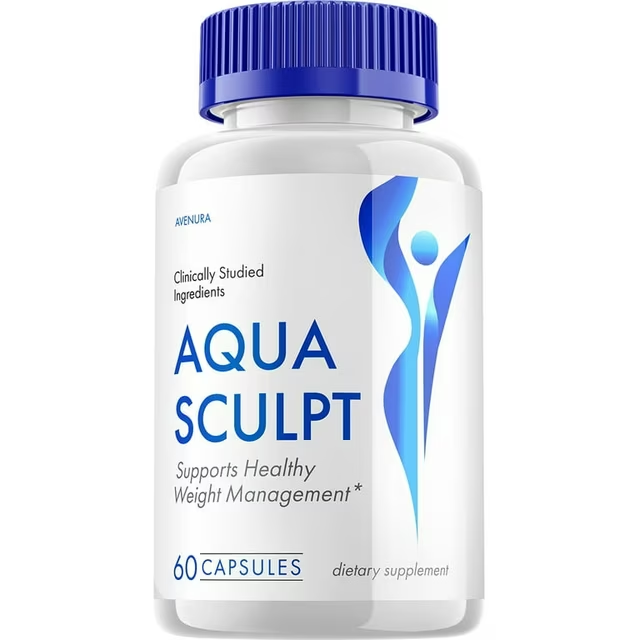
AquaSculpt
AquaSculpt combines cold-induced thermogenesis with a 14-ingredient metabolic support formula. The concept: drink ice co...
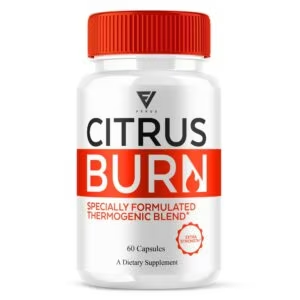
CitrusBurn
CitrusBurn targets what the manufacturer calls 'thermogenic resistance' — the gradual metabolic slowdown that many women...
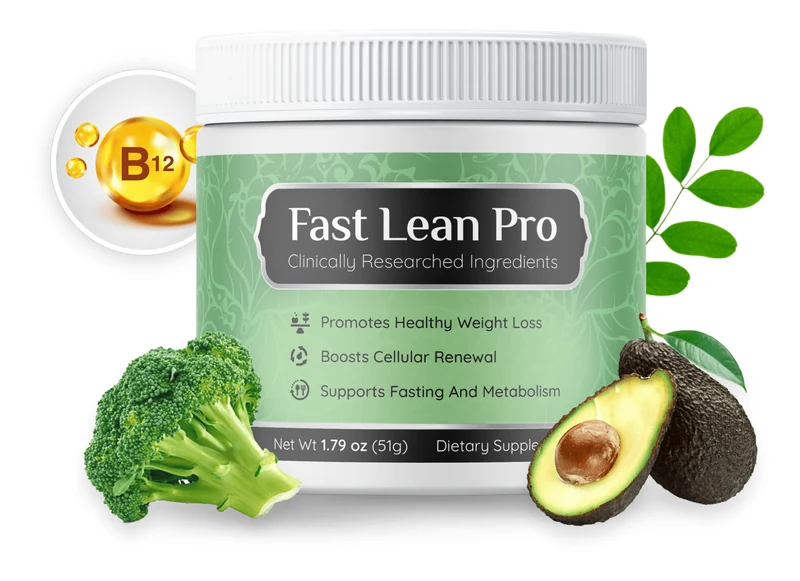
Fast Lean Pro
Fast Lean Pro is a once-a-day, 1.7 g scoop of powder sold as a 'fasting switch' that supposedly tricks your body into th...
Why we recommend Smoothie Diet: Superior weight loss targeting, clinically proven ingredients, and better value for money with money-back guarantee.
Smoothie Diet vs Competitors
Detailed comparison of Smoothie Diet against top weight loss competitors in the market:
| Feature | Smoothie Diet | AquaSculpt | CitrusBurn |
|---|---|---|---|
| Price | From $27 | From $49 | From $49 |
| Money-Back Guarantee | 90 days | 60-day money-back guarantee | 180-day money-back guarantee |
| User Rating | 4/5 | 4.1/5 | 4.2/5 |
| Key Benefits | Weight Loss: Users who follow the plan closely report 5-10 lbs of weight loss over 21 days, More Produce: The program gets significantly more fruits and vegetables into your diet than most people normally eat | Steady Weight Loss: Most users report 8-13 lbs over 60-90 days with consistent use, Sustained Energy: Clean, steady energy without jitters or crashes | Gradual Weight Loss: Most users report 8-14 lbs over 90 days when combined with improved eating habits, Sustained Energy: Steady energy through the day without the jitters or crashes associated with caffeine-heavy formulas |
| Third-Party Testing | ✓ Yes | ✓ Yes | ✓ Yes |
Winner: Smoothie Diet
Smoothie Diet stands out with superior weight loss support, longer money-back guarantee, and proven ingredients that specifically target weight loss health.
Lead Science Editor
Sarah leads the editorial review process at The Health News, making sure every piece of content meets rigorous evidence-based standards.
FAQ
Where can I buy Smoothie Diet?
Smoothie Diet is sold only through the official website (the link on this page). It is not stocked on Amazon, Walmart, GNC or in pharmacies, and third-party listings are usually expired stock or counterfeits that are not covered by the 90-day money-back guarantee.
How much does Smoothie Diet cost?
The official site sells single bottles at $47 and drops the per-bottle price to about $27 on the three- and six-bottle bundles. Every order is covered by the 90-day money-back guarantee, so the larger bundles carry the same risk as a single bottle.
Is Smoothie Diet legit or a scam?
Smoothie Diet is a real product with a working refund policy: the 90-day money-back guarantee is honored through the payment processor, not the seller. The scam risk comes from fake listings and coupon sites, which is why we only link to the official checkout. Results vary and nothing here is a cure, which is covered in the review above.
Is there a Smoothie Diet discount or coupon code?
There is no coupon-code field at checkout. The discount is built into the multi-bottle bundles on the official site, which also carry free US shipping when the promotion is active. Coupon codes advertised on third-party sites do not work.
How is The Smoothie Diet different from other weight loss programs?
It's a structured meal replacement plan using whole-food smoothies rather than supplements or pills. You get a day-by-day schedule, shopping lists, and recipes. The main difference from supplement-based products is that you're eating real food. The main difference from other diet plans is the simplicity — blending is easier than cooking complex meals.
Will I be hungry on The Smoothie Diet?
Some people are, especially in the first week. The smoothies contain fiber and protein which help, and the program includes solid meals too. But liquid meals don't always satisfy the way solid food does, and some users do report hunger, particularly in the afternoon.
How much weight can I expect to lose in 21 days?
Users who follow the program closely typically report 5-10 pounds of weight loss over the 21 days. Some of this is water weight, especially in the first week. Results vary based on starting weight, how strictly you follow the plan, and your activity level.
Do I need expensive ingredients or equipment?
You need a decent blender — a low-powered one will leave chunks and make the experience worse. As for ingredients, most are common grocery items, but fresh fruits and vegetables do cost more than processed food. Some users find their grocery bill increases during the program. Buying frozen produce can help with costs.
Is The Smoothie Diet sustainable long-term?
The program is designed as a 21-day reset, not a permanent eating plan. Most people can't and shouldn't replace meals with smoothies indefinitely. The real question is what habits you carry forward afterward. Some users keep a few recipes in their rotation, which is probably the healthiest approach.
What if The Smoothie Diet doesn't work for me?
The program comes with a money-back guarantee, so you can try it with limited financial risk. If you don't see results, you can request a refund.
Will I gain the weight back after the 21 days?
This is the biggest challenge with any meal replacement program. If you go back to your previous eating habits, weight regain is likely. The users who maintain their results are the ones who use the 21 days as a starting point for broader dietary changes, not as a one-time fix.
Is The Smoothie Diet FDA approved?
The Smoothie Diet is a digital meal plan program, not a supplement or drug, so FDA approval does not apply. It consists of smoothie recipes using whole fruits, vegetables, and protein sources that are all common grocery items.
What are the main ingredients in The Smoothie Diet recipes?
The recipes use whole fruits (berries, bananas, mangoes), leafy greens (spinach, kale), protein sources (protein powder, Greek yogurt, nut butters), and healthy fats (avocado, coconut oil, flaxseed). Each recipe is designed to provide balanced nutrition while maintaining a calorie deficit.
Does The Smoothie Diet have side effects?
Some users experience bloating or digestive changes in the first few days as their body adjusts to the increased fiber intake. Hunger is common, especially in the first week. If you have diabetes or blood sugar issues, consult your doctor before starting any meal replacement program.
Get science-backed weight loss tips
Join thousands getting honest supplement reviews and practical weight loss advice.
No spam. Unsubscribe anytime.
Compare Smoothie Diet With:
Related Articles

Does CitrusBurn Work? What the Research Says About Its Ingredients (2026)
9 min read

Does Nagano Lean Body Tonic Work? The Evidence Behind Its Ingredients (2026)
9 min read

Is Okinawa Flat Belly Tonic a Scam? What We Found After 90 Days
10 min read

How to Spot Fake Supplement Reviews: A Consumer's Guide
12 min read