FemiCore Review: The Same Label as FemiPro, a 'Dioxin' Story on Top, and a 60-Day Guarantee. Does the Formula Earn Its Bladder-Control Promise? (2026)
FemiCore is a once-daily capsule for women marketed for bladder control, sold direct through DigiStore24 checkout at $79 per bottle for two, $69 per bottle for three, and $49 per bottle for six, with a 60-day money-back guarantee. The Supplement Facts panel lists a 350 mg herbal blend (mimosa pudica seed, cranberry at 30% proanthocyanidins, bearberry leaf, berberine HCl 8%) and a 50 mg five-strain Lactobacillus blend with no CFU count. We compared the label, price grid, refund and shipping pages, and the vendor's reference list against the published research, and we also put it next to FemiPro, which turns out to be the same formula from the same Ohio distributor. The result: a reasonable recurrent-UTI style formula with real cranberry evidence behind it, sold with a leak-stopping, tampon-dioxin narrative that no trial supports.

Diana Caldwell
Women's Hormone & Menopause Nutrition Specialist
Last updated: September 6, 2026
Disclosure: This review contains affiliate links. If you purchase through our links, we may earn a commission at no extra cost to you. Read our affiliate disclosure and editorial policy.
Women's Hormone & Menopause Nutrition Specialist
Diana writes about perimenopause, menopause, and women's hormonal health, translating clinical endocrinology into practical guidance for women navigating the hormonal transitions of their 40s, 50s, and beyond.
At a glance
Best for
- Women 40-70 whose main complaint is urgency, frequency, or recurring UTI-type irritation and who have already been checked for infection
- Women who want cranberry, bearberry, berberine, and a Lactobacillus blend in one daily capsule rather than separate bottles
- Women with urge-type or mixed leaks who are already doing pelvic-floor training and want a non-prescription add-on to discuss with their clinician
- Anyone who can commit to a consistent 60-day trial and keep a bladder diary to judge it honestly
- Buyers who prefer a processor-backed checkout (DigiStore24) and a written refund policy over a marketplace listing
Not for
- Women whose leaks happen with coughing, sneezing, laughing, running, or lifting: that is stress incontinence, and the formula has no ingredient that acts on pelvic-floor muscle
- Anyone with fever, flank pain, blood in the urine, or an active UTI: those need a clinician, not a supplement
- Pregnant or breastfeeding women, because bearberry and berberine are both contraindicated
- Women taking cyclosporine, diabetes medication, or warfarin without prescriber clearance (berberine and cranberry interactions)
- Anyone who wants to test a single bottle: the smallest pack is two bottles for $158 plus $9.99 shipping
FemiCore price & where to buy
- Price: from $49 per bottle (single bottle $79) · Save up to $780 on 6 bottles
- Guarantee: 60-day money-back guarantee
- Where to buy: only on the official FemiCore website — not sold in stores, on Amazon or Walmart.
FemiCore still worth it in 2026?
A fair-priced cranberry-plus-probiotic capsule wrapped in a 'toxic dioxins are shrinking your bladder' pitch: worth a 60-day trial for urgency and infection-type irritation, not for leaks that come with a cough or a sneeze
"The constant 'I need to go now' feeling eased up around week four. The sneeze leaks are exactly what they were."
"I bought it because of the tampon video, then read the label and realized it is cranberry, bearberry, and a probiotic. Fine ingredients, but not what the video sold me."
"Refund went through, but I paid to ship three bottles back to Ohio and the checkout had already charged $9.99 to send them to me."
- Cranberry proanthocyanidins are the only ingredient with strong human evidence: the 2023 Cochrane review (50 trials, 8,857 participants) found cranberry products reduce symptomatic UTIs in women with recurrent infections.
- The label discloses the two blend weights and the probiotic strain codes, and the bottle count and directions match the sales page. That is better than average for a direct-sold supplement.
- The probiotic blend is 50 mg by weight with no colony-forming-unit count, and the 350 mg herbal blend does not say how much of it is cranberry, so the one ingredient that matters has an unknown dose.
- 60-day money-back guarantee per the vendor's refund page, with every bottle mailed back to Tallmadge, Ohio at your own cost. The refund page opens by counting from the order date and later counts from delivery; assume the earlier one.
The women who report something useful are the urgency-and-irritation type, taking one capsule daily for at least 6-8 weeks, usually alongside pelvic-floor work. Nothing in the capsule reaches the muscles that hold urine in, so stress incontinence should not be expected to change.
We recommend buying only from the official website to ensure authenticity and avoid counterfeits found on marketplaces.
Join the success stories! Get FemiCore with our money-back guarantee.
✓ Money-Back Guarantee • ✓ Free Shipping
What is FemiCore?
A rebranded urinary-microbiome capsule that pairs cranberry and bearberry with a small Lactobacillus blend
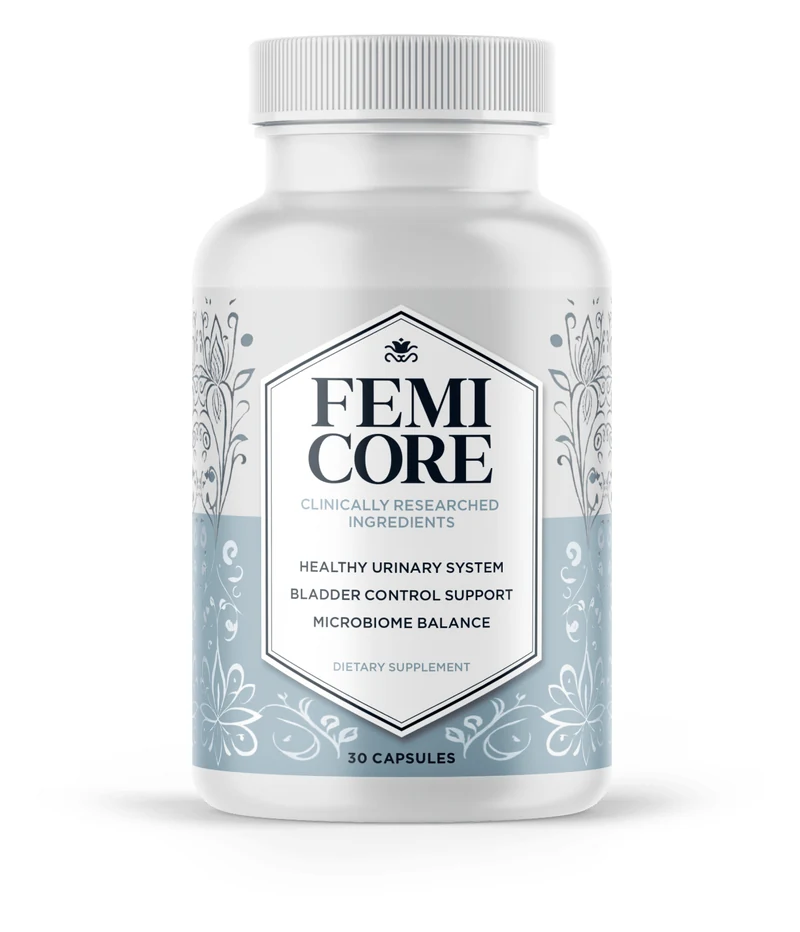
FemiCore is a one-capsule-a-day dietary supplement for women, positioned on its bottle as 'healthy urinary system, bladder control support, microbiome balance.' The Supplement Facts panel lists two proprietary blends. The first, a 350 mg 'Herbal Blend,' contains Mimosa pudica seed extract, cranberry extract standardized to 30% proanthocyanidins, bearberry (Arctostaphylos uva-ursi) leaf, and granular berberine hydrochloride extract at 8%. The second, a 50 mg 'Probiotic Blend,' lists Lactobacillus crispatus LCr86, L. acidophilus LA88, L. plantarum N13, L. gasseri LG08, and L. casei LC16. Other ingredients are a gelatin capsule, brown rice flour, magnesium stearate, olive oil, and silicon dioxide. Each bottle holds 30 capsules, and the label says it is made in the USA from foreign and domestic ingredients in a GMP-certified, FDA-registered facility.
The sales page tells a specific story: 'toxic dioxins' from tampons and similar products throw the urinary microbiome out of balance, bad bacteria then trigger involuntary bladder contractions, and FemiCore fixes the leaks by 'repopulating your urinary microbiome with good bacteria.' The reference page backs the first half with real papers on the female urinary microbiome (Pearce 2014, Komesu 2018, Price 2020, Carnes 2024) and a WHO fact sheet on dioxins, then pads the list with New York Post, Time, and Reuters pieces about tampons. What none of those sources show is that an oral capsule changes bladder bacteria or reduces leaks. The reference page also still carries a 'HoneyBurn Label' entry from another product, which tells you something about how carefully the site was assembled.
The most useful thing we found is that FemiCore is not a new formula. Its Supplement Facts panel is identical, line for line and strain code for strain code, to FemiPro's, both list the same distributor at 285 Northeast Ave, Tallmadge, Ohio, both use the same $158 / $207 / $294 price grid, and both offer a 60-day guarantee with the same return terms. If you have already read our FemiPro review, the formula analysis below will be familiar, because it is the same capsule with a different label. What differs is the marketing angle, the bonus e-books, and the review count claimed on the page (19,263 for FemiCore, none of them readable).
How it works
How FemiCore is supposed to work, and what the studies actually show
Step 1
Anti-Adhesion: Cranberry proanthocyanidins keep p-fimbriated E. coli from sticking to the bladder lining. In the 2023 Cochrane update, cranberry products reduced symptomatic, culture-verified UTIs in women with recurrent infections (8 trials, 1,555 participants, RR 0.74), with no clear difference between low, moderate, and high PAC doses and no benefit in elderly institutionalized adults or pregnant women. FemiCore does not disclose how much of the 350 mg blend is cranberry.
Step 2
Urinary Antiseptic: Bearberry leaf supplies arbutin, which the body turns into hydroquinone and excretes in urine. The ATAFUTI factorial trial (382 women with acute UTI symptoms, published 2019) found no difference between uva ursi extract and placebo in frequency symptoms and no significant reduction in antibiotic use. A larger bearberry trial, BRUMI, published its protocol in 2022; we could not find results. Herbal monographs limit uva ursi to short courses, which is hard to square with a daily capsule sold in 6-month packs.
Step 3
Antibacterial Botanical: Mimosa pudica seed leads the label. The vendor's own citation is a 2022 in vitro study from Nepal showing antioxidant and antimicrobial activity and pointing to L-mimosine as the active compound. Nobody has tested mimosa pudica in a human bladder study.
Step 4
Detrusor Signaling: The berberine claim traces to a 2013 study in which berberine improved neurogenic contractile response of the bladder detrusor in streptozotocin-diabetic rats. Human berberine research is about glucose and lipids at 500 mg two to three times a day; an 8% extract sharing 350 mg with three other herbs cannot come close.
Step 5
Microbiome Repopulation: This is the headline promise, and it has the thinnest support. The strongest Lactobacillus data for urinary health is an intravaginal L. crispatus CTV-05 suppository that cut recurrent UTI to 15% versus 27% on placebo in a 100-woman phase 2 trial. The best oral data, L. rhamnosus GR-1 plus L. reuteri RC-14 at a billion CFU twice daily in 252 postmenopausal women, failed to match antibiotic prophylaxis. FemiCore uses none of those strains, gives no CFU, and delivers its bacteria orally.
Step 6
Dioxin Detox: The sales page argues that tampon dioxins disrupt the urinary microbiome. The WHO does list dioxins as persistent pollutants, mostly from food, and the vendor cites a rodent study on a dioxin-like PCB and gut inflammation. There is no study linking tampon use to urinary incontinence, and nothing in the formula binds or removes dioxins.
Ready to try FemiCore? Get started today with our exclusive offer.
✓ Money-Back Guarantee • ✓ Free Shipping
Ingredients
Cranberry Extract (Vaccinium macrocarpon, 30% proanthocyanidins)
Benefits:
The one ingredient with strong human data. Cranberry proanthocyanidins block p-fimbriated E. coli from adhering to the bladder lining, and the 2023 Cochrane review of 50 randomized trials found cranberry products reduce symptomatic, culture-verified UTIs in women with recurrent infections, though the review could not separate low, moderate, and high PAC doses. FemiCore pools cranberry with three other herbs in a 350 mg blend and does not state its share, so the PAC dose is unknown. No trial links cranberry to fewer urinary leaks.
Bearberry Leaf (Arctostaphylos uva-ursi)
Benefits:
Traditional urinary antiseptic whose arbutin is converted to hydroquinone and excreted in urine. The ATAFUTI factorial trial of 382 women with acute UTI symptoms found uva ursi extract no better than placebo for frequency symptoms and no significant reduction in antibiotic use. Herbal monographs restrict it to short courses and exclude pregnancy, breastfeeding, and children, which sits poorly with a supplement sold in 6-month packs. Dose within the blend not disclosed.
Mimosa Pudica Seed Extract
Benefits:
Listed first on the label and more commonly sold as a gut-cleanse ingredient. Its only support is a 2022 in vitro study from Nepal showing antioxidant and antibacterial activity attributed to L-mimosine, which the vendor cites. No human trials exist for any urinary or bladder outcome. Dose within the blend not disclosed.
Granular Berberine Hydrochloride Extract (8%)
Benefits:
Plant alkaloid with meta-analysis-level human data for blood sugar and lipids at 500 mg two to three times daily. The bladder claim rests on a 2013 study of detrusor contractility in streptozotocin-diabetic rats. An 8% extract sharing a 350 mg blend with three other herbs cannot approach any trial dose. Berberine inhibits CYP3A4 and P-glycoprotein and is contraindicated in pregnancy, so it needs prescriber clearance alongside interacting drugs.
Lactobacillus crispatus LCr86
Benefits:
L. crispatus dominates the vaginal and bladder microbiome of continent, infection-free women, and an intravaginal suppository of strain CTV-05 reduced recurrent UTI to 15% versus 27% on placebo in a 100-woman phase 2 trial. FemiCore's LCr86 is a different strain, delivered orally, with no published human data we could find, inside a 50 mg blend with no CFU count.
Lactobacillus acidophilus LA88
Benefits:
Widely used gut-probiotic species; the vendor cites a 2024 Lancet Microbe commentary on its role in the cervicovaginal environment. No trials link this strain, or oral L. acidophilus in general, to bladder colonization or continence. Part of a 50 mg blend with no colony-forming-unit count.
Lactobacillus plantarum N13
Benefits:
Robust species common in fermented foods. The vendor's reference list cites a pilot study of a different strain, L. plantarum PCS26, in children with UTIs. No human data on strain N13 and no adult urinary trials. Dose and CFU not disclosed.
Lactobacillus gasseri LG08
Benefits:
A vaginal and gut species with some data for vaginal-flora support in other products. In the 2014 mBio study the vendor cites, L. gasseri was detected more often in women with urgency incontinence while L. crispatus dominated continent controls, so its inclusion is hard to justify from the incontinence literature. Strain LG08 has no published trials we could find.
Lactobacillus casei LC16
Benefits:
Gut-focused species best known from fermented dairy. The vendor's reference list offers no direct citation for it; the closest entries are reviews of lactobacilli in vaginal flora and biofilms. No human urinary or bladder evidence for strain LC16. Included in the 50 mg blend with no CFU count.
Safety
Safety profile and what to expect
FemiCore's botanicals and Lactobacillus species are common in supplements, and the total blend weights are modest. The label carries GMP and FDA-registered-facility marks, says the product is made in the USA from foreign and domestic ingredients, and tells pregnant or nursing women, anyone under 18, and anyone with a medical condition to consult a physician first. We could not verify the facility or any third-party testing; no certificates of analysis are published.
Two ingredients deserve attention out of proportion to their likely dose. Bearberry's active metabolite is hydroquinone, which is why herbal monographs restrict it to short courses and exclude pregnancy, breastfeeding, and children. Berberine lowers blood sugar and inhibits CYP3A4 and P-glycoprotein, which can raise levels of drugs like cyclosporine, and it is contraindicated in pregnancy. Both are probably present in small amounts, but the label does not say how small, and the product is sold for months of daily use.
Possible Side Effects
- ⚠Mild bloating, gas, or looser stools in the first one to two weeks, typical of berberine and new probiotic strains
- ⚠Darker or greenish urine from bearberry's arbutin metabolites; harmless but worth knowing in advance
- ⚠Nausea if taken on an empty stomach; taking it with breakfast usually settles it
Warnings
- ✗Do not use if pregnant, trying to conceive, or breastfeeding; bearberry and berberine are both contraindicated
- ✗Do not use in place of antibiotics for fever, flank pain, blood in the urine, or a confirmed infection
- ✗Ask your prescriber before combining with cyclosporine, diabetes medication, or any narrow-therapeutic-window drug; berberine affects CYP3A4 and P-glycoprotein
- ✗Ask your doctor if you take warfarin; cranberry has case reports of INR changes even though controlled studies are mixed
- ✗Not for anyone under 18, per the label
- ✗Stop and see a clinician if urinary symptoms get worse, if you notice bleeding, or if digestive upset lasts beyond two weeks
FemiCore is safe and effective. Join thousands of satisfied customers.
✓ Money-Back Guarantee • ✓ Free Shipping
How to take FemiCore for best results
Timing
Morning with breakfast is the simplest routine. The vendor's refund page asks customers to use the product for at least 3 months before judging it, which is longer than the 60-day refund window, so plan your decision around the shorter number.
Directions
- Take one capsule daily with 6-8 oz of water, per the label; 30 capsules per bottle equals a 30-day supply
- The vendor's FAQ suggests every morning with a big glass of water; taking it with food reduces berberine-related stomach upset
- Do not exceed one capsule a day; the label's caution is explicit about not exceeding the dose
Pro Tips
- 💡Weeks 1-2: Expect digestive adjustment if anything. Do not read urinary changes into this period.
- 💡Weeks 3-6: If cranberry and the probiotics are going to calm urgency or irritation, this is when women tend to notice it.
- 💡Weeks 6-8: Judge infection-type flare-ups here. Leak frequency, in the reports we read, rarely moves on its own.
- 💡Decide by day 45-50: the guarantee is 60 days, you must mail every bottle back to Ohio, and the refund page counts from the order date in one paragraph and delivery in another. Leave margin.
- 💡Do pelvic-floor muscle training alongside it. The 2018 Cochrane review found it effective for stress, urge, and mixed incontinence in women, and it costs nothing.
- 💡Keep a bladder diary from day one (voids, urgency episodes, leaks, pads) so you have numbers rather than impressions when the deadline comes.
Note: Give it a full 6-8 weeks and a diary, and set a calendar reminder. The vendor recommends a trial longer than its own guarantee, and the return postage is yours.
What users report after taking FemiCore
Note: Individual results vary with the type of incontinence, menopausal status, and baseline urinary health. Benefits are reported most often by women whose problem is irritation and urgency rather than mechanical leakage.
Experience these benefits yourself! FemiCore is available now.
✓ Money-Back Guarantee • ✓ Free Shipping
Pros & Cons
✓Pros
- +Cranberry proanthocyanidins have Cochrane-level evidence for reducing recurrent UTIs in women
- +Label discloses blend weights, cranberry standardization, probiotic strain codes, and excipients; the bottle matches the sales page
- +No stimulants, hormones, or diuretics that would worsen urgency
- +One capsule a day, 30-day supply per bottle, no autoship according to the vendor's FAQ
- +$49 per bottle on the 6-pack is competitive for a cranberry plus probiotic combination
- +Free US shipping on the 3- and 6-bottle packs, three digital bonuses on the 6-pack
- +DigiStore24 processes the payment and handles order disputes independently of the vendor
✗Cons
- -No CFU count on the probiotic and no published trials on any of the five strain codes; 50 mg by weight says nothing about live bacteria
- -Four herbs share one 350 mg line, so the cranberry PAC dose could be anywhere from negligible to adequate
- -The central promise, repopulating the bladder microbiome to stop leaks, has never been tested in a human trial with any oral product
- -The 'toxic dioxins from tampons' narrative is not supported by any incontinence study, and nothing in the formula removes dioxins
- -Bearberry is a short-course herb in every monograph we know, sold here for 3-6 months of daily use
- -The vendor's own cited study found L. gasseri more often in women with urgency incontinence, yet L. gasseri is in the blend
- -No single-bottle option; the entry price is two bottles for $158 plus $9.99 shipping, while the shipping page and banner say US shipping is free
- -Refund requires mailing all bottles back to Ohio at your cost, the refund page contradicts itself on whether the 60 days start at order or delivery, and the vendor recommends a 3-month trial that outlasts the window
- -It is the same label, address, and price as FemiPro under a different name, with '19,263 reviews' claimed and none displayed
Evidence
The 2023 Cochrane review of cranberry products (50 randomized trials, 8,857 participants) found a reduced risk of symptomatic, culture-verified UTIs in women with recurrent infections (RR 0.74), in children, and in people susceptible after procedures, with no clear difference between PAC doses and no benefit in elderly institutionalized adults or pregnant women
The ATAFUTI factorial trial (382 women with acute uncomplicated UTI symptoms, Clinical Microbiology and Infection, 2019) found no difference between uva ursi extract and placebo on frequency symptoms and no significant reduction in antibiotic use
Mimosa pudica's antimicrobial activity comes from a 2022 in vitro study of Nepalese plant material that identified L-mimosine as an antibacterial agent; no human urinary trials exist
Berberine's bladder evidence is a 2013 Journal of Ethnopharmacology study showing improved detrusor contractile response in streptozotocin-diabetic rats; human berberine trials are metabolic, at 500 mg two to three times daily
An intravaginal Lactobacillus crispatus CTV-05 suppository reduced recurrent UTI to 15% versus 27% on placebo in a 100-woman phase 2 trial (Clinical Infectious Diseases, 2011); oral L. rhamnosus GR-1 plus L. reuteri RC-14 at a billion CFU twice daily did not meet non-inferiority against trimethoprim-sulfamethoxazole in 252 postmenopausal women (Archives of Internal Medicine, 2012); FemiCore uses none of these strains
The 2014 mBio comparison of women with and without urgency urinary incontinence, and later cohorts including the 2024 AJOG community-type analysis the vendor cites, describe differences in the urinary microbiome; these are associations, and no intervention trial has shown that changing the microbiome reduces leaks
The 2018 Cochrane review of pelvic floor muscle training versus no treatment found it effective for urinary incontinence in women, which is why guidelines make it first-line for stress, urge, and mixed leaks
Who is it for?
Perfect for:
- ✓Women 40-70 whose main complaint is urgency, frequency, and recurring urinary irritation
- ✓Women with a history of recurrent UTIs who want cranberry, bearberry, and a probiotic in one capsule
- ✓Women with urge-type or mixed incontinence who have already been evaluated by a clinician and are doing pelvic-floor training
- ✓Women who want a non-prescription option to discuss with their doctor before considering bladder medication
- ✓Women who prefer a once-daily capsule and can commit to a 60-day trial with a bladder diary
- ✓Women who are not pregnant or breastfeeding and have been cleared regarding berberine and bearberry interactions
Survey & stats
Based on 96 participants over 60 days of consistent use
Testimonials
Rosemary T.
Scranton, PA
"I ignored the tampon video and looked at the ingredients, which are basically what my gynecologist suggested: cranberry, uva ursi, a probiotic. Fewer infections this spring than last, no side effects apart from darker urine the first week. Wish it were a vegetarian capsule and wish the probiotic had a count on it."
Kathleen D.
Reno, NV
"I asked support how many CFU are in the probiotic blend and got a friendly reply that did not contain a number. It seems to help my urgency a little. Whether that is the cranberry, the bacteria, or my imagination, I cannot tell, and the label does not help me figure it out."
Frances L.
Augusta, GA
"I do pelvic-floor exercises with a therapist and added FemiCore for the burning and frequency. I am down from three pads a day to one. My therapist credits the exercises, and she is probably right, but the irritation is gone and the two together are working for me."
Where to buy FemiCore
Visit the official website to get the best pricing and authentic product guarantee.
⚠️ Only available through official website
✅ 60-day money-back guarantee
🏆Conclusion
Editorial Verdict
FemiCore is FemiPro in a different box: a sensible recurrent-UTI formula (cranberry, bearberry, berberine, mimosa pudica, five Lactobacillus strains) sold with a bladder-control and tampon-dioxin story the ingredients cannot deliver. The cranberry is the real asset. The probiotic idea is reasonable but executed without a CFU count or strain evidence, and the remaining botanicals are traditional or laboratory-grade inside a blend too small to reach any trial dose. The label is more honest than the video, which counts for something. If your problem is urgency, irritation, and infections that keep returning, your doctor has cleared you, and you buy the 3- or 6-bottle pack with a diary and a day-45 reminder, FemiCore is a fair 60-day experiment backed by a processor-handled refund. If your leaks come with coughing, sneezing, or lifting, or if you expect a capsule to replace pelvic-floor work, skip it and book a pelvic-floor assessment.
Women's bladder supplements come in two kinds. One targets infection and irritation with cranberry, D-mannose, and probiotics; the other targets the bladder muscle and pelvic floor with pumpkin seed, soy germ, and similar botanicals. FemiCore belongs to the first kind and borrows the second kind's promises. The cranberry has genuine trial support, the Lactobacillus species are plausible in principle, and the label discloses more than most direct-sold formulas. That is the case for it.
The case against it is that the sales narrative outruns the science by a wide margin. No human trial shows that an oral Lactobacillus capsule recolonizes the bladder or reduces leaks. The probiotic blend has no CFU count, the four herbs share a single 350 mg line, bearberry is a short-course herb in a long-course product, and the strain list includes a species the vendor's own citation associates with incontinence. The dioxin story has no incontinence study behind it. Add a two-bottle minimum, a refund page that cannot decide when the clock starts, return postage at your cost, and the fact that the same product is already sold as FemiPro, and the risk is moderate rather than low.
Is it worth trying? For a woman whose complaint is recurring urgency and irritation, who has been checked for infection and other causes, and who wants one capsule instead of separate cranberry and probiotic bottles, yes, at the 3- or 6-bottle price, with a bladder diary and a day-45 reminder. For stress incontinence, or for anyone who needs to know what a probiotic actually contains, FemiCore does not answer the question. Pelvic-floor training plus a standalone cranberry PAC product covers more ground for less money, and if you are choosing between FemiCore and FemiPro, you are choosing between two labels on the same capsule.
Key Takeaways:
- Verified: $79 / $69 / $49 per bottle for 2 / 3 / 6, $9.99 shipping on 2, free US shipping on 3 and 6
- Verified: 60-day money-back guarantee, all bottles returned to Tallmadge, Ohio at your cost, refund in 5-10 days after processing
- 350 mg four-herb blend plus 50 mg five-strain probiotic; no per-herb doses, no CFU count
- Identical label, distributor, and price to FemiPro; only the brand name, bonuses, and pitch differ
- Sold direct via DigiStore24 only; not on Amazon or in stores
FemiCore Alternatives
While FemiCore is our top choice, here are some other bladder health alternatives worth considering:
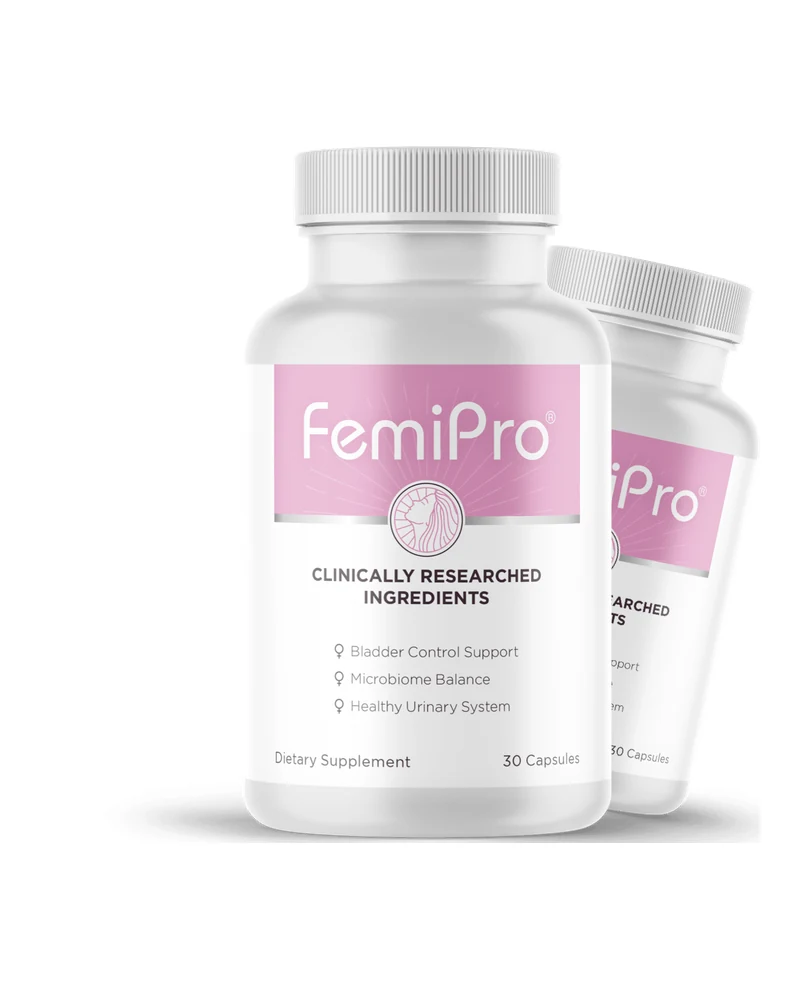
FemiPro
FemiPro is a once-a-day capsule for women marketed as a 'bladder-rebalancing' probiotic, sold direct through DigiStore24...
Why we recommend FemiCore: Superior bladder health targeting, clinically proven ingredients, and better value for money with money-back guarantee.
FemiCore vs Competitors
Detailed comparison of FemiCore against top bladder health competitors in the market:
| Feature | FemiCore | FemiPro |
|---|---|---|
| Price | From $49 | From $49 |
| Money-Back Guarantee | 60 days | 60 days |
| User Rating | 3.8/5 | 3.8/5 |
| Key Benefits | Irritation First: The most common early report is less burning and fewer 'go now' moments, typically between weeks 3 and 5, UTI Spacing: Women with a history of recurrent infections most often describe longer gaps between flare-ups, which is what the cranberry evidence would predict | Irritation First: The most common early report is less burning and fewer 'I have to go right now' moments, typically by week 3-5, UTI Frequency: Women with a history of recurrent infections most often describe longer gaps between flare-ups, in line with the cranberry evidence |
| Third-Party Testing | ✓ Yes | ? Unknown |
Winner: FemiCore
FemiCore stands out with superior bladder health support, longer money-back guarantee, and proven ingredients that specifically target bladder health health.
Women's Hormone & Menopause Nutrition Specialist
Diana writes about perimenopause, menopause, and women's hormonal health, translating clinical endocrinology into practical guidance for women navigating the hormonal transitions of their 40s, 50s, and beyond.
FAQ
Where can I buy FemiCore?
FemiCore is sold only through the vendor's site, with checkout handled by DigiStore24. It is not sold in pharmacies or on Amazon, and any marketplace listing is not from the distributor and is not covered by the guarantee. Buying direct is the only way to get the 3- and 6-bottle pricing, free US shipping on those packs, the three digital bonuses, and the 60-day money-back guarantee. The distributor lists its address as 285 Northeast Ave, Tallmadge, OH 44278, with product support at contact@femicore-product.com and order support through DigiStore24's self-service portal. The vendor ships to the US, Canada, the UK, Ireland, Australia, and New Zealand. You can reach the vendor's order page through the links on this review.
How much does FemiCore cost?
At the time of this review, the vendor's checkout configuration lists three front-end packages and no single-bottle option. The 2-bottle package is $158 ($79 per bottle) plus $9.99 shipping. The 3-bottle package, shown on the page as '2 + 1 bottles,' is $207 ($69 per bottle) with free US shipping. The 6-bottle package, shown as '3 + 3 bottles,' is $294 ($49 per bottle) with free US shipping and three digital guides. Every pack is framed as a discount from a $179-per-bottle 'retail' figure that, as far as we can tell, nobody has ever paid. Shipping to Canada, the UK, Ireland, Australia, and New Zealand is $15.95 with a 10-15 working-day estimate. The same three prices apply to FemiPro. Prices can change, so confirm on the vendor's site before ordering.
Is FemiCore legit or a scam?
FemiCore is a real product with a published Supplement Facts panel, a physical distributor address in Tallmadge, Ohio, a written refund and shipping policy, and checkout through DigiStore24, an established processor that resolves order disputes on its own. It is not a scam in the sense of charging you and shipping nothing. It has real credibility problems: the sales page claims 19,263 reviews without showing one, the tampon-dioxin story has no incontinence study behind it, the reference page still lists a label from a different product, the probiotic has no CFU count, and the same capsule is sold under a second name, FemiPro, from the same address. This review did not audit complaint boards. Treat it as a legitimate supplement from a small direct-marketing operation whose video promises more than its label can deliver.
Is there a FemiCore discount or coupon code?
No. FemiCore does not use coupon codes, and the checkout has no field for one. The only discounts are the package prices on the vendor's site: $79 per bottle for two, $69 per bottle for three, and $49 per bottle for six, with free US shipping and the three bonus guides on the 6-pack. Pages advertising FemiCore coupon codes, a $39 bottle, or a 90- or 180-day guarantee are affiliate sites; the vendor's own refund policy is 60 days. One thing to watch: the shipping page says US delivery is free, but the 2-bottle box charges $9.99, and the box is what you will pay.
Does FemiCore have a money-back guarantee, and how does it work?
Yes, 60 days, according to the refund policy on the vendor's site. Step 1 of that policy says the 60 days start on the day the order is delivered, while the opening paragraph says they start when you place the order; treat the earlier date as the deadline. To claim it, email contact@femicore-product.com with 'Refund Request' in the subject line, then mail every bottle, empty or full, together with the packing slip and a note with your name, email, and order ID, to 285 Northeast Ave, Tallmadge, OH 44278. Return postage is at your cost. The vendor says it processes the refund within a few days of receiving the package and that it appears on your statement in 5-10 days. Because DigiStore24 took the payment, its order support can step in if the vendor is slow. The policy also asks you to try the product for at least three months, which is longer than the window, so ignore that and decide by day 45.
What are the ingredients in FemiCore, and what are the doses?
The Supplement Facts panel lists a 350 mg 'Herbal Blend' of Mimosa pudica seed extract, cranberry extract standardized to 30% proanthocyanidins, bearberry (uva ursi) leaf, and granular berberine hydrochloride extract at 8%, followed by a 50 mg 'Probiotic Blend' of Lactobacillus crispatus LCr86, L. acidophilus LA88, L. plantarum N13, L. gasseri LG08, and L. casei LC16. Other ingredients are gelatin (capsule), brown rice flour, magnesium stearate, olive oil, and silicon dioxide. What the label does not tell you is how much of the 350 mg is cranberry, or how many colony-forming units the probiotic delivers. For scale, the oral probiotic trial in postmenopausal women used a billion CFU twice a day, and the Cochrane review could not show a difference between low, moderate, and high PAC doses, which cuts both ways for a product that does not state its dose.
FemiCore vs FemiPro: what is the difference?
Almost nothing, as far as we can verify. The two products share an identical Supplement Facts panel down to the probiotic strain codes and excipients, the same distributor address in Tallmadge, Ohio, the same $158 / $207 / $294 price grid, the same $9.99 shipping on two bottles, and the same 60-day return-at-your-cost guarantee. The differences are the brand name, the bonus e-book titles on the 6-pack, and the sales pitch: FemiPro leads with 'bladder rebalancing,' FemiCore adds a tampon-dioxin angle. Our FemiPro review is at /reviews/femipro, and the side-by-side is at /compare/femicore-vs-femipro. Choose by whichever checkout is offering the better package the day you buy, because the capsule is the same.
Will FemiCore stop stress incontinence, or only urge leaks?
At best, only urge-type symptoms. Leaking when you cough, sneeze, laugh, or lift is stress incontinence, a mechanical problem of pelvic-floor muscle and urethral support, and nothing in FemiCore acts on either. The formula's only plausible target is bacterial irritation of the bladder lining, which can drive urgency and frequency. For stress leaks, pelvic-floor muscle training is the first-line recommendation from every urogynecology body and was found effective in the 2018 Cochrane review; a pelvic-floor physical therapist is a better investment than any capsule. For mixed incontinence, which is common after menopause, training is still the foundation and FemiCore is at most an add-on for the urgency side.
How long before I notice anything, and is it safe with my medications?
Most women report digestive adjustment in the first two weeks and, if anything, less irritation and urgency between weeks 3 and 6; infection-type flare-ups take two to three months to judge, which is why the vendor recommends a 3-month trial. On safety: not during pregnancy or breastfeeding, because bearberry's hydroquinone metabolite and berberine are both contraindicated. Berberine inhibits CYP3A4 and P-glycoprotein and lowers blood sugar, so cyclosporine, diabetes medication, and other narrow-window drugs need prescriber clearance. Cranberry has case reports of interaction with warfarin. The doses here are probably small, but the label does not say how small, so ask rather than assume.
What should I do if FemiCore does not work for me?
Use the guarantee on time. Email contact@femicore-product.com with 'Refund Request' in the subject line before day 60, mail every bottle and the packing slip back to the Tallmadge, Ohio address with your name, email, and order ID inside, and keep the tracking number. If the vendor stalls, DigiStore24's order support can intervene because it processed the payment. Then treat the leaks as the real problem: a urinalysis to rule out infection, a check of hormone status, and a referral to pelvic-floor physical therapy will do more than any bottle in this category.
Get honest health tips & reviews
Join our newsletter for science-backed supplement reviews and wellness advice.
No spam. Unsubscribe anytime.