Head-to-Head Comparison · 2026
GlucoBerry vs Sugar Defender (2026): Four Printed Doses or a Broader Liquid Formula?
One of these products prints four exact doses on a capsule label. The other is a liquid built around a longer ingredient list. That difference, plus how much it costs to start, decides which one fits you.
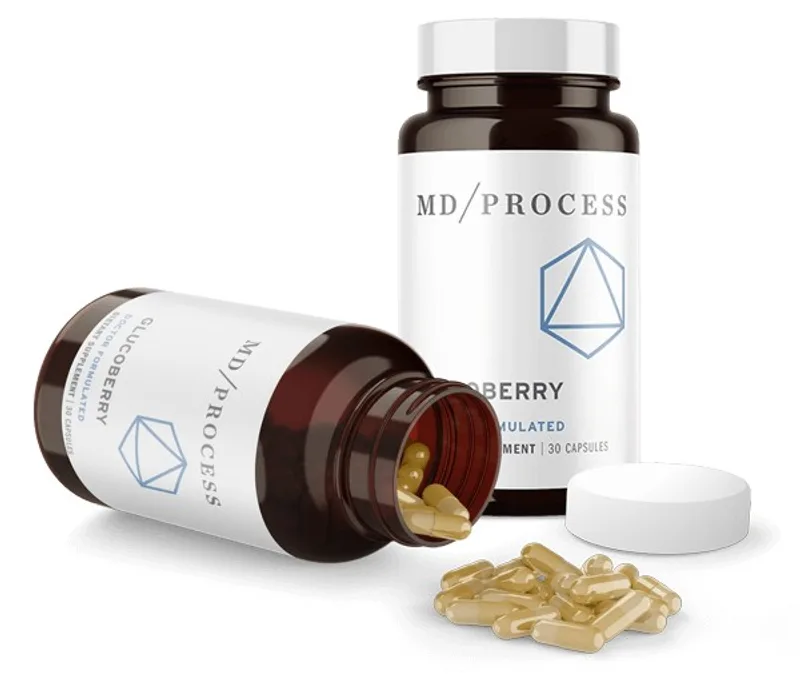
GlucoBerry
3.9/5
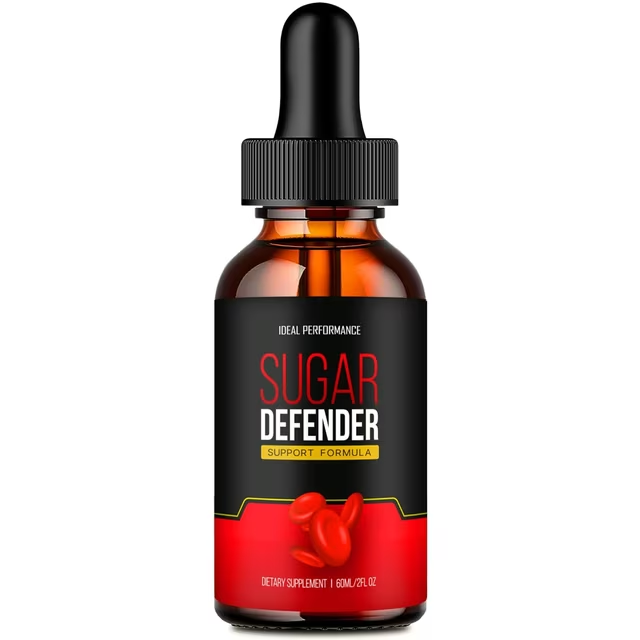
Sugar Defender
4/5
In 60 seconds
GlucoBerry is a short, fully disclosed capsule: 180 mg of maqui berry extract, 600 mcg of chromium picolinate, 2 mg of biotin, and 400 mg of gymnema leaf powder. Sugar Defender is a liquid drop taken under the tongue, with chromium, gymnema, alpha-lipoic acid, African mango, ginseng, and maca among a longer list, without per-ingredient amounts. GlucoBerry tells you exactly how much you get. Sugar Defender covers more ground and is cheaper to start.
GlucoBerry approach
Four actives with every amount printed. Chromium 600 mcg and biotin 2 mg match the doses of a 447-person placebo-controlled trial. Maqui berry extract 180 mg matches a 3-month prediabetes study. Gymnema is 400 mg of leaf powder. Gelatin capsule, one a day with food.
Sugar Defender approach
A liquid formula described in our review as 24 ingredients, led by chromium picolinate, gymnema sylvestre, and alpha-lipoic acid, with African mango, ginseng, and maca. Individual doses are not disclosed. One dropper under the tongue each morning, or mixed into water.
The 60-Second Honest Take
Put the two products side by side and the choice comes down to transparency versus breadth. GlucoBerry prints four exact doses. You can check every one against the research, and two of them line up with specific human trials almost to the milligram. Sugar Defender lists more ingredients, including alpha-lipoic acid, but does not tell you how much of each is in the dropper. Neither approach is wrong. A short, fully dosed formula makes it easy to know what you are taking. A broader formula works on more pathways at once: insulin response, sugar absorption, antioxidant support, and stress-related appetite. The practical difference is cost to start. Sugar Defender sells a single bottle for $69. GlucoBerry's smallest order is two bottles for $147.95 with shipping. Over six months, GlucoBerry is cheaper: $234 against $294. For most first-time buyers, Sugar Defender is easier to try, which is why it keeps the top spot in our blood sugar ranking.
What GlucoBerry Gets Right
The label. Maqui berry extract 180 mg, chromium 600 mcg, biotin 2 mg, gymnema 400 mg, and nothing hidden in a blend. Among ClickBank blood sugar formulas that is unusual, and it is the main reason GlucoBerry scores as well as it does in our GlucoBerry review. Chromium and biotin at trial doses. The largest trial of this pairing (Albarracin et al., Diabetes/Metabolism Research and Reviews, 2008; PMID 17506119) gave 447 overweight adults whose glucose was poorly controlled on oral medication 600 mcg of chromium and 2 mg of biotin for 90 days. A1c fell 0.54% more than placebo and fasting glucose fell 9.8 mg/dL. A Yale-led pilot of 43 people using the same doses found a lower 2-hour glucose curve after four weeks (Singer and Geohas, Diabetes Technology & Therapeutics, 2006; PMID 17109595). GlucoBerry did not just pick these ingredients. It picked the doses too. Maqui berry at the studied amount. In a 3-month study, 31 adults with prediabetes took 180 mg of Delphinol maqui extract daily, and A1c moved from 5.65% to 5.35% (Alvarado et al., Panminerva Medica, 2016; PMID 27820958). An earlier placebo-controlled crossover study found the extract blunted the post-meal glucose rise after rice (PMID 24861886). Price at scale. At $39 a bottle on the 6-pack with free US shipping, it is one of the lower long-run costs in the category.
Where GlucoBerry Falls Short
The sales story is bigger than the science. The page talks about a kidney "Blood Sugar Drain" clogged by a "sticky gray protein". The maqui research we found points to the gut: delphinidin slowed sodium-dependent glucose transport in rodent intestinal tissue. We found no human study showing maqui berry acts on kidney glucose handling, and the page never names the protein. One number does not match. The page says maqui improved long-term blood sugar markers by 23%. In the 3-month trial, A1c moved 0.3 points, about 5%, and that study had no placebo group. Gymnema is powder, not extract. The page says it uses the same dose as a 58-person study. That open-label study used 500 mg a day (Kumar et al., Journal of Dietary Supplements, 2010; PMID 22432517). GlucoBerry has 400 mg of leaf powder, which is usually weaker than a standardized extract. Practical catches. No single bottle. A gelatin capsule, so not vegetarian. And 2 mg of biotin, which the FDA has warned can distort some lab results, including thyroid tests and troponin.
What Sugar Defender Gets Right
Breadth. Sugar Defender works on several pathways at once. Chromium picolinate supports insulin response, gymnema is the traditional sugar-craving botanical, and alpha-lipoic acid, which GlucoBerry does not contain, brings antioxidant and insulin-sensitivity research of its own. African mango, ginseng, and maca round out a formula aimed at appetite and stress as well as glucose. Our Sugar Defender review covers the full list. Easier to start. A single bottle is $69, three are $59 each, six are $49 each, with free shipping on the multi-bottle packs. You can test it for a month without buying two or more bottles. Format. The liquid goes under the tongue or into water. People who dislike capsules, or who already take a handful of pills, often find it easier to stay consistent with. The guarantee. Sugar Defender's refund window is 60 days. That is shorter than GlucoBerry's 180, but a short window is one buyers actually use, and it pushes you to judge the product honestly within two months instead of forgetting about it.
Where Sugar Defender Falls Short
You cannot check the doses. Our own review flags this: with a long ingredient list and no per-ingredient amounts, it is hard to tell whether the chromium, gymnema, or alpha-lipoic acid are near the amounts used in studies. GlucoBerry's label answers that question; Sugar Defender's does not. Taste and cost at scale. Some users mention a slightly metallic taste. And over six months, Sugar Defender costs $294 against GlucoBerry's $234. The same medication caution. Like GlucoBerry, it contains ingredients that can add to the effect of insulin or oral glucose-lowering drugs, so the doctor conversation comes first either way.
One Thing Both Products Should Have Told You
The strongest human evidence for either formula comes from people already on medication, or with borderline readings, measured over about three months. The chromium-biotin trial enrolled people with poorly controlled glucose on oral drugs. The maqui trial enrolled people with prediabetes and had no placebo group. That does not make either product useless. It means realistic expectations are small, gradual changes, plus fewer sweet cravings for many people. It also means the safety point is the same for both. If you take metformin, insulin, or a sulfonylurea, talk to your prescriber before adding either product, check your readings more often for the first few weeks, and never change a dose on your own. Neither product replaces medication, and neither is intended to diagnose or treat any disease.
The Verdict, Stated Plainly
Sugar Defender stays our overall pick. It works on more pathways, includes alpha-lipoic acid, comes as a liquid, and lets you start with a single $69 bottle. For most people trying a blood sugar supplement for the first time, that lower barrier matters. GlucoBerry is the pick for label readers. If you want to see every milligram, and you like the idea of chromium and biotin at the exact doses from a 447-person trial, it is the more transparent product and the cheaper one over six months. Just ignore the kidney story and plan on buying at least two bottles. Either way, give it about three months, keep a simple log of your readings, and keep your doctor in the loop.
Quick Verdict
Choose GlucoBerry if you want:
- ✓Adults 40-70 with fasting glucose in the normal or borderline range who want a supplement to go with diet and walking
- ✓People who want to see exact milligrams on the label before they buy
- ✓Anyone tired of multi-capsule routines; this is one capsule a day
May not be ideal for:
Anyone on metformin, insulin, sulfonylureas, or another glucose-lowering drug who has not cleared it with their prescriber, because chromium and gymnema can add to those drugs' effect
Choose Sugar Defender if you want:
- ✓Adults with borderline or elevated blood sugar levels
- ✓People looking for natural blood sugar management support
- ✓Anyone who prefers liquid drops over pills or capsules
May not be ideal for:
People under 18, pregnant, or nursing
Side-by-Side Comparison
| Feature | GlucoBerry | Sugar Defender |
|---|---|---|
| Our Rating | 3.9/5 | 4/5 |
| Starting Price | $39 | $49 |
| Guarantee | 180-day money-back | 60-day money-back guarantee |
| Key Ingredients | 4 active ingredients | 6 active ingredients |
| Best For | Adults 40-70 with fasting glucose in the normal or borderline range who want a supplement to go with diet and walking | Adults with borderline or elevated blood sugar levels |
Pros & Cons
GlucoBerry
Pros
- ✓Every dose is on the label: maqui berry 180 mg, chromium 600 mcg, biotin 2 mg, gymnema 400 mg, with no proprietary blend
- ✓Chromium and biotin match the exact doses from a 447-person placebo-controlled trial and a Yale-led pilot
- ✓Maqui berry dose matches the 180 mg used in a 3-month human study
- ✓One capsule a day, the easiest routine in this category
- ✓6-bottle price of $39 a bottle with free US shipping is lower than most ClickBank blood sugar formulas at the same tier
Cons
- ✗The kidney 'Blood Sugar Drain' and 'sticky gray protein' story is not supported by any human study we could find; the maqui research points to the gut
- ✗The '23% improvement in long-term blood sugar markers' claim does not match the maqui trial we read, which showed A1c moving 0.3 points (about 5%) with no placebo group
- ✗Gymnema is 400 mg of leaf powder, not a standardized extract, and 100 mg less than the 58-person study the sales page says it copies
- ✗The label does not say the maqui extract is Delphinol or give its delphinidin content, so you cannot confirm it matches the studied extract
Sugar Defender
Pros
- ✓24 ingredients targeting blood sugar from multiple pathways
- ✓Liquid drop format for faster absorption than capsules
- ✓Chromium, gymnema, and ALA are all well-researched for blood sugar support
- ✓No harsh stimulants or synthetic compounds
- ✓Sublingual delivery bypasses digestive system for better bioavailability
Cons
- ✗Only available on the official website — not in stores or pharmacies
- ✗Premium pricing — $49-$69 per bottle depending on package size
- ✗Must consult doctor if on any diabetes medication — risk of hypoglycemia
- ✗Liquid drops have a slightly metallic taste some users dislike
Pricing Comparison
GlucoBerry
Sugar Defender
Frequently Asked Questions
Which is better, GlucoBerry or Sugar Defender?
Both GlucoBerry (rated 3.9/5) and Sugar Defender (rated 4/5) are solid blood sugar supplements. GlucoBerry is best for Adults 40-70 with fasting glucose in the normal or borderline range who want a supplement to go with diet and walking, while Sugar Defender excels at Adults with borderline or elevated blood sugar levels. The best choice depends on your specific goals and preferences.
What is the price difference between GlucoBerry and Sugar Defender?
GlucoBerry starts at $39 per bottle while Sugar Defender starts at $49 per bottle. Both offer multi-bottle discounts that reduce the per-unit cost. GlucoBerry comes with a 180-day money-back guarantee and Sugar Defender offers a 60-day money-back guarantee guarantee.
Which has better ingredients, GlucoBerry or Sugar Defender?
GlucoBerry features 4 key ingredients while Sugar Defender contains 6 active compounds. Both formulas are manufactured in FDA-registered, GMP-certified facilities. The ingredient profiles target blood sugar from different angles, so the better formula depends on which specific benefits matter most to you.
Can I take GlucoBerry and Sugar Defender together?
We recommend choosing one supplement at a time so you can accurately assess its effects. Taking both simultaneously makes it difficult to determine which product is contributing to your results. If one doesn't meet your needs, you can switch to the other. Always consult your healthcare provider before combining supplements.
Final Verdict
Sugar Defender keeps the top position in our blood sugar ranking because it covers more pathways, including alpha-lipoic acid, which GlucoBerry lacks, comes as an easy liquid, and sells a single bottle at $69, so first-time buyers can try it without a two-bottle commitment. GlucoBerry is the better choice for a different buyer: someone who will not buy a proprietary blend. Every dose is on its label, and its 600 mcg of chromium with 2 mg of biotin matches a 447-person placebo-controlled trial (PMID 17506119), while its 180 mg of maqui berry matches a 3-month prediabetes study (PMID 27820958). Over six months it is also cheaper, at $234 against $294. The caveats are real: the kidney 'Blood Sugar Drain' story and the 23% claim do not match the maqui research, the gymnema is powder rather than extract, and the 2 mg of biotin can skew some lab tests. If you take glucose-lowering medication, talk to your prescriber before starting either one.