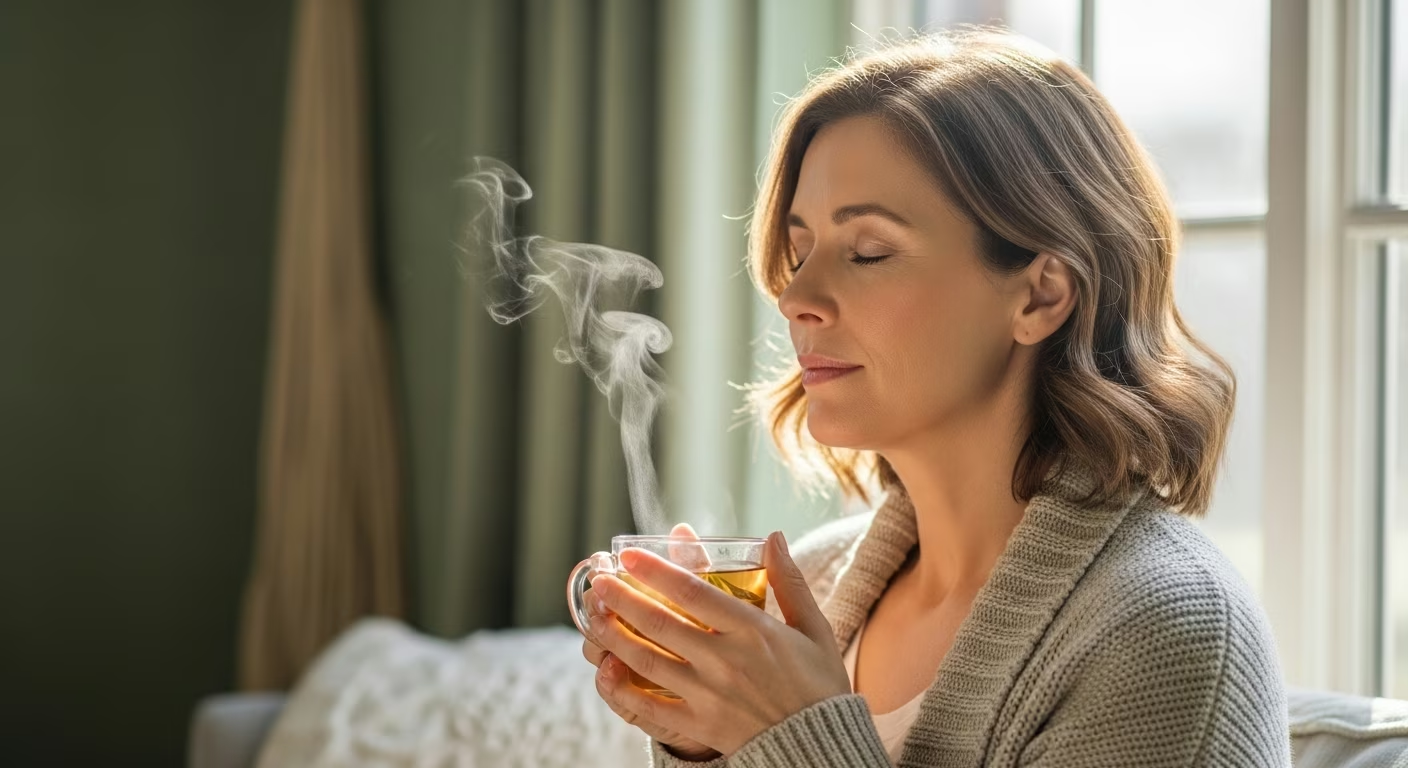
One of the most common things I hear from women in their 40s, almost always with a note of shame in their voice, is some version of: "I have never been an anxious person, and suddenly I am waking up at 3 a.m. with my heart pounding for no reason." If that is you, please hear this first: you are not crazy, you are not broken, and you have not suddenly developed a personality disorder at 45. Menopause anxiety is one of the most common and most under-recognized symptoms of the hormonal transition, and on Reddit's menopause communities it is the second most discussed complaint. This is biology, not character, and it has real, evidence-based solutions.
Is This Actually Menopause? The Science
Yes, and the research is increasingly clear on this. Gordon and colleagues (2015, Menopause) documented that women are at significantly elevated risk for new-onset anxiety symptoms during the menopausal transition, and the risk is highest during perimenopause specifically, when estrogen and progesterone are fluctuating most chaotically. Bromberger and Kravitz (2011, Menopause) followed women longitudinally and found that women with no prior history of anxiety or depression frequently experience meaningful symptoms for the first time in midlife.
That is important, because many women, and frankly many clinicians, dismiss perimenopausal anxiety as a psychological reaction to life stressors. The data says something different: the hormonal transition itself dysregulates the stress response system, and the anxiety that results is as biological as a hot flash.
What's Actually Happening in Your Body
The HPA Axis Gets Dysregulated
Your hypothalamic-pituitary-adrenal axis, or HPA axis, is the system that governs your stress response. Estrogen and progesterone both help keep that system calibrated; in particular, progesterone's breakdown product allopregnanolone acts on GABA receptors in the brain, which produce a natural calming effect. When progesterone fluctuates and then declines in perimenopause, that GABA-driven brake on anxiety weakens. Add fluctuating estrogen, which also modulates serotonin and norepinephrine, and you get a stress response system that fires too easily, runs too long, and takes too long to reset.
Sleep Disruption Feeds the Anxiety
Night sweats, early-morning waking, and the classic 3 a.m. racing-mind wake-up all fragment sleep in a way that directly worsens anxiety. A single night of poor sleep measurably increases amygdala reactivity the next day, meaning your brain interprets neutral situations as threatening. Over weeks and months, that pattern produces the hypervigilant, on-edge feeling women describe when they say anxiety "came out of nowhere." The anxiety and the sleep disruption feed each other in a loop, and breaking either one helps the other.
Cortisol Stays Higher, Longer
Cortisol is designed to rise in response to stress and then fall. In perimenopause, that reset often gets sticky. The result is a baseline anxiety that is not tied to any specific event; your body is running in a subtly activated state throughout the day. This is why many women describe menopause anxiety as "free-floating" or "without a reason." There is a reason, it is just biochemical rather than situational.
Evidence-Based Things That Help
Rebuild the Sleep Foundation First
This is unglamorous, but it is the most important lever most women have. A consistent sleep window (same bedtime and wake time within 30 minutes), a cool and dark bedroom, alcohol limited or eliminated on weeknights (it fragments sleep even when it feels relaxing), and morning outdoor light exposure are the fundamentals. For women whose sleep is being broken specifically by hot flashes and night sweats, addressing the vasomotor symptoms is often the fastest route to lower daytime anxiety.
Adaptogens With Real Anxiety Evidence
Sensoril ashwagandha stands out here. Lopresti and colleagues (2019, Medicine) ran a randomized controlled trial and documented reductions in anxiety and perceived stress, along with lower morning cortisol, in adults taking a standardized ashwagandha extract. Chandrasekhar and colleagues (2012) earlier found similar anxiety and cortisol reductions. Ashwagandha is not a sedative and it does not produce a noticeable acute effect; it works over weeks to dampen an over-activated stress response. For perimenopausal women specifically, it addresses the exact HPA-axis pattern the hormonal transition creates.
Movement That Matches the Moment
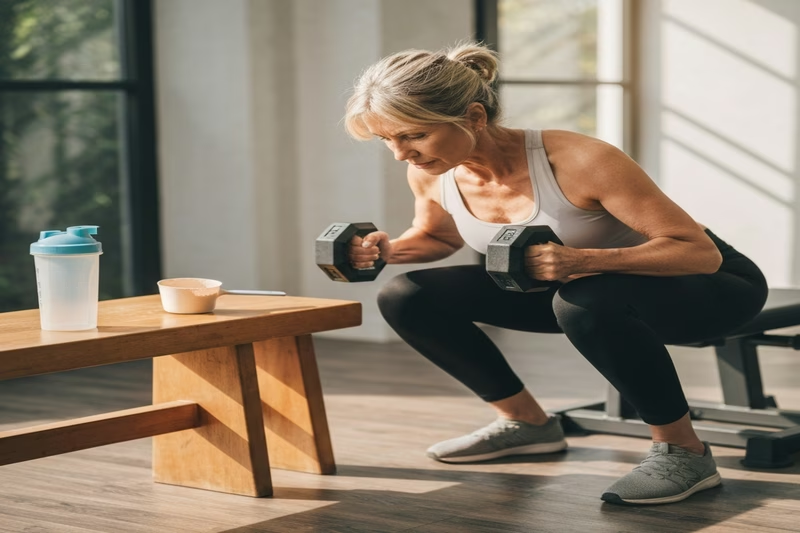
Regular exercise is one of the most effective anxiety interventions in any population, and that is particularly true in midlife. Two to three strength sessions per week plus daily walking is a reasonable target. For acutely anxious days, 20 to 30 minutes of brisk walking, ideally outside, shifts the nervous system more reliably than most people expect. What often does not help is punishing, very high-intensity exercise on a sleep-deprived body; that can actually raise cortisol further. Match the intensity to the day.
Cut the Chemical Anxiety Amplifiers
Three substances reliably worsen menopause anxiety in almost every woman who pays attention. Alcohol, even one or two drinks, fragments sleep and spikes cortisol overnight, which is why anxiety is often worst the morning after. Caffeine late in the day lingers longer in the perimenopausal body than women expect; a morning cutoff of 10 or 11 a.m. is a reasonable starting point for anxious women. Nicotine, including vaping, is a straightforward cortisol elevator. You do not have to eliminate all three forever, but cutting back reveals how much of the anxiety is chemically driven.
Breath Work That Actually Moves the Nervous System
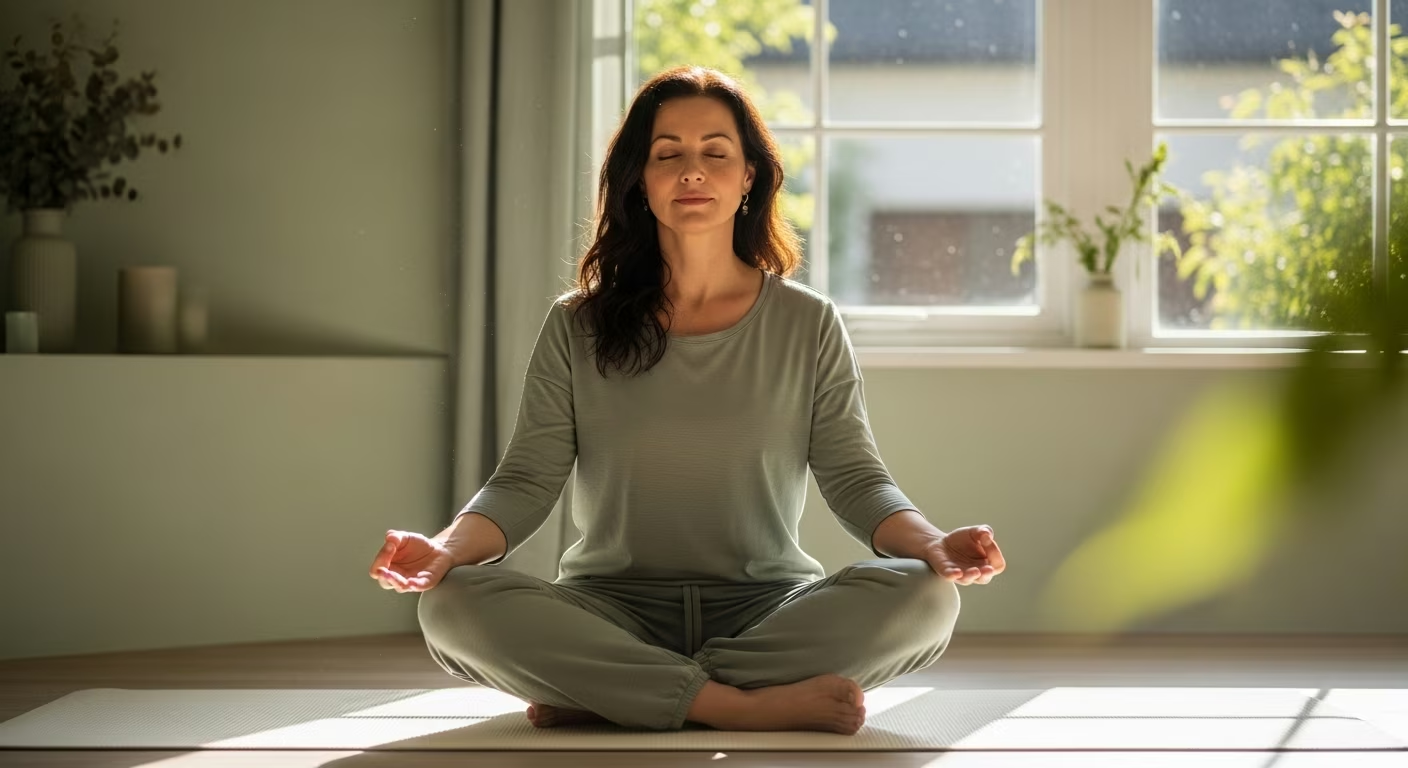
You do not need a long meditation practice to shift state; you need a reliable pattern that engages the vagus nerve. Slow nasal breathing with longer exhales than inhales (for instance, inhale 4 seconds, exhale 6 to 8 seconds) for 5 to 10 minutes activates the parasympathetic branch of the nervous system and lowers heart rate and perceived anxiety. Doing this first thing in the morning, before any news or email, is a low-cost way to start the day with a calmer baseline.
Stabilize Blood Sugar Across the Day
Blood sugar crashes feel remarkably like anxiety, and perimenopausal women are often more insulin-resistant than they were a decade earlier. A protein-forward breakfast of 25 to 35 grams of protein, lunch that is not primarily refined carbohydrates, and a genuine snack in the mid-afternoon (rather than powering through) all matter. Women who under-eat during the day and then feel "anxious for no reason" around 4 p.m. are often experiencing a glucose-driven stress response.
Know When Medication or HRT Is the Right Call
Lifestyle and supplements are a reasonable starting point for mild to moderate anxiety, but they are not the answer for everyone. Freeman and colleagues (2014, Menopause) demonstrated that SSRIs and SNRIs can meaningfully reduce anxiety symptoms in perimenopausal women, including those whose primary issue is hot flashes plus anxiety. Menopausal hormone therapy, where medically appropriate, often relieves anxiety by stabilizing estrogen and improving sleep. If your anxiety is interfering with daily function, neither medication nor HRT is a failure; they are tools, and using them is often the most efficient path back to feeling like yourself.
A menopause supplement formulated with clinically studied adaptogens like Sensoril ashwagandha targets cortisol, sleep, and anxiety together, which is exactly the combination perimenopause tends to dysregulate.
See our top menopause supplement picksA Realistic Weekly Template for a Calmer Nervous System
- Two to three strength sessions per week, combined with daily 20 to 30 minute walks.
- Protein-forward breakfast (25 to 35 grams) within an hour of waking, every day.
- Caffeine cutoff by 10 or 11 a.m., with a non-negotiable wind-down hour before bed.
- 5 to 10 minutes of slow nasal breathing first thing in the morning, before screens.
- Alcohol reduced or removed on weeknights, with an honest re-evaluation after two weeks.
- A consistent bedtime window that allows 7 to 8 hours in bed, protected from everything else.
What Doesn't Help (and Often Makes It Worse)
- Trying to "push through" anxiety with more caffeine; it feeds the cortisol loop directly.
- Using evening alcohol to "wind down"; sleep pays the bill and anxiety collects it at 3 a.m.
- Waiting for perimenopause to "just pass" without any intervention; it doesn't have to.
- Assuming this is purely psychological and ignoring the hormonal piece entirely.
- Jumping between five different supplements every two weeks without giving any one a real trial.
When to See a Doctor
Reach out to your clinician if anxiety is interfering with work, relationships, or sleep on a regular basis; if you are experiencing panic attacks; if you are having thoughts of self-harm (in which case contact urgent help immediately); or if your symptoms are not responding to lifestyle work after several weeks of honest effort. A good workup ideally rules out thyroid dysfunction (particularly hyperthyroidism, which mimics anxiety), low vitamin D, and sleep apnea, all common and treatable in midlife. Ask about menopausal hormone therapy if your anxiety clusters with hot flashes, night sweats, and sleep disruption; the updated evidence over the past decade supports its safety and benefit for many women under 60 or within 10 years of menopause. SSRIs, SNRIs, and short-term anxiolytics all have legitimate roles for the right patient, and a good clinician will talk through the options without making you feel defensive.
The Bottom Line
Menopause anxiety is not a character flaw, not a sign of weakness, and not something you are doing to yourself. It is the predictable result of a hormonal transition that temporarily destabilizes your stress response system. The playbook that works: protect sleep, move your body, feed yourself well, limit the chemical amplifiers, consider clinically studied adaptogens, and have an honest conversation with a knowledgeable clinician if lifestyle work is not enough on its own. You are not crazy. This is real. And it is fixable.
Frequently Asked Questions
Can perimenopause cause anxiety in women who've never had it before?
Yes, and this is actually common. Bromberger and Kravitz (2011, Menopause) found that women with no prior history of anxiety frequently experience meaningful symptoms for the first time in midlife, driven by the hormonal transition itself rather than life circumstances.
Why do I wake up at 3 a.m. with anxiety?
Early-morning waking with a racing mind is classic in perimenopause and is driven by the combination of cortisol rising early, sleep fragmented by hot flashes, and a destabilized GABA system from progesterone fluctuations. Improving sleep hygiene and considering progesterone support with a clinician are the two most useful levers.
Does ashwagandha actually help menopause anxiety?
There's credible human evidence. Lopresti and colleagues (2019, Medicine) documented reductions in anxiety, perceived stress, and morning cortisol in a randomized trial of standardized ashwagandha. It works over weeks, not acutely, and fits the HPA-axis pattern perimenopause creates.
Should I take an SSRI for menopause anxiety?
It's worth a conversation with your clinician. Freeman et al. (2014, Menopause) showed SSRIs and SNRIs meaningfully reduce anxiety in perimenopausal women, especially those with concurrent hot flashes. For some women, HRT is a better fit. Neither is a failure, both are tools.
Will menopause anxiety go away on its own?
For many women, symptoms ease as hormones settle in postmenopause, though that can take years. Waiting it out is not your only option, and for many women it's not the wisest one; lifestyle work, supplements, HRT, and medication can all shorten the rough patch meaningfully.
Is menopause anxiety the same as generalized anxiety disorder?
Not quite. The symptom experience can overlap, but menopausal anxiety is driven by a hormonal destabilization of the stress response system, and it typically improves with interventions that restore sleep, cortisol rhythm, and estrogen or progesterone balance. Sustained anxiety despite those interventions warrants evaluation for a standalone anxiety disorder.
Get honest health tips & reviews
Join our newsletter for science-backed supplement reviews and wellness advice.
No spam. Unsubscribe anytime.